It’s a common sight: your dog finishes relieving themselves, takes a few steps back, then begins vigorously kicking their hind legs against the ground. Dirt flies, grass scatters, and you’re left wondering—what on earth are they doing? Is this a hygiene habit, a territorial display, or just an odd quirk? The truth is, this behavior is deeply rooted in canine instincts and serves multiple purposes. Understanding why dogs kick after pooping can offer insight into their communication methods, emotional state, and evolutionary background.
This seemingly simple act isn’t random. It’s a complex blend of scent marking, communication, and instinct passed down from wild ancestors. While some owners mistake it for digging or cleaning up, the real reasons are far more strategic. In this article, we’ll explore the science behind this behavior, distinguish between scratching and marking, and help you interpret what your dog might be “saying” with their back paws.
The Science Behind the Kick: Scent and Communication
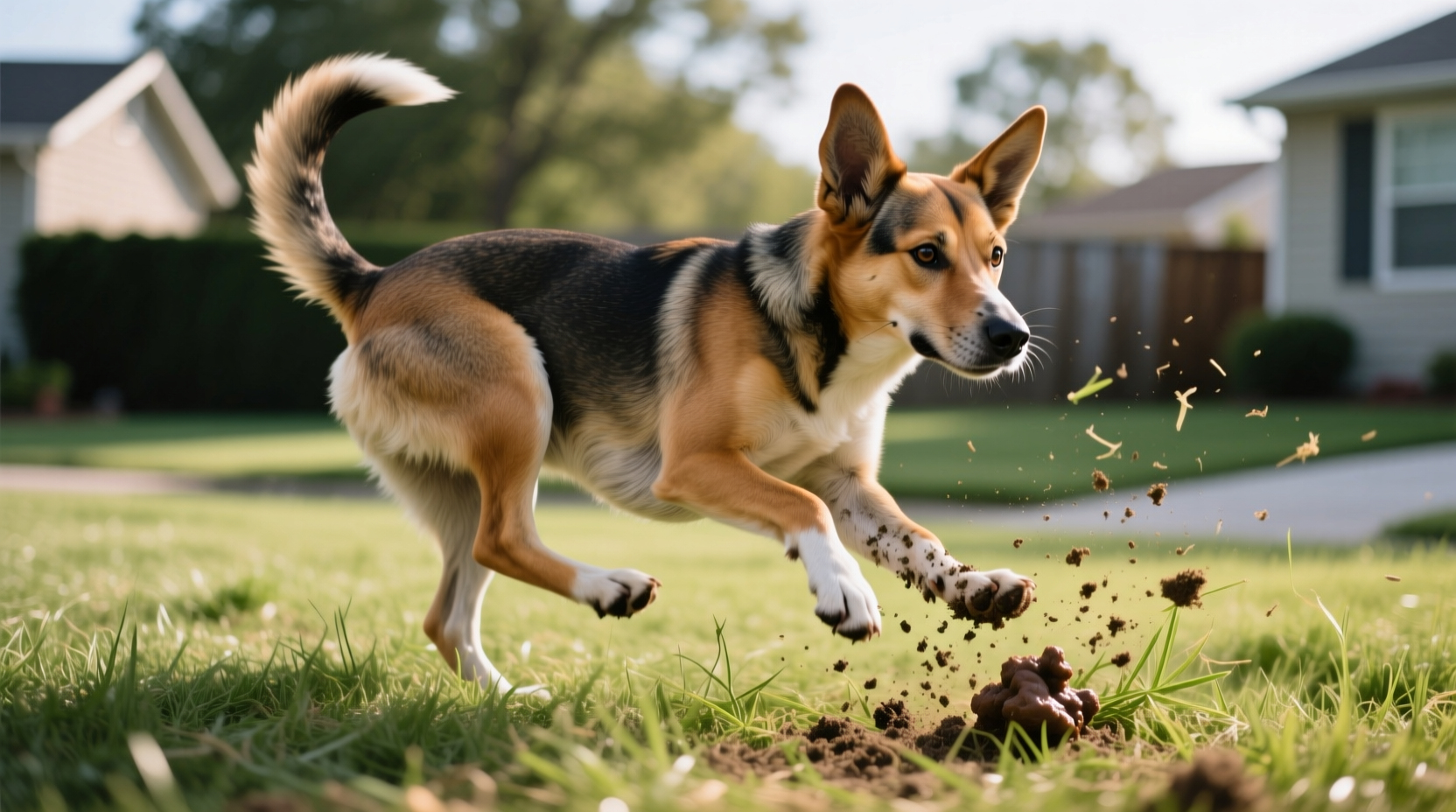
Dogs don’t just use urine and feces to mark territory—they also rely on scent glands located in their paws. Between the pads of a dog’s feet are apocrine glands that secrete a unique chemical signature. When a dog kicks the ground after eliminating, they’re not only covering their waste (as some assume), but actively dispersing their personal scent into the environment.
This dual-layered marking strategy—using both fecal matter and foot secretions—creates a stronger olfactory signal for other dogs. The physical disturbance of soil or grass also visually flags the area, making it more noticeable to passing animals. In essence, the kick is a multimodal message: “I was here, this is my space.”
“Dogs are olfactory-driven creatures. Every scratch, rub, and kick leaves behind information about identity, health, and social status.” — Dr. Lena Torres, Canine Behavior Specialist
In the wild, wolves and other canids exhibit similar behaviors. These actions help establish boundaries without direct confrontation. Even domesticated dogs retain this instinct, especially in environments where they encounter unfamiliar scents or animals. The intensity of the kicking often correlates with the dog’s confidence level and familiarity with the territory.
Scratching vs. Marking: What’s the Difference?
While the terms are sometimes used interchangeably, scratching and marking serve different functions in canine behavior. Recognizing the distinction helps clarify whether your dog is simply grooming, asserting dominance, or responding to environmental stimuli.
| Behavior | Purpose | Physical Signs | Frequency |
|---|---|---|---|
| Post-defecation kicking | Scent marking using paw glands | Rapid backward scraping with both hind legs | After most eliminations |
| Random digging | Burial, cooling, boredom relief | Front paw digging, hole creation | Irregular, context-dependent |
| Ground scratching after urination | Combined urinary and paw gland marking | Short kicks, often single leg | Frequent in dominant dogs |
| Self-scratching (itching) | Skin irritation or parasites | Fast, localized, may cause redness | Repetitive, often accompanied by licking |
Post-poop kicking is typically a coordinated, bilateral motion involving rapid backward sweeps of the hind legs. It lasts only a few seconds and is almost always linked to elimination. True scratching—such as when a dog itches due to fleas or allergies—is erratic, localized, and often repeated throughout the day. Digging for fun or comfort tends to involve the front paws and results in visible holes or displaced material.
Tip: Observe the timing and pattern. If kicking happens immediately after pooping and stops quickly, it’s likely marking—not itching or digging.Evolutionary Roots: Why This Behavior Persists
The practice of kicking after defecation traces back to dogs’ wild ancestors. In pack-oriented species like wolves and coyotes, minimizing direct conflict is crucial for survival. Instead of fighting over territory, animals use passive signals to assert presence and avoid confrontations.
By combining fecal deposits with paw-scent dispersion, canids create a layered message that lasts longer than urine alone. Soil disturbance also changes the texture and appearance of the ground, serving as a visual cue even when the scent has faded. This behavior is particularly useful in dense forests or tall grass where visual markers are hard to spot.
Domestic dogs, despite generations of breeding, still carry these instincts. Even house-trained pets that eliminate in designated areas may perform a symbolic kick on hardwood floors or carpet—there’s no dirt to scatter, yet the motion remains. This suggests the behavior is hardwired rather than learned.
Interestingly, the frequency and vigor of kicking often correlate with a dog’s social confidence. Dominant or highly territorial dogs tend to kick more aggressively and consistently. Shy or submissive dogs may skip the ritual altogether or perform a half-hearted scrape.
When Kicking Might Signal a Problem
While post-poop kicking is normal, sudden changes in the behavior warrant attention. Excessive scratching, limping after kicking, or signs of discomfort could indicate underlying medical issues.
- Paw injuries: Cuts, thorns, or cracked pads can make kicking painful. Check for bleeding, swelling, or foreign objects.
- Skin infections: Yeast or bacterial infections between the toes may cause persistent licking and scratching.
- Allergies: Environmental or food allergies often manifest as itchy paws, leading to confusion with marking behavior.
- Anxiety or compulsive disorders: Repetitive, obsessive movements—even mimicking kicking—can stem from stress.
If your dog starts kicking at inappropriate times (e.g., indoors without eliminating) or shows signs of pain, consult a veterinarian. A simple paw inspection can rule out many physical causes.
“A dog that suddenly starts scratching obsessively after months of normal behavior may be reacting to allergens, parasites, or joint pain.” — Dr. Rajiv Mehta, Veterinary Dermatologist
Mini Case Study: Max, the Over-Marker
Max, a three-year-old male Siberian Husky, lived in a suburban neighborhood with frequent dog walkers. His owner noticed he was kicking so hard after pooping that he’d tear up the lawn. Concerned about yard damage and possible aggression, she consulted a behaviorist.
Observation revealed Max wasn’t aggressive—he was responding to high canine traffic in the area. Neighboring dogs frequently marked near his preferred spots, triggering a stronger defensive response. The behaviorist recommended rotating walk times and using positive reinforcement when Max eliminated calmly without kicking.
Over six weeks, with consistent training and reduced exposure to rival scents, Max’s kicking decreased by 70%. He still performed a brief scrape occasionally, but the destructive digging stopped. The case highlighted how environmental triggers can amplify instinctual behaviors—even in well-socialized pets.
How to Respond: Should You Stop the Behavior?
In most cases, there’s no need to discourage kicking. It’s natural, harmless, and part of your dog’s communication toolkit. However, if it’s damaging your garden or creating safety hazards (like loose gravel), consider these strategies:
- Redirect the location: Train your dog to eliminate in a designated gravel or mulch area where kicking won’t harm plants.
- Use positive reinforcement: Reward calm behavior after elimination instead of focusing on the kick.
- Provide alternative outlets: Increase mental stimulation and exercise to reduce territorial anxiety.
- Avoid punishment: Never scold your dog for kicking—it’s instinctive, not defiant.
- Consult a trainer: If the behavior seems obsessive or aggressive, seek professional guidance.
Checklist: Is Your Dog’s Kicking Normal?
- ✅ Occurs only after elimination
- ✅ Lasts 2–5 seconds
- ✅ No signs of pain or limping
- ✅ No raw skin or bleeding on paws
- ✅ Consistent with breed and temperament
- ✅ Doesn’t happen indoors (unless mimicked)
- ✅ Other dogs in household behave similarly
If all boxes are checked, your dog is likely engaging in healthy, instinct-driven marking. If several are unchecked, further investigation may be needed.
Frequently Asked Questions
Is kicking after pooping a sign of dominance?
Not necessarily. While dominant dogs may mark more frequently, kicking is a standard behavior across temperaments. It’s more about communication than hierarchy. Even submissive dogs may kick to signal their presence without confrontation.
Do all dog breeds kick the same way?
No. Breeds with strong working or territorial backgrounds—like Terriers, Huskies, and Shepherds—tend to kick more vigorously. Smaller breeds or those bred for companionship may show a milder version or skip it entirely. Individual personality also plays a role.
Can neutered dogs still mark this way?
Yes. While neutering reduces hormone-driven urine marking, scent marking via paw glands remains largely unaffected. The kicking behavior is more about identity and environment than reproduction.
Conclusion: Embracing Your Dog’s Natural Language
Your dog’s post-poop kick isn’t misbehavior—it’s a sophisticated form of silent communication. Rooted in evolution and refined through instinct, this action allows dogs to navigate their world without words. By understanding the difference between scratching and marking, you gain deeper insight into your pet’s emotional and social needs.
Instead of trying to suppress this natural habit, observe it with curiosity. Notice when it happens, how intensely, and in what contexts. These clues can reveal your dog’s confidence level, reaction to other animals, and overall well-being. With informed awareness, you can support your dog’s health while respecting their innate behaviors.
💬 Have a story about your dog’s marking habits? Share your experience in the comments—your insights could help fellow pet owners understand their furry companions better!








