Dogs barking at delivery personnel is one of the most common behavioral challenges reported by pet owners. Whether it’s the UPS driver, a postal worker, or someone dropping off dinner, the arrival often triggers an eruption of barking—sometimes escalating into lunging, growling, or even attempts to bite through a door or window. While this reaction may seem irrational to us, from a dog’s perspective, it makes perfect sense. The key isn’t to suppress the instinct but to reshape the response through consistent, empathetic training.
Understanding the root causes of this behavior is the first step toward effective change. Dogs are territorial by nature, highly attuned to changes in their environment, and deeply motivated to protect their home and family. When a stranger approaches the front door—even if they’re just leaving a package—it can trigger alarm, excitement, or defensive behavior. With the right approach, however, you can teach your dog to remain calm and confident when visitors arrive.
Why Your Dog Barks at Delivery People
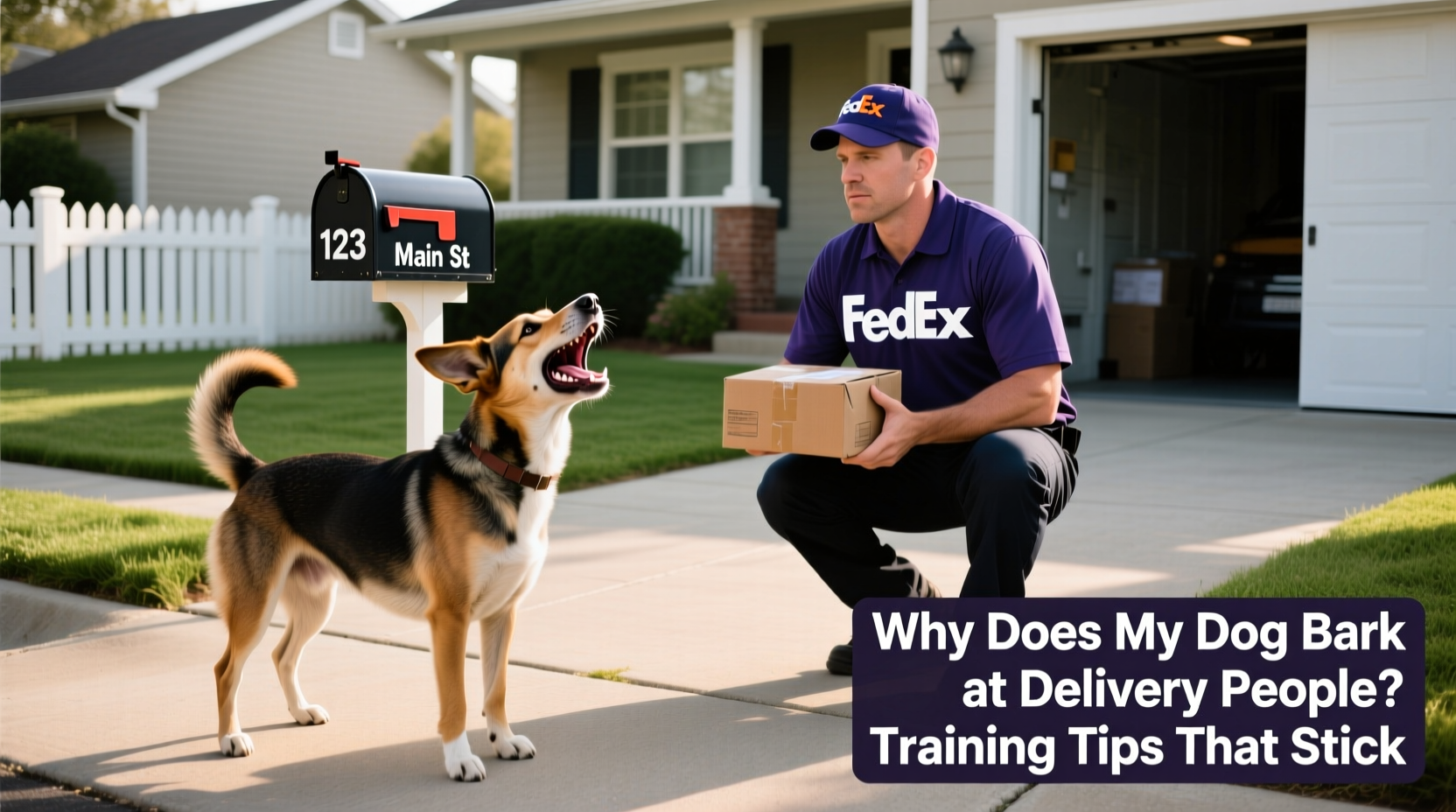
Barking at delivery workers isn't misbehavior; it's communication. Dogs use vocalizations to express concern, alert their pack (you), or attempt to drive away what they perceive as a threat. Several psychological and environmental factors contribute to this reaction:
- Protective Instinct: Dogs evolved as guardians. Their natural impulse is to warn or repel intruders near their territory.
- Lack of Familiarity: Delivery people appear unpredictably, wear different uniforms, and don’t engage socially with the household, making them seem suspicious.
- Reinforcement Loop: Every time the person leaves after the dog barks, the dog believes their barking made the “threat” go away—this reinforces the behavior.
- Sensory Triggers: Footsteps, doorbells, knocking, and sudden movement outside windows all serve as cues that trigger arousal.
- Poor Early Socialization: Dogs not exposed to varied people and environments during puppyhood may react fearfully to unfamiliar stimuli.
“Dogs aren’t being ‘bad’ when they bark at strangers—they’re doing exactly what we bred them to do. The challenge is teaching them when protection is necessary and when it isn’t.” — Dr. Karen Becker, Veterinary Behaviorist
Training Tips That Actually Work—And Last
Effective training doesn’t rely on punishment or suppression. It builds new associations, strengthens self-control, and reduces anxiety. Below are proven strategies backed by animal behavior science that produce long-term results.
1. Change the Emotional Response: Counterconditioning & Desensitization
The goal is to shift your dog’s emotional state from alarm to calm anticipation. This process involves pairing the sight or sound of a delivery person with something highly positive—like treats or toys.
- Start by playing recorded doorbell or knock sounds at low volume while giving your dog high-value treats (e.g., chicken, cheese).
- Gradually increase the volume as your dog remains relaxed.
- Progress to simulating deliveries: have a friend approach the door quietly while you reward calm behavior.
- Eventually work up to real-life scenarios with actual delivery attempts.
2. Teach an Incompatible Behavior: “Go to Place”
You can’t expect your dog to be quiet if they’re stationed right at the front window. Instead, train them to go to a designated “safe spot” away from the door when someone arrives.
Choose a mat or bed in a quieter part of the house. Use a cue like “Go to place” and reward every time they lie down there calmly. Practice this daily, even when no one is coming, so it becomes automatic.
3. Manage the Environment First
Training works best when you control exposure. Prevent rehearsal of unwanted behaviors by:
- Closing blinds or using opaque window film to block views of the front yard.
- Using baby gates to keep your dog out of entry areas during peak delivery hours.
- Putting on calming music or white noise to muffle doorbells and knocks.
4. Use Positive Interruption Cues
Teach a reliable “focus” or “look at me” command. When your dog starts to react, use this cue to redirect their attention before barking escalates.
Practice in low-distraction environments first. Reward eye contact instantly. Over time, this becomes a tool to interrupt reactivity early.
5. Simulate Real-Life Scenarios Safely
Work with a friend or trainer to stage mock deliveries. Start at a distance where your dog notices but doesn’t react. Reward calm observation. Gradually decrease the distance over multiple sessions.
Tip: Always end sessions on a positive note—even if progress is small. Success builds confidence for both dog and owner.Step-by-Step Training Timeline (6-Week Plan)
Consistency is critical. Follow this structured plan to see measurable improvement within six weeks.
| Week | Focus | Key Actions |
|---|---|---|
| 1 | Management & Baseline | Block visual access to the door, record barking frequency, begin “go to place” training indoors. |
| 2 | Desensitization Start | Introduce recorded doorbell sounds at low volume with treat pairing. Practice 5–10 mins/day. |
| 3 | Distance Exposure | Have a helper walk past the house at a safe distance. Reward calmness. Increase duration gradually. |
| 4 | Simulated Arrival | Helper approaches driveway, pauses, then leaves. Repeat with treats during and after. |
| 5 | Door Interaction | Helper knocks lightly once. If dog stays calm, reward. If reactive, abort and retry later. |
| 6 | Real-World Testing | Monitor actual deliveries. Use “go to place” or redirection. Celebrate small wins. |
Common Mistakes That Undermine Progress
Even well-meaning owners can accidentally reinforce barking or stall progress. Avoid these pitfalls:
- Yelling “Quiet!” – This often sounds like joining in the barking to a dog. It increases arousal rather than reducing it.
- Punishing After the Fact – Dogs don’t connect delayed correction with the original behavior.
- Allowing Rehearsal – Letting your dog bark at the door every day strengthens the habit.
- Skipping Management – Expecting training to work without controlling the environment sets your dog up to fail.
- Inconsistent Rewards – Only rewarding sometimes weakens learning. Be predictable in early stages.
“Training isn’t about dominance—it’s about clarity. Dogs thrive when they know what earns them good things.” — Sophia Yin, DVM, Animal Behavior Expert
Mini Case Study: Transforming Max, the Reactive Terrier
Max, a 3-year-old Jack Russell Terrier, would bark wildly and lunge at the front window whenever anyone approached his owner’s suburban home. His owner, Lisa, felt embarrassed and worried about potential aggression.
She began by installing frosted window film to limit visibility and trained Max to go to a cozy bed in the back bedroom when the doorbell rang. Using chicken and cheese, she paired the sound of the bell with treats—even playing recordings during quiet times.
Over four weeks, she enlisted a neighbor to simulate deliveries. At first, the neighbor walked only to the end of the driveway. Each time Max stayed quiet, he got a treat. Gradually, the neighbor moved closer. By week six, Max would lie on his mat, glance at the door, then look back at Lisa for a reward when the doorbell rang.
Today, Max still perks up at knocks—but instead of barking, he trots to his place and waits for his treat. Lisa reports fewer complaints from neighbors and a more relaxed household.
Checklist: How to Stop Door-Related Barking
Use this actionable checklist to guide your training journey:
- ✅ Install window covers to block visual triggers
- ✅ Choose a high-value treat your dog loves
- ✅ Teach and practice the “go to place” command daily
- ✅ Record or source doorbell/knock sounds for training
- ✅ Begin desensitization at sub-threshold levels (no barking)
- ✅ Enlist a helper for staged delivery simulations
- ✅ Keep training sessions short (5–10 minutes) and positive
- ✅ Monitor real deliveries and apply trained responses
- ✅ Track progress weekly (note reduced barking duration/frequency)
- ✅ Stay patient—behavior change takes time and repetition
FAQ: Common Questions About Dog Barking at Delivery People
Will neutering or spaying stop my dog from barking at strangers?
No, reproductive status has little impact on territorial barking. This behavior is driven by instinct and learned experience, not hormones. Training and management are far more effective solutions.
Can I use a bark collar to stop this behavior?
We strongly advise against aversive tools like shock or spray collars. They suppress symptoms without addressing the underlying cause and can increase fear or aggression. Positive reinforcement methods are safer and more sustainable.
What if my dog was rescued or has a history of trauma?
Dogs with unknown backgrounds may need extra patience. Focus on building trust and safety. Consider working with a certified force-free trainer or veterinary behaviorist to tailor a plan that respects your dog’s limits.
Conclusion: Building Calm, Confidence, and Long-Term Results
Barking at delivery people is a common but solvable issue. The secret lies not in silencing your dog, but in helping them feel secure and understand that visitors aren’t a threat. Through desensitization, positive reinforcement, and consistent practice, you can transform a chaotic scene into a peaceful routine.
Remember, progress isn’t always linear. Some days will be better than others. What matters is showing up, staying calm yourself, and rewarding the behaviors you want to see. Over time, your dog will learn that deliveries mean treats, not threats—and that calmness pays off.
🚀 Start today: Pick one strategy—whether it’s setting up a “go to place” zone or playing a doorbell recording with treats—and commit to practicing it daily. Small steps lead to big changes. Share your progress in the comments and inspire others on the same journey!








