If you work from home or spend time typing, you’ve likely experienced the familiar weight of your cat settling directly onto your laptop or keyboard. While it may seem like a deliberate act of sabotage, your cat isn’t trying to ruin your productivity—there’s a deeper, instinctual logic behind the behavior. Understanding the motivations can help you respond with patience and practicality rather than frustration.
Cats are creatures of comfort, curiosity, and connection. Their actions often reflect a blend of environmental cues, emotional needs, and physical preferences. When your cat chooses your keyboard over any other surface in the room, it’s not random—it’s a signal. The good news is that with subtle environmental adjustments and positive reinforcement, you can guide your cat toward more appropriate spots without damaging your bond.
The Psychology Behind Keyboard-Sitting Behavior
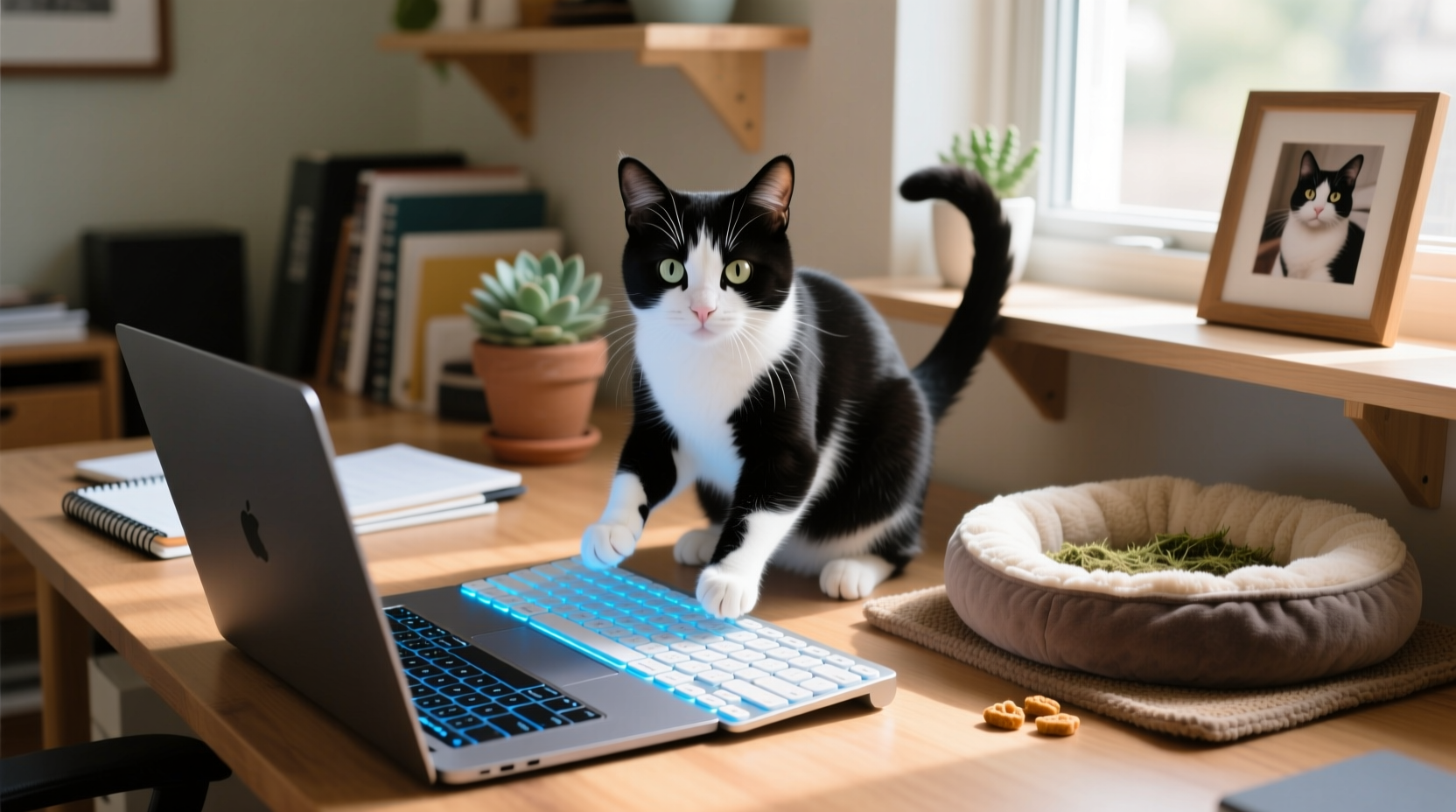
To effectively address the behavior, it's essential to understand why your cat finds your keyboard so appealing. Several overlapping factors contribute to this common feline quirk.
- Warmth: Laptops and keyboards emit heat, especially after extended use. Cats naturally gravitate toward warm surfaces—a holdover from their wild ancestors who sought sunlit rocks or sheltered nooks for thermoregulation.
- Attention-seeking: If your cat notices that sitting on your keyboard gets an immediate reaction—whether it’s laughter, scolding, or petting—they learn that this is a reliable way to engage you.
- Scent marking: Your keyboard carries your scent, making it a comforting object. By sitting on it, your cat both absorbs your scent and deposits their own through glands in their paws, reinforcing a sense of shared territory.
- Curiosity: The movement of your fingers, glowing screen, and clicking sounds mimic prey-like activity, triggering your cat’s predatory instincts and drawing them in.
- Proximity to you: Cats form strong attachments to their humans. Sitting on your keyboard places them physically close to you during moments when you might otherwise be distracted.
“Cats don’t misbehave out of spite. They act based on instinct, environment, and learned outcomes. What seems disruptive to us often makes perfect sense from their perspective.” — Dr. Sarah Thompson, Feline Behavior SpecialistTip: Never push your cat off your keyboard abruptly. This can create negative associations and damage trust. Instead, gently lift and redirect them.
Creating Cat-Friendly Alternatives
The most effective long-term solution isn’t to stop your cat from seeking warmth or closeness—but to offer better options that meet the same needs. Redirecting the behavior starts with enriching your cat’s environment.
Begin by identifying what your cat gains from the keyboard: warmth, attention, elevation, or proximity. Then, provide alternatives that fulfill those needs even more effectively.
Warm and Cozy Spots
Place heated cat beds, soft blankets, or self-warming mats near your workspace. Some cats prefer elevated perches with padding, such as window seats or cat shelves. Position these within sight of your desk so your cat still feels included.
Elevated Observation Points
Cats are natural observers. A cat tree or wall-mounted shelf near your desk gives them a high vantage point to monitor household activity without invading your workspace.
Scent-Infused Comfort Zones
Transfer your scent to alternative resting spots by placing worn clothing, a pillowcase, or a recently used sweater in their bed. This mimics the familiarity they seek on your keyboard.
| Need Met by Keyboard | Feline Motivation | Better Alternative |
|---|---|---|
| Heat | Thermoregulation | Heated cat pad or sunlit perch |
| Attention | Social bonding | Dedicated playtime or lap visits |
| Elevation | Security & observation | Cat tree or shelf near desk |
| Your Scent | Territorial comfort | Bed with your clothing item |
| Movement/Stimulation | Prey drive | Interactive toy nearby |
Step-by-Step Guide to Gentle Redirection
Changing your cat’s habits requires consistency, timing, and positive reinforcement. Follow this five-step process to encourage a shift in behavior without causing stress.
- Observe patterns: Note when and how often your cat approaches the keyboard. Is it during video calls? After meals? Identifying triggers helps you anticipate and intervene early.
- Prepare the alternative: Set up a cozy spot near your desk at least 24 hours before starting redirection. Let your cat explore it freely and reward visits with treats or praise.
- Interrupt gently: When your cat jumps onto the keyboard, calmly say “off” or make a soft shooing sound. Avoid yelling or sudden movements.
- Redirect immediately: Lift your cat (if comfortable) and place them in the designated alternative spot. Offer a treat, gentle petting, or a short play session to reinforce the new location.
- Repeat consistently: It may take days or weeks for the behavior to change. Everyone in the household should follow the same approach to avoid mixed signals.
Over time, your cat will begin to associate the alternative spot with positive outcomes, while the keyboard becomes less rewarding due to consistent redirection.
Tip: Use a pheromone diffuser like Feliway near your workspace. These calming scents can reduce anxiety-driven attention-seeking behaviors.Common Mistakes That Reinforce the Habit
Even well-meaning owners can accidentally encourage unwanted behavior. Be mindful of these common pitfalls:
- Inconsistent responses: Sometimes allowing the cat on the keyboard and other times pushing them off creates confusion. Cats thrive on predictability.
- Overreacting: Shouting or flicking fingers may scare your cat, leading to avoidance or increased anxiety—not better behavior.
- Neglecting enrichment: If your cat lacks stimulation elsewhere, they’ll seek interaction wherever they can get it—even if it means interrupting your work.
- Using aversive methods: Aluminum foil, citrus sprays, or motion-activated devices may deter cats but can damage trust and create fear-based associations with your workspace.
Instead of focusing on stopping the behavior, focus on replacing it with something equally satisfying for your cat.
Mini Case Study: Reclaiming the Home Office with Luna
Sophie, a freelance graphic designer, struggled daily with her 3-year-old tabby, Luna, who would leap onto her keyboard during client calls. Initially, Sophie tried closing her office door, but Luna meowed persistently, escalating stress for both of them.
After consulting a cat behaviorist, Sophie implemented a three-part strategy:
- She placed a heated cat bed on a floating shelf beside her desk, adding a T-shirt she had worn the previous day for scent familiarity.
- She introduced a daily 15-minute interactive play session before work to satisfy Luna’s need for engagement.
- Whenever Luna approached the keyboard, Sophie gently lifted her and placed her on the shelf, offering a treat and quiet praise.
Within two weeks, Luna began choosing the shelf voluntarily. By week four, keyboard-sitting had dropped from multiple times per day to once every few days—and eventually stopped altogether. Sophie regained focus, and Luna felt more secure and attended.
The key was not exclusion, but inclusion in a structured, predictable way.
Checklist: How to Gently Redirect Keyboard-Sitting
Use this checklist to implement a humane, effective plan:
- ✅ Identify the underlying need (warmth, attention, etc.)
- ✅ Provide a superior alternative (heated bed, elevated perch)
- ✅ Transfer your scent to the new spot
- ✅ Introduce the new spot before starting redirection
- ✅ Reward visits to the alternative location
- ✅ Respond consistently every time the cat approaches the keyboard
- ✅ Avoid punishment or startling tactics
- ✅ Increase play and mental stimulation during the day
- ✅ Involve all household members in the plan
- ✅ Monitor progress and adjust as needed
FAQ: Common Questions About Cats and Keyboards
Is it harmful for my cat to sit on my laptop?
Occasional sitting is unlikely to cause harm, but prolonged exposure to heat can lead to overheating in some cats, especially those with thick coats. Additionally, crumbs or liquids near the keyboard pose ingestion risks. It’s best to discourage the habit for both your cat’s safety and device longevity.
Why does my cat only sit on my keyboard and not my partner’s?
This often comes down to scent, attention patterns, or routine. If you’re more responsive to your cat’s presence, or spend more time stationary at your desk, your cat may view your workspace as a higher-value interaction zone. The same redirection techniques apply regardless of whose keyboard is targeted.
Will my cat eventually grow out of this behavior?
Some kittens outgrow attention-seeking behaviors as they mature, but adult cats typically maintain habits unless guided otherwise. Proactive redirection is more reliable than waiting for the behavior to fade on its own.
Conclusion: Harmony Over Habit
Your cat sitting on your keyboard isn’t defiance—it’s communication. By understanding the instinctive drivers behind the behavior, you can respond with empathy and intelligence. The goal isn’t to exclude your cat from your workspace, but to include them in a way that respects both your needs and theirs.
With thoughtful environmental design, consistent redirection, and a little patience, you can preserve your productivity while strengthening your bond. Cats don’t demand much—just warmth, security, and connection. When those needs are met thoughtfully, the keyboard loses its appeal, and peace returns to your desk.
💬 Have a story about your cat’s keyboard antics or a successful redirection tip? Share your experience in the comments—your insight could help another cat-loving remote worker find balance!








