It’s a familiar scene: you’re sitting side by side with your partner on the couch, enjoying a quiet evening, when your cat pads over, pauses deliberately, and settles directly between the two of you—often pressing firmly against one or both of you. You exchange glances, smile, maybe even laugh. But beneath that adorable moment lies a complex web of feline instincts, social dynamics, and emotional signaling. This seemingly simple act is far more intentional than it appears. Understanding why your cat does this offers insight into their perception of safety, territory, and relationships.
Cats are not merely pets; they are sentient beings with intricate social behaviors shaped by evolution, domestication, and individual personality. When your cat inserts themselves physically between you and your partner, they aren’t just seeking warmth or comfort—they’re making a statement. Whether it's territorial marking, attention-seeking, or an expression of trust, this behavior speaks volumes about how your cat views their place in your household.
The Social Psychology Behind the Behavior
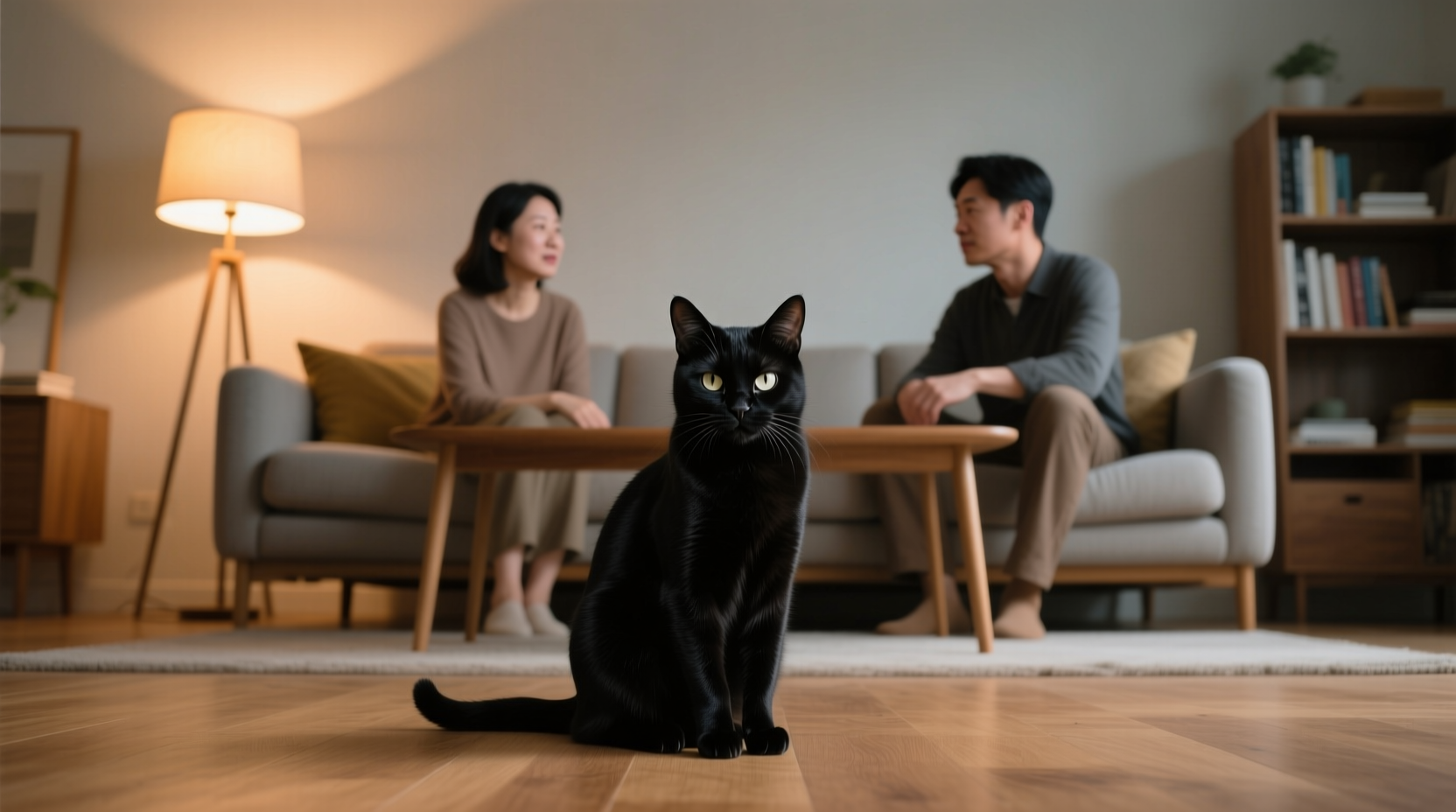
To understand why cats position themselves between two people, we must first recognize that cats are not solitary animals by default. While they may not form packs like dogs, domestic cats have developed nuanced ways of navigating multi-individual households. In the wild, cats live in loose colonies where hierarchy, scent sharing, and proximity signal alliance and safety. Your home becomes your cat’s colony, and every interaction carries subtle meaning.
Sitting between two humans often reflects a cat’s attempt to integrate into a perceived social unit. When partners interact—talking, laughing, touching—their energy shifts. To a cat, this can appear as either a bonding event worth joining or a potential disruption to their established routine. By inserting themselves into the space, the cat reasserts their presence and maintains control over their environment.
“Cats use physical placement as a form of communication. When they sit between two people, they're often saying, ‘I am part of this group, and I belong here.’” — Dr. Sarah Thompson, Feline Behavioral Scientist, Cornell Feline Health Center
This behavior also ties into a cat’s need for predictability. Sudden closeness between two humans—especially if accompanied by loud voices or movement—can feel destabilizing. The cat steps in not out of jealousy, but as a stabilizing force, anchoring themselves within the emotional center of activity.
Five Key Reasons Your Cat Claims Space Between You and Your Partner
1. Territorial Marking Through Proximity
Cats are territorial creatures. Even indoor-only cats develop strong attachments to specific areas, objects, and people. Sitting between you and your partner allows them to mark both individuals with their scent via facial pheromones released from glands around their cheeks and forehead. Each time they rub or press against you, they’re reinforcing ownership—not in a possessive human sense, but as a biological instinct to define safe zones.
Tip: If your cat frequently pushes between you during intimate moments, avoid pushing them away abruptly. Gently shift them aside while offering verbal reassurance to prevent anxiety.2. Seeking Attention or Preventing Displacement
Cats quickly learn which behaviors yield results. If sitting between you consistently earns pets, cuddles, or verbal affection, they’ll repeat it. More subtly, they may be preemptively guarding against being ignored. In households with multiple people, cats often fear exclusion. Placing themselves centrally ensures they remain visible and involved.
3. Comfort and Warmth
Let’s not overlook the obvious: body heat. Humans emit warmth, and close proximity doubles it. Cats naturally gravitate toward warm surfaces—laptops, sunlit floors, radiators. Two people sitting together create a thermal hotspot. Your cat isn’t always making a symbolic gesture; sometimes, they’re simply optimizing their comfort.
4. Bond Reinforcement and Social Mediation
Interestingly, some cats act as social mediators. Observations from veterinary ethologists suggest that certain cats will insert themselves between arguing or tense family members, possibly responding to elevated stress hormones like cortisol. Their calm presence may serve as a de-escalation tactic—a feline peacekeeper using stillness to diffuse tension.
5. Establishing Hierarchical Position
Despite their small size, cats perceive themselves as equals—or even superiors—in the household hierarchy. By positioning themselves between two larger beings, they assert dominance through spatial control. It’s a non-aggressive way of saying, “This space is mine unless I choose otherwise.” This is especially common in cats with confident personalities or those who were primary pets before a partner moved in.
Do’s and Don’ts: How to Respond to This Behavior
| Do’s | Don’ts |
|---|---|
| Allow your cat to settle naturally without forcing them off your lap | Yell at or push your cat aggressively when they interrupt |
| Offer gentle pets and soothing words to acknowledge their presence | Assume the behavior is always about jealousy—context matters |
| Create alternative cozy spots nearby (heated beds, window perches) | Isolate your cat after they sit between you—it may increase anxiety |
| Use positive reinforcement when they choose adjacent seating | Neglect their need for routine and environmental stability |
Real-Life Example: The Case of Luna and the Movie Nights
Luna, a three-year-old tuxedo cat from Portland, Oregon, became notorious in her household for disrupting weekly movie nights. Every Friday, her owners, Mark and Jess, would sit closely on the sofa to watch films. Within minutes, Luna would leap between them, often wedging herself so tightly that conversation became difficult.
At first, they assumed she wanted attention. They tried giving her treats beforehand, placing her on a nearby chair, even closing the door—but Luna persisted. After consulting a certified feline behaviorist, they learned that Luna associated movie night not with fun, but with loss of access. The dimmed lights, lowered voices, and lack of eye contact made her feel excluded.
The solution? They introduced a heated cat bed placed directly beside the couch, within arm’s reach. Before starting the film, they invited Luna onto the new bed with a soft blanket and a few gentle strokes. Over time, she began choosing the bed voluntarily. The key wasn’t removing her from the space, but redefining her role within it.
Today, Luna still joins movie night—but now she curls up beside them rather than between them. Her behavior shifted not because she was forced, but because her emotional needs were addressed with empathy and consistency.
Step-by-Step Guide to Managing Space-Claiming Behavior
- Observe the Context: Note when and how often your cat sits between you. Is it during quiet times, arguments, or displays of affection?
- Assess Body Language: Relaxed posture and purring suggest comfort. Tail flicking or flattened ears may indicate stress or agitation.
- Provide Alternatives: Place a comfortable cat bed, cushion, or heated mat nearby to give them a designated spot.
- Encourage Gradual Shifts: Reward your cat with treats or affection when they choose to sit beside you instead of between you.
- Maintain Routine Interactions: Ensure your cat receives consistent one-on-one time so they don’t feel compelled to compete for attention.
- Avoid Punishment: Never scold or remove your cat harshly. This increases insecurity and may worsen the behavior.
- Reinforce Positive Outcomes: When your cat respects shared space without intrusion, acknowledge it with calm praise or a gentle touch.
Frequently Asked Questions
Is my cat jealous when they sit between us?
Not necessarily in the human emotional sense. While cats experience attachment and can react to changes in attention, their behavior is more accurately described as resource guarding or environmental monitoring. They’re less likely acting out of envy and more out of a desire to maintain balance in their social ecosystem.
Should I let my cat always sit between us?
It depends on your comfort and your cat’s intent. If the behavior is peaceful and part of your bonding ritual, there’s no harm. However, if it disrupts your relationship or causes tension, gently guide your cat toward alternative spaces using positive reinforcement. Consistency and patience are key.
Could this behavior indicate anxiety?
Yes, in some cases. Cats with separation anxiety or insecure attachment styles may become hyper-vigilant about human interactions. Signs include following you room-to-room, excessive vocalization when apart, or destructive behavior when left alone. If space-claiming is accompanied by other anxious behaviors, consider consulting a veterinarian or animal behaviorist.
Conclusion: Respecting Boundaries—Human and Feline
Your cat sitting between you and your partner is more than a quirky habit—it’s a window into their inner world. Whether driven by instinct, emotion, or comfort, this behavior underscores the depth of the bond you share. Rather than seeing it as an interruption, view it as participation. Your cat isn’t trying to break your connection; they’re attempting to join it.
By understanding the motivations behind this action, you can respond with compassion instead of frustration. Create environments where everyone—two-legged and four-legged—feels secure. Honor your relationship with your partner while also affirming your cat’s place within the family unit. With mindful adjustments, mutual respect grows, and harmony becomes the norm.
💬 Have a story about your cat claiming space? Share your experience in the comments below—we’d love to hear how your feline navigates love, loyalty, and lap real estate.








