Kneading—sometimes called “making biscuits”—is one of the most endearing behaviors cats exhibit. When your adult cat, now seven years old, settles into your lap and rhythmically pushes its paws against a blanket, sweater, or your thigh, it���s easy to assume this is leftover kitten behavior that never quite faded. But the truth is more complex and deeply rooted in biology, emotion, and instinct. While kneading is commonly associated with nursing kittens, it persists into adulthood for multiple reasons, many of which reflect your cat’s psychological state, physical comfort, and evolutionary programming.
This behavior isn’t just a quirky habit—it’s a window into your cat’s inner world. Understanding why your mature cat continues to knead can help you strengthen your bond, assess their emotional well-being, and ensure their environment supports their natural instincts.
The Origins of Kneading: From Kittenhood to Adulthood
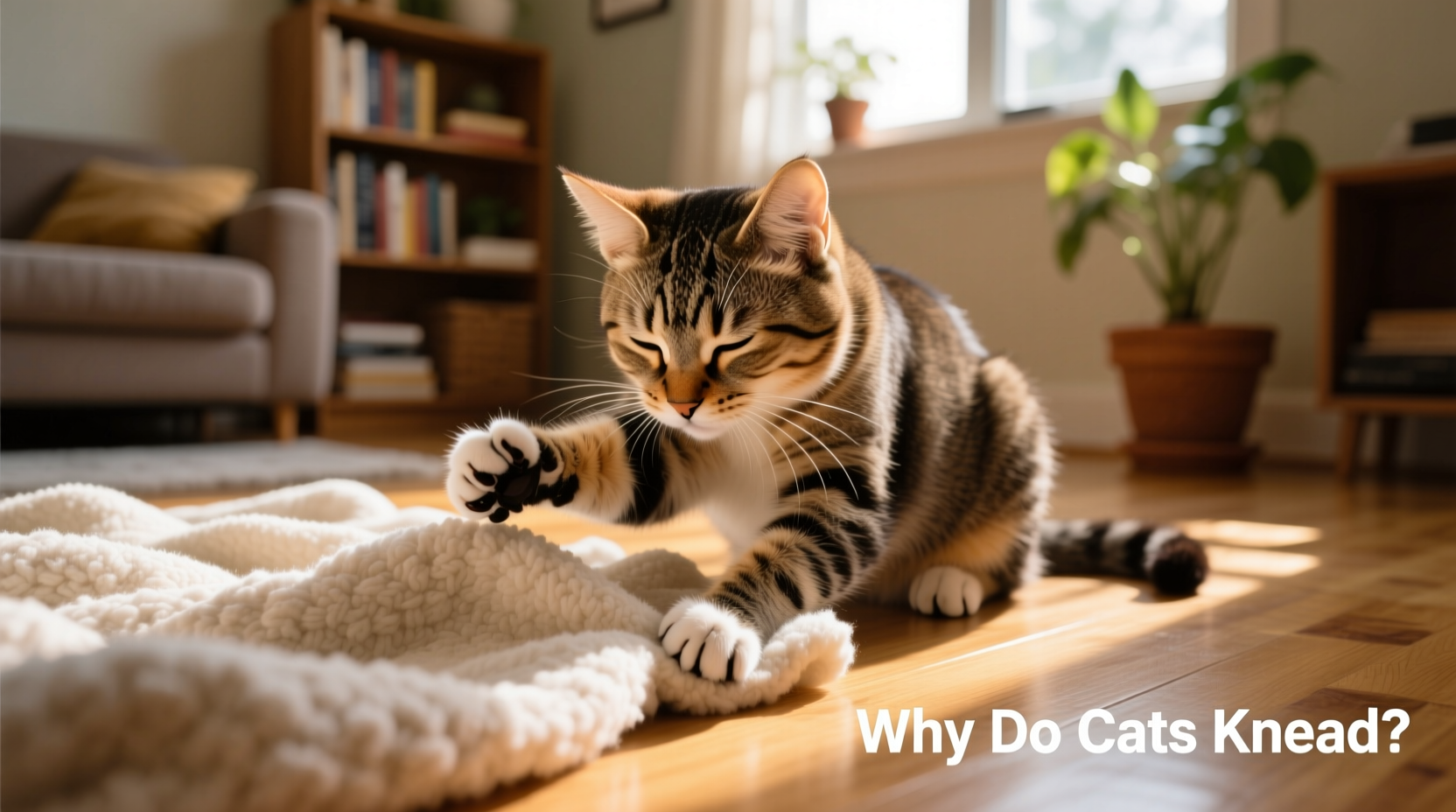
Kneading begins in the first days of life. Newborn kittens press their tiny paws into their mother’s mammary glands to stimulate milk flow. This rhythmic motion is both functional and comforting. The act releases oxytocin in the mother cat, promoting milk letdown, while the kitten associates the movement with warmth, nourishment, and safety.
As cats grow, the survival necessity fades, but the emotional imprint remains. The neural pathways formed during early feeding experiences become linked with feelings of security and contentment. Even at age seven, when your cat has long since weaned, kneading can trigger the same emotional response—a deep sense of calm reminiscent of kittenhood.
It’s important to note that not all cats knead, and the frequency varies widely. Some cats stop as they mature; others never start. Those who continue into adulthood often do so because the behavior serves additional purposes beyond nostalgia.
Scent Marking and Territory Claiming
Cats have scent glands located in the soft pads of their paws. When they knead, they release pheromones—chemical signals that communicate information to other animals. In the wild, scent marking helps cats establish territory and reduce social tension. Even domesticated cats retain this instinct.
When your seven-year-old cat kneads your blanket or your lap, they are subtly marking you and their surroundings as “safe” and “theirs.” This is a sign of trust. By depositing their scent on you, they’re reinforcing a social bond. It’s a feline equivalent of saying, “This space, and you, belong to me—and I feel secure here.”
Tip: If your cat frequently kneads specific spots—like your favorite chair or bed—this likely indicates those areas are emotionally significant to them. Avoid harsh cleaning products that remove their scent, as this may cause stress.Comfort, Nesting, and Self-Soothing
Another key reason adult cats knead is to create a comfortable resting place. In the wild, cats would paw at leaves, grass, or dirt to form a soft depression for sleeping—a nesting behavior. Though modern cats sleep on plush beds and heated cushions, the instinct to “fluff” their sleeping area remains.
Kneading before lying down may be your cat’s way of checking texture, adjusting position, or simply performing a ritual that precedes relaxation. For some cats, especially those who experienced early instability or rehoming, this repetitive motion acts as a self-soothing mechanism—similar to how humans might rock, twirl hair, or tap fingers when anxious.
At seven years old, your cat is considered middle-aged. Changes in routine, new pets, or even subtle household shifts can affect their sense of security. Kneading may increase during periods of stress or transition, serving as a coping strategy.
Physical Health and Muscle Memory
The act of kneading engages muscles in the shoulders, forelegs, and paws. Regular movement like this can promote circulation and joint flexibility, especially in older cats. While not a substitute for exercise, kneading may contribute to maintaining mobility.
Additionally, the behavior is reinforced by positive outcomes. If your cat kneads and then settles into a nap—or receives petting and affection—the brain links the action with reward. Over time, this creates a feedback loop: knead → comfort → relaxation → repetition.
“Kneading in adult cats is a multi-functional behavior. It’s not just about memory—it’s about communication, comfort, and control over their environment.” — Dr. Lena Reyes, Feline Behavioral Scientist, Cornell Feline Health Center
Why Does My Cat Still Do This at Age 7?
You might wonder why this behavior persists in a fully grown cat. After all, seven years is well past kittenhood. But in cat years, this is still prime adulthood—equivalent to a human in their mid-30s. Cats at this stage are often at their most confident and settled, especially if they’ve lived in a stable home.
Persistence of kneading into adulthood is actually a positive indicator. It suggests your cat feels safe enough to express instinctive behaviors without fear of threat or competition. In multi-cat households, dominant or anxious cats may suppress such actions, reserving them only for private moments. A cat that kneads openly in your presence is demonstrating emotional security.
Moreover, cats who were weaned early or bottle-fed may knead more intensely or frequently. Without the prolonged nursing experience, the tactile sensation of pressing against a soft surface may remain particularly satisfying. These cats often seek out fuzzy blankets, wool sweaters, or even human skin to recreate the lost sensory input.
Gender and Hormonal Influences
Interestingly, unspayed female cats may knead more frequently when in heat. The motion mimics nesting behavior associated with preparing for pregnancy. Even after spaying, some residual hormonal patterns or muscle memory may sustain the habit.
Male cats also knead, though typically less associated with reproductive cycles. Their motivation tends to center on comfort and scent marking. However, neutered males may show increased kneading post-surgery due to reduced aggression and heightened relaxation.
Tip: If your cat suddenly stops kneading after doing so for years, monitor for signs of pain or arthritis. Reluctance to use their paws could indicate joint discomfort.Do’s and Don’ts of Handling Kneading Behavior
While kneading is generally harmless, it can sometimes lead to scratched skin or damaged fabrics—especially if claws are involved. How you respond matters. Punishing or discouraging the behavior may damage trust, as it’s intrinsically tied to comfort.
| Do’s | Don’ts |
|---|---|
| Provide soft, washable blankets for kneading | Yank your cat away mid-knead |
| Trim claws regularly to minimize scratches | Scold or punish your cat for kneading |
| Use claw caps if scratching becomes painful | Withhold affection when they knead |
| Redirect to a designated “kneading zone” (e.g., a fleece mat) | Assume the behavior is attention-seeking |
| Observe patterns—note when kneading increases | Ignore sudden changes in frequency or intensity |
Mini Case Study: Bella, the Senior Kneader
Bella, a seven-year-old domestic shorthair, was adopted at six months old. Her owner, Maria, noticed she kneaded constantly—on laps, couches, even her pillow at night. At first, Maria worried it was obsessive. But after consulting a veterinary behaviorist, she learned Bella’s behavior was normal and even healthy.
What stood out was that Bella only kneaded when Maria was home. During work trips, the behavior stopped entirely. The vet explained that Bella associated kneading with Maria’s presence and used it as an emotional anchor. Maria began placing a worn T-shirt of hers on Bella’s bed when traveling. Within days, Bella resumed kneading the shirt, suggesting it carried her scent and provided comfort.
This case illustrates how kneading is not just reflexive—it’s context-dependent and emotionally intelligent. Bella wasn’t just making biscuits; she was managing separation anxiety through a familiar, soothing ritual.
When Kneading Might Signal a Problem
In most cases, kneading is benign. However, sudden changes warrant attention. Excessive kneading—especially if accompanied by vocalization, drooling, or disorientation—can occasionally indicate medical issues such as:
- Feline Cognitive Dysfunction (FCD): Similar to dementia in humans, older cats may repeat behaviors compulsively.
- Pain or discomfort: Some cats knead areas near injuries, possibly due to nerve stimulation.
- Seizure activity: Rarely, rhythmic movements may be part of a partial seizure.
If your cat begins kneading obsessively—hours per day, to the point of fur loss or bleeding paws—consult your veterinarian. Rule out neurological or dermatological causes before assuming it’s purely behavioral.
Checklist: Is Your Cat’s Kneading Healthy?
- Does your cat knead only in safe, relaxed environments?
- Is the behavior voluntary and intermittent, not constant? <3>Are claws trimmed or protected to prevent injury?
- Has there been no recent change in frequency or intensity?
- Does your cat stop when distracted or called?
- Is your cat otherwise active, eating well, and using the litter box normally?
If you answered “yes” to all, your cat’s kneading is likely a normal, healthy expression of instinct and emotion.
FAQ
Is kneading a sign of dominance?
No. Kneading is not aggressive or hierarchical. It’s a self-directed behavior focused on comfort and scent marking, not social control. Cats don’t knead to assert dominance over people or other pets.
Can I train my cat to stop kneading?
Technically, yes—but it’s not recommended. Since kneading is emotionally meaningful, suppressing it may cause stress. Instead, manage the environment: provide soft surfaces, trim claws, and use barriers like a thick blanket between you and your cat if needed.
Why does my cat drool when kneading?
Drooling during kneading is common and usually a sign of extreme relaxation. It harks back to kittenhood, when nursing triggered salivation. As long as your cat is healthy and hydrated, this is perfectly normal.
Conclusion: Embrace the Biscuits
Your seven-year-old cat kneading blankets isn’t stuck in kitten mode—they’re expressing a rich blend of instinct, memory, and emotional intelligence. Far from being immature, this behavior reflects a deep-seated sense of safety and belonging. It’s a testament to the trust they’ve placed in you and their environment.
Rather than viewing kneading as a nuisance, consider it a compliment. You’ve created a space where your cat feels secure enough to revert to one of their earliest, most vulnerable behaviors. Protect that trust by respecting their rituals, monitoring for changes, and providing outlets for natural expression.
💬 Does your cat still make biscuits? Share your story or tips in the comments—your experience could help another cat owner understand their furry companion better.








