
Cats are creatures of instinct, and one of the most common yet misunderstood behaviors they display is kneading—sometimes gently, sometimes with surprising force. When your cat climbs onto your lap and begins rhythmically pushing their paws into your thigh, claws extended and muscles tensed, it’s easy to wonder: Is this a sign of affection? Could it be discomfort? Or is something deeper going on beneath that rhythmic push-and-pull?
Kneading is natural feline behavior, but when it turns aggressive—marked by deep pressure, extended claws, biting fabric, or even vocalizations—it can signal more than just contentment. Understanding the nuances behind aggressive kneading helps decode your cat’s emotional world, from security and comfort to anxiety and territorial communication.
The Origins of Kneading: A Behavior Rooted in Kittenhood
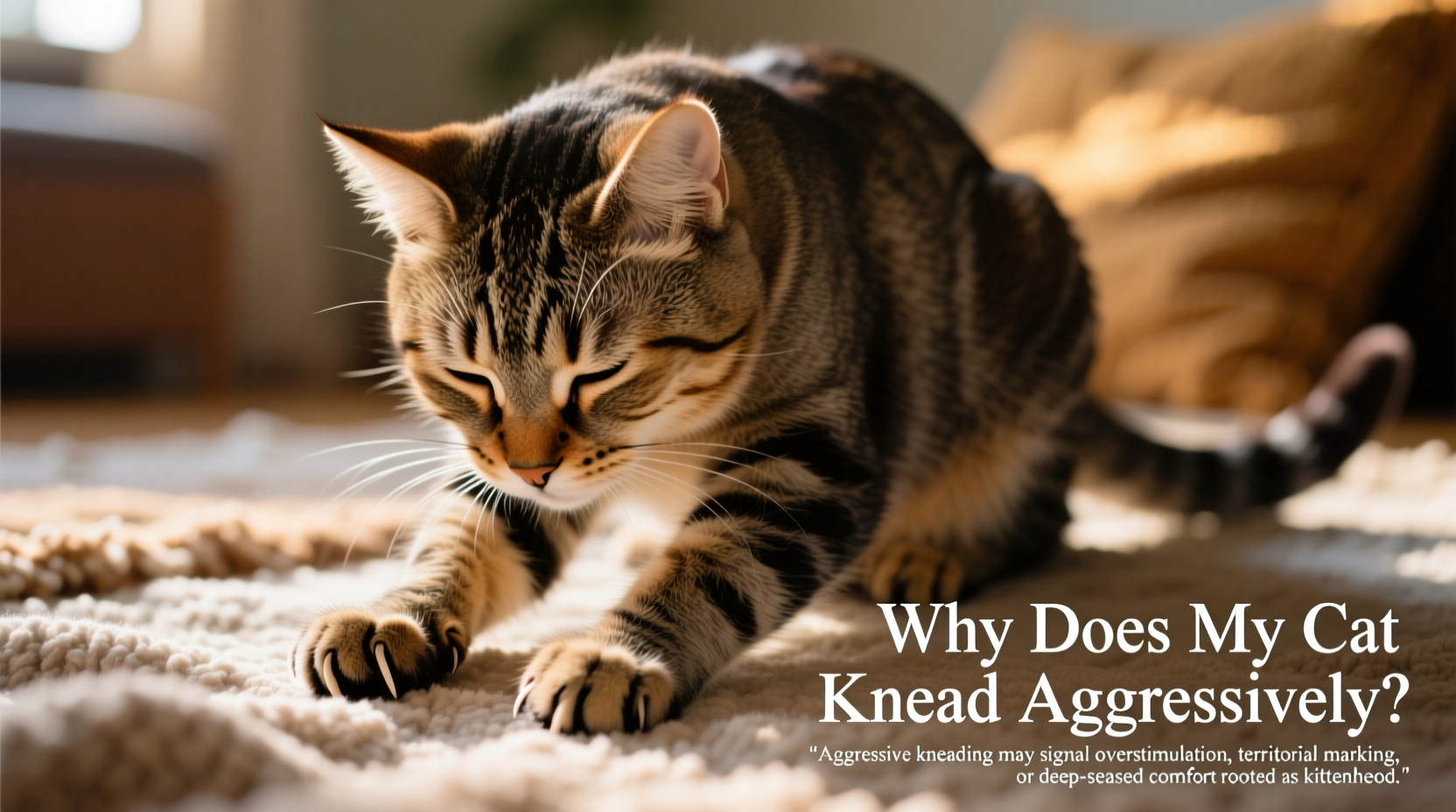
Kneading begins in kittenhood. Newborn kittens knead their mother’s mammary glands to stimulate milk flow. This action is both functional and soothing, linking tactile stimulation with nourishment and warmth. As cats grow, the behavior often persists into adulthood, not because they still need milk, but because the motion triggers deep-seated feelings of safety and satisfaction.
In adult cats, kneading is typically associated with positive emotions. It’s commonly observed when a cat settles into a cozy spot, curls up beside a trusted human, or prepares to nap. The rhythmic motion releases endorphins, creating a self-soothing effect similar to how humans might rock or fidget when relaxed.
However, not all kneading is gentle. Some cats press hard, extend sharp claws, or alternate between purring and low growling. This variation isn’t random—it reflects subtle shifts in emotional context and physiological arousal.
“Kneading is a window into a cat’s inner state. While often a sign of comfort, the intensity and accompanying behaviors can reveal underlying tension or overstimulation.” — Dr. Lena Torres, Feline Behavioral Specialist
Aggressive Kneading vs. Normal Kneading: Spotting the Difference
It’s important to distinguish between typical kneading and aggressive forms. While both involve the same basic paw motion, the context, force, and accompanying signals differ significantly.
| Feature | Normal Kneading | Aggressive Kneading |
|---|---|---|
| Pressure | Light to moderate, rhythmic | Hard, forceful, sometimes erratic |
| Claw Use | Often retracted or lightly extended | Frequently fully extended, may puncture fabric |
| Vocalization | Purring, soft chirps | Hissing, growling, or silence despite tension |
| Body Language | Relaxed ears, slow blinking, loose posture | Tense muscles, flattened ears, dilated pupils |
| Duration | Short bursts, usually under 2 minutes | Prolonged sessions, sometimes over 5 minutes |
Aggressive kneading doesn’t always mean aggression in the emotional sense. Instead, it often reflects heightened arousal—an overflow of emotion that could stem from excitement, anxiety, or even mild frustration. The key is observing the full behavioral picture, not just the paw motion.
Tip: Pay attention to your cat’s tail. A gently twitching tail during kneading may indicate focus, but a lashing tail suggests overstimulation and possible discomfort.What Aggressive Kneading Reveals About Your Cat’s Mood
When your cat kneads aggressively, they’re communicating on multiple levels. Here are the most common emotional drivers behind intense kneading behavior:
1. Overstimulation or Sensory Overload
Cats have sensitive nerve endings in their paws and lower back. Petting, especially in these areas, can build up sensory input until it becomes overwhelming. What starts as a calm interaction may escalate into forceful kneading as your cat tries to process the stimulation. In these cases, aggressive kneading acts as a release valve.
2. Anxiety or Insecurity
Some cats knead intensely when stressed—such as during thunderstorms, visits to the vet, or after moving homes. The behavior serves as a self-soothing mechanism, much like a child sucking their thumb. If your cat seeks out a specific blanket, piece of furniture, or your lap only during tense moments and kneads forcefully, anxiety may be the root cause.
3. Territorial Marking
Cats have scent glands in their paw pads. Kneading deposits pheromones onto surfaces, marking them as safe and familiar. When done aggressively, this can be an attempt to reclaim space that feels threatened—especially in multi-cat households or after introducing new people or pets.
4. Unmet Needs or Frustration
A cat that hasn’t had enough playtime, mental stimulation, or access to high perches may redirect that pent-up energy into repetitive behaviors like aggressive kneading. It’s not necessarily about you—it’s about excess arousal seeking an outlet.
5. Affection Mixed with Excitement
Not all aggressive kneading is negative. Some cats become so emotionally overwhelmed by affection that they express it physically. They may purr loudly while digging in deeply—a sign of extreme contentment rather than distress. These cats often seek out laps specifically for this ritual and appear otherwise relaxed.
Real-Life Example: Luna’s Evening Ritual
Sarah adopted Luna, a three-year-old domestic shorthair, six months ago. Initially, Luna would gently knead her blanket before napping. But recently, Sarah noticed Luna climbing onto her chest each evening, claws out, pressing so hard it left red marks.
Concerned, Sarah consulted a feline behaviorist. After reviewing video footage and daily routines, the expert noted that Luna’s aggressive kneading occurred only after Sarah returned from work—never during weekend interactions. Further observation revealed that Luna was also over-grooming her legs at night.
The conclusion: Luna wasn’t being hostile. She was experiencing separation-related anxiety. Her intense kneading was a self-soothing response to the relief of seeing Sarah again. The solution? Introducing structured play sessions before bedtime and using a pheromone diffuser reduced both the kneading intensity and grooming compulsions within three weeks.
This case illustrates how aggressive kneading can be a symptom, not the core issue—and how context shapes interpretation.
How to Respond: A Step-by-Step Guide
If your cat kneads aggressively, your response should depend on the underlying cause. Follow this timeline to assess and address the behavior effectively:
- Observe Without Interfering (Days 1–3): Note when the kneading occurs, how long it lasts, and what your cat does immediately before and after. Look for patterns related to time of day, presence of other animals, or recent changes in environment.
- Check for Physical Triggers (Day 4): Rule out pain or skin conditions. Schedule a vet visit if your cat shows signs of discomfort, such as limping, excessive licking, or reluctance to be touched.
- Assess Emotional State (Days 5–7): Evaluate stressors—new pets, loud noises, lack of vertical space, or inconsistent routines. Use a journal to track potential correlations.
- Modify the Environment (Ongoing): Provide scratching posts, elevated resting spots, and interactive toys. Consider using synthetic feline facial pheromones (like Feliway) to promote calmness.
- Redirect the Behavior (As Needed): If kneading becomes painful, place a thick blanket or pillow between your lap and the cat. Gently disengage if body language indicates overstimulation.
- Reinforce Calm Alternatives (Weeks 2+): Reward quiet, gentle interactions with treats or affection. Avoid reinforcing aggressive kneading by giving attention only when the behavior is soft and controlled.
Do’s and Don’ts of Handling Aggressive Kneading
| Do’s | Don’ts |
|---|---|
| Provide soft surfaces for kneading (blankets, mats) | Yell at or punish your cat for kneading |
| Use nail caps to minimize scratching damage | Remove the cat abruptly mid-kneading |
| Encourage play to burn excess energy | Assume all aggressive kneading is negative |
| Monitor body language for signs of stress | Allow unsupervised access to delicate fabrics |
| Consult a vet or behaviorist if behavior changes suddenly | Ignore sudden onset of intense behavior without investigation |
FAQ: Common Questions About Aggressive Kneading
Is aggressive kneading a sign of dominance?
No. Cats don’t knead to assert dominance. While the behavior can be linked to territorial marking via scent glands, it’s more about creating a sense of safety than establishing hierarchy. Dominant behaviors in cats include blocking access to resources, staring, or displacing others from preferred spots—not kneading.
Why does my cat bite the blanket while kneading?
Biting during kneading mimics the nursing behavior of kittens, who would suckle while kneading their mother. Adult cats may suck on wool, fabric, or even plastic as a comforting habit. If the behavior becomes obsessive or involves ingestion, consult a veterinarian, as it could indicate pica or nutritional deficiency.
Should I stop my cat from kneading aggressively?
Not necessarily. If the behavior isn’t causing harm and your cat appears relaxed, it’s best to let it continue. However, if it leads to injury, fabric destruction, or seems tied to anxiety, intervention through environmental enrichment or behavioral training is recommended. Never suppress natural behaviors without offering appropriate alternatives.
Final Checklist: Assessing Your Cat’s Kneading Behavior
- ✅ Observe the context: When and where does aggressive kneading occur?
- ✅ Check body language: Are ears forward or flat? Is the tail calm or flicking?
- ✅ Rule out medical issues: Has your cat had a recent checkup?
- ✅ Evaluate routine changes: Have there been moves, new pets, or schedule shifts?
- ✅ Provide outlets: Does your cat have enough play, climbing, and scratching opportunities?
- ✅ Protect yourself: Use barriers like blankets if kneading causes pain.
- ✅ Know when to seek help: Sudden changes in behavior warrant professional consultation.
Conclusion: Listening Beyond the Paws
Aggressive kneading is more than a quirky habit—it’s a form of nonverbal communication. By paying close attention to the intensity, timing, and accompanying cues, you gain valuable insight into your cat’s emotional landscape. Whether it’s a cry for comfort, a burst of joy, or a coping mechanism for stress, every push of the paw tells a story.
Instead of discouraging the behavior outright, approach it with curiosity and care. Adjust the environment, meet unmet needs, and strengthen your bond through understanding. Your cat isn’t trying to hurt you—they’re reaching out in the only way they know how.
💬 Have a cat that kneads aggressively? Share your experience or questions below. Let’s build a community of informed, empathetic cat guardians who listen—not just to meows, but to the quiet rhythms of paws on fabric.








