Rabbits are quiet animals by nature, but when they suddenly start thumping their hind feet on the ground, the sound can be startling—especially if you don’t know what it means. This rhythmic pounding is not a sign of aggression or playfulness; it’s a form of communication deeply rooted in their instincts. For rabbit owners, understanding the reasons behind foot thumping is essential to building trust, ensuring well-being, and responding appropriately to your pet’s emotional state.
In the wild, rabbits rely heavily on non-verbal cues to survive. With limited vocal range, they’ve evolved physical behaviors like foot thumping to convey danger, discomfort, or alarm. When domesticated rabbits exhibit this behavior, they’re often trying to tell us something important. Ignoring or misinterpreting these signals can lead to stress, fear, or even long-term behavioral issues.
This article explores the biological and psychological reasons behind rabbit foot thumping, deciphers what different types of thumps may mean, and provides practical guidance for owners on how to respond effectively.
The Evolutionary Purpose of Foot Thumping
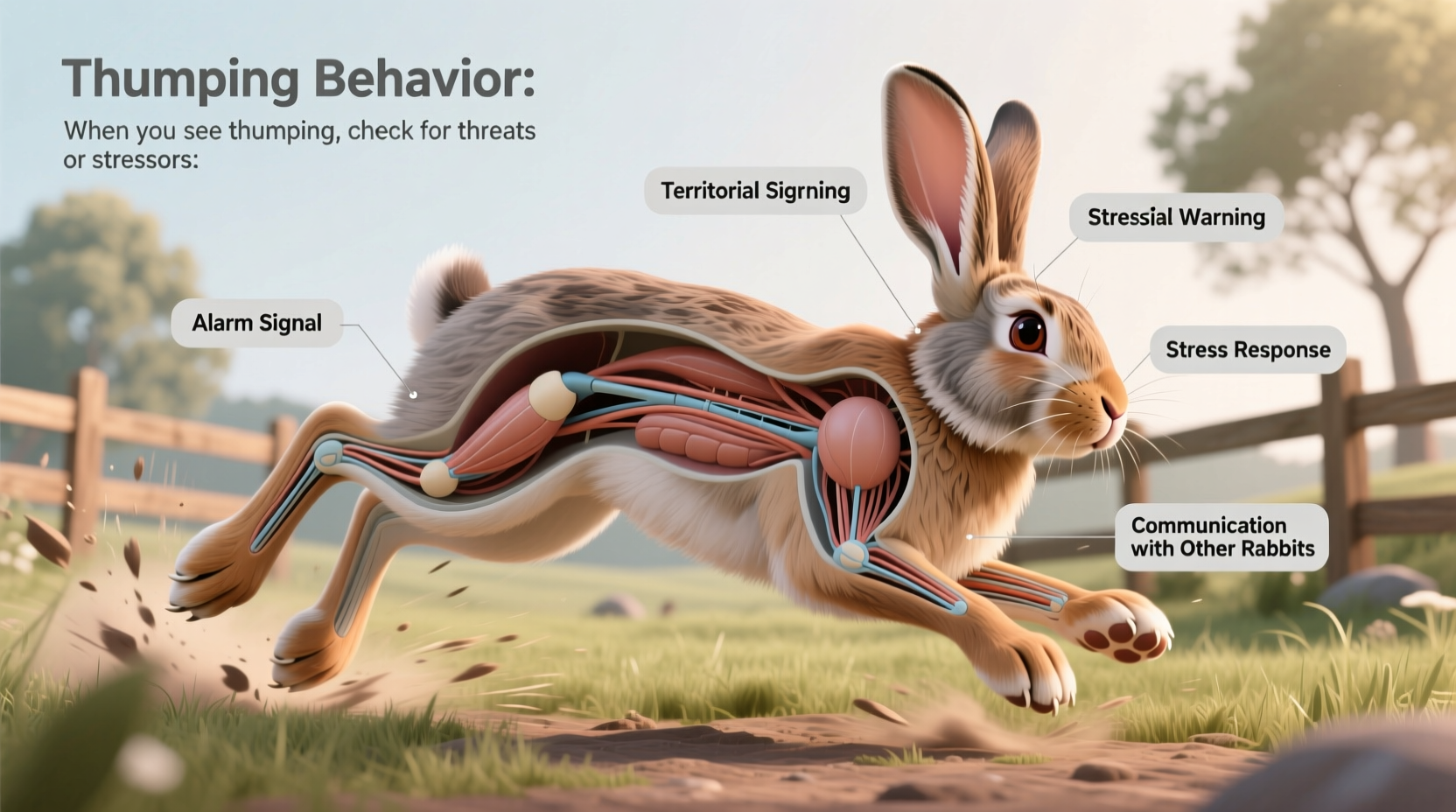
In the wild, rabbits live in complex social groups called colonies. Their survival depends on early detection of predators and rapid communication within the group. Unlike many mammals that use vocalizations to warn others, rabbits have developed a unique method: foot thumping.
A single, forceful stomp with the powerful hind legs creates a low-frequency vibration that travels through the ground. Other rabbits nearby can feel these vibrations through their sensitive footpads, allowing them to react quickly—even in complete darkness or dense brush. This silent alarm system gives the entire warren time to freeze, flee, or take cover before a threat arrives.
“Foot thumping in rabbits is one of the most sophisticated non-vocal warning systems in the animal kingdom. It’s not just noise—it’s seismic signaling.” — Dr. Lila Hartman, Ethologist and Small Mammal Behavior Specialist
Domestic rabbits retain this instinct despite generations of selective breeding. Even in safe, indoor environments, they may thump when they perceive danger—real or imagined. The key for owners is recognizing that the behavior isn’t “misbehavior,” but a legitimate expression of their natural instincts.
Common Reasons Why Rabbits Thump Their Feet
While alarm is the primary reason for foot thumping, it’s not the only one. Rabbits may thump for various emotional or environmental triggers. Understanding the context helps determine the appropriate response.
- Fear or perceived threat: Loud noises, sudden movements, unfamiliar people, or pets (like dogs or cats) can trigger a thump as a warning signal.
- Pain or discomfort: A rabbit in pain—perhaps due to an injury, digestive issue, or arthritis—may thump to express distress.
- Anger or territoriality: Some rabbits thump when another animal or person invades their space, especially around food or nesting areas.
- Disapproval or annoyance: A rabbit might thump if disturbed during rest or if asked to do something they dislike (e.g., being picked up).
- Communication with other rabbits: In multi-rabbit households, thumping can serve as a social signal to assert dominance or express irritation.
Interpreting the Type and Frequency of Thumps
Not all thumps are the same. The intensity, duration, and repetition offer clues about your rabbit’s emotional state.
| Type of Thump | What It Likely Means | Owner Response |
|---|---|---|
| Single, sharp thump | Initial alert to a sudden stimulus (e.g., loud noise) | Check surroundings; reassure calmly if needed |
| Repeated thumping | Sustained fear or frustration (e.g., ongoing disturbance) | Remove stressor or give space |
| Soft, intermittent taps | Mild annoyance or attention-seeking | Observe behavior; avoid reinforcing with attention if manipulative |
| Continuous thumping while crouched | High fear or pain; possible health concern | Minimize stimuli; consult veterinarian |
For example, a rabbit that thumps once when the vacuum turns on is reacting to a sudden noise. But if the thumping continues after the noise stops, the rabbit may still feel unsafe or be expressing anxiety about the situation. Similarly, a rabbit that thumps every time you approach its cage might be communicating discomfort with handling or lack of trust.
Mini Case Study: Bella the Nervous Rabbit
Bella, a 2-year-old Dutch rabbit, lived in a busy household with two young children and a dog. Her owner noticed she frequently thumped when the kids ran past her enclosure. Initially dismissed as “just being dramatic,” the thumping increased over time, accompanied by hiding and reduced appetite.
After consulting a rabbit-savvy vet and a behaviorist, the family learned that Bella felt constantly threatened. The solution wasn’t to ignore the thumping, but to modify her environment. They moved her enclosure to a quieter room, established a routine where children approached slowly and quietly, and introduced positive reinforcement with treats during calm interactions.
Within three weeks, Bella’s thumping decreased significantly. She began exploring more and even initiated contact with family members. This case illustrates that persistent thumping is often a cry for environmental adjustment—not defiance.
How Owners Should Respond to Foot Thumping
Your reaction to foot thumping shapes your rabbit’s sense of safety and trust. Reacting incorrectly—such as yelling, ignoring, or forcing interaction—can worsen anxiety and damage your bond.
Step-by-Step Guide: Responding to a Thumping Rabbit
- Pause and observe: Stop moving and watch your rabbit’s body language. Are ears back? Is it crouched or frozen?
- Scan the environment: Identify potential stressors—loud sounds, new objects, other pets, or sudden changes.
- Reduce stimulation: Turn off loud devices, remove other animals, or dim lights if needed.
- Speak softly: Use a calm, low voice to reassure without approaching.
- Give space: Allow the rabbit to retreat to a secure area like a hide box or corner.
- Wait it out: Don’t rush recovery. Let the rabbit self-soothe at its own pace.
- Reassess later: Once calm, consider long-term changes to prevent recurrence.
When Thumping Signals a Health Problem
While most thumping is behavioral, it can sometimes indicate underlying medical issues. Painful conditions such as gastrointestinal stasis, dental disease, or spinal problems may cause a rabbit to thump due to discomfort.
Look for additional signs that suggest illness:
- Limited mobility or reluctance to move
- Teeth grinding (a sign of pain)
- Changes in appetite or droppings
- Hunched posture or shallow breathing
- Aggression when touched
If your rabbit thumps frequently without an obvious environmental trigger—or if the behavior is new and persistent—a veterinary evaluation is crucial. A qualified exotic vet can perform a physical exam and recommend diagnostics like X-rays or blood work.
“Persistent or unexplained thumping should never be written off as ‘just how the rabbit is.’ It could be the only way they’re telling you they’re in pain.” — Dr. Rajiv Mehta, Exotic Animal Veterinarian
Preventing Unnecessary Thumping: A Proactive Checklist
Prevention is always better than reaction. By creating a stable, predictable environment, you can reduce the frequency of alarm thumping and build a calmer, more confident rabbit.
Prevention Checklist for Rabbit Owners:- ✅ Provide a quiet, low-traffic area for housing
- ✅ Offer multiple hiding spots (hide boxes, tunnels)
- ✅ Maintain a consistent daily routine (feeding, cleaning)
- ✅ Minimize loud noises (TVs, vacuums, shouting)
- ✅ Introduce new people or pets gradually
- ✅ Handle your rabbit gently and only when necessary
- ✅ Schedule annual wellness exams with a rabbit-experienced vet
- ✅ Monitor for changes in behavior or appetite
Enrichment also plays a role. Boredom or frustration can manifest as thumping. Rotate toys, provide digging boxes, and allow supervised free-roam time to keep your rabbit mentally stimulated and emotionally balanced.
Frequently Asked Questions
Is foot thumping normal in rabbits?
Yes, foot thumping is a completely normal and natural behavior. All rabbits have the instinct to thump, though individual personalities and environments influence how often it occurs.
Do rabbits thump when they’re happy?
No, rabbits do not thump out of joy. Thumping is a stress-related behavior. If your rabbit seems excited, it may be binkying (jumping and twisting in the air), which is the true sign of happiness.
Can I train my rabbit to stop thumping?
You cannot—and should not—train a rabbit to stop thumping altogether. It’s a vital form of expression. However, you can reduce unnecessary thumping by addressing fears, providing security, and minimizing stressors in their environment.
Conclusion: Listening Beyond the Sound
Foot thumping is more than a quirky habit—it’s a window into your rabbit’s inner world. Each thump carries meaning, whether it’s a warning, a plea for space, or a sign of unseen pain. As owners, our responsibility is not to silence the sound, but to listen to what it tells us.
By respecting your rabbit’s instincts, observing their behavior closely, and responding with empathy, you create a relationship built on trust rather than fear. A rabbit that feels safe is less likely to thump out of alarm and more likely to show affection through gentle nudges, grooming, or relaxed flops.
Start today by auditing your rabbit’s environment. Is it quiet enough? Are hiding places accessible? Are interactions positive and stress-free? Small changes can make a profound difference in your rabbit’s emotional well-being.
💬 Have a rabbit that thumps often? Share your experience or ask questions in the comments—let’s learn together how to be better listeners for our quiet companions.








