From calling a dog “Princess” to attributing complex emotions to a cat’s stare, humans routinely assign human traits, feelings, and names to their pets. This behavior—known as anthropomorphism—is so common it often goes unquestioned. Yet beneath this seemingly innocent tendency lies a rich psychological landscape involving empathy, attachment, cognition, and identity. The act of naming further deepens this bond, transforming an animal into a member of the family. Understanding why we anthropomorphize and how naming plays into this process reveals not just how we relate to animals, but also how we understand ourselves.
The Roots of Anthropomorphism: A Psychological Perspective
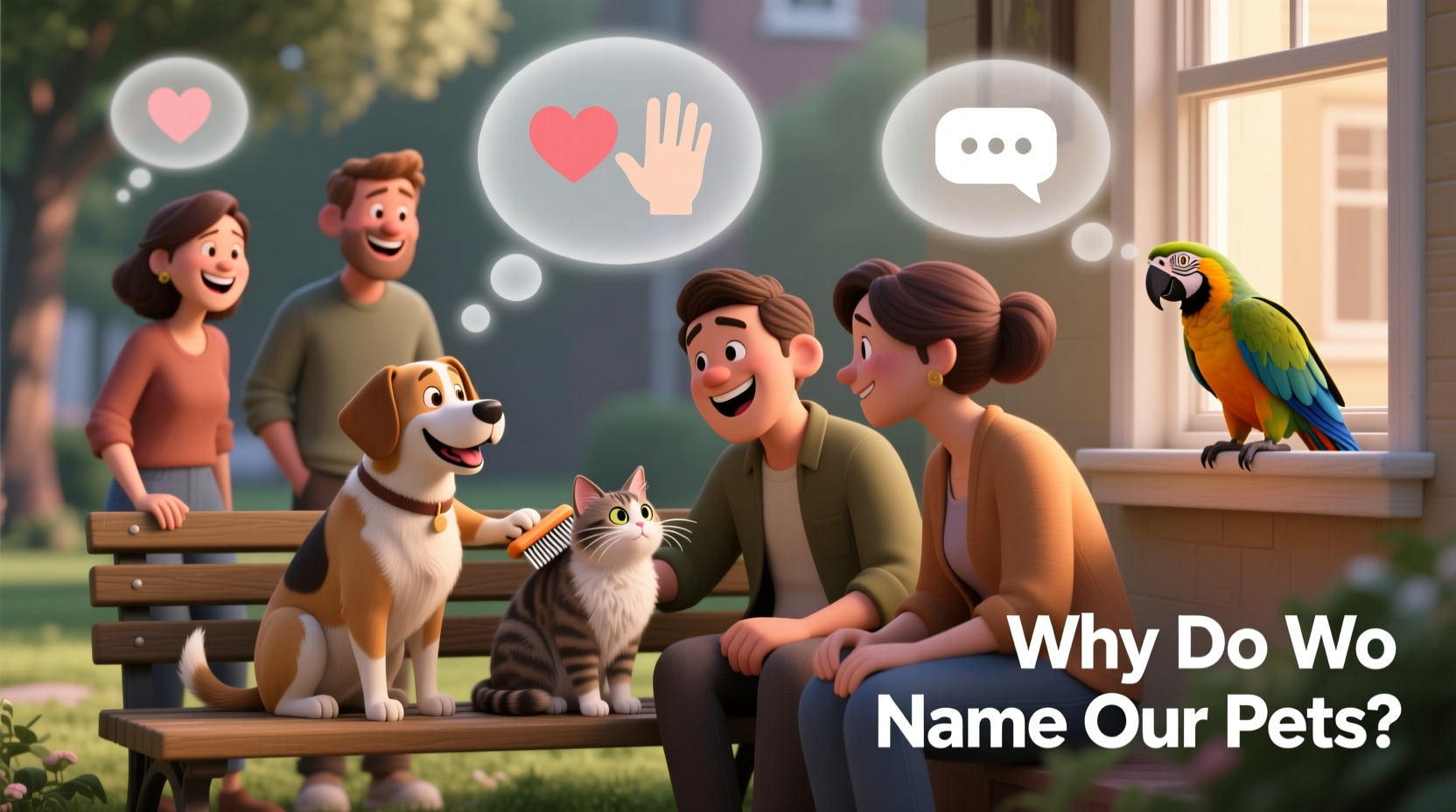
Anthropomorphism—the attribution of human characteristics to non-human entities—is not a modern quirk. It dates back to ancient mythology, where gods took animal forms and animals spoke with human wisdom. Today, it persists in everyday life, especially in how people interact with pets. But why do we instinctively project thoughts, intentions, and emotions onto creatures that don’t share our language or cognitive framework?
One explanation comes from evolutionary psychology. Humans are inherently social beings, finely tuned to detect agency and intention in others. This ability helped our ancestors survive by predicting the behavior of predators, prey, and fellow humans. Over time, this sensitivity evolved into a default setting: when faced with ambiguous behavior—like a dog tilting its head—we interpret it through a human lens. We assume curiosity, concern, or confusion because those are the emotions we would feel in a similar context.
“We’re wired to see minds where there may not be one. It’s a byproduct of our hyper-social brains.” — Dr. Laurie Santos, Cognitive Scientist, Yale University
This mental shortcut, known as theory of mind, allows us to navigate complex social environments. When applied to pets, it fosters deeper emotional connections. Saying “He’s sad because I left” rather than “He’s exhibiting separation distress” makes the experience more relatable and manageable for the owner.
The Role of Attachment in Pet Humanization
Attachment theory, originally developed to explain infant-caregiver bonds, also applies to human-animal relationships. Many pet owners form secure attachments to their animals, experiencing comfort, loyalty, and emotional regulation through their presence. In fact, studies show that interacting with pets can increase oxytocin levels—the so-called \"love hormone\"—similar to what occurs during human bonding.
When pets become emotionally significant, owners naturally begin to treat them as companions rather than property. This shift encourages anthropomorphism. Naming plays a pivotal role here. A label like “Mr. Whiskers” or “Luna” signals personhood. It replaces generic terms like “the cat” with an individual identity, reinforcing the idea that the pet has personality, preferences, and inner life.
This is particularly evident in households where pets have birthdays, wear clothing, or appear in family photos. These rituals mirror those reserved for human children, reflecting a psychological reclassification: the pet is no longer just an animal, but a quasi-family member.
Tip: Notice when you use human emotional language for your pet (“She’s jealous,” “He feels guilty”). This is a natural sign of bonding—but also an opportunity to reflect on your own emotional needs.Why Naming Matters: Identity, Emotion, and Social Signaling
Naming is one of the first steps in personalizing a relationship. When someone chooses a name like “Buster,” “Simba,” or “Professor Fluffington III,” they aren’t just labeling—they’re assigning identity, history, and narrative. Names carry cultural meaning, humor, aspiration, and affection.
Consider the difference between naming a dog “Dog” versus “Max.” The former emphasizes function; the latter implies familiarity and intimacy. Names become shorthand for stories: “We named her Daisy after my grandmother’s favorite flower,” or “He looked so dignified, we called him Sir Pounce-a-Lot.”
Moreover, pet names serve as social signals. A whimsical name might reveal the owner’s sense of humor or values. A regal name could indicate a desire for sophistication. In online communities, unique pet names help build identity and connection among owners who share similar lifestyles or interests.
Psychological Functions of Pet Names
- Emotional anchoring: Names help owners process grief and joy, making loss more poignant and companionship more meaningful.
- Behavioral reinforcement: Calling a dog “Good Boy” repeatedly reinforces positive training through association.
- Identity projection: Owners often choose names that reflect their own tastes, culture, or aspirations.
- Social bonding: Sharing a pet’s name invites conversation and connection with others.
A Closer Look: How Culture and Personality Shape Naming Choices
Pet naming isn’t random—it reflects broader cultural trends and individual psychology. In Western societies, pets are increasingly given human-like names (e.g., “Oliver,” “Chloe”), mirroring the rise of childlessness, delayed parenthood, and companion-focused lifestyles. According to the American Pet Products Association, over 95% of pet owners refer to themselves as “pet parents,” a term that underscores the familial role pets now occupy.
Personality traits also influence naming. Research published in *Human-Animal Interaction Bulletin* found that owners high in openness and agreeableness tend to choose creative or emotionally expressive names, while those high in conscientiousness prefer traditional or practical ones. Extroverts are more likely to pick bold, attention-grabbing names, whereas introverts may opt for subtle or literary references.
Cultural context matters too. In Japan, pets often receive English or Western-sounding names as a sign of cosmopolitanism. In Latin America, religious or poetic names are common. Meanwhile, internet culture has popularized meme-inspired names like “Shrek” or “Khaleesi,” blending pop culture with personal expression.
“Naming is an act of love and ownership. It’s how we bring animals into our symbolic world.” — Dr. Elizabeth Marshall Thomas, Author of *The Hidden Life of Dogs*
Mini Case Study: From Stray to Family Member
Take the story of Maria, a 34-year-old graphic designer in Portland, Oregon. She adopted a scruffy terrier mix from a shelter. Initially unnamed and skittish, the dog responded poorly to commands and seemed withdrawn. After weeks of bonding, Maria named him “Arlo,” inspired by a folk song she associated with warmth and resilience.
Almost immediately, her perception shifted. She began interpreting his behaviors differently—not as defiance, but as cautious exploration. She started saying things like, “Arlo’s nervous about the vacuum,” instead of “He won’t listen.” Over time, Arlo became more responsive, not because his intelligence changed, but because Maria’s approach did. Her anthropomorphic interpretations led to greater patience, consistency, and emotional attunement.
In therapy, Maria later realized that naming Arlo had helped her process her own anxiety after a difficult breakup. Caring for him gave her a sense of purpose, and naming him allowed her to project hope and healing onto their shared future.
Do’s and Don’ts of Healthy Anthropomorphism
While anthropomorphism can strengthen bonds, it can also lead to misunderstandings if taken too far. Pets have species-specific needs that shouldn’t be overridden by human assumptions. The following table outlines key guidelines:
| Do’s | Don’ts |
|---|---|
| Do interpret behavior empathetically, considering emotional states like fear or excitement. | Don’t assume pets experience complex human emotions like guilt, shame, or revenge. |
| Do use names that reflect your pet’s personality and strengthen your bond. | Don’t impose human expectations (e.g., expecting a cat to “share” like a sibling). |
| Do observe body language and learn species-appropriate communication. | Don’t punish behaviors based on assumed intent (e.g., scolding a dog for “being bad” when it’s anxious). |
| Do celebrate your pet’s milestones with names and rituals if it brings joy. | Don’t neglect veterinary or behavioral science in favor of emotional interpretation. |
Step-by-Step Guide to Mindful Pet Naming and Bonding
Choosing a name and relating to your pet doesn’t have to be arbitrary. A thoughtful approach can enhance mutual understanding and well-being. Follow these steps:
- Observe First: Spend a few days watching your pet’s behavior before deciding on a name. Note quirks, energy levels, and reactions to stimuli.
- Reflect on Meaning: Consider what qualities stand out. Is your cat calm and wise? Playful and mischievous? Let the name reflect observed traits, not just aesthetics.
- Test the Name: Say it aloud in different contexts—calling, praising, correcting. Does it feel natural? Does your pet respond?
- Align with Care: Use the name consistently in training and routines to reinforce recognition and trust.
- Reassess Over Time: If the name no longer fits or causes confusion, it’s okay to gently transition to a new one using repetition and positive reinforcement.
Frequently Asked Questions
Is anthropomorphism harmful to pets?
Not inherently. Moderate anthropomorphism fosters empathy and strengthens bonds. However, it becomes problematic when it leads to misinterpreting needs—such as assuming a cat wants cuddles when it’s actually stressed. Balancing emotional connection with scientific understanding ensures better care.
Can pets recognize their names?
Yes, most dogs and many cats learn to associate their names with attention, rewards, or commands. Studies show dogs can recognize their names even amid background noise, especially when paired with positive experiences. The key is consistent use and reinforcement.
What if I regret my pet’s name?
Names can be changed. Start by using the new name during feeding, play, or treats. Pair it with enthusiasm and rewards. Most pets adapt within a few weeks. Just avoid switching names frequently, which can cause confusion.
Tips for Thoughtful Pet Parenting
Tip: Use anthropomorphism as a bridge to empathy, not a replacement for observation. Ask, “How might a dog/cat actually experience this?” alongside “How would I feel?” Tip: Choose a name that’s easy to pronounce and distinct from common commands (e.g., avoid “Kit” if you use “sit”). Tip: Involve household members in the naming process to foster shared ownership and consistency.Conclusion: Embracing the Bond, Mindfully
Anthropomorphizing pets and giving them meaningful names are deeply human acts—rooted in our need for connection, narrative, and love. They reflect our capacity for compassion and imagination. When guided by awareness and respect for the animal’s true nature, these tendencies enrich both human and pet lives.
The next time you catch yourself saying, “He’s plotting something,” or “She misses me,” pause and smile. These moments aren’t silly—they’re testaments to the profound relationships we build across species. But also take a breath, consult the science, and ensure that love is matched with understanding.
💬 What’s the story behind your pet’s name? Share your experience and join the conversation about the heartwarming, complex world of human-animal bonds.








