It starts with a simple swipe of balm on chapped lips. Within days, you’re reaching for it every hour—morning, noon, and night. Your lips feel tight, flaky, or cracked the moment they go bare. You apply more. They feel better—briefly. But soon, the cycle repeats. You're not alone. Millions use lip balm daily, convinced it’s healing their lips, only to find themselves trapped in a loop of dependency and worsening dryness. The irony? The very product meant to soothe may be making things worse.
This phenomenon—commonly called \"lip balm addiction\"—isn't a true psychological addiction, but rather a physiological dependency created by repeated application of certain ingredients. Over time, your lips become less capable of maintaining moisture on their own, relying instead on external products. Understanding why this happens—and how to break free—is essential for long-term lip health.
The Science Behind Lip Dryness and Balm Use
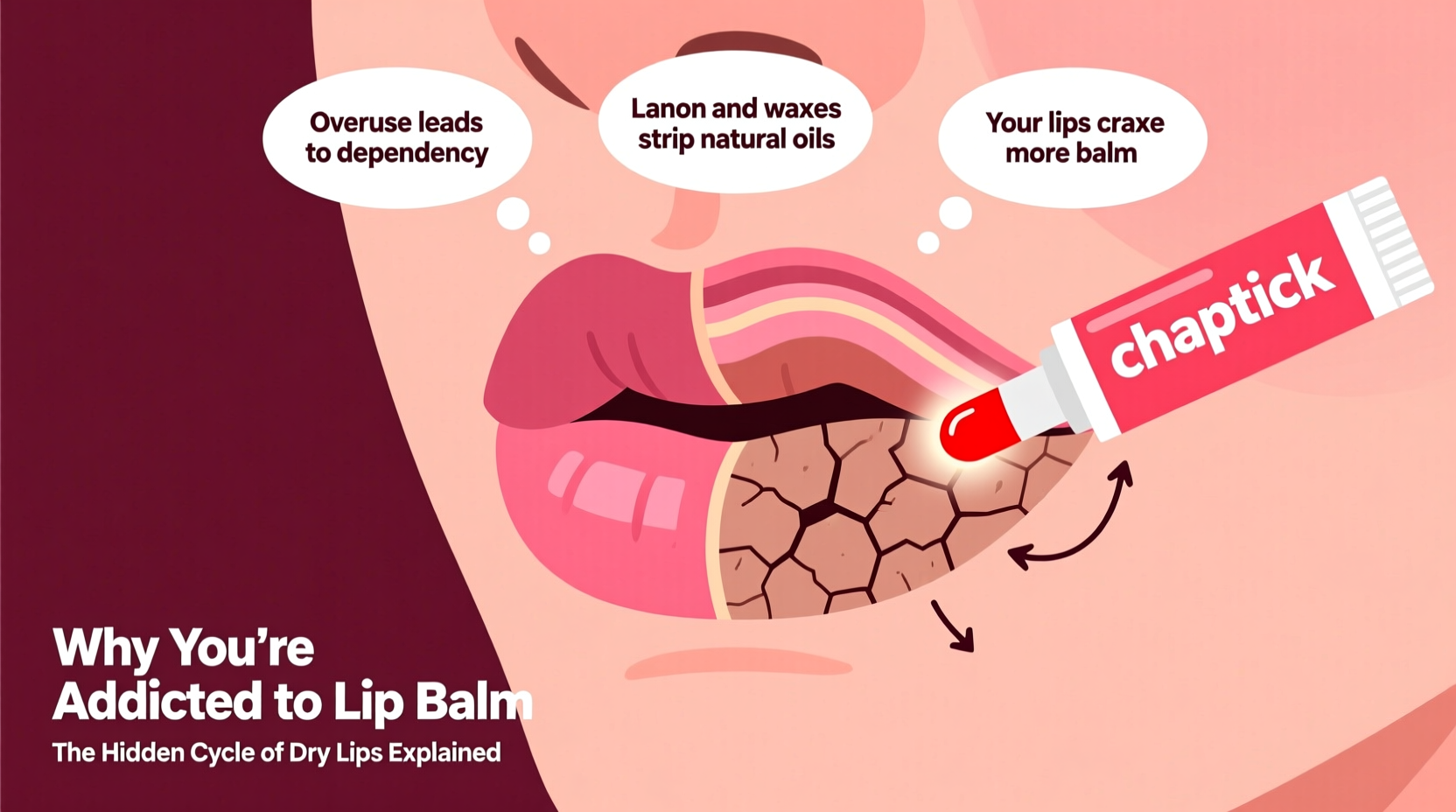
Lips are uniquely vulnerable to dryness. Unlike the rest of your skin, they lack oil (sebaceous) glands and a thick protective barrier. This makes them prone to water loss, especially in dry climates, windy conditions, or during winter months. When lips lose moisture, they crack, peel, and feel uncomfortable. Enter lip balm: a quick fix that seals in moisture and provides temporary relief.
But not all balms work the same way. Many contain occlusive agents like petroleum jelly, beeswax, or shea butter that form a physical barrier on the surface. While effective short-term, some formulations also include ingredients that can irritate or dry out lips over time—such as menthol, camphor, phenol, or alcohol. These create a cooling or tingling sensation that feels therapeutic, but actually stimulate mild inflammation and increase blood flow, leading to further irritation once the effect wears off.
Repeated use of such products trains your lips to depend on external moisture. Without the balm, they feel drier than before—not because they’ve worsened inherently, but because the natural hydration process has been disrupted. Dermatologists refer to this as “rebound dryness.”
“Lip balms with irritants can create a vicious cycle. Patients come in thinking they need more balm, when what they really need is to stop using the wrong kind.” — Dr. Nina Rodriguez, Board-Certified Dermatologist
How Lip Balm Dependency Develops
Dependency doesn’t happen overnight. It develops gradually through consistent, frequent application—often dozens of times per day. Here's how the cycle unfolds:
- Initial Dryness: Lips become dry due to environmental exposure, dehydration, or habitual licking.
- First Application: A lip balm is applied, providing immediate comfort and smoothing the surface.
- Temporary Relief: The occlusive layer prevents moisture loss, giving a sense of healing.
- Rebound Effect: As the balm wears off—especially if it contains irritants—lips feel drier than before, prompting reapplication.
- Increased Frequency: Users begin applying balm more often, reinforcing reliance.
- Reduced Natural Function: Over time, the lips’ ability to self-moisturize diminishes due to constant interference.
This pattern mirrors behavioral conditioning. Each application reinforces the belief that relief comes only from the balm, even when the root cause remains unaddressed. In some cases, people report anxiety when separated from their product—a sign of psychological reinforcement tied to physical discomfort.
Tip: If your lip balm tingles, burns, or smells strong, it likely contains irritants like menthol or phenol. Switch to a fragrance-free, hypoallergenic formula.Common Ingredients That Worsen Dryness
Not all lip balms are created equal. Some ingredients provide lasting protection, while others sabotage long-term lip health. Below is a breakdown of common components found in popular brands:
| Ingredient | Purpose | Effect on Lips |
|---|---|---|
| Petroleum Jelly (e.g., Vaseline) | Occlusive moisturizer | Safe and effective; locks in moisture without irritation |
| Beeswax | Thickening agent, barrier | Generally safe; helps protect but may clog if overused |
| Menthol / Camphor | Cooling sensation | Irritating; increases blood flow and leads to rebound dryness |
| Phenol | Exfoliant, antiseptic | Dries and peels lips; highly problematic with frequent use |
| Alcohol (e.g., ethanol, isopropyl) | Solvent, preservative | Evaporates quickly, strips moisture, causes cracking |
| Fragrance / Flavorings | Enhance sensory appeal | Common allergens; trigger inflammation and sensitivity |
| Shea Butter | Emollient | Nourishing and soothing; excellent for repair |
The takeaway? Avoid anything that tingle, sting, or smells medicinal. Opt for minimalist formulas with few, recognizable ingredients.
Mini Case Study: Breaking the Cycle
Sarah, a 29-year-old teacher from Denver, used Carmex multiple times an hour during winter. Her lips were constantly peeling, and she couldn’t go five minutes without reapplying. After consulting a dermatologist, she learned her favorite balm contained both menthol and camphor—two known irritants.
She switched to a plain petroleum jelly and stopped all flavored or medicated balms. For the first three days, her lips felt intensely dry and raw—a withdrawal phase. By day five, flaking decreased. Within two weeks, her lips regained their natural softness. Today, she uses balm only at night and after washing her face, applying it just once or twice daily.
Her experience highlights a key truth: healing requires short-term discomfort for long-term gain.
How to Break Free From Lip Balm Addiction
Quitting isn’t about willpower—it’s about strategy. Cold turkey works for some, but most benefit from a gradual transition. Follow these steps to restore your lips’ natural resilience:
- Identify the Culprits: Check your current balm’s ingredient list. Eliminate any containing menthol, camphor, phenol, alcohol, or artificial fragrances.
- Switch to a Healing Formula: Use a bland, non-irritating balm like pure petroleum jelly, lanolin, or unscented shea butter. CeraVe Healing Ointment or Aquaphor are excellent options.
- Reduce Frequency Gradually: Cut down applications by one per day every few days. Replace the habit with sipping water or chewing sugar-free gum if oral fixation is involved.
- Hydrate Internally: Drink plenty of water. Dehydration manifests first on the lips.
- Avoid Licking Your Lips: Saliva evaporates quickly and contains enzymes that irritate delicate lip tissue. Awareness is the first step to breaking this habit.
- Use Humidifiers: Especially in heated indoor spaces during winter, low humidity accelerates moisture loss.
- Protect Against Elements: Wear a scarf in cold wind or use a mineral-based SPF lip balm during sun exposure.
Checklist: Steps to Regain Healthy Lips
- ✅ Read labels: Avoid menthol, camphor, phenol, alcohol, and fragrance
- ✅ Switch to a gentle, occlusive balm (e.g., petroleum jelly)
- ✅ Limit applications to 2–3 times per day max
- ✅ Stop licking your lips—even subconsciously
- ✅ Increase water intake to at least 2 liters daily
- ✅ Use a humidifier in dry environments
- ✅ Protect lips from sun with zinc oxide-based SPF balm
- ✅ Allow 7–14 days for adjustment; expect initial dryness
Frequently Asked Questions
Is lip balm addiction real?
While not a clinical addiction like substance dependence, the term describes a real physiological dependency. Frequent use of irritating balms disrupts the lips’ natural moisture balance, creating a cycle where users feel compelled to reapply due to worsening dryness between uses.
Can I heal my lips without using any balm?
In mild cases, yes—especially if you address root causes like dehydration or lip-licking. However, during the healing phase, a non-irritating occlusive agent (like petroleum jelly) can support recovery by preventing further moisture loss. The goal is to wean off frequent use, not eliminate all protection.
How long does it take to break the cycle?
Most people notice improvement within 5–7 days. Full recovery—where lips feel naturally hydrated without constant balm—typically takes 2 to 3 weeks. Consistency is key; reverting to old habits can restart the cycle.
Prevention: Building Sustainable Lip Health
Once healed, maintaining healthy lips requires mindfulness. Think of your lips like any other part of your skin—they thrive on balance, not over-treatment. Instead of reacting to dryness with more product, focus on prevention.
Stay hydrated throughout the day. Monitor environmental triggers: indoor heating, air conditioning, and UV exposure all contribute to dryness. If you wear lipstick regularly, ensure it’s not matte or long-wear formulas that strip moisture. And never exfoliate aggressively—gentle sloughing once a week is sufficient.
Choose lip care products as carefully as you would facial moisturizers. Look for dermatologist-tested, fragrance-free, and hypoallergenic labels. Simplicity wins: fewer ingredients mean lower risk of irritation.
“Healthy lips don’t need constant balm. They need proper hydration, protection, and a chance to function naturally.” — Dr. Alan Kim, Cosmetic Dermatologist
Conclusion: Take Control of Your Lip Health
Dry lips don’t have to be a lifelong struggle. The solution often lies not in applying more balm, but in understanding why you need it so often in the first place. By identifying harmful ingredients, breaking the reapplication cycle, and supporting your lips’ natural function, you can achieve lasting comfort without dependency.
Start today: examine your current lip product, switch to a clean alternative, and commit to a structured reduction plan. It may feel uncomfortable at first, but your lips will adapt. Within weeks, you’ll find yourself reaching for the tube less often—because you won’t need to.
💬 Have you struggled with lip balm dependency? Share your story or tips in the comments—your experience could help someone break free too.








