
Hamsters are among the most popular small pets, prized for their compact size, low maintenance, and endearing behaviors. One of the most common — and sometimes puzzling — habits they exhibit is running on their exercise wheel late into the night. If you’ve ever been kept awake by the rhythmic spinning of a hamster wheel in the dark, you’re not alone. But what drives this behavior? Is it natural? And more importantly, could it be a sign of stress or distress?
Understanding the biology, instincts, and emotional needs of hamsters is key to determining whether their nightly marathons are healthy or harmful. This article explores the science behind nocturnal wheel-running, evaluates when it might signal stress, and offers practical guidance for ensuring your hamster thrives.
The Nocturnal Nature of Hamsters
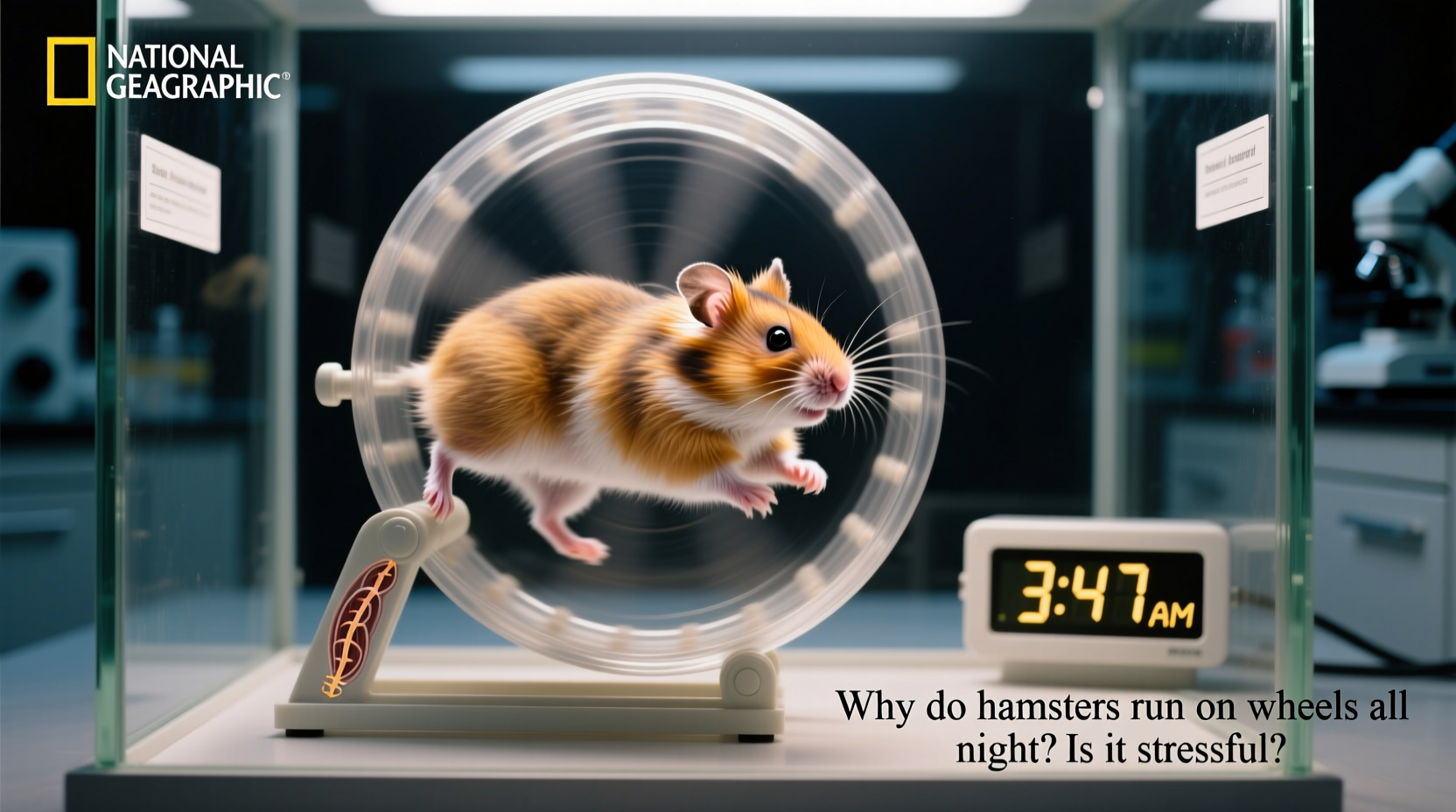
Hamsters are naturally nocturnal animals. In the wild, they spend daylight hours hidden in burrows to avoid predators and emerge at dusk to forage, explore, and stay active through the night. This instinct doesn’t disappear in captivity. Even well-socialized domestic hamsters retain their crepuscular and nocturnal tendencies, meaning they're most active during twilight and nighttime hours.
This biological rhythm explains why your hamster begins sprinting on its wheel shortly after sunset and may continue for several hours. Their internal clock, regulated by circadian rhythms, triggers increased alertness and energy once the environment grows quiet and dim. Wheel-running is not random — it’s an expression of deeply ingrained survival behavior.
In the wild, Syrian and dwarf hamsters can travel up to 5–9 miles per night in search of food and territory. A wheel provides a controlled outlet for that same drive to move, explore, and expend energy. Without such an outlet, hamsters may develop behavioral issues like bar-chewing, digging obsessively, or becoming lethargic.
Tip: Place your hamster’s cage in a quieter part of the home if nighttime noise is disruptive — but never disable the wheel as a solution.Is Wheel-Running Natural or a Sign of Stress?
The line between natural behavior and stress-induced activity can be subtle. Occasional intense running is normal; however, excessive, non-stop wheel use — especially if accompanied by other symptoms — may indicate underlying stress.
Stress in hamsters often stems from environmental factors: small enclosures, lack of enrichment, inappropriate bedding, loud noises, or inconsistent routines. When a hamster feels confined or mentally under-stimulated, repetitive behaviors like continuous wheel-running can become compulsive. This phenomenon, known as stereotypy, is seen in captive animals deprived of natural outlets.
A stressed hamster might run frantically without breaks, appear agitated, lose weight despite eating normally, or show signs of fur loss or self-injury. On the other hand, a healthy hamster will alternate between running, eating, grooming, and resting throughout the night.
“Wheel-running is a species-typical behavior, but when it becomes rigid and unvarying, it can reflect poor welfare.” — Dr. Laura Bunderson, Small Mammal Behavior Specialist
Key Differences: Healthy vs. Compulsive Wheel Use
| Aspect | Healthy Wheel Use | Compulsive/Problematic Use |
|---|---|---|
| Duration | Intermittent bursts over several hours | Nearly continuous, with minimal breaks |
| Behavior Pattern | Mixed with feeding, grooming, exploring | Single-minded focus on wheel only |
| Physical Condition | Good weight, clean coat, alert eyes | Weight loss, worn paws, dull fur |
| Environment | Spacious cage with hiding spots and toys | Small enclosure, no enrichment |
| Sleep Patterns | Rests during day and between runs | Rarely stops moving, even in light |
Creating a Balanced Environment to Prevent Stress
Preventing stress-related wheel obsession starts with proper habitat design. A hamster’s cage should allow for both physical activity and mental engagement. Simply providing a wheel isn’t enough — it must be part of a broader enrichment strategy.
The minimum recommended floor space for a single Syrian hamster is 450 square inches (about 2,900 cm²), with depth being more important than height since hamsters dig horizontally. Dwarf hamsters need slightly less but still benefit from spacious setups. Multi-level cages often sacrifice usable floor area for vertical features that hamsters rarely use.
- Exercise wheel size: Minimum 8 inches (20 cm) diameter for Syrians, 6.5 inches (17 cm) for dwarfs. Smaller wheels force unnatural postures and can lead to spinal issues.
- Wheel type: Solid-surface wheels are safer than wire or mesh models, which can injure feet or tails.
- Enrichment: Include tunnels, chew toys, nesting materials, and rotating puzzles to stimulate natural foraging behaviors.
- Bedding: Use deep, absorbent, dust-free bedding (like paper-based or aspen shavings) to encourage digging.
Mini Case Study: Luna the Overactive Dwarf Hamster
Luna, a Roborovski dwarf hamster, was adopted by a college student living in a studio apartment. Her cage was a standard 20-gallon aquarium with a small wire wheel, two plastic tubes, and cedar bedding. Within weeks, her owner noticed she ran almost nonstop from midnight until dawn, pausing only briefly to eat.
Concerned about the noise and Luna’s apparent restlessness, the owner consulted a veterinarian specializing in exotic pets. After evaluation, the vet identified multiple issues: the cage was too small, the bedding was irritating her respiratory system, and the wheel had an open rung design that posed a foot-trapping risk.
The owner upgraded to a larger bin cage with 600 square inches of floor space, replaced the bedding with recycled paper fiber, installed a silent solid-surface wheel, and added cardboard mazes and buried seeds. Within ten days, Luna’s wheel use decreased by nearly 40%, and she began spending more time exploring and building nests. Her coat improved, and her activity became more balanced.
This case illustrates how environmental adjustments can shift behavior from compulsive to natural without eliminating essential activities like running.
Step-by-Step Guide to Assessing and Improving Your Hamster’s Routine
If you’re unsure whether your hamster’s wheel use is healthy, follow this step-by-step process to evaluate and enhance their well-being.
- Observe overnight behavior: Use a notebook or voice memo to log activity patterns over three nights. Note duration of wheel use, breaks, and other behaviors.
- Measure cage size: Calculate floor area. If below 450 sq in (Syrian) or 300 sq in (dwarf), consider upgrading.
- Inspect the wheel: Ensure it’s solid, appropriately sized, and spins smoothly without wobbling or squeaking.
- Add enrichment: Introduce new items weekly — hide treats, rotate toys, add tunnels made from toilet paper rolls.
- Adjust lighting: Maintain a consistent light-dark cycle (12 hours each). Avoid sudden bright lights at night, which can disorient them.
- Monitor physical health: Check for weight changes, eye discharge, wet tail, or limping. Schedule a vet check if abnormalities appear.
- Reduce external stressors: Keep the cage away from TVs, loud appliances, or foot traffic. Other pets should not be able to stare or paw at the enclosure.
“Enrichment doesn’t have to be expensive. A cardboard box with holes cut out can provide hours of exploration.” — Dr. Rebecca Tran, Exotic Pet Veterinarian
FAQ: Common Questions About Hamster Wheel Use
Can I turn off the wheel at night to let my hamster sleep?
No. Disabling the wheel disrupts natural behavior and can increase stress. Instead, address any environmental deficiencies that may be driving overuse. If noise is an issue, place the cage in a separate room or use a quieter wheel with ball bearings.
How many miles does a hamster run per night?
Studies estimate that some hamsters can cover up to 5–9 miles (8–14 km) in a single night. While exact distances vary, the key is that this reflects their innate need for movement, not necessarily excess energy or anxiety.
Should I be worried if my hamster runs every night?
Not if the behavior is intermittent, the animal appears healthy, and the environment is enriched. Continuous, frantic running without breaks — especially if paired with weight loss or aggression — warrants a veterinary consultation.
Checklist: Signs of a Happy, Healthy Hamster
- ✅ Alternates between wheel use, eating, grooming, and resting
- ✅ Maintains steady weight and eats regularly
- ✅ Has a clean, dry coat and bright eyes
- ✅ Builds nests and uses hiding places
- ✅ Shows curiosity when new objects are introduced
- ✅ Wheel is silent, smooth, and appropriately sized
- ✅ Cage meets minimum space requirements with varied enrichment
Conclusion: Supporting Natural Behavior Without Encouraging Stress
Hamsters run on wheels all night because it aligns with their evolutionary instincts. In the wild, they cover vast distances; in captivity, the wheel fulfills that need in a confined space. When provided with a properly sized wheel and a stimulating environment, this behavior is not only normal but beneficial.
The real concern arises when wheel use becomes obsessive — a symptom of inadequate space, boredom, or stress. By observing your hamster’s patterns, improving their habitat, and offering diverse enrichment, you can support a balanced lifestyle that honors their nature while protecting their well-being.
💬 Have you noticed changes in your hamster’s wheel habits after making environmental upgrades? Share your experience in the comments — your insights could help fellow pet owners create better homes for their tiny runners.








