
If you’ve ever watched a pet gecko closely, you might have noticed something odd: it frequently licks its eyes. At first glance, this behavior seems bizarre—after all, most animals don’t groom their eyeballs with their tongues. But for geckos, this isn’t just a quirk; it’s a vital survival mechanism. Behind this peculiar habit lie fascinating adaptations that reveal how these small reptiles thrive in diverse environments. From eye-licking to tail-wiggling and vocalizing like birds, geckos exhibit some of the most unusual behaviors in the reptile world. Understanding these actions not only deepens our appreciation for these creatures but also helps owners provide better care.
The Science Behind Eye-Licking: More Than Just Grooming
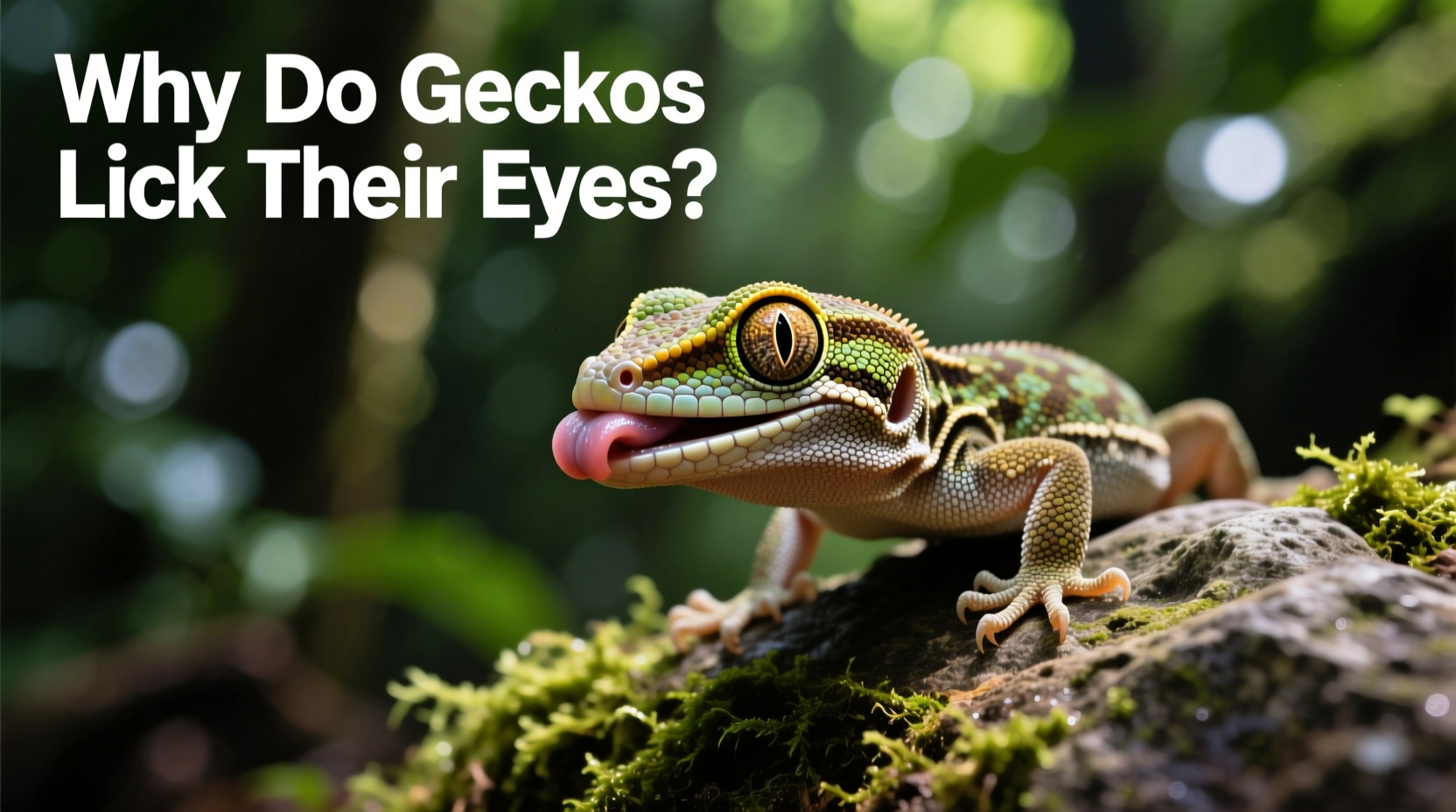
Geckos lack eyelids. Unlike humans or dogs, they can’t blink to moisten or clean their eyes. Instead, they rely on their long, sticky tongues to perform what is essentially a built-in windshield wiper system. When a gecko licks its eye, it’s simultaneously cleaning dust, debris, and dried mucus while spreading moisture across the surface. This keeps the cornea hydrated and prevents infections or scratches.
The transparent scale covering a gecko’s eye—called the spectacle or brille—is fused shut, forming a protective barrier. While this shield guards against injury and dehydration, it still requires regular maintenance. Without blinking, the only way to remove foreign particles is through physical wiping. The tongue, equipped with tiny papillae and a slightly sticky texture, is perfectly adapted for this task.
“Geckos’ eye-licking behavior is a brilliant evolutionary workaround for the absence of movable eyelids. It’s not just grooming—it’s essential ocular hygiene.” — Dr. Lena Torres, Herpetologist at the National Reptile Research InstituteTip: If your pet gecko stops licking its eyes or shows cloudy vision, consult a veterinarian. It could indicate dehydration, infection, or shedding complications.
Other Bizarre Gecko Behaviors—and What They Mean
Eye-licking is just the beginning. Geckos display a range of strange yet functional behaviors that often puzzle new owners. These aren’t random acts—they’re deeply rooted in biology, communication, and environmental adaptation.
Vocalizations: Chirps, Clicks, and Barks
Most reptiles are silent, but many gecko species are surprisingly vocal. Tokay geckos emit loud, bird-like calls to mark territory or attract mates. Leopard geckos may chirp when stressed or during courtship. These sounds serve as social signals in the wild, where visual cues can be limited at night.
Tail Waving and Dropping
A waving tail isn’t playful—it’s a warning. When threatened, some geckos raise and wiggle their tails to distract predators. If grabbed, they can voluntarily shed their tail (autotomy), which continues to move, giving the gecko time to escape. The tail regrows over weeks, though usually with a different texture or color.
Nocturnal Pacing and Glass Surfing
It’s common to see geckos running up and down the glass walls of their enclosures. This “glass surfing” often indicates stress, improper temperature gradients, or an instinctual attempt to explore beyond perceived boundaries. Ensuring proper enclosure size and hiding spots reduces this behavior.
Staring Motionlessly for Long Periods
Geckos are ambush predators. Their stillness isn’t laziness—it’s strategic. By remaining motionless, they conserve energy and avoid detection by both prey and predators. A gecko staring into space might simply be waiting for a cricket to wander within striking distance.
Decoding Common Misconceptions About Gecko Behavior
Many gecko behaviors are misunderstood, leading to poor husbandry or unnecessary concern. Here’s a breakdown of myths versus facts:
| Myth | Reality |
|---|---|
| Geckos lick their eyes because they’re sick. | This is normal, healthy behavior. Lack of eye-licking is more concerning than frequent licking. |
| Vocalizations mean the gecko is in pain. | While distress calls exist, most sounds are part of natural communication, especially at night. |
| A dropped tail is life-threatening. | It’s a survival strategy. Though stressful, most geckos recover fully with proper care. |
| Geckos don’t need UVB lighting. | While leopard geckos can survive without it, many species benefit from low-level UVB for vitamin D synthesis and overall health. |
| They’re lazy because they sleep all day. | Most geckos are nocturnal. Daytime inactivity is natural, not lethargy. |
Step-by-Step: Observing and Interpreting Your Gecko’s Behavior
Understanding your gecko starts with consistent, patient observation. Follow this timeline to build insight into your pet’s habits:
- Week 1: Establish Baseline Behavior
Observe your gecko at the same time each evening (when most are active). Note frequency of movement, feeding, vocalization, and eye-licking. - Week 2: Monitor Environmental Response
Adjust one variable at a time—such as humidity or nighttime temperature—and record behavioral changes. For example, increased glass surfing may signal overheating. - Week 3: Track Feeding and Shedding Patterns
Note appetite fluctuations during shedding cycles. Reduced eating is normal; refusal to drink or persistent stuck shed is not. - Week 4: Identify Stress Triggers
Introduce gentle handling and monitor reactions. Hissing, tail vibration, or rapid retreat suggest discomfort. Adjust interaction frequency accordingly. - Ongoing: Keep a Behavioral Log
Use a notebook or app to track anomalies. Early detection of irregularities—like decreased eye-licking or labored breathing—can prevent serious health issues.
Real Example: Solving a Mystery in a Home Terrarium
Sarah, a first-time gecko owner in Austin, Texas, noticed her leopard gecko, Loki, had stopped eating and was frequently rubbing his eyes against rocks. She assumed he was adjusting to his new home, but after a week, he became increasingly lethargic. Concerned, she reviewed her care routine and discovered two issues: the humidity level had dropped to 25% (below the ideal 30–40%), and Loki had retained shed around his eyes.
She consulted a local reptile vet, who explained that low humidity made shedding difficult, and the stuck skin impaired vision and comfort. Since geckos can’t remove debris without proper moisture, Loki’s inability to clean his eyes effectively led to irritation. Following the vet’s advice, Sarah introduced a humid hide filled with damp moss and misted the enclosure lightly each evening. Within three days, Loki completed his shed, resumed normal feeding, and returned to his regular eye-licking routine.
This case highlights how seemingly odd behaviors—like eye-rubbing—are often symptoms of underlying environmental issues. Proper hydration enables natural behaviors to function correctly.
Checklist: Healthy Gecko Behavior Indicators
To ensure your gecko is thriving, use this checklist weekly:
- ✅ Regular eye-licking after waking or during activity
- ✅ Clear, unclouded eyes with no discharge
- ✅ Active hunting or interest in food during nighttime
- ✅ Smooth, complete shedding every 4–8 weeks
- ✅ Normal droppings (solid urate + feces)
- ✅ Occasional vocalizations without signs of distress
- ✅ Willingness to explore the enclosure, especially at night
- ❌ No prolonged hiding beyond normal nocturnal patterns
- ❌ No gaping mouth, wheezing, or nasal discharge
- ❌ No refusal to drink water for more than 48 hours
Frequently Asked Questions
Can geckos see well if they can’t blink?
Yes. The spectacle protects the eye while allowing excellent vision. Most geckos have superior night vision due to highly sensitive photoreceptors. Some species even see colors in near-total darkness—a rare trait among vertebrates.
Is it safe to touch a gecko’s eye?
No. Never touch or attempt to wipe a gecko’s eye manually. You risk scratching the delicate spectacle or introducing bacteria. If debris is visible and not removed through licking, increase humidity or consult a vet.
Do all geckos lick their eyes?
Virtually all lidless gecko species do. However, some geckos—like the rare eyelid geckos of the genus *Sphaerodactylus*—have movable eyelids and do not rely on tongue-cleaning. These are exceptions, not the rule.
Conclusion: Embracing the Oddities of Reptile Life
The world of geckos is full of behaviors that seem strange at first but make perfect sense in context. Licking their eyes isn’t weird—it’s a sophisticated solution to a biological constraint. Each action, from chirping to tail-dropping, reflects millions of years of evolution fine-tuned for survival. As caretakers, our role isn’t to correct these instincts but to understand them and create environments where they can flourish naturally.
By observing closely, providing proper conditions, and respecting their unique needs, we not only keep geckos healthy but also gain a deeper connection to the intricate lives of these remarkable reptiles. Whether you're a curious observer or a dedicated keeper, there’s always more to learn from the quiet, watchful gaze of a gecko—and yes, the occasional flick of its tongue across its eye.
🚀 Ready to become a better gecko caregiver? Start tonight by observing your pet’s behavior under a night-safe light. Share your findings or questions with a reptile community—you might just decode a new habit.








