
Dogs have a way of capturing our hearts with their seemingly thoughtful expressions, and few behaviors are as endearing as the head tilt. When you speak to your dog, especially in a high-pitched or emotionally expressive tone, they often respond by cocking their head to one side, ears perked. This gesture is more than just cute—it’s a window into how dogs perceive sound, process language, and connect emotionally with humans. While long dismissed as mere charm, modern research reveals that head tilting is rooted in auditory function, cognitive processing, and social bonding. Understanding this behavior offers deeper insight into the canine mind and strengthens the human-dog relationship.
Hearing Mechanics and Sound Localization
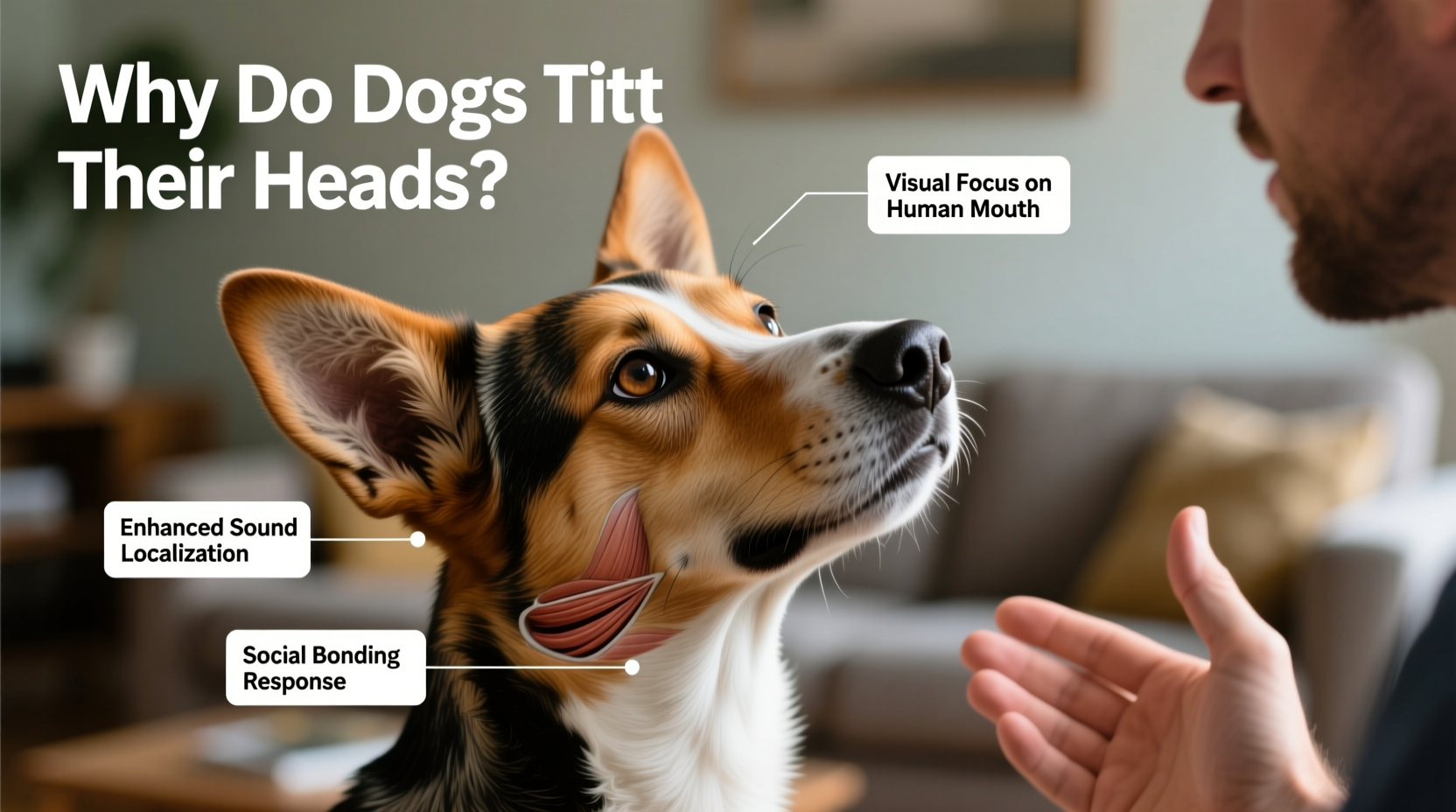
Dogs possess exceptional hearing, capable of detecting frequencies far beyond the human range. However, their ability to pinpoint where a sound originates depends on subtle cues like timing and volume differences between each ear. The shape and position of a dog’s ears play a crucial role in this process. When a dog hears an unfamiliar or intriguing sound—such as a new word, a squeaky toy, or a change in your vocal tone—they may tilt their head to adjust the position of their ears relative to the sound source.
This small movement alters how sound waves enter the ear canal, helping the dog better localize the origin of the noise. For dogs with floppy or long ears, such as Cocker Spaniels or Basset Hounds, tilting can temporarily lift the ear flap, improving sound reception. In essence, the head tilt functions like fine-tuning a radio signal—adjusting for clarity and directionality.
Tip: Observe when your dog tilts its head—does it happen more with high-pitched voices or sudden noises? This can help you understand what sounds capture their attention most.Cognitive Processing and Language Recognition
Beyond hearing mechanics, head tilting is increasingly linked to cognitive engagement. Research from Eötvös Loránd University in Budapest has shown that dogs can recognize and remember specific words, particularly those associated with toys or commands. In studies using fMRI scans, certain areas of the canine brain light up when dogs hear familiar words, even when spoken in a neutral tone.
The head tilt may occur during these moments of recognition or confusion. When a dog hears a word they’ve learned—like “ball” or “walk”—they might tilt their head as they mentally retrieve the associated meaning. Conversely, if the word is unfamiliar or used in a new context, the tilt could reflect active problem-solving, similar to a person furrowing their brow while thinking.
Dr. Claudia Fritsche, a veterinary ethologist, explains:
“The head tilt often coincides with heightened attention. It’s not just about hearing the sound, but understanding its relevance. Dogs are constantly evaluating whether a word or tone signals something important—food, play, or a command.”
How Breed Affects Head Tilting Frequency
Not all dogs tilt their heads equally. Breeds with longer muzzles and upright ears, such as German Shepherds or Siberian Huskies, may tilt less frequently because their ear positioning naturally supports better sound localization. In contrast, brachycephalic breeds (short-nosed dogs) like Pugs or French Bulldogs, and those with drooping ears, tend to tilt more often, possibly due to physical constraints in auditory processing.
| Breed Type | Average Head Tilt Frequency | Potential Reasons |
|---|---|---|
| Long-eared (e.g., Beagle) | High | Ear coverage limits sound; tilt improves reception |
| Short-nosed (e.g., Pug) | High | Skull shape affects ear alignment and depth perception |
| Working breeds (e.g., Border Collie) | Moderate to High | High trainability and attentiveness increase response |
| Sighthounds (e.g., Greyhound) | Low to Moderate | Less auditory focus, more visual orientation |
Emotional Connection and Social Reinforcement
One of the most compelling explanations for head tilting lies in the social bond between dogs and humans. Dogs are highly attuned to human facial expressions, tone of voice, and body language. When you speak to your dog, especially in a warm, engaging manner, they respond not just to the words but to the emotional intent behind them.
The head tilt enhances their view of your face, allowing them to better read your lips, eyes, and expressions. Since dogs rely heavily on visual cues during communication, shifting their head slightly can reduce muzzle obstruction and improve their line of sight. This adjustment helps them interpret whether you’re happy, upset, or issuing a command.
Moreover, this behavior is often positively reinforced. Owners tend to react with affection, laughter, or treats when their dog tilts its head, making it more likely the dog will repeat the action. Over time, the head tilt can become a learned social gesture—a way for dogs to engage attention and elicit a positive response.
“We’ve observed that dogs who receive more verbal praise are more likely to develop consistent head-tilting behaviors during conversation. It’s a blend of natural instinct and conditioned reward.” — Dr. Brian Hare, Canine Cognition Researcher, Duke University
A Real-Life Example: Max the Rescue Dog
Consider Max, a mixed-breed rescue adopted by a family in Colorado. When first brought home, Max rarely responded to verbal cues and never tilted his head. Over several months of consistent training and positive interaction, his responsiveness improved dramatically. His owner noticed that after learning the word “treat,” Max began tilting his head whenever the word was mentioned—even when whispered.
What started as a rare gesture became a regular part of his communication repertoire. Veterinarians assessing Max noted that while his hearing was normal, his initial lack of social exposure had delayed his development of communicative behaviors. The emergence of head tilting signaled not only improved auditory recognition but also growing trust and emotional connection with his new family.
When Head Tilting Might Signal a Health Issue
While occasional head tilting is normal and healthy, persistent or uncontrolled tilting—especially when accompanied by other symptoms—can indicate an underlying medical condition. Common causes include:
- Otitis externa: Inflammation or infection of the outer ear canal.
- Ear mites: Parasites that cause irritation and balance issues.
- Vestibular disease: A disorder affecting the inner ear or brainstem, leading to dizziness and loss of coordination.
- Neurological conditions: Such as tumors or inflammation in the brain.
If your dog exhibits any of the following, consult a veterinarian promptly:
Warning Signs: Constant head tilt (even at rest), circling, loss of balance, discharge from the ear, excessive scratching, or changes in appetite or behavior.Step-by-Step: Assessing Your Dog’s Head-Tilting Behavior
- Observe frequency and context: Does the tilt happen during speech, when hearing strange noises, or randomly?
- Note accompanying behaviors: Is your dog alert and responsive, or disoriented and unsteady?
- Check ear health: Look for redness, odor, or debris in the ears.
- Test responsiveness: Call your dog’s name or use known commands to assess hearing and cognition.
- Consult a professional: If tilting persists without stimulus or worsens over time, schedule a vet visit.
Practical Tips for Dog Owners
Understanding why your dog tilts their head allows you to foster better communication and strengthen your bond. Here are actionable steps to support healthy, meaningful interactions:
Tip: Use consistent vocabulary when training. Dogs respond best to clear, repeated words rather than varied phrasing.- Speak in a calm, expressive tone to encourage attentive listening.
- Pair verbal cues with hand signals to enhance comprehension.
- Avoid shouting or sudden loud noises that may startle your dog.
- Regularly clean your dog’s ears (if recommended for their breed) to prevent infections that impair hearing.
- Reinforce positive behaviors with praise or treats—but don’t over-reward head tilting if it becomes obsessive.
Do’s and Don’ts of Responding to Head Tilting
| Do | Don’t |
|---|---|
| Encourage engagement through gentle speech | Force your dog to tilt by repeating words excessively |
| Use the moment to reinforce training | Ignore signs of discomfort or imbalance |
| Monitor changes in frequency or posture | Assume all tilting is harmless without context |
| Take photos or videos to track behavior trends | Delay veterinary care if tilting becomes constant |
Frequently Asked Questions
Is head tilting a sign of intelligence in dogs?
While not a direct measure of IQ, head tilting often correlates with attentiveness and problem-solving. Dogs that tilt their heads may be actively processing information, which reflects cognitive engagement. However, intelligence varies widely among individuals and breeds, and head tilting alone shouldn’t be used to judge smarts.
Do puppies tilt their heads too?
Yes, though less frequently than adult dogs. Puppies begin developing auditory and social skills in their first few months. As they learn to associate words with actions and pay closer attention to human speech, head tilting becomes more common. Early socialization plays a key role in shaping this behavior.
Can dogs hear better when they tilt their heads?
In many cases, yes. By adjusting the angle of their ears, dogs can improve sound localization and clarity, especially for high-frequency or soft sounds. This physical adjustment helps them determine where a noise is coming from and whether it’s relevant to their safety or routine.
Conclusion: Listening Back to Our Dogs
The head tilt is more than a charming quirk—it’s a complex behavior woven from biology, cognition, and emotion. From fine-tuning auditory input to deepening social bonds, this simple motion reveals how deeply dogs are tuned into human communication. As pet owners, recognizing the science behind the tilt empowers us to listen more closely to what our dogs are trying to tell us.
Next time your dog cocks their head inquisitively, take a moment to appreciate the intricate interplay of evolution and affection at work. Whether they’re decoding your words or simply seeking connection, that tilt is a testament to the remarkable relationship we share with our canine companions.
💬 Have a story about your dog’s head-tilting habits? Share your experiences in the comments and join the conversation about what our dogs are really thinking.








