
Dogs are among the most expressive animals on the planet, and few behaviors capture human attention quite like the head tilt. It’s endearing, almost theatrical—the way a dog will cock its head to one side when spoken to, as if hanging on every syllable. But behind that charming gesture lies a complex interplay of biology, cognition, and social bonding. While many assume it's just a cute reflex, research suggests the head tilt may be more than mere instinct. Could it actually be a sign of intelligence? Or is it simply a mechanical adjustment for better hearing? The truth is layered—and surprisingly insightful.
Understanding the reasons behind this behavior not only deepens our appreciation for canine communication but also reveals how dogs perceive and interact with humans. From auditory processing to emotional attunement, the head tilt offers a window into the canine mind. Let’s explore the science, dispel myths, and examine whether this familiar gesture might indeed reflect something deeper—like problem-solving ability or social smarts.
The Science Behind the Head Tilt: Hearing and Anatomy
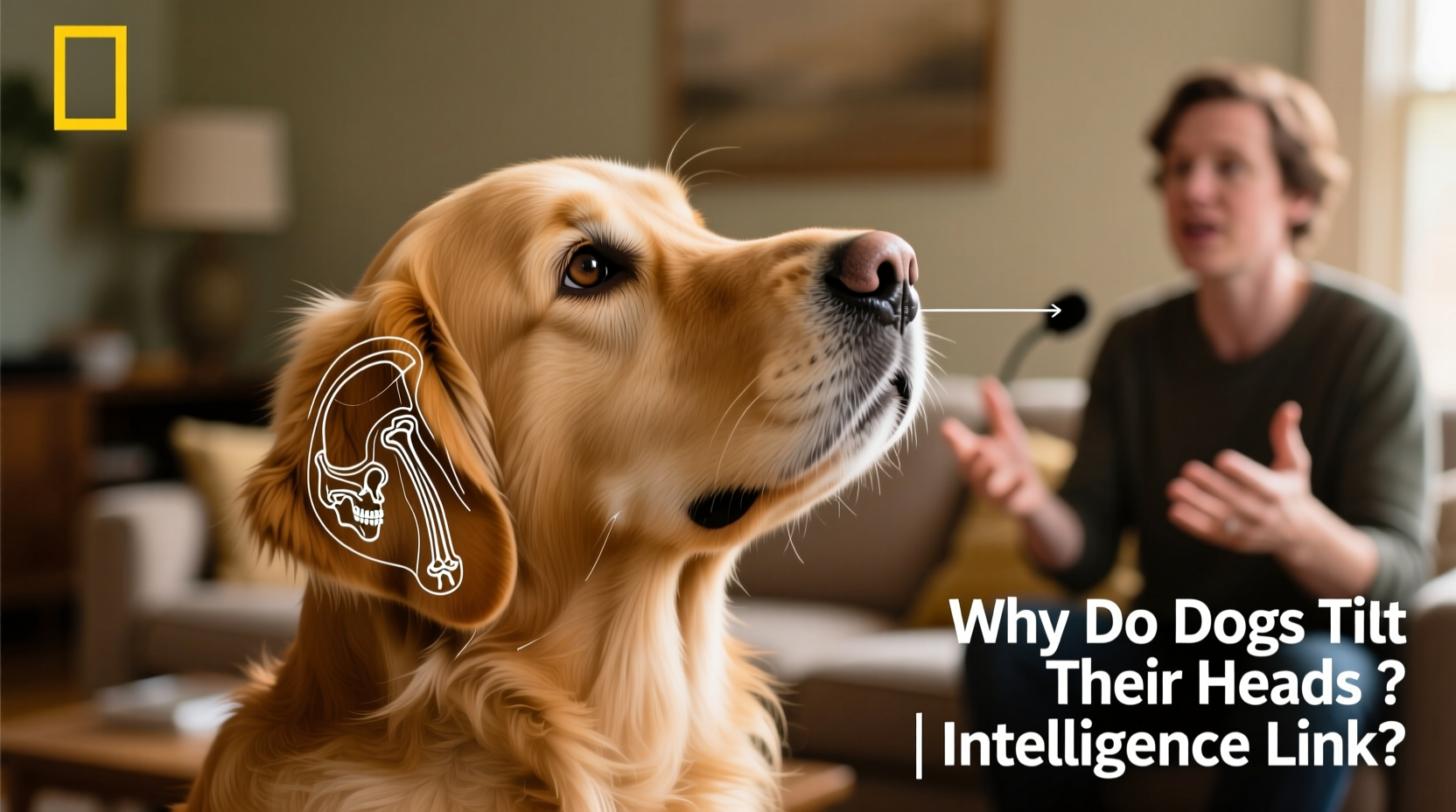
One of the most widely accepted explanations for head tilting involves hearing. Dogs rely heavily on auditory cues, and their ear structure plays a significant role in how they process sound. When a dog hears an unfamiliar or high-pitched noise—such as a squeaky toy or a new word—they may tilt their head to adjust the position of their ears relative to the sound source.
This subtle movement can help align the pinna (the external part of the ear) more directly with the sound wave, improving localization. For dogs with long, floppy ears—like Basset Hounds or Cocker Spaniels—the tilt may serve to momentarily lift the ear flap away from the ear canal, reducing obstruction and enhancing sound reception.
A 2022 study published in *Animal Cognition* observed 40 dogs during auditory tests and found that head tilting occurred significantly more often when dogs heard novel words or muffled speech. The researchers concluded that the behavior correlates with active listening and sound analysis, particularly when clarity is compromised.
Tip: If your dog frequently tilts its head in quiet environments, it could indicate hearing sensitivity or even early hearing loss—consider a veterinary checkup if the behavior becomes obsessive.Cognitive Engagement: Is the Head Tilt a Sign of Intelligence?
While hearing mechanics explain part of the story, cognitive scientists argue that the head tilt may also reflect mental processing. Dogs don’t just hear words—they associate them with meaning, especially those trained in commands or language recognition.
Border Collies like Chaser, who learned over 1,000 object names, have demonstrated advanced lexical understanding. In such intelligent breeds, the head tilt often follows verbal cues that require retrieval or decision-making. Researchers at Eötvös Loránd University in Hungary used fMRI scans to show that highly trained dogs exhibit increased brain activity in regions associated with language processing when hearing familiar words—activity that coincided with physical responses like head tilting.
“Head tilting isn’t random. In some dogs, it’s a visible marker of cognitive engagement—a pause to process information before responding.” — Dr. Ádám Miklósi, Ethologist and Canine Behavior Researcher
This suggests that the tilt may function similarly to a human furrowing their brow when concentrating. It’s not proof of intelligence per se, but rather a behavioral indicator that the dog is actively thinking. Not all dogs do it equally; working breeds and those with higher trainability scores (per Stanley Coren’s rankings) tend to tilt more frequently during learning tasks.
Social Bonding and Emotional Intelligence
Beyond hearing and cognition, the head tilt may serve a deeply social purpose. Dogs are exquisitely attuned to human facial expressions and body language. By tilting their heads, they may be attempting to get a better view of our faces—especially the mouth area, where much emotional information is conveyed.
Human speech involves subtle lip movements, and dogs rely on these visual cues to interpret tone and intent. A head tilt can shift the dog’s line of sight, helping them see past their muzzle and focus on our eyes and mouth. This is particularly relevant for brachycephalic (short-nosed) breeds like Pugs or Bulldogs, whose facial structure naturally obstructs peripheral vision.
Moreover, studies suggest dogs use the head tilt strategically to elicit positive responses from humans. A 2020 behavioral analysis revealed that dogs were more likely to tilt their heads when their owners used high-pitched, affectionate tones—especially during moments of uncertainty or reward anticipation. The gesture appears to strengthen social bonds, prompting humans to respond with praise, treats, or affection.
In this context, the head tilt may reflect emotional intelligence: the ability to read social cues and adapt behavior accordingly. Dogs aren’t just reacting—they’re communicating, seeking connection, and sometimes even manipulating us (in the most adorable way possible).
Do All Dogs Tilt Their Heads? A Breed and Individual Comparison
Not all dogs tilt their heads with equal frequency. Some never do, while others seem to tilt at the slightest sound. This variation depends on breed, anatomy, training history, and individual personality.
| Breed Type | Head Tilt Frequency | Possible Reasons |
|---|---|---|
| Border Collie | High | High intelligence, strong auditory focus, responsive to verbal cues |
| Golden Retriever | Moderate to High | Socially motivated, eager to please, good hearing |
| Bulldog | Low | Anatomical limitation (flat face), less reliance on auditory cues |
| Beagle | Moderate | Strong sense of smell, may prioritize scent over sound |
| Poodle | High | Trainable, attentive, uses visual and auditory input effectively |
The table highlights how both physical and cognitive traits influence the behavior. While breed tendencies exist, individual differences matter just as much. A well-socialized rescue dog with no formal training might tilt more than a purebred that’s never been exposed to varied vocal stimuli.
Mini Case Study: Max, the Rescue Terrier Who Learned to Listen
Max, a mixed-breed terrier adopted from a rural shelter, showed little interest in human speech during his first weeks at home. His new owner, Sarah, spoke to him constantly, but Max rarely responded—let alone tilted his head. Over time, she introduced structured training using hand signals paired with verbal commands. As Max began associating words with actions (like “sit,” “treat,” and “walk”), he started tilting his head whenever she used a new phrase.
Within three months, Max would tilt his head at the sound of his name, the jingle of keys, or the phrase “Want a snack?” The behavior emerged not from instinct, but from learning. For Max, the head tilt became a bridge between confusion and comprehension—a physical manifestation of cognitive effort. His transformation illustrates how environment and interaction shape even seemingly innate behaviors.
When to Be Concerned: Medical Causes of Excessive Tilting
While occasional head tilting is normal, persistent or uncontrolled tilting can signal health issues. A dog that holds its head tilted to one side for hours, especially if accompanied by circling, imbalance, or vomiting, may be suffering from vestibular disease or an ear infection.
Common medical causes include:
- Inner ear infections (otitis interna)
- Vestibular disease (often mistaken for stroke)
- Ear mites or wax buildup
- Neurological disorders or tumors
If your dog suddenly begins tilting its head without stimulus—or if the tilt becomes rigid and constant—consult a veterinarian promptly. Unlike communicative tilts, which are brief and situational, pathological tilts are prolonged and often unilateral.
Tip: Regular ear cleaning and avoiding water exposure during baths can prevent many ear-related issues that lead to abnormal head positioning.Actionable Checklist: Understanding and Responding to Your Dog’s Head Tilt
To make the most of this natural behavior and support your dog’s well-being, consider the following steps:
- Observe patterns: Note when and how often your dog tilts its head. Is it during speech, sounds, or specific commands?
- Use consistent verbal cues: Reinforce understanding by pairing words with actions repeatedly.
- Encourage eye contact: Reward your dog for looking at your face when speaking, which enhances communication.
- Monitor for asymmetry: Check if the tilt favors one side consistently, which could indicate a medical issue.
- Engage in auditory enrichment: Play recorded commands or novel sounds to stimulate cognitive processing.
- Schedule regular vet checks: Include ear exams to rule out infections or hearing problems.
Frequently Asked Questions
Does head tilting mean my dog understands me?
Not necessarily—but it often means they’re trying to. The tilt usually indicates active listening or an attempt to gather more sensory information. With training, dogs can learn to associate certain words with meanings, and the tilt may occur during that processing phase.
Are smarter dogs more likely to tilt their heads?
There’s a correlation, but not a direct causation. Intelligent and highly trainable dogs tend to tilt more because they’re more attuned to human communication. However, any dog can learn to respond to verbal cues with proper reinforcement, regardless of breed-based intelligence rankings.
Can I train my dog to tilt its head on command?
Yes—many owners teach the “tilt” as a trick using positive reinforcement. Hold a treat slightly to the side and above the dog’s head, encouraging them to follow it with their eyes. Once they tilt naturally, mark the behavior with a click or “yes” and reward. With repetition, you can pair it with a verbal cue like “What?”
Conclusion: More Than Just Cute—A Window Into Canine Mind and Heart
The head tilt is far more than a photogenic quirk. It’s a multifaceted behavior rooted in anatomy, shaped by cognition, and refined through social interaction. Whether adjusting for better hearing, processing a new word, or seeking emotional connection, dogs use this gesture to navigate their world—and ours.
While it may not be a definitive measure of intelligence, frequent head tilting in response to speech often reflects attentiveness, curiosity, and a desire to understand. These are qualities we value not just in pets, but in companions. Recognizing the depth behind this simple motion allows us to communicate more effectively, build stronger bonds, and appreciate the remarkable ways dogs engage with human life.
💬 Have a dog that tilts on cue or surprises you with their understanding? Share your story in the comments—your experience could inspire others to listen a little closer to what their dogs are truly saying.








