Dogs communicate in ways that go far beyond barking and tail wagging. One of the most subtle yet telling behaviors is sighing. You’ve likely heard your dog let out a long, drawn-out exhale after flopping onto the couch or settling into bed. It can sound almost human-like—content, tired, or even dramatic. But what does it really mean? Is your dog sighing out of deep relaxation, or could it be a quiet cry for help signaling pain or distress?
Understanding canine body language requires more than just listening to sounds—it involves observing context, posture, and patterns over time. Sighing is one of the most commonly misunderstood vocalizations in dogs. While often dismissed as nothing more than a quirky habit, loud sighs can carry significant emotional or physiological messages. Recognizing the difference between a peaceful sigh and one rooted in discomfort is essential for responsible pet ownership.
The Science Behind Canine Sighing
In both humans and animals, sighing serves a physiological purpose. A deep exhalation following a longer inhale helps reinflate alveoli—the tiny air sacs in the lungs—that may have partially collapsed during regular breathing. This \"reset breath\" maintains lung efficiency and oxygen exchange. In dogs, this mechanism functions similarly, but the behavioral context adds another layer of meaning.
Studies in animal behavior suggest that sighs in dogs are not random. They occur at transition points: after periods of activity, during shifts in emotional states, or when making decisions. Ethologists classify certain sighs as “calming signals”—part of a broader set of non-verbal cues dogs use to regulate social interactions and self-soothe.
Dr. Patricia McConnell, a renowned animal behaviorist, explains:
“Dogs use subtle body language like lip licking, yawning, and sighing to manage stress or diffuse tension—not just with other dogs, but with humans too. These signals often go unnoticed, but they’re critical to understanding a dog’s inner world.” — Dr. Patricia McConnell, Ethologist and Author
This means that while some sighs reflect contentment, others may indicate that your dog is trying to calm itself down in response to anxiety, confusion, or low-level discomfort.
Relaxation Sighs: When Contentment Speaks Volumes
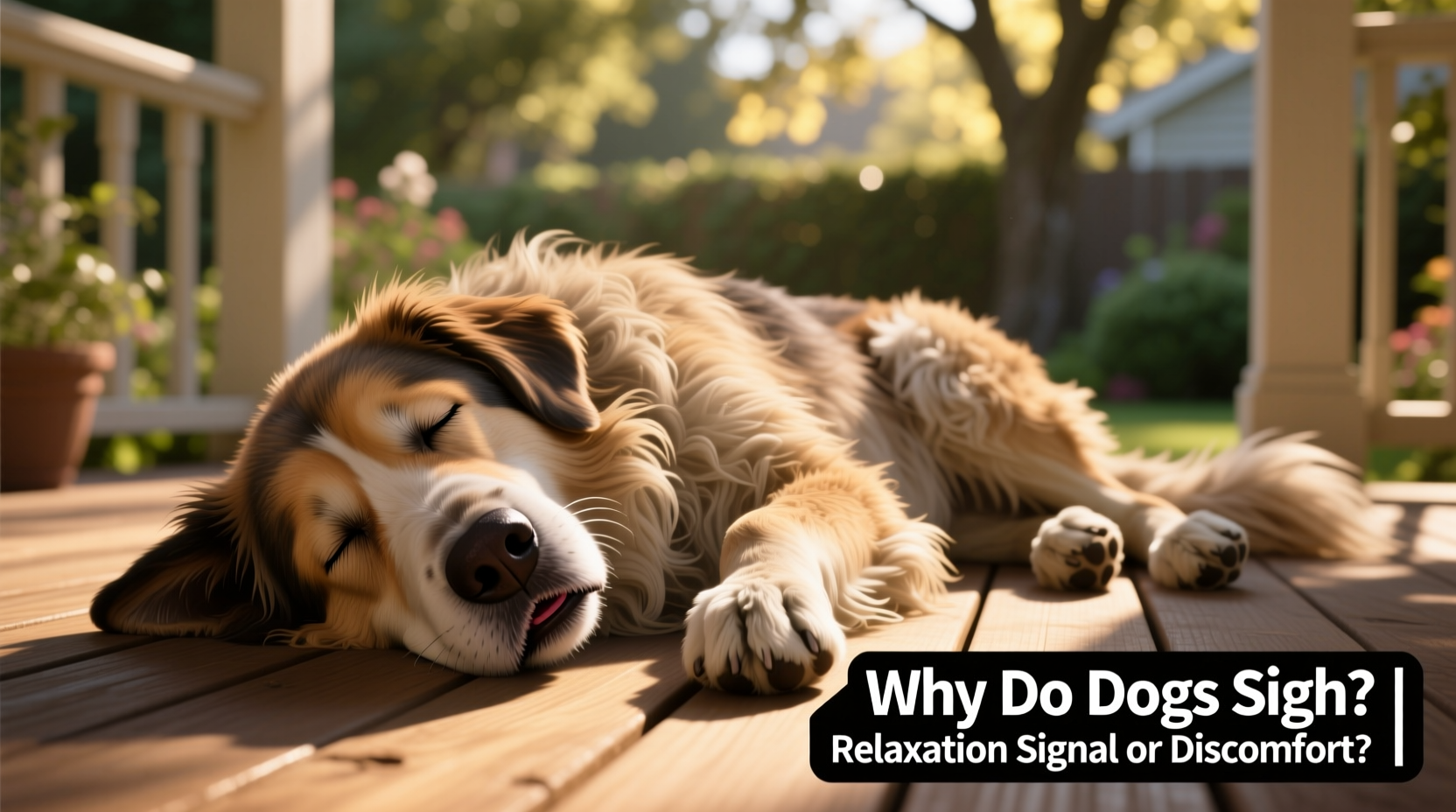
A relaxed sigh typically occurs when a dog lies down after play, settles beside you on the couch, or stretches out in a sunlit spot. The accompanying body language is unmistakable: half-closed or fully closed eyes, loose muscles, a slightly open mouth, and possibly a visible blink pattern known as the “soft eye” look—gentle and unfocused.
These sighs are usually soft to moderately loud and come from deep within the chest. They follow a slow, rhythmic breathing pattern and are often repeated once or twice as the dog transitions into rest. Think of it as the canine version of saying, “Ahhh, that’s better.”
In multi-dog households, relaxation sighs can also serve a social function. One dog may sigh after a minor disagreement or high-energy interaction, signaling that the situation has de-escalated. Other dogs recognize this cue and respond by relaxing their own posture.
Tip: Observe your dog’s entire body when it sighs. If ears are back, tail is stiff, or weight is shifted backward, it may not be relaxation—even if the sigh sounds similar.Sighing as a Sign of Discomfort or Pain
Not all sighs are peaceful. Some are expressions of physical or emotional strain. A sigh linked to discomfort tends to be sharper, more forceful, or unusually frequent. It may be accompanied by other warning signs such as:
- Lying down abruptly after standing
- Restlessness or inability to get comfortable
- Whining, groaning, or panting without heat exposure
- Licking lips or excessive swallowing (signs of nausea or pain)
- Avoiding movement, stairs, or jumping
Older dogs or those with chronic conditions like arthritis, heart disease, or respiratory issues may sigh more frequently due to fatigue or labored breathing. In these cases, the sigh is less about emotion and more about bodily effort. For example, a dog with congestive heart failure might sigh heavily after walking across the room because its body is struggling to oxygenate properly.
Similarly, dogs experiencing anxiety—such as separation distress or noise phobia—may emit repetitive sighs during triggering situations. These are part of a cluster of displacement behaviors, which include yawning, scratching, or shaking off when not wet. Such actions help the dog cope with internal conflict.
Case Study: Bella the Rescue Beagle
Bella, a 5-year-old beagle adopted from a shelter, was described by her new family as “always sighing.” At first, they assumed she was happy and relaxed. But over time, they noticed she sighed mostly when left alone, often followed by pacing and chewing furniture.
After consulting a veterinary behaviorist, they learned Bella’s sighs were not signs of peace—but attempts to self-soothe under stress. Her history of abandonment had left her with moderate separation anxiety. With a structured training plan involving desensitization and environmental enrichment, Bella’s sighing decreased significantly within eight weeks. The change wasn’t just behavioral; her overall demeanor became more confident and calm.
This case illustrates how easily a sigh can be misread—especially when it resembles familiar patterns of relaxation.
How to Tell the Difference: Context Is Key
Interpreting a dog’s sigh requires attention to three core factors: timing, body language, and frequency.
| Factor | Relaxation Sigh | Discomfort Sigh |
|---|---|---|
| Timing | After play, before sleep, during quiet bonding moments | During or after physical exertion, when left alone, in unfamiliar environments |
| Body Language | Loose posture, soft eyes, slow blinking, tail relaxed | Tense muscles, wide eyes, pinned-back ears, tucked tail |
| Frequency | Occasional, isolated events | Repetitive, especially in specific situations |
| Vocal Quality | Deep, slow, full exhalation | Sharp, forced, sometimes with an audible grunt |
| Response to Environment | Unbothered by distractions | Hypervigilant or withdrawn |
Use this table as a reference when evaluating your dog’s behavior. Keep a brief journal for a few days noting when sighs occur, what your dog was doing beforehand, and how it behaved afterward. Patterns will emerge that clarify whether the sighing aligns with comfort or concern.
Action Plan: What to Do When Your Dog Sighs Loudly
If you're unsure whether your dog’s sighs are benign or concerning, take a systematic approach. Follow this step-by-step guide to assess and respond appropriately:
- Observe the Full Context: Note what your dog was doing before and after the sigh. Was it lying down after a walk? Or did it sigh while staring at the door during a thunderstorm?
- Check Body Language: Look beyond the sound. Are the muscles tense? Is the gaze fixed or darting? Is the dog avoiding interaction?
- Monitor Frequency: Occasional sighs are normal. Multiple sighs per hour, especially in clusters, warrant closer inspection.
- Rule Out Medical Causes: Schedule a vet visit if you notice additional symptoms like lethargy, reduced appetite, coughing, or limping. Blood work, X-rays, or cardiac screening may be necessary.
- Evaluate Emotional Triggers: Consider environmental stressors—new pets, renovations, changes in routine, or loud noises. Use video recordings to catch behaviors when you’re not present.
- Modify the Environment: Provide safe spaces (crates, quiet rooms), white noise machines, or calming aids like pheromone diffusers if anxiety is suspected.
- Consult a Professional: A certified dog trainer or veterinary behaviorist can help differentiate emotional from physical causes and design an intervention strategy.
Common Misconceptions About Dog Sighing
Several myths persist about why dogs sigh, often leading owners to misinterpret their pets’ needs:
- Myth: Sighing means boredom. While understimulated dogs may develop repetitive behaviors, sighing alone isn't a reliable indicator of boredom. Look for pacing, destructive chewing, or excessive barking instead.
- Myth: Only anxious dogs sigh. False. Healthy, well-adjusted dogs sigh frequently as part of normal emotional regulation.
- Myth: Loud sighs are always dramatic or manipulative. Dogs don’t use sighs to manipulate in the human sense. Even expressive sighs are genuine reflections of internal states, not calculated performances.
Understanding these misconceptions prevents owners from dismissing legitimate concerns or overreacting to harmless behaviors.
Frequently Asked Questions
Do all dog breeds sigh equally?
No. Brachycephalic breeds (like Bulldogs or Pugs) may produce louder or more labored exhalations due to their shortened airways. Their sighs can sound more intense but aren’t necessarily indicative of discomfort unless paired with other symptoms like snorting, gagging, or exercise intolerance.
Can puppies sigh for the same reasons as adult dogs?
Yes. Puppies begin using calming signals early in life. A post-nursing sigh, for instance, often signals satiation and drowsiness. However, persistent sighing in young dogs should still be evaluated to rule out congenital issues like heart defects or respiratory abnormalities.
Should I respond when my dog sighs?
Only if the sigh appears linked to distress. Responding to every sigh with attention may inadvertently reinforce anxious behaviors. Instead, remain calm and observe. If the dog is uncomfortable, address the environment or seek medical advice. If relaxed, simply allow the moment of peace to unfold.
Final Thoughts: Listening Beyond the Sound
A dog’s sigh is more than background noise—it’s a nuanced form of communication shaped by biology, emotion, and experience. Whether expressing relief after a long day or quietly enduring discomfort, your dog trusts you to listen closely and respond wisely.
By learning to decode the subtleties of canine expression, you deepen your bond and enhance your pet’s quality of life. Don’t just hear the sigh—see the whole dog. Pay attention to patterns, respect individual differences, and never underestimate the value of professional insight when uncertainty arises.
💬 Have you noticed your dog sighing in specific situations? Share your observations in the comments below—your experience could help other pet owners understand their dogs better.








