Cats are enigmatic creatures. One moment they’re curled up in a sunbeam, purring softly; the next, they’re frozen in place, eyes locked on an empty patch of wall with unblinking intensity. To human observers, this behavior can seem bizarre—perhaps even concerning. But staring at walls is more common than many realize, and while it’s often harmless, it can sometimes signal deeper issues. Understanding why cats engage in this behavior requires insight into their sensory world, natural instincts, and potential health conditions.
This article explores the science and psychology behind wall-staring in cats, separating myth from reality and offering practical guidance for concerned pet owners. Whether your cat occasionally zones out or seems fixated on invisible stimuli, you’ll gain clarity on what might be happening—and when to take action.
The Feline Sensory Advantage
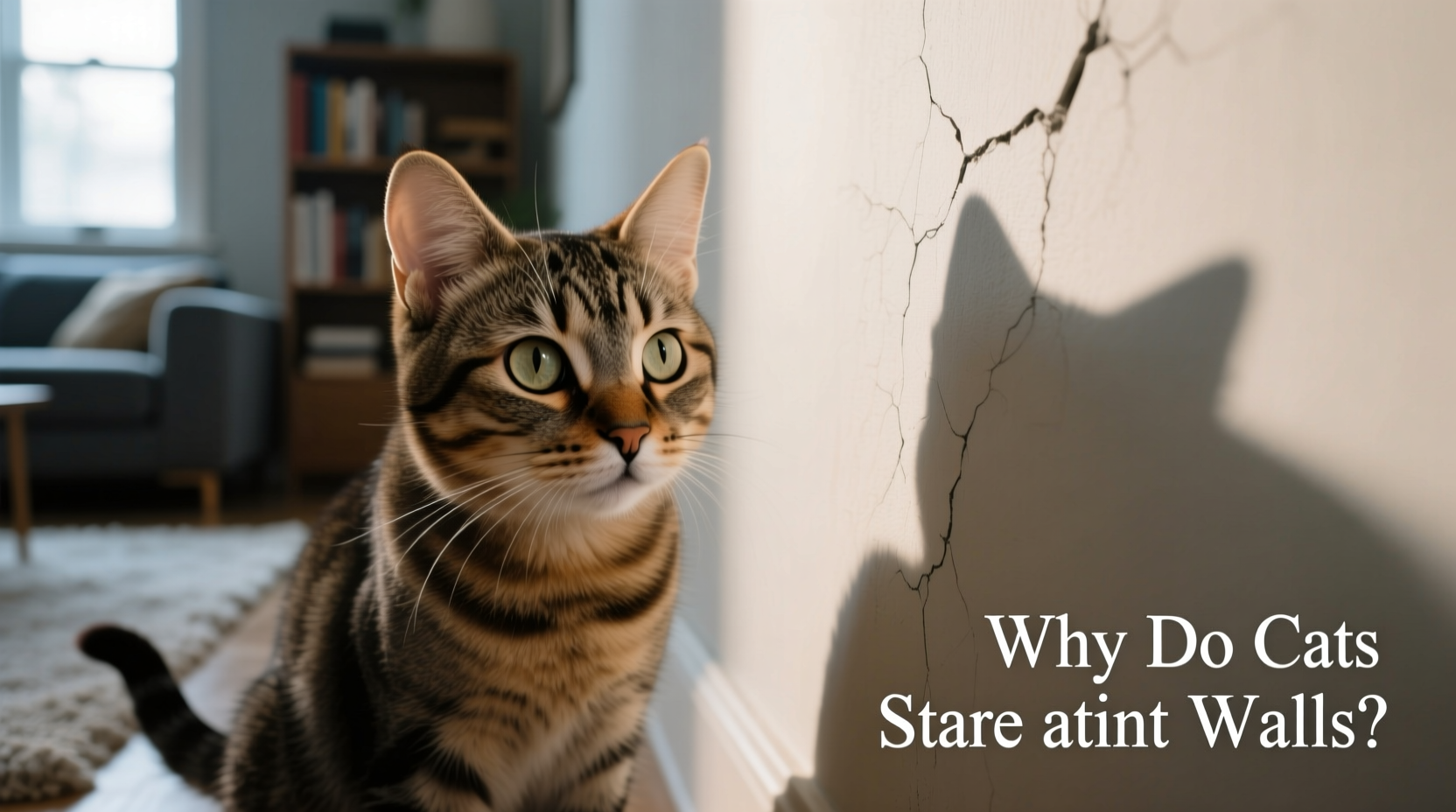
Cats experience the world through senses far sharper than our own. What appears as blank space to us may be rich with movement, sound, or scent detectable only to a cat. Their vision, hearing, and olfactory systems are finely tuned for hunting and survival, which means they perceive environments differently than humans.
- Vision: Cats see better in low light due to a high concentration of rod cells in their retinas. They can detect subtle movements—like dust motes drifting in a sunbeam or a shadow shifting—that we might miss entirely.
- Hearing: With a range extending up to 64,000 Hz (humans max out around 20,000 Hz), cats can hear ultrasonic sounds made by rodents or insects inside walls.
- Whiskers and air currents: Sensitive facial whiskers allow cats to detect minute changes in airflow, possibly alerting them to unseen movement nearby.
When a cat stares intently at a wall, it may not be “nothing” they’re observing. It could be a combination of faint noises, vibrations, or visual flickers imperceptible to us. This sensory input triggers their instinct to monitor potential prey or threats—even if no visible animal is present.
Tip: Observe the environment when your cat stares—check for drafts, insect activity, or electrical buzzing that might attract their attention.Instinctual Hunting Behavior
In the wild, cats spend significant time scanning their surroundings for signs of prey. Domestication hasn’t erased these deeply ingrained behaviors. A sudden twitch of the ears, dilation of pupils, or low crouch while staring at a wall suggests your cat has detected something that triggers its predatory sequence: locate, stalk, pounce.
Even indoor cats maintain strong hunting drives. If there are mice, spiders, or insects living within wall cavities, your cat may hear scratching, scurrying, or high-pitched squeaks. These auditory cues activate neural pathways associated with hunting, leading to prolonged focus on the source—even if access is blocked by drywall.
“Cats don’t just react to what they see—they respond to what they sense. A wall isn’t a barrier to their awareness.” — Dr. Lena Torres, Feline Ethologist
Some cats will paw at baseboards or follow a path along the wall, tracking the movement of hidden animals. Others remain motionless, conserving energy until the perfect moment to strike—if only the wall weren’t in the way.
Medical and Neurological Considerations
While occasional wall-gazing is normal, persistent or repetitive staring—especially when accompanied by other unusual behaviors—can indicate underlying medical problems. Certain conditions affect brain function, perception, or neurological stability, causing disorientation or hallucinatory episodes.
One such condition is feline hyperesthesia syndrome, which causes skin rippling, tail flicking, and sudden bursts of running or vocalization. In some cases, affected cats exhibit vacant stares or appear entranced by non-existent stimuli.
Another serious concern is seizures. Cats experiencing partial (focal) seizures may display odd behaviors like lip-smacking, blinking excessively, or fixating on one spot without responding to external stimuli. These episodes can last seconds to minutes and may go unnoticed unless closely observed.
Symptoms That Warrant Veterinary Attention
| Behavior | Possible Cause | Action Recommended |
|---|---|---|
| Staring for several minutes without response | Seizure activity, cognitive dysfunction | Schedule vet exam; consider neurological screening |
| Twitching, falling over during episode | Focal seizure | Immediate veterinary consultation |
| Following invisible objects around room | Visual hallucinations, CNS disorder | Rule out toxins, infection, or metabolic disease |
| Increased vocalization while staring | Pain, anxiety, senility (in older cats) | Blood work and behavioral assessment |
Elderly cats may develop feline cognitive dysfunction (FCD), similar to dementia in humans. Signs include confusion, altered sleep patterns, and aimless wandering or staring. If your senior cat suddenly begins spending long periods gazing at walls, consult your veterinarian to evaluate cognitive health.
Environmental Triggers and Boredom
Not all wall-staring stems from sensory detection or illness. Sometimes, the cause is simpler: boredom. Indoor cats without sufficient mental stimulation may resort to fixating on minor environmental changes simply because there’s little else to do.
A flickering reflection from a window, a slowly moving shadow caused by tree branches outside, or even the hum of appliances can become points of fascination for an under-stimulated cat. Over time, these moments may evolve into habitual behavior—your cat learns that focusing on the wall brings engagement, even if fleeting.
Lack of enrichment leads to repetitive behaviors known as stereotypies. These can include pacing, excessive grooming, or obsessive staring. Unlike instinctual hunting focus, stereotypic behaviors serve no functional purpose and often arise from stress or confinement.
Checklist: Is Your Cat Mentally Stimulated?
- ✅ Does your cat have daily interactive play sessions (at least 10–15 minutes, twice a day)?
- ✅ Are puzzle feeders or treat-dispensing toys used regularly?
- ✅ Is there access to windows with bird feeders or outdoor views?
- ✅ Do you rotate toys weekly to prevent habituation?
- ✅ Are vertical spaces (shelves, cat trees) available for climbing and observation?
If most answers are “no,” environmental enrichment should be prioritized before assuming medical causes.
Tip: Introduce a bird feeder outside a sunny window. Many cats find watching birds deeply satisfying and mentally engaging.Mini Case Study: Bella and the Basement Wall
Bella, a 4-year-old domestic shorthair, began spending increasing amounts of time sitting near the basement wall, staring intently and occasionally swatting at the baseboard. Her owner, Maria, initially dismissed it as quirky behavior—until she noticed Bella doing it multiple times a day, sometimes for over ten minutes.
After ruling out seizures and ear infections with her vet, Maria set up a night-vision camera. Within hours, footage revealed faint scratching sounds coming from inside the wall. A pest control inspection confirmed a small mouse nest behind the insulation. Once removed, Bella’s wall-staring ceased almost immediately.
This case illustrates how acute senses can drive seemingly odd behaviors—and why investigation should begin with both environment and health.
Step-by-Step Guide: Responding to Wall-Staring Behavior
If your cat frequently stares at walls, use this systematic approach to determine the cause and appropriate response:
- Observe the context: Note when the behavior occurs (time of day, lighting, noise levels). Is your cat relaxed or tense? Does it follow a specific trigger?
- Inspect the environment: Look for signs of pests (droppings, gnaw marks), flickering lights, drafts, or electronic devices emitting high-frequency sounds.
- Assess overall behavior: Check for changes in appetite, litter box habits, sociability, or coordination. Any deviation warrants medical evaluation.
- Enhance enrichment: Increase playtime, introduce new toys, provide window perches, or try food puzzles to redirect focus.
- Consult your veterinarian: If the behavior persists, worsens, or includes physical symptoms (tremors, drooling, disorientation), schedule a full check-up including bloodwork and neurological screening.
This method ensures you address both psychological and physiological factors without jumping to conclusions.
Frequently Asked Questions
Is it normal for cats to stare at walls?
Yes, occasional staring is normal, especially if triggered by sounds or movements humans can’t detect. However, frequent or prolonged fixation—particularly if unresponsive to stimuli—should be evaluated.
Can cats see ghosts or spirits?
There’s no scientific evidence that cats see supernatural entities. What may seem like ghost-spotting is more likely acute hearing or vision detecting subtle stimuli, such as air currents, rodents, or electromagnetic fields from wiring.
My older cat stares at walls and seems confused. Should I be worried?
Yes. In senior cats, staring combined with disorientation, vocalization at night, or soiling outside the litter box may indicate feline cognitive dysfunction. Early intervention can improve quality of life.
Understanding Beyond the Surface
Cats live in a layered reality—one shaped by senses we barely comprehend. When a cat stares at a wall, it’s not necessarily “zoning out.” It may be concentrating intensely on stimuli we cannot perceive. Respecting their sensory world means resisting the urge to anthropomorphize their actions while remaining vigilant for signs of distress.
Behavioral quirks are part of what makes cats fascinating companions. But responsible ownership involves distinguishing between harmless idiosyncrasies and warning signs of illness. By combining observation, environmental awareness, and proactive care, you can ensure your cat’s well-being while deepening your bond.
“The key to understanding cats isn’t making them fit our logic—it’s learning to interpret their silent signals.” — Dr. Arjun Patel, Veterinary Behaviorist
Take Action Today
If your cat stares at walls, start with curiosity, not concern. Watch closely. Listen. Adjust the environment. Engage your cat with enriching activities. And if uncertainty lingers, seek professional advice. Your cat relies on you to bridge the gap between species—to notice what they notice, even when it’s invisible.
Understanding feline behavior isn’t about solving mysteries; it’s about embracing them with empathy and knowledge. Share your experiences, ask questions, and continue learning. The more we understand our cats, the better we can support their health, happiness, and natural instincts.
💬 Have a story about your cat’s strange staring habits? We’d love to hear how you figured it out—leave a comment and join the conversation!








