
Cats are enigmatic creatures. One moment they're curled up in a sunbeam, the next they're locked in an intense gaze at a blank wall with ears forward and tail twitching. This behavior can be puzzling—and even unsettling—for pet owners. While occasional wall-staring is often harmless, persistent or sudden changes in such behavior may signal underlying issues. Understanding why cats engage in this seemingly odd habit requires a blend of behavioral insight, environmental awareness, and medical knowledge.
This article explores the full spectrum of reasons behind feline wall fixation—from instinctual behaviors to neurological conditions—so you can determine what’s normal, what might need attention, and when it’s time to consult a veterinarian.
Understanding Feline Sensory Perception
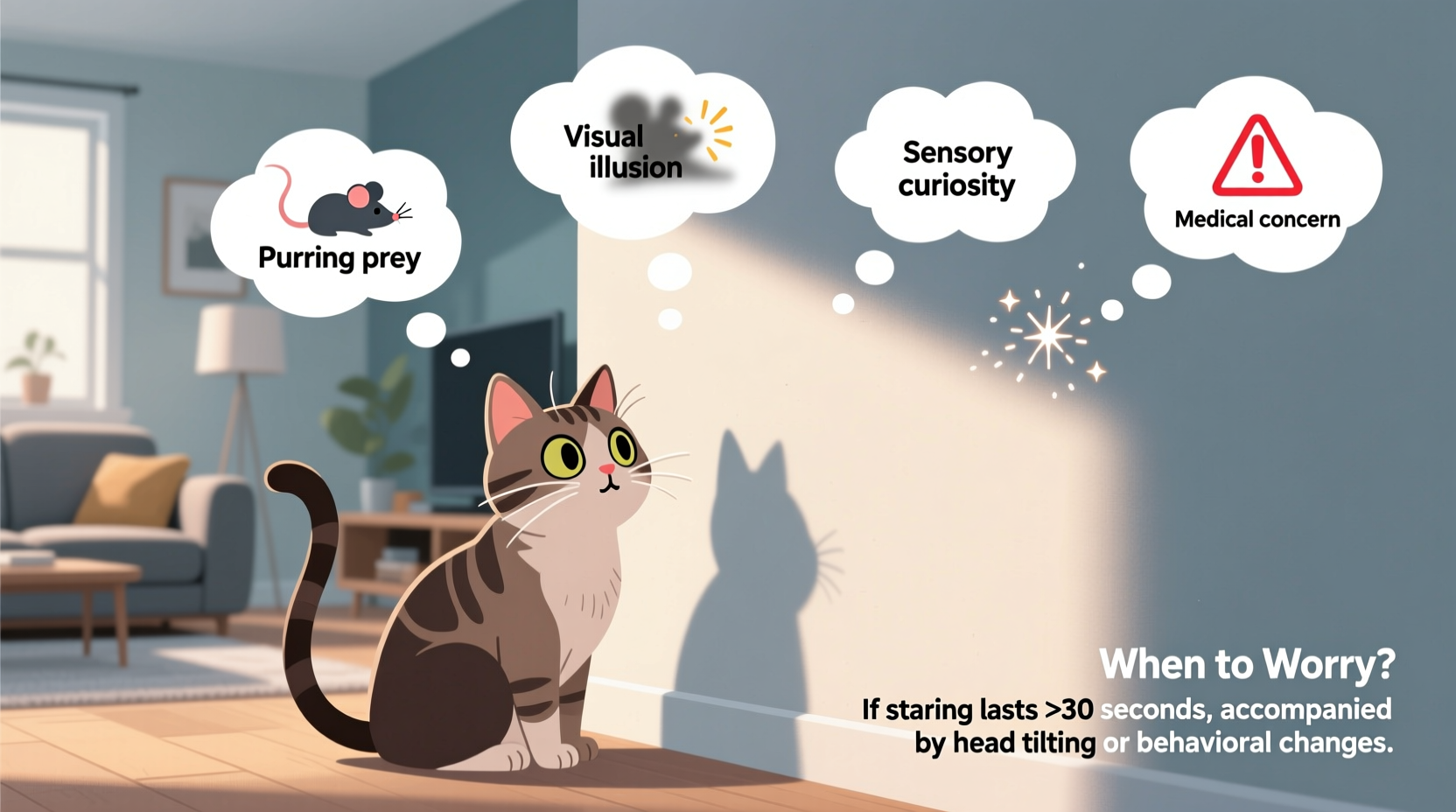
To grasp why cats might appear to stare at nothing, it helps to understand how their senses differ from ours. Cats perceive the world through heightened auditory, visual, and olfactory systems that detect stimuli far beyond human capability.
- Vision: Cats have superior night vision and detect rapid movements better than humans. They can see flickering lights (like those from LED bulbs or TVs) that appear constant to us.
- Hearing: Their ears can rotate 180 degrees and detect frequencies up to 64 kHz—well above the human range. They may react to high-pitched sounds like rodents in walls, electrical buzzing, or even ultrasonic devices.
- Whiskers and Air Currents: Facial whiskers sense minute changes in air pressure, which could alert them to movement behind walls or drafts from vents.
A cat staring at a wall might actually be responding to something imperceptible to you—a shadow, a sound, or a scent carried on airflow. These sensory inputs can trigger hunting instincts or defensive postures, even without visible cause.
“Cats live in a sensory world we can’t fully access. What looks like vacant staring may be acute awareness of subtle environmental cues.” — Dr. Lena Patel, Veterinary Ethologist
Possible Behavioral Reasons for Wall Staring
Not all wall-gazing indicates a problem. In many cases, it falls within the range of normal feline behavior. Here are several common non-medical explanations:
1. Hunting Instinct Activation
Cats are hardwired predators. Even well-fed indoor cats retain strong hunting drives. A tiny insect crawling behind drywall, a spider on the ceiling edge, or dust motes dancing in sunlight can captivate their attention. The stillness before a pounce often involves focused staring.
2. Environmental Stimuli You Can’t Detect
Flickering fluorescent lights, low-frequency hums from appliances, or vibrations from plumbing can draw a cat’s focus. Some modern electronics emit high-pitched noises during operation—inaudible to people but noticeable to cats.
3. Playful or Imaginative Behavior
Like children pretending, cats sometimes engage in solitary play involving imaginary prey. A shifting shadow or reflection might become a “target” for stalking and batting at thin air.
4. Territorial Monitoring
Cats are territorial animals. Staring at a specific spot could be part of routine surveillance—checking for intruders (real or perceived), monitoring entry points, or reacting to outdoor animals seen through windows earlier in the day.
Tip: Observe your cat’s body language. If the stare is brief, followed by normal activity, it’s likely just curiosity or instinct.Medical and Neurological Causes to Consider
When wall-staring becomes frequent, prolonged, or accompanied by other symptoms, it may point to physical or neurological problems. Below are key health-related causes that warrant closer evaluation.
1. Seizures (Focal or Partial)
Also known as petit mal seizures, focal seizures affect only part of the brain. During these episodes, cats may freeze, stare blankly, drool, blink excessively, or make chewing motions—all while appearing awake but unresponsive. These can last seconds to minutes and may go unnoticed unless observed closely.
Post-seizure, cats might seem disoriented, hide, or act unusually affectionate. Because seizures don't always involve convulsions, staring spells are often misinterpreted as zoning out.
2. Cognitive Dysfunction Syndrome (CDS)
Common in senior cats (typically over 10 years old), CDS resembles dementia in humans. Symptoms include confusion, altered sleep cycles, vocalization at night, and repetitive behaviors like pacing or staring into space.
A cat with CDS might fixate on walls due to spatial disorientation or memory lapses, unable to recall where they were going or what they intended to do.
3. Vision Problems or Hallucinations
Retinal diseases, cataracts, or hypertension-induced vision loss can alter perception. As vision deteriorates, cats may respond to visual distortions or shadows that aren’t there. In rare cases, toxins or metabolic imbalances can lead to hallucinations.
4. Pain or Discomfort
Chronic pain—such as from arthritis, dental disease, or internal illness—can cause a cat to withdraw and exhibit unusual behaviors. Staring into space may reflect discomfort or mental fatigue rather than intentional focus.
5. Hyperesthesia Syndrome
Feline hyperesthesia syndrome (also called \"rolling skin syndrome\") causes sudden bursts of agitation, tail flicking, skin rippling, and erratic running. Some affected cats also display trance-like staring before an episode, possibly due to abnormal neural firing in the spinal cord or brain.
“Any change in behavior—especially repetitive staring—should prompt a veterinary checkup in older cats. Early diagnosis improves outcomes significantly.” — Dr. Marcus Tran, Feline Internal Medicine Specialist
When to Worry: Red Flags That Require Attention
Occasional wall-staring isn’t concerning. But certain patterns suggest a deeper issue. Use the following checklist to assess whether professional evaluation is needed.
Behavioral Checklist: Signs to Monitor
Checklist:- Staring lasts more than a few minutes regularly
- Accompanied by muscle twitching, drooling, or blinking
- Followed by confusion, hiding, or aimless wandering
- Occurs multiple times per day
- Associated with loss of balance or falling
- New onset after age 7 (increased risk of CDS or seizures)
- Sudden personality changes (aggression, clinginess, withdrawal)
If three or more apply, schedule a vet visit promptly. Document the behavior with notes or video to help your veterinarian make an accurate assessment.
Diagnostic Process Overview
Veterinarians typically follow a step-by-step approach:
- History Review: Duration, frequency, triggers, and associated signs.
- Physical & Neurological Exam: Checks reflexes, coordination, eye response, and pain indicators.
- Bloodwork: Evaluates organ function, thyroid levels, and infection markers.
- Blood Pressure Test: Hypertension can cause neurological symptoms.
- Imaging (if indicated): MRI or CT scans to rule out brain lesions or tumors.
- Ophthalmic Evaluation: Assesses retinal health and vision integrity.
Real-Life Example: Bella’s Nighttime Episodes
Bella, a 12-year-old domestic shorthair, began staring at the bedroom wall every night around 2 a.m. Her owner initially thought she saw bugs, but the behavior escalated: Bella would freeze mid-step, pupils dilated, jaw chattering slightly. After five months, she had two episodes involving circling and bumping into furniture.
Her vet conducted blood tests, which revealed elevated kidney values and high blood pressure. An ophthalmic exam showed early retinal detachment—common in hypertensive cats. With medication to control blood pressure and a renal-support diet, Bella’s staring episodes decreased dramatically within six weeks.
This case illustrates how a subtle behavioral change can mask a serious systemic condition. Without intervention, Bella could have suffered blindness or stroke-like events.
Preventive Care and Environmental Adjustments
While not all causes of wall-staring are preventable, proactive care reduces risks and supports overall well-being.
Indoor Environment Optimization
| Factor | Do’s | Avoid |
|---|---|---|
| Lighting | Use warm-white LEDs; minimize flicker | Fluorescent tubes, strobe effects |
| Noise Levels | Provide quiet retreats; use white noise if needed | Ultrasonic cleaners, loud electronics near resting areas |
| Mental Stimulation | Daily interactive play, puzzle feeders | Long periods of isolation |
| Routine | Consistent feeding and sleep schedules | Sudden changes in layout or household dynamics |
Enrichment plays a critical role. Boredom or stress can manifest as compulsive behaviors. Rotating toys, offering window perches, and introducing safe outdoor views (via enclosed catio or bird feeders) keep cats mentally engaged.
Tip: Record suspicious episodes on your phone. Even 10 seconds of footage can provide crucial clues to your vet.Frequently Asked Questions
Is it normal for my cat to stare at the wall for a few seconds?
Yes. Brief moments of focused attention—especially if followed by normal behavior—are usually due to instinct, curiosity, or response to undetectable stimuli. It becomes concerning only if it increases in duration or frequency.
Can stress cause a cat to stare at walls?
Indirectly, yes. Chronic stress may contribute to compulsive behaviors or exacerbate underlying conditions like hyperesthesia. However, stress alone rarely causes prolonged staring without other signs such as overgrooming, urination outside the litter box, or aggression.
Do blind cats stare at walls more often?
Blind or visually impaired cats may appear to stare into space because they rely more on hearing and memory to navigate. They might orient toward familiar sounds or remain still while processing sensory input. True “staring” diminishes if vision is fully lost, but disoriented gazing can persist.
Conclusion: Know Your Cat, Trust Your Instincts
Cats stare at walls for reasons spanning the ordinary to the urgent. From tracking invisible prey to signaling neurological distress, the context determines whether the behavior is benign or a cry for help. There’s no universal rule—but there is a simple principle: know your cat’s baseline.
Every cat has quirks. What matters is deviation from their usual self. If your cat starts spacing out frequently, seems unresponsive, or acts confused afterward, don’t dismiss it as “just being weird.” Early detection of medical issues leads to better management and improved quality of life.
Monitor closely, document changes, and partner with your veterinarian when in doubt. Your attentiveness today could prevent a crisis tomorrow.
💬 Have you noticed your cat staring at walls? Share your experience or questions in the comments—your story might help another pet owner recognize a warning sign early.








