Cats have a reputation for being both graceful and mischievous—often in the same breath. One moment, your feline is delicately stepping across the room; the next, a carefully placed mug crashes from the counter. If you've ever found yourself cleaning up after your cat's latest \"knockdown,\" you're not alone. This behavior, while frustrating, is rarely malicious. It stems from deeply ingrained instincts, curiosity, and sometimes unmet needs. Understanding the root causes is the first step toward managing it humanely and effectively.
More than just a quirky habit, object-knocking can signal underlying behavioral or environmental issues. With the right approach, pet owners can reduce unwanted destruction without suppressing their cat’s natural drive to explore and interact with the world.
The Science Behind the Swat: Why Cats Knock Things Over
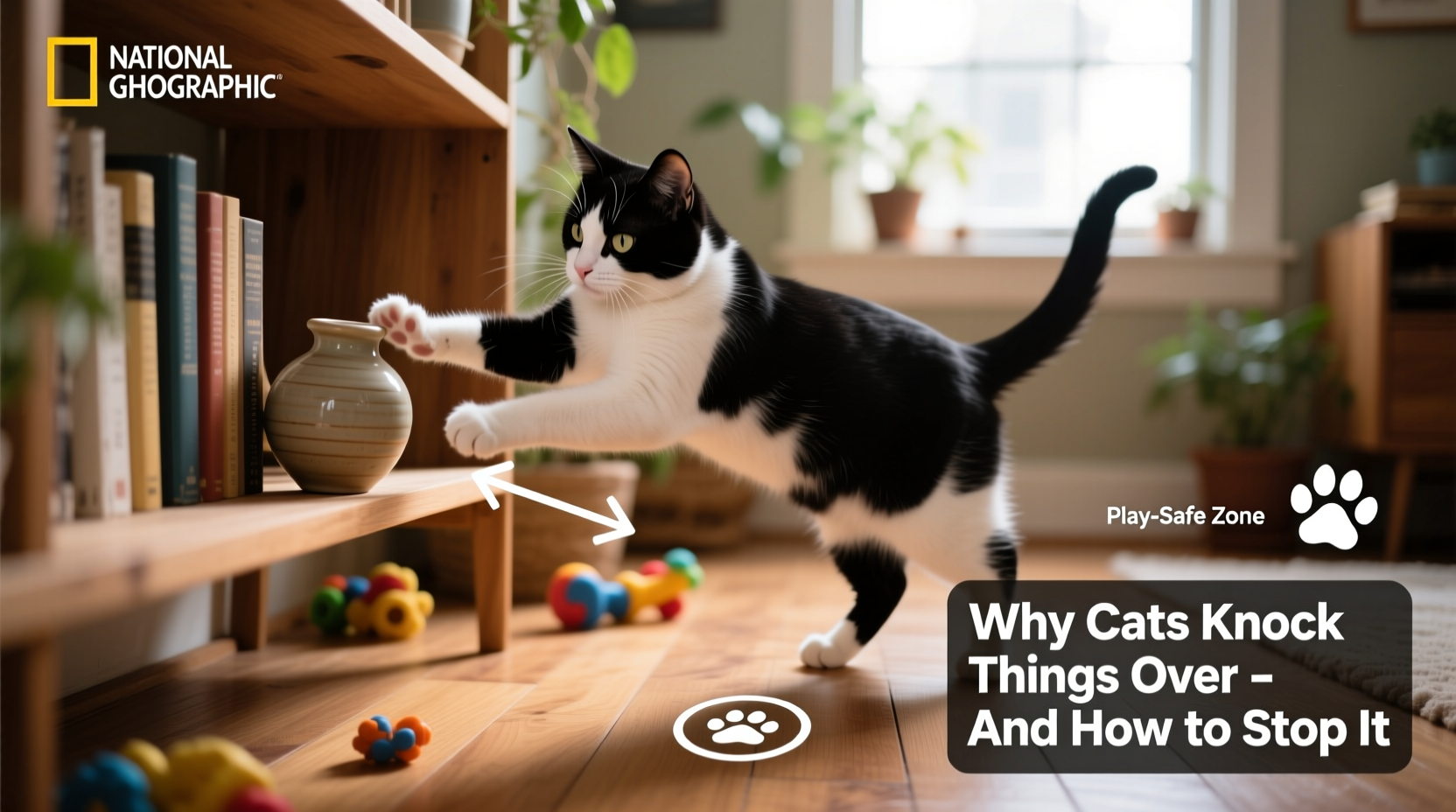
Cats are predators by nature. Even well-fed indoor cats retain the hunting instincts of their wild ancestors. When a cat bats an object off a surface, it’s often testing its environment—mimicking the way they might pounce on prey in the wild. The movement of a falling cup or wobbling pen triggers their chase response, satisfying their need for mental stimulation.
Another factor is sensory exploration. Cats rely heavily on their paws to gather information. By nudging an object, they assess its texture, weight, and stability. A wobbly candle or dangling phone charger becomes irresistible—not because they want to annoy you, but because their brains are wired to investigate motion and unpredictability.
Sometimes, attention-seeking plays a role. If knocking something over consistently results in a reaction—positive or negative—from their human, the behavior can be reinforced. A startled yelp or even a scolding voice may still register as engagement to a cat that otherwise feels ignored.
“Cats don’t act out of spite. What looks like mischief is usually instinctual behavior amplified by boredom or lack of appropriate outlets.” — Dr. Lena Reyes, Feline Behavior Specialist
Environmental and Emotional Triggers
Not all cats knock things over for the same reason. Some are naturally more curious or bold, but external factors can amplify the behavior:
- Boredom: Indoor cats without sufficient enrichment often resort to self-entertainment, which includes batting objects off shelves.
- Lack of Hunting Simulation: Without opportunities to “hunt,” cats redirect predatory energy toward household items.
- Stress or Anxiety: Changes in routine, new pets, or loud environments can cause displacement behaviors, including object-knocking.
- Overstimulation: Some cats become hyper-focused on moving objects (like pens or phones) and lose impulse control.
It’s also worth noting that younger cats and kittens are more prone to this behavior. Their play is practice for survival skills, so swatting at dangling earrings or tipping water glasses isn’t defiance—it’s development.
Tip: Rotate toys weekly to maintain novelty and prevent toy fatigue. Cats respond best to variety.How to Discourage Destructive Play: A Step-by-Step Guide
Eliminating the behavior entirely may not be realistic—or fair—but you can significantly reduce it through consistent, positive strategies. Follow this timeline to create lasting change:
- Week 1: Assess and Secure
Walk through each room your cat frequents. Identify high-risk zones—surfaces near beds, desks, or shelves where valuable or breakable items sit. Remove or secure these objects. Use museum putty or non-slip mats to anchor decor. This isn’t about restricting your cat—it’s about protecting both your belongings and your peace of mind. - Week 2: Introduce Targeted Enrichment
Replace temptation with better options. Invest in interactive toys that mimic prey: feather wands, motorized mice, or puzzle feeders. Schedule two 10-minute play sessions daily using wand toys to simulate a full “hunt-catch-kill” sequence. This satisfies their predatory drive and reduces residual energy. - Week 3: Redirect, Don’t React
If your cat starts nudging an object, avoid yelling or sudden movements. Instead, quietly remove the item and replace it with an approved toy. Say “Let’s play!” and initiate a short game. Over time, your cat learns that playtime follows interaction with toys—not household items. - Week 4: Reinforce Boundaries with Positive Cues
Use verbal cues like “off” or “leave it” when your cat approaches restricted areas. Pair the command with a treat when they disengage. Never punish; instead, reward desired behavior immediately. Consistency over weeks builds reliable habits. - Ongoing: Monitor and Adapt
Track progress in a journal. Note when incidents occur, what was knocked over, and what preceded the action. Adjust your strategy based on patterns—e.g., more playtime before bedtime if nighttime activity spikes.
Do’s and Don’ts: Managing Cat Behavior Effectively
| Do’s | Don’ts |
|---|---|
| Provide vertical spaces like cat trees for climbing and perching | Leave fragile or hazardous items within paw’s reach |
| Use food puzzles to stimulate problem-solving | Punish your cat physically or with sprays |
| Engage in daily interactive play with wand toys | Ignore signs of stress or overstimulation |
| Rotate toys every 7–10 days to maintain interest | Assume the behavior will resolve on its own |
| Use deterrents like double-sided tape on surfaces | Yell or make loud noises, which increase anxiety |
Real-Life Example: Turning Chaos into Calm
Sarah, a graphic designer from Portland, adopted a 1-year-old tabby named Milo. Within weeks, her home office became a hazard zone: pens, USB drives, even her coffee mug were frequent casualties. After consulting a feline behaviorist, she implemented structured changes.
First, she cleared her desk and installed a cat shelf above it, complete with a cozy bed and hanging toys. She began two daily play sessions using a feather wand, ending each with a small treat to simulate a “kill and eat” conclusion. She also introduced a motion-activated air canister (safe for pets) near her monitor—its harmless puff startled Milo just enough to break the habit without fear.
Within three weeks, desk-tipping incidents dropped by 80%. Six weeks in, Milo hadn’t knocked anything over in over ten days. Sarah noted, “I used to think he was being defiant. Now I see he just needed a better outlet.”
Action Checklist: Reducing Object-Knocking in 5 Steps
- ✅ Remove or secure breakable and hazardous items from elevated surfaces
- ✅ Introduce at least two interactive toys that encourage chasing and pouncing
- ✅ Schedule 10–15 minutes of focused play twice daily using wand-style toys
- ✅ Use positive reinforcement when your cat engages with toys instead of household objects
- ✅ Consider safe deterrents like textured mats or motion-activated devices for high-risk zones
Frequently Asked Questions
Is my cat knocking things over to get back at me?
No. Cats do not act out of revenge or spite. Their actions are driven by instinct, curiosity, or learned behavior. If your cat knocks something over after you leave the room, it’s likely coincidental or related to boredom—not retaliation.
Can declawed cats still knock things over?
Absolutely. While declawing removes the ability to scratch, it doesn’t affect a cat’s desire to bat, nudge, or manipulate objects. In fact, some declawed cats become more cautious due to past pain, but others continue playful swatting using the flat of their paws.
Are certain breeds more prone to this behavior?
Some breeds, like Siamese, Bengals, and Abyssinians, are naturally more active and curious, making them more likely to engage in object-knocking. However, individual personality and environment play a bigger role than breed alone.
Conclusion: Encouraging Harmony Through Understanding
Cats knock things over not to frustrate their humans, but because they are intelligent, instinct-driven animals navigating a world not built for their natural behaviors. Rather than viewing this as defiance, reframe it as communication—an invitation to provide better outlets for their energy and curiosity.
With patience, consistency, and the right tools, destructive play can be redirected into healthy, fulfilling activities. The goal isn’t a perfectly tidy home, but a balanced one where both cat and owner thrive. Start today: clear one surface, introduce one new toy, and engage in a five-minute play session. Small steps lead to meaningful change.
💬 Have a story about your cat’s antics or a successful training tip? Share your experience in the comments—your insight could help another cat owner find peace and play in harmony.








