
Cats are creatures of habit, ritual, and subtle communication. Among their most endearing behaviors is kneading—the rhythmic pushing of paws in and out against soft surfaces, often accompanied by purring and half-closed eyes. While commonly referred to as “making biscuits,” this action is far more than a quirky habit. It’s a deeply rooted instinct that traces back to kittenhood and serves multiple psychological and physiological purposes throughout a cat’s life. Understanding why cats knead offers insight into their emotional needs, evolutionary history, and the enduring bond between felines and their caregivers.
The Origins of Kneading: A Behavior Born in Kittenhood
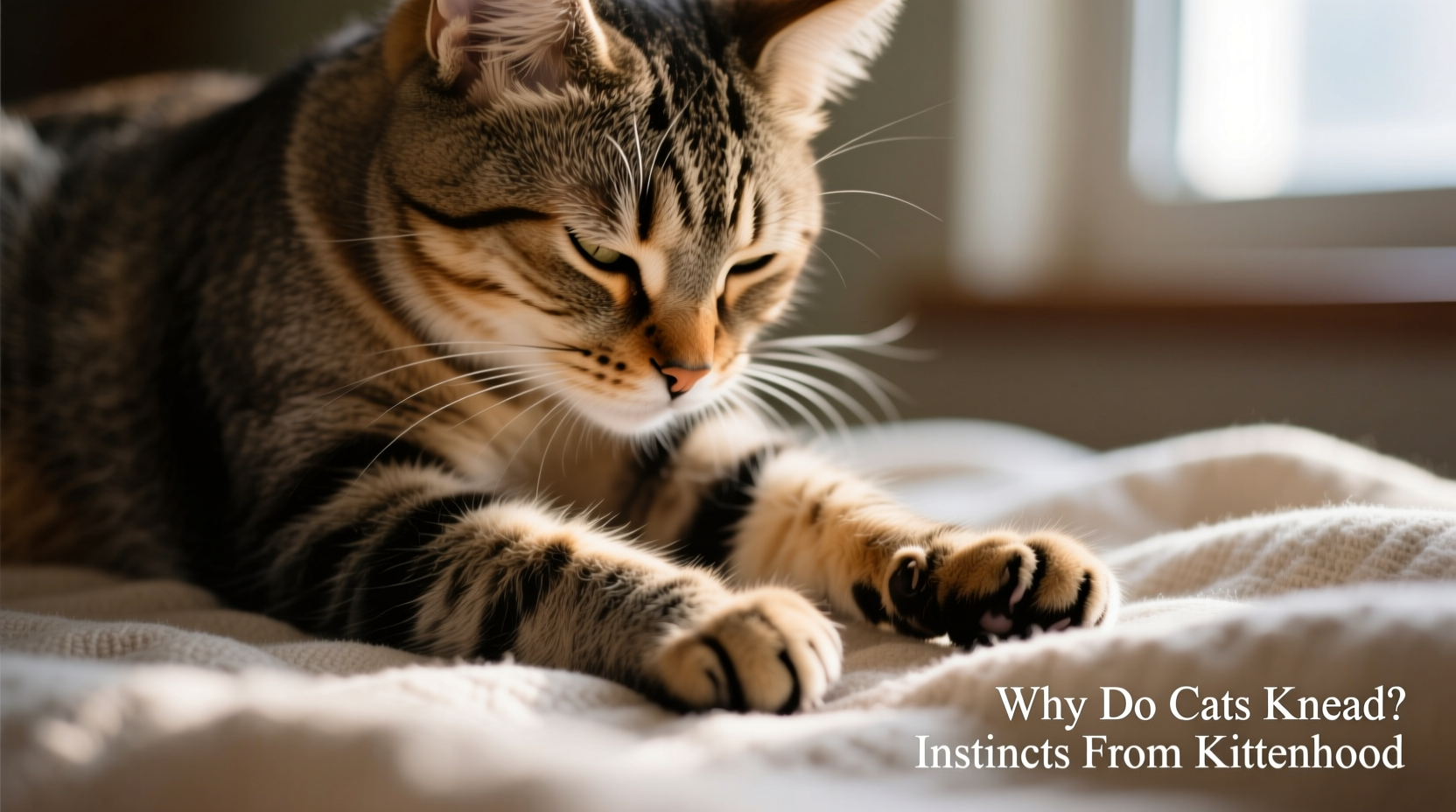
Kneading begins in the earliest days of a cat’s life. Newborn kittens, blind and entirely dependent, use their front paws to massage their mother’s mammary glands. This motion stimulates milk flow, ensuring nourishment during nursing. The behavior is both functional and comforting—it links tactile stimulation with warmth, food, and safety. Over time, this physical act becomes associated with feelings of security and contentment.
Even after weaning, many cats retain this behavior into adulthood. When a grown cat climbs onto a lap and begins to rhythmically press its paws, it’s not trying to nurse. Instead, it’s reliving a primal sense of comfort. The act triggers the same neurological pathways that once signaled survival and well-being. In essence, adult kneading is a behavioral echo—a throwback to one of the first experiences of trust and care.
Tip: If your cat kneads you frequently, offer a soft blanket or cushion nearby. This gives them a designated surface while protecting your skin or clothing.Instinctual Functions Beyond Infancy
While the nursing connection explains the origin of kneading, adult cats engage in this behavior for several evolved reasons. These functions reflect both physical and emotional instincts shaped by evolution.
Scent Marking and Territory Claiming
Cats have scent glands in the soft pads of their paws. Each time they knead, they release pheromones—chemical signals that communicate ownership and familiarity. To humans, these scents are undetectable, but to other animals, they broadcast a clear message: “This space (or person) belongs to me.”
This form of marking isn’t aggressive; rather, it’s a way for cats to make their environment feel safe. By leaving their scent on a couch, bed, or even a human companion, they reinforce a sense of belonging. It’s a self-soothing strategy, transforming neutral spaces into emotionally secure zones.
Nesting and Comfort Preparation
In the wild, cats would knead tall grass or foliage to create a soft, level spot for resting or giving birth. This nesting instinct persists in domesticated cats, who may knead blankets or cushions before settling down. Even in a safe home, the urge to “fluff” their sleeping area remains hardwired.
This behavior is especially common in female cats, whether spayed or intact, suggesting an evolutionary link to maternal preparation. The rhythmic motion may help assess the firmness and safety of a surface, ensuring it’s suitable for vulnerable activities like sleep or birthing.
Stress Relief and Emotional Regulation
Kneading has a meditative quality. The repetitive motion can lower heart rate and promote relaxation, much like rocking or thumb-sucking in humans. Cats under stress—due to environmental changes, new pets, or loud noises—may resort to kneading as a coping mechanism.
Veterinary behaviorists note that cats deprived of early maternal contact or separated too soon from their mothers are more likely to exhibit persistent kneading into adulthood. This suggests the behavior can become a compensatory mechanism when early comfort is disrupted.
“Kneading is one of the clearest examples of how early kitten experiences shape adult feline behavior. It’s not just habit—it’s emotional memory in motion.” — Dr. Lena Reyes, Feline Behavioral Specialist
Why Some Cats Knead More Than Others
Not all cats knead, and the frequency varies widely among individuals. Several factors influence whether and how often a cat engages in this behavior:
- Breed tendencies: Certain breeds, such as Siamese, Ragdolls, and Maine Coons, are more prone to kneading, possibly due to higher sociability and affection levels.
- Early life experience: Kittens allowed to stay with their mothers for at least 8–10 weeks are less likely to over-knead as adults, suggesting proper socialization reduces dependency behaviors.
- Personality: Calmer, more affectionate cats tend to knead more frequently than aloof or independent ones.
- Environment: Cats in stable, low-stress homes may knead as a sign of contentment, while those in unpredictable environments might use it more for self-soothing.
Practical Implications for Cat Owners
Understanding the roots of kneading allows owners to respond appropriately—supporting their cat’s emotional health without compromising comfort or furniture.
When Kneading Becomes Problematic
While generally harmless, kneading can sometimes lead to issues:
- Damaged upholstery or clothing from sharp claws.
- Pain or discomfort if the cat uses excessive force or claws extend unintentionally.
- Overstimulation, where prolonged petting combined with kneading leads to sudden aggression (“petting-induced arousal”).
Recognizing the signs of overstimulation—such as tail flicking, flattened ears, or skin rippling—can help prevent negative outcomes. It’s important to respect a cat’s limits, even during seemingly affectionate moments.
Tip: Trim your cat’s claws regularly or use soft nail caps to reduce damage during kneading sessions.Encouraging Healthy Expression of the Behavior
Rather than discouraging kneading, which could increase anxiety, provide outlets that satisfy the instinct safely. Redirecting the behavior ensures your cat feels secure without sacrificing your belongings.
Actionable Checklist: Supporting Your Cat’s Kneading Instinct
Use this checklist to create a supportive environment for your kneading cat:
- Provide soft, washable blankets or cat beds in favorite lounging spots.
- Place a fleece-covered pillow on your lap when expecting cuddle time.
- Regularly trim claws or apply soft vinyl nail covers.
- Avoid punishing or startling your cat during kneading—it’s a natural, calming behavior.
- Observe context: Frequent kneading after changes (new pet, move, etc.) may signal stress.
- Consider pheromone diffusers (like Feliway) if kneading increases suddenly alongside anxiety signs.
Step-by-Step Guide: How to Respond When Your Cat Starts Kneading
Follow this sequence to manage kneading positively:
- Pause and observe: Note your cat’s body language. Are they relaxed? Purring? This indicates contentment.
- Protect your skin: Place a thick blanket or cushion between your lap and the cat if claws are involved.
- Allow the behavior: Let them continue uninterrupted unless signs of overstimulation appear.
- End gently: If petting must stop, do so slowly—avoid pulling away abruptly.
- Redirect if needed: Offer a nearby soft toy or bed to encourage continuation off your body.
Real-Life Example: Bella and the Post-Move Anxiety
Bella, a 4-year-old tabby, had always kneaded occasionally—mostly when settling into her favorite armchair. After her family moved to a new apartment, her kneading intensified. She began pressing into her owner’s chest hourly, sometimes with enough force to leave marks. Concerned, the owner consulted a veterinary behaviorist.
The specialist explained that the change in environment had disrupted Bella’s sense of security. Her increased kneading was an attempt to reestablish familiarity through scent marking and self-soothing. The solution wasn’t to stop the behavior but to support it constructively.
The family introduced a heated cat bed sprayed with synthetic feline facial pheromones and placed it near a sunlit window. They also started using a soft fleece mat during lap sessions. Within three weeks, Bella’s kneading returned to baseline levels. She still made biscuits—but now mostly on her own terms and preferred surfaces.
Do’s and Don’ts of Managing Kneading Behavior
| Do | Don’t |
|---|---|
| Provide soft surfaces for kneading | Yell at or punish your cat for kneading |
| Trim claws regularly | Pull your cat off mid-knead without warning |
| Use pheromone sprays to enhance comfort | Assume excessive kneading is always playful |
| Monitor for signs of stress or pain | Ignore sudden behavioral changes linked to kneading |
Frequently Asked Questions
Is kneading a sign of dominance?
No. Despite releasing scent, kneading is not an act of dominance. It’s primarily a self-comforting and marking behavior tied to security, not hierarchy. Cats don’t knead to assert control but to feel safe.
Why does my cat drool when kneading?
Drooling during kneading is common and usually benign. It’s often linked to intense relaxation and nostalgia for kittenhood, when sucking and swallowing were part of feeding. As long as the cat is healthy, this is a positive sign of deep contentment.
Should I be concerned if my older cat starts kneading suddenly?
A sudden onset of kneading in a senior cat warrants attention. While it could simply reflect increased need for comfort, it may also indicate cognitive decline, anxiety, or pain. Consult your veterinarian if the behavior appears alongside confusion, vocalization, or litter box issues.
Conclusion: Embracing the Biscuit-Making Ritual
Kneading is more than a cute quirk—it’s a window into a cat’s inner world. Rooted in survival, shaped by emotion, and sustained by instinct, this behavior connects past and present, kitten and adult, animal and caregiver. When a cat kneads you, they’re not just pressing paws into fabric; they’re expressing trust, marking you as family, and returning, momentarily, to the safest place they’ve ever known.
Instead of viewing kneading as a nuisance, consider it a compliment—a living testament to the bond you’ve built. With thoughtful management and empathy, you can honor this instinctual ritual while keeping both your cat and your sofa intact.
💬 Does your cat knead? Share your story or tips in the comments—your experience could help another cat lover understand this beautiful behavior.








