
It’s a familiar sight: your cat settles into a cozy spot, presses its paws rhythmically into a soft blanket or your lap, and begins the gentle push-pull motion known as kneading. Often called “making biscuits,” this behavior is both endearing and puzzling. Why do cats knead blankets? What drives this repetitive paw motion that seems to serve no immediate purpose? The answer lies deep in feline biology, early development, and emotional expression. Understanding this instinctive act reveals more than just a quirky habit—it offers insight into how cats communicate comfort, territory, and affection.
The Origins of Kneading: A Behavior Rooted in Kittenhood
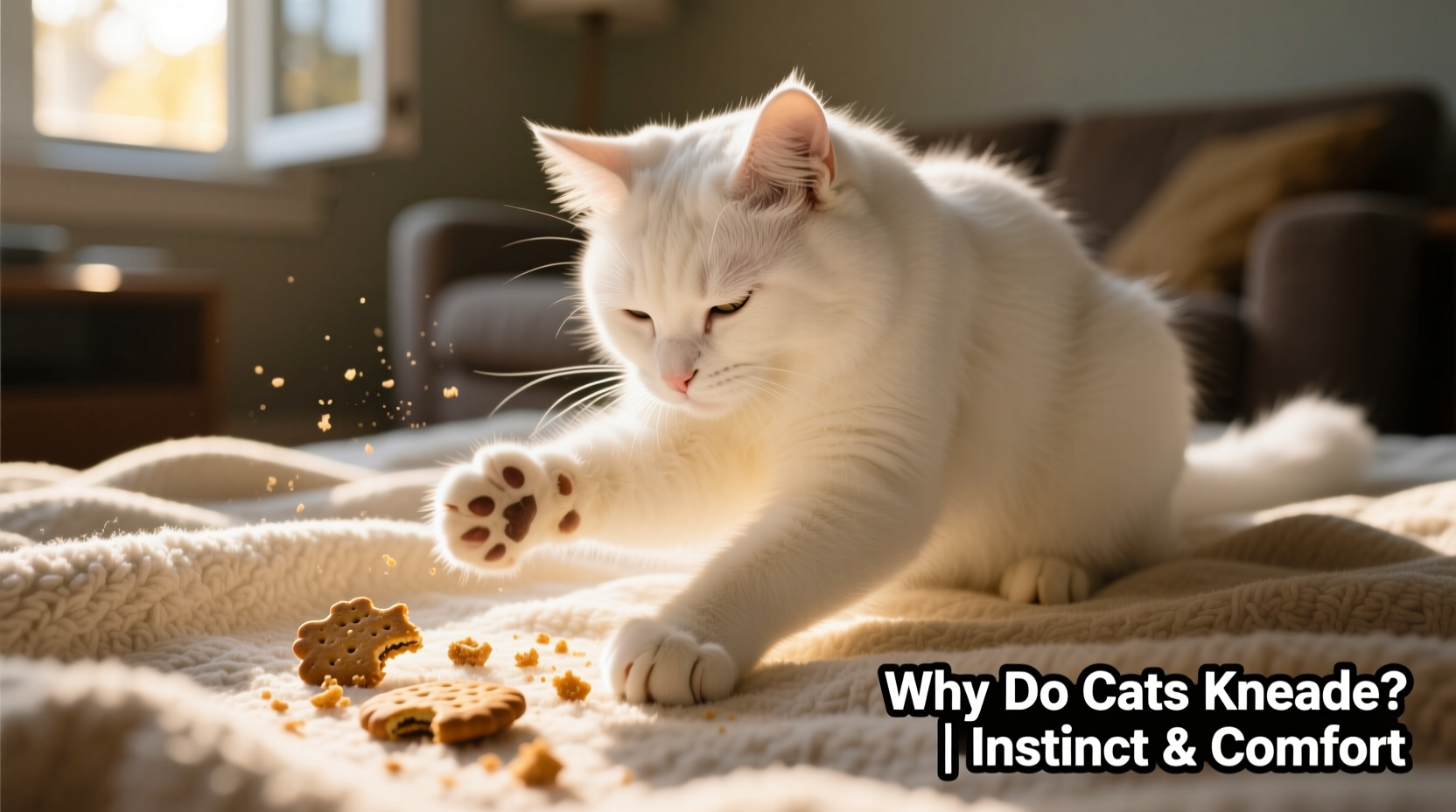
Kneading begins in the first days of life. Newborn kittens rely on this motion to stimulate milk flow from their mother’s mammary glands. By pressing their tiny paws against her belly, they trigger the let-down reflex, ensuring nourishment. This early association links kneading with warmth, safety, nutrition, and maternal bonding.
As cats grow, they often retain this behavior into adulthood—even if they’ve been weaned for years. The persistence of kneading reflects what ethologists call a \"fixed action pattern\": an innate, hardwired sequence of behaviors that continues even when the original survival need has passed.
This doesn’t mean adult cats believe they’re nursing. Instead, the physical sensation of pushing into something soft likely evokes deep-seated feelings of security and contentment. It's not uncommon for cats to purr, drool, or half-close their eyes while kneading—further signs that they are mentally transported back to a state of infantile calm.
Tip: If your cat kneads during petting sessions, it’s a strong sign of trust and emotional comfort. Respect their boundaries—if they walk away, don’t force continued interaction.Instinctual Drives Behind Adult Kneading
While nursing is the starting point, adult cats knead for several evolved reasons tied to survival instincts and social behavior.
1. Scent Marking Through Paw Glands
Cats have scent glands in the soft pads of their paws. When they knead, these glands release pheromones—chemical signals that mark territory and convey emotional states. To humans, a blanket may seem neutral, but to a cat, it becomes infused with their personal signature.
This olfactory marking helps create a familiar environment. In multi-cat households, you might observe different cats kneading the same spot—one asserting ownership, another reinforcing shared space.
2. Nesting and Comfort Preparation
In the wild, cats would knead tall grass or leaves to flatten them into a makeshift bed. This nesting instinct persists in domestic cats, even when plush beds are readily available. Kneading a blanket mimics this preparation ritual, helping them shape a secure, comfortable resting place.
Interestingly, cats often knead shortly before lying down. This timing supports the theory that the behavior serves as a final environmental check—softening the surface, testing temperature, and confirming safety.
3. Stress Relief and Emotional Regulation
Just as humans might rock or fidget when anxious, some cats use kneading as a self-soothing mechanism. The rhythmic motion can lower heart rate and promote relaxation. Cats in shelters or new homes may knead more frequently as they adjust to unfamiliar surroundings.
“Kneading is one of the clearest examples of a kitten behavior that persists because it works—emotionally and physiologically—for adult cats.” — Dr. Sarah Ellis, Feline Behavior Researcher, University of Lincoln
When Kneading Becomes Problematic: Managing Claws and Discomfort
While kneading is natural, it can sometimes lead to unintended consequences—especially when directed at human skin or delicate fabrics. Sharp claws can cause scratches, snag clothing, or damage upholstery over time.
The key is not to discourage the behavior entirely, but to redirect it appropriately. Punishing a cat for kneading can erode trust and increase anxiety, counteracting the very comfort the act provides.
Practical Solutions for Coexistence
- Trim nails regularly: Keeping claws blunt reduces scratching risk without interfering with kneading.
- Use protective barriers: Place a thick blanket or cushion between your lap and the cat during kneading sessions.
- Provide alternative surfaces: Offer a designated “kneading pad”—a soft fleece mat or old sweater—to channel the behavior.
- Train with redirection: Gently lift the cat and move them to their preferred surface when they begin kneading inappropriately.
| Situation | Recommended Action | Avoid |
|---|---|---|
| Cat kneads on your leg with claws out | Place a folded towel underneath; trim claws weekly | Pulling away abruptly or scolding |
| Cat damages furniture | Offer a textured scratching post nearby | Using sprays that punish natural behavior |
| Cat kneads obsessively | Check for stressors; consult a vet if sudden increase | Ignoring possible medical or anxiety causes |
Decoding the Emotional Language of Kneading
Kneading isn’t just a mechanical act—it’s a form of nonverbal communication. How, when, and where a cat kneads can reveal their emotional state and relationship with you.
For example, a cat that kneads only in your presence is signaling deep attachment. They associate you with safety and comfort, much like they did with their mother. If they purr simultaneously, it’s a near-guarantee they feel completely at ease.
Conversely, excessive or frantic kneading—especially if accompanied by vocalization or restlessness—may indicate underlying stress or discomfort. Senior cats with cognitive decline, for instance, may knead repetitively due to confusion.
Mini Case Study: Luna, the Rescue Cat
Luna, a three-year-old domestic shorthair adopted from a shelter, initially avoided human contact. Over weeks of consistent routine and quiet interaction, she began approaching her owner’s lap. One evening, after settling onto a wool blanket, she started kneading slowly—then faster—with eyes half-closed and a soft purr emerging.
Her owner noted this was the first clear sign Luna felt safe. Over time, the kneading became more frequent and relaxed. No other behavioral training was needed; the simple return of this instinctive behavior marked a turning point in emotional recovery.
This case illustrates how kneading functions as both a coping mechanism and a milestone in trust-building—especially for cats with traumatic pasts.
Step-by-Step: Encouraging Healthy Kneading Habits
If you want to support your cat’s natural tendencies while protecting your home and skin, follow this practical timeline:
- Week 1: Observe patterns – Note when and where your cat kneads. Is it before naps? During petting? On specific materials?
- Week 2: Introduce a kneading zone – Place a soft, washable mat in their favorite lounging area. Rub it with a cloth from their bedding to add familiar scent.
- Week 3: Redirect gently – When they start kneading on furniture or skin, calmly pick them up and place them on the mat. Reward with verbal praise (not treats, to avoid conditioning food dependence).
- Week 4: Maintain consistency – Repeat redirection daily. Trim claws every 10–14 days. Wash the kneading mat weekly to keep it hygienic and appealing.
- Ongoing: Monitor changes – Sudden increases or cessation of kneading could signal health issues. Consult your vet if accompanied by lethargy, aggression, or litter box avoidance.
Frequently Asked Questions
Is kneading a sign of dominance?
No. Kneading is not about asserting control or hierarchy. It’s primarily a comfort-driven behavior linked to early nursing and emotional regulation. While it does involve scent marking, this is more about creating familiarity than claiming superiority.
Why does my cat drool when kneading?
Drooling during kneading is common and usually harmless. It’s often a carryover from kittenhood, when sucking and swallowing were part of feeding. Combined with purring and half-closed eyes, drooling typically indicates extreme relaxation—your cat is emotionally regressed to a blissful, infant-like state.
Should I be concerned if my older cat stops kneading?
A decrease in kneading with age can be normal due to arthritis or reduced mobility. However, if the change is sudden or paired with other behavioral shifts (e.g., hiding, decreased grooming), it’s worth discussing with a veterinarian. Pain or cognitive dysfunction could be underlying factors.
Conclusion: Embracing the Biscuit-Making Ritual
Kneading is more than a cute quirk—it’s a window into a cat’s inner world. From primal survival instincts to expressions of love and security, this behavior bridges kittenhood and adulthood, biology and emotion. When your cat makes biscuits on your lap, they aren’t just pressing paws into fabric; they’re sharing a moment of vulnerability, trust, and deep-seated comfort.
Instead of seeing kneading as a nuisance, reframe it as a compliment. Your cat feels safe enough to revert to one of their most infantile, instinctive acts. With thoughtful management—claw care, appropriate surfaces, and patient redirection—you can preserve both your furnishings and this special bond.
💬 Does your cat make biscuits? Share your stories, tips, or questions in the comments—let’s celebrate the little rituals that make cat ownership so uniquely rewarding.








