It’s a familiar scene for many cat owners: you open a can of wet food, and before you’ve even set the bowl down, your cat dashes off—only to return moments later with a crumpled toy mouse clamped in their jaws. They drop it right beside (or sometimes directly into) their food bowl, stare at you expectantly, then sit back as if they’ve completed an essential ritual. While this behavior might seem whimsical or even bizarre, it’s actually rooted in deep feline instincts, social dynamics, and emotional expression. Understanding why cats engage in this peculiar habit offers valuable insight into their complex minds and strengthens the bond between pet and owner.
The Instinctual Roots of Toy-Burying Behavior
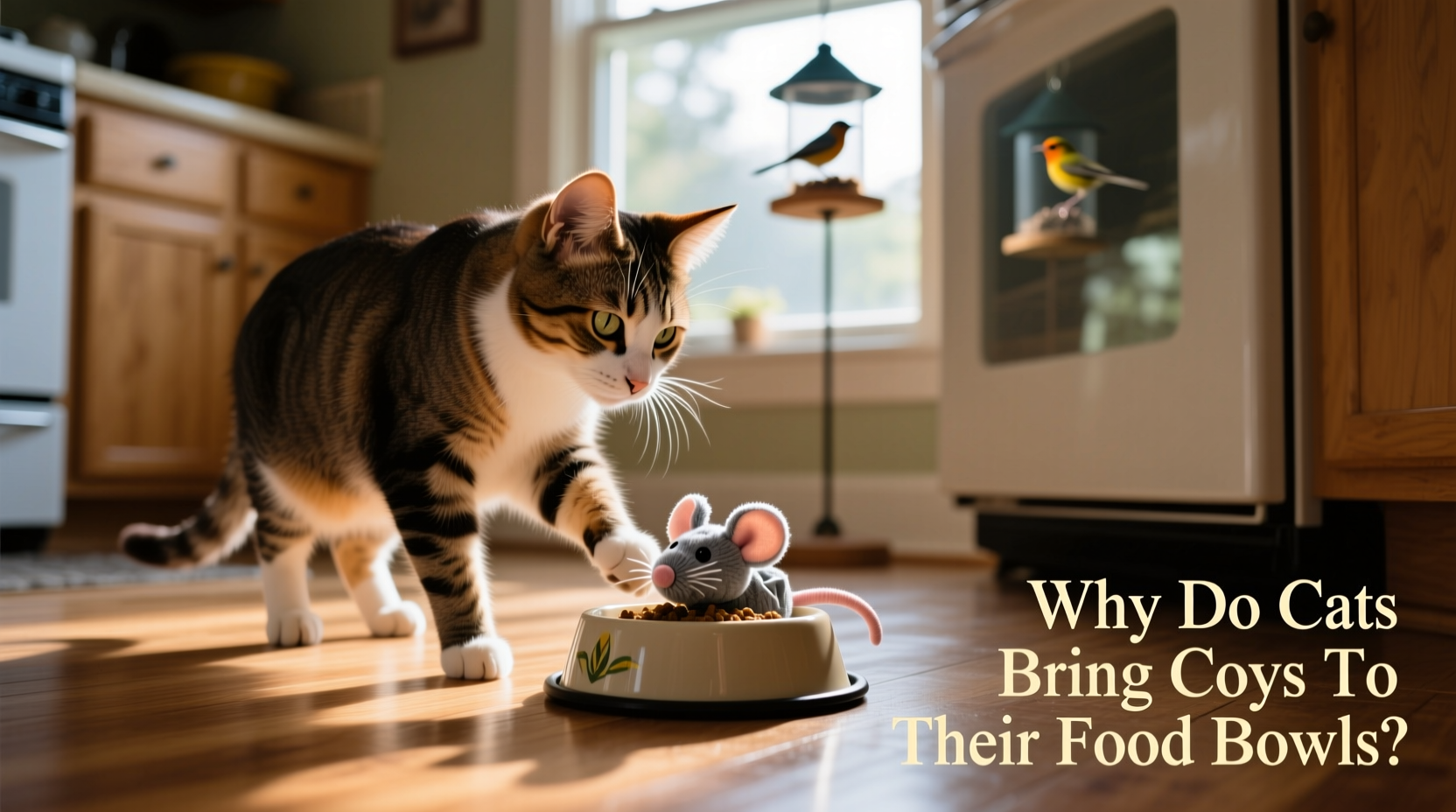
Cats are hardwired hunters. Even domesticated felines retain the behavioral patterns of their wild ancestors. In the wild, after making a kill, a cat may carry prey to a safe location before eating—either to protect it from scavengers or to share it with kittens. When your cat brings a toy to their food bowl, they’re not just playing; they’re acting on instinctual drives that have evolved over millennia.
This behavior mirrors caching—the act of hiding surplus food for later consumption. Although your cat doesn’t need to hunt for survival, their brain still processes toys as “prey.” By bringing the toy to their feeding area, they may be symbolically storing it in a secure zone where resources are concentrated. The food bowl becomes a central hub—a place associated with sustenance, safety, and routine.
“Cats don’t distinguish sharply between play and predation. A toy is prey in their mind, and bringing it to their food space is a natural extension of resource management.” — Dr. Lydia Chen, Feline Ethologist, University of Edinburgh
Social Bonding and Gift-Giving Rituals
Another compelling explanation lies in the social structure of cats. Unlike dogs, which evolved from pack animals, cats are solitary hunters but have developed nuanced ways of forming bonds—with both humans and other cats. One such method is gift-giving.
When a mother cat brings injured prey to her kittens, she’s teaching them how to eat and hunt. Similarly, when your cat drops a toy at your feet—or next to their food bowl—it may be an attempt to “share the bounty” with you, their trusted companion. This gesture signifies trust and inclusion in their inner circle.
In multi-cat households, this behavior can also reflect social hierarchy. A dominant cat might bring toys to the feeding area as a way of marking territory or asserting control over shared resources. Conversely, a more submissive cat might leave toys near the bowl as a peace offering or appeasement gesture.
Tip: If your cat frequently brings toys to their food bowl, respond positively—even if it seems odd. Acknowledge the gesture with gentle praise or a brief play session to reinforce their sense of security.Environmental Triggers and Routine Reinforcement
Domestic cats thrive on routine. Feeding time is often the most predictable and emotionally charged part of their day. It’s no surprise, then, that other significant behaviors cluster around this event. The sound of a can opening, the sight of a food bag, or even your movement toward the pantry can trigger a cascade of conditioned responses.
If your cat has learned that bringing a toy leads to attention, playtime, or affection during meals, they may repeat the behavior to elicit that response. Over time, this becomes a reinforced ritual—part habit, part communication.
Additionally, some cats associate certain toys with hunting success. After “capturing” a feather wand or plush bird, they may feel compelled to present it where food is consumed, mimicking the completion of a successful hunt. This is especially common in indoor cats who lack real prey but still experience strong predatory urges.
Common Environmental Cues That Trigger Toy-Dropping
- Sound of food packaging or can opener
- Owner approaching the kitchen or feeding station
- Presence of other pets during mealtime
- Time-based routines (e.g., feeding always at 7 AM)
- Post-play excitement coinciding with feeding
Emotional Expression and Anxiety Signals
While many instances of toy-carrying are harmless or even endearing, they can occasionally signal underlying stress or anxiety. Cats use displacement behaviors—actions that seem out of context—to cope with uncertainty or internal conflict. Dropping toys near the food bowl could be one such behavior, especially if accompanied by other signs like excessive grooming, vocalization, or pacing.
For example, a cat in a busy household might feel conflicted during feeding times—excited by food but anxious about competition from other pets. Bringing a toy to the bowl could serve as a self-soothing mechanism, grounding them through a familiar action. Similarly, a newly adopted cat might use this ritual to create a sense of control in an unfamiliar environment.
It’s important to observe the full context. Is the behavior new? Does it happen only at certain times? Is the cat otherwise healthy and active? Sudden changes in behavior should prompt a veterinary consultation to rule out medical causes such as cognitive dysfunction or hyperthyroidism, which can affect feline behavior.
When to Be Concerned: Red Flags in Repetitive Behaviors
| Behavior | Normal? | Potential Concern |
|---|---|---|
| Brings toy once per meal, calm demeanor | Yes | No |
| Drops multiple toys aggressively | Maybe | Possibly obsessive-compulsive tendency |
| Refuses to eat until toy is removed | No | Anxiety or food aversion issue |
| Carries toy constantly, even while sleeping | Rarely | Attachment disorder or stress |
Mini Case Study: Luna and the Pink Mouse
Luna, a three-year-old tabby living in a two-person apartment in Portland, began bringing her favorite pink plush mouse to her food bowl every evening after dinner. Her owners initially found it charming, but when she started refusing to eat unless the toy was placed beside the bowl, they grew concerned.
After consulting a feline behaviorist, they discovered that Luna had been rehomed twice before adoption. Her current routine—feeding at exactly 7:15 PM—provided much-needed stability. The pink mouse had become a transitional object, helping her shift from daytime solitude to evening interaction. The behavior wasn’t compulsive; it was ritualistic and comforting.
The solution wasn’t to stop the behavior, but to honor it. Her owners now place the toy next to the bowl each night, turning it into a shared ritual. Over time, Luna has become more confident and less dependent on the toy, though she still enjoys the ceremony.
Step-by-Step Guide: Responding to Your Cat’s Toy Ritual
Understanding *why* your cat brings toys to their food bowl is only half the battle. How you respond matters just as much. Follow this sequence to support your cat’s well-being while maintaining healthy boundaries.
- Observe Without Judgment: For one week, note when and how often the behavior occurs. Record any triggers (e.g., feeding time, presence of guests).
- Assess Emotional State: Look for signs of stress—dilated pupils, flattened ears, tail flicking. A relaxed posture suggests the behavior is normal.
- Acknowledge the Gesture: Say something gentle like “Thank you for sharing,” or offer a quick pet. This validates your cat’s effort to communicate.
- Maintain Consistent Routines: Feed at the same times daily. Predictability reduces anxiety and reinforces positive associations.
- Rotate Toys Strategically: Introduce new toys weekly to prevent fixation on one object. Store others out of sight to renew interest.
- Consult a Professional if Needed: If the behavior disrupts eating, sleep, or household harmony, seek advice from a certified feline behavior consultant.
Checklist: Supporting Healthy Feline Behavior Around Feeding
- ✅ Keep feeding area quiet and free from foot traffic
- ✅ Use puzzle feeders to stimulate natural foraging instincts
- ✅ Provide separate spaces for eating, playing, and resting
- ✅ Avoid punishing or scolding toy-carrying behavior
- ✅ Monitor for sudden changes in appetite or activity level
- ✅ Schedule annual vet checkups to rule out medical issues
Frequently Asked Questions
Is it normal for cats to bring toys to their food bowls?
Yes, it’s very common and generally considered normal behavior. It stems from instinctual hunting and caching patterns, as well as social bonding. As long as the cat is healthy and not distressed, there’s no cause for concern.
Should I remove the toy from the food bowl?
If the toy isn’t interfering with eating or hygiene, it’s best to leave it. Removing it abruptly may confuse or upset your cat. If cleanliness is a concern, gently move the toy aside after the meal and return it afterward.
Can this behavior indicate a medical problem?
Rarely, yes. Sudden onset of obsessive toy-carrying, especially when paired with changes in appetite, litter box use, or sleep patterns, could signal cognitive decline, pain, or neurological issues. Always consult your veterinarian if you notice abrupt behavioral shifts.
Conclusion: Embracing the Quirks of Feline Communication
Cats don’t speak our language, but they communicate constantly—through body posture, vocalizations, and symbolic actions like bringing toys to their food bowls. What might seem like odd pet behavior is often a window into their ancestral past, emotional state, and relationship with you. Rather than discouraging these rituals, consider them invitations to understand your cat more deeply.
By responding with patience, observation, and respect, you nurture a bond built on mutual trust. The next time your cat trots toward their dinner with a crinkly ball in tow, remember: they’re not being strange—they’re being perfectly feline.
💬 Has your cat ever brought toys to their food bowl? Share your story in the comments—your experience might help another pet owner feel less alone!








