When it comes to holiday decor, few elements draw as much attention as the Christmas tree. And while the lights, ornaments, and treetop star all contribute to its charm, one often-overlooked detail can make or break your tree’s appearance in photographs: how well the base conceals the stand. Whether you're staging a festive Instagram post, preparing for family portraits, or simply aiming for a polished look in your living room, hiding the metal or plastic stand is essential. Two popular solutions dominate the market—tree collars and tree skirts—but they differ significantly in function, style, and photographic performance. Understanding their strengths and limitations helps you choose the best option for a seamless, camera-ready display.
Understanding Tree Collars and Tree Skirts
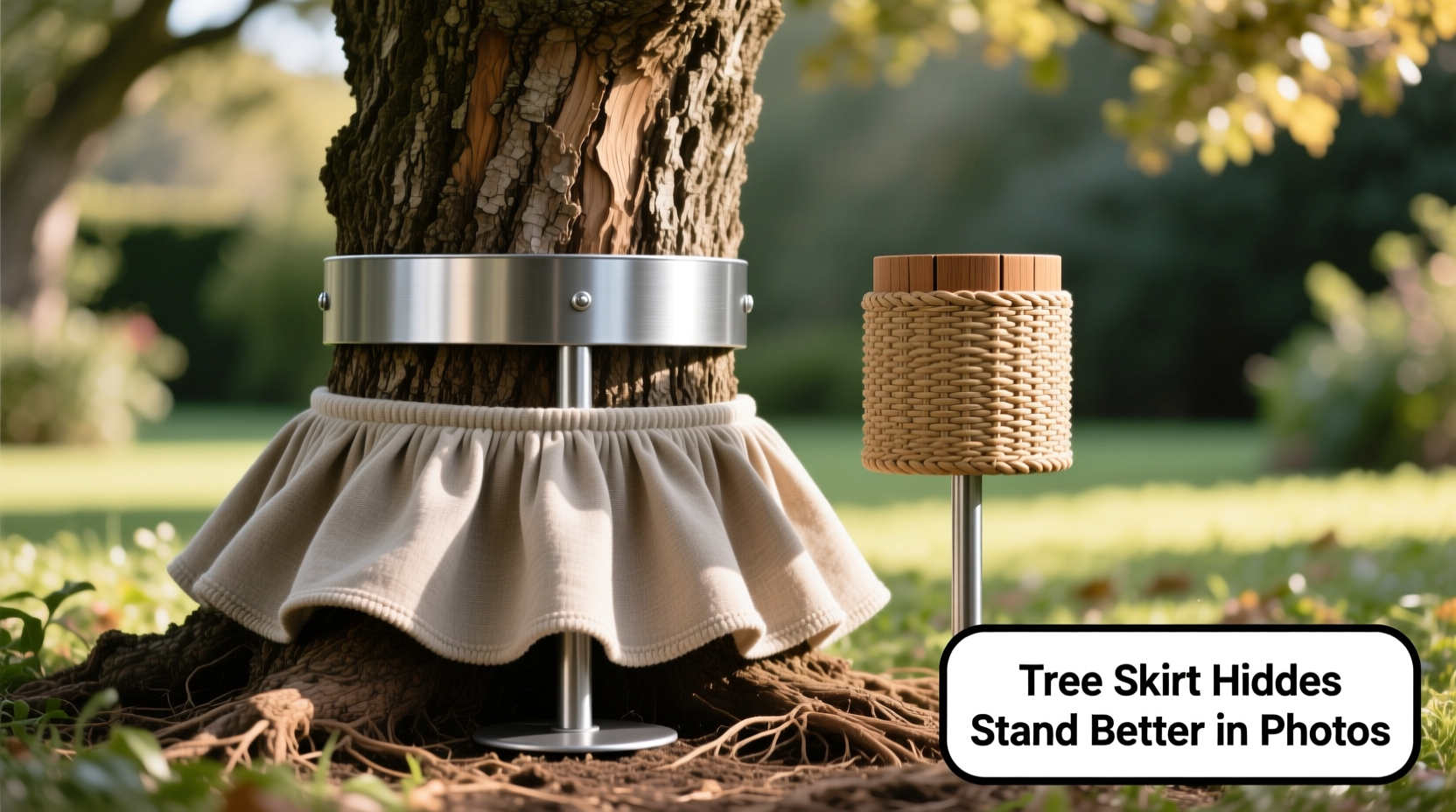
A tree skirt is a traditional fabric circle placed around the base of the tree, typically draped over the stand. It serves both decorative and practical purposes, catching pine needles and adding seasonal flair. Most tree skirts feature a central opening through which the tree trunk passes, allowing the skirt to sit flat on the floor. They come in a wide range of materials—from velvet and faux fur to burlap and embroidered cotton—and are often embellished with holiday motifs like snowflakes, reindeer, or holly.
In contrast, a tree collar is a rigid or semi-rigid ring that encircles the tree trunk at its base. Unlike a skirt, it does not extend across the floor. Instead, it creates a clean, elevated border that completely covers the stand. Tree collars are commonly made from wood, metal, wicker, or fabric-wrapped foam, and they emphasize minimalism and modern design. Because they don’t lie flat, they avoid issues like tripping hazards or pet interference, making them increasingly popular in contemporary homes.
The fundamental difference lies in coverage: skirts spread outward; collars wrap upward. This structural distinction directly impacts how effectively each option hides the tree stand—especially in photographs taken from various angles.
Photographic Performance: Coverage and Angle Sensitivity
In photography, perspective is everything. A tree may look flawless from the front but reveal awkward gaps or visible stands when shot from the side or above. This is where the choice between a collar and a skirt becomes critical.
Tree skirts, while charming, often struggle with full concealment. Even when properly centered, the fabric tends to bunch or shift, especially after pets or children pass by. More importantly, because skirts lie horizontally, any camera angle above 30 degrees (common in smartphone shots) exposes the lower portion of the stand. The gap between the trunk and the skirt’s inner edge frequently reveals metallic legs, water reservoirs, or adjustment knobs—elements that disrupt the illusion of a natural, freestanding tree.
Tree collars, by design, rise vertically around the trunk. Their height—typically ranging from 6 to 12 inches—creates a continuous barrier that blocks the stand from nearly every viewing angle. When photographed from above, eye level, or below, the collar maintains its integrity without shifting. There’s no fabric to flatten or pull away from the trunk. As a result, collars provide a more consistent and professional appearance in still images and videos alike.
Tip: For maximum photo readiness, choose a tree collar with a height of at least 8 inches to fully obscure standard stand components.Material and Design Impact on Visual Appeal
Both collars and skirts offer diverse aesthetic options, but their materials influence how naturally they blend into holiday imagery.
Fabric skirts introduce texture and warmth, ideal for cozy, rustic, or traditional themes. However, their soft edges can appear messy in high-resolution photos if not perfectly arranged. Wrinkles, folds, or uneven draping become magnified under bright lighting or close-up shots. Additionally, lighter-colored skirts may reflect glare, drawing attention to the base rather than hiding it.
Tree collars, especially those made from natural materials like unfinished wood or woven rattan, project a curated, editorial look. Their structured form holds shape consistently, making them favored by interior photographers and influencers. Metallic collars in gold or black add a luxe finish without overwhelming the scene. Fabric-covered collars offer a middle ground—soft to the touch but firm enough to maintain clean lines in photos.
One limitation of collars is their reduced surface area for decoration. Skirts allow for scattered presents, faux snow, or pinecones to be arranged over the fabric, creating a fuller base. Collars require creative styling—such as placing gifts behind or beside them—to achieve a similar layered effect without compromising the clean line that makes them photogenic.
Comparison Table: Tree Collar vs Tree Skirt for Stand Concealment
| Feature | Tree Collar | Tree Skirt |
|---|---|---|
| Stand Coverage (Front View) | Excellent | Good |
| Stand Coverage (Side/Angle View) | Excellent | Poor to Fair |
| Shape Retention | High (rigid structure) | Low (fabric shifts easily) |
| Photogenic Consistency | High | Moderate |
| Decorative Flexibility | Moderate | High |
| Ease of Use with Pets/Children | High (no tripping) | Low (loose fabric) |
Real-World Example: A Photographer’s Holiday Setup
Sarah Lin, a lifestyle photographer based in Portland, specializes in seasonal home features for magazines and brands. Every December, she styles multiple trees for clients aiming for “picture-perfect” holiday campaigns. In her experience, tree collars have become non-negotiable for professional shoots.
“I used to work with skirts for years,” she explains. “But I kept having to retouch the base in post-production—erasing parts of the stand that peeked out from under the fabric. Clients wanted that effortless, magazine-cover look, and skirts just couldn’t deliver consistently. Once I switched to wooden collars, my setup time dropped by half, and the number of reshoots due to visible stands went to zero.”
For a recent shoot with a minimalist Scandinavian theme, Sarah used a 10-inch white-washed wood collar. She arranged gifts in varying sizes behind the tree, ensuring the collar remained unobstructed. The overhead shots—crucial for social media content—showed a clean, uninterrupted base. “The collar acted like a frame,” she says. “It defined the tree’s footprint without competing with it.”
“From a photographer’s standpoint, a tree collar is like using a shallow depth of field—it directs focus exactly where you want it.” — Sarah Lin, Lifestyle Photographer
Step-by-Step Guide: Choosing and Styling for Photo-Ready Results
- Assess your stand type. Measure the height and width of your tree stand. Standard stands are 6–8 inches tall; taller collars (9+ inches) will hide them completely.
- Determine your primary viewing angle. If most photos will be taken at eye level or above (e.g., smartphone shots), prioritize vertical coverage—a collar is ideal.
- Select material based on lighting. Glossy or reflective surfaces (like metallic skirts) may cause glare. Matte-finish collars perform better under varied indoor lighting.
- Test placement before decorating. Place the tree in the collar or over the skirt and walk around it. Check for gaps at different angles, especially where the trunk meets the base.
- Style strategically. With a collar, place presents beside or behind it. With a skirt, avoid piling items too close to the trunk, which can lift the fabric and expose the stand.
- Secure in high-traffic areas. Use double-sided tape under skirts to prevent sliding. Collars generally stay in place but should rest evenly on the floor.
Checklist: Ensuring Your Tree Base Is Photo-Ready
- ✅ Measure your tree stand height to ensure full coverage
- ✅ Choose a collar with minimum 8-inch height for reliable concealment
- ✅ Avoid overly bulky skirts that create uneven folds
- ✅ Style presents and decor to complement—not compromise—base coverage
- ✅ Test visibility from multiple angles before finalizing setup
- ✅ Use a level surface to prevent tilting that exposes one side of the stand
Frequently Asked Questions
Can I use a tree skirt and collar together?
Yes, some decorators combine both for added texture and security. Place the collar around the trunk first, then drape a smaller, fitted skirt around its base. This layered approach works well for themed decor but requires careful alignment to avoid bulkiness.
Do tree collars work with artificial trees?
Absolutely. Most artificial trees have collapsible stands similar in size to real tree bases. As long as the collar’s inner diameter accommodates the trunk width, it will effectively hide the stand. Many pre-lit trees even benefit more from collars due to visible wiring at the base.
Are tree collars harder to store than skirts?
They can be, depending on material. Rigid wooden or metal collars require more space than foldable fabric skirts. However, many modern collars are designed in two or three segments for easy disassembly and compact storage.
Final Thoughts and Recommendation
When the goal is to hide the tree stand effectively in photographs, the tree collar emerges as the superior choice. Its vertical design, structural stability, and angle-resistant coverage make it ideal for capturing polished, professional-looking images with minimal effort. While tree skirts retain their charm for traditional settings and gift-heavy displays, they fall short in consistency and reliability—especially under the scrutiny of a camera lens.
That said, aesthetics matter. If your holiday theme leans heavily on nostalgia, warmth, or handmade touches, a well-styled skirt may still serve your vision. But for anyone prioritizing clean lines, social media appeal, or frequent photography, investing in a quality tree collar is a decision that pays off every time you snap a picture.
💬 Have you switched from a tree skirt to a collar? Share your experience and favorite styling tips in the comments!








