For pet owners who travel frequently or need to store their dog’s crate between uses, knowing how to efficiently and safely collapse a Kong dog crate is essential. These crates are designed for durability and security, but their folding mechanism can be confusing if you're unfamiliar with it. Done incorrectly, the process may damage the crate or lead to pinched fingers—or worse, stress your pet during disassembly. This guide breaks down every step with precision, offers pro tips, and includes practical advice so you can fold your Kong crate confidently, consistently, and without hassle.
Understanding Your Kong Dog Crate Design
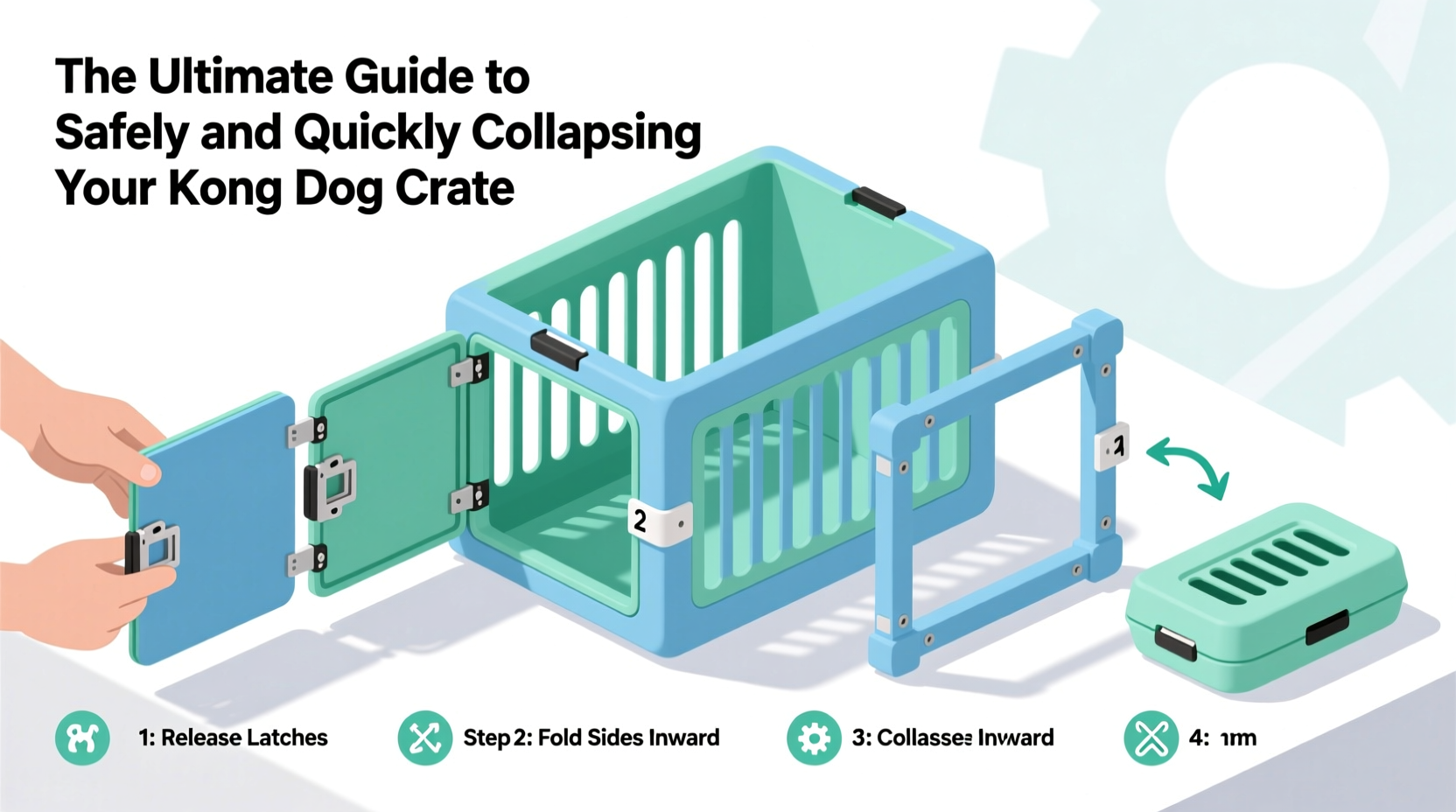
Kong dog crates are engineered for strength, ventilation, and portability. Most models use a collapsible wire-frame design with a patented latch system that allows the crate to lock securely when open and fold flat when not in use. Unlike generic folding crates, Kong models often feature reinforced corners, rust-resistant coating, and dual-locking doors for added safety.
The key components involved in collapsing the crate include:
- Side latches – Located on both ends, these release the frame tension.
- Hinge bars – Run along the top and bottom, allowing the crate to fold inward.
- Door panel – Must be fully unlatched before folding begins.
- Stabilizing feet – May need to be retracted or removed depending on model.
Because Kong manufactures multiple crate sizes—from small carriers for puppies to large XL versions for breeds like German Shepherds—the exact method may vary slightly. Always consult your user manual for model-specific details, but the general principles remain consistent across the product line.
Tip: Before attempting to collapse your crate, ensure all toys, bedding, and bowls are removed. A clutter-free interior prevents snags and ensures smooth folding.Step-by-Step Guide to Collapsing Your Kong Crate
Folding your Kong dog crate doesn’t have to be frustrating. Follow this proven sequence to do it safely and efficiently every time.
- Clear the crate completely. Remove any accessories, chew toys, blankets, or water bowls. Even a small item caught in the hinge can bend the frame.
- Open and secure the door fully. Swing the door open 180 degrees and hook it back using the built-in latch. This prevents it from snapping shut during collapse.
- Release the end caps. Locate the two plastic end panels (one at each short end). Press the center tab on each to disengage the locking mechanism.
- Lift the top frame gently. With both end caps released, lift upward on the top rail to disengage the vertical supports. You should feel the structure loosen.
- Fold inward from both sides. Apply even pressure to the left and right panels, guiding them toward the center. The hinges will allow the crate to concertina into itself.
- Secure with the strap or latch. Once fully collapsed, fasten the included nylon strap or side clip to keep the crate compact during storage or transport.
This entire process should take no more than 90 seconds once mastered. Practice it at home before needing to do it on the go—such as at a vet clinic or during travel.
Do’s and Don’ts of Crate Collapse
To protect both the integrity of your crate and your own safety, follow these best practices.
| Do’s | Don’ts |
|---|---|
| Always remove the dog before starting | Never attempt to fold the crate with your pet inside |
| Clean the crate monthly to prevent debris buildup in joints | Don’t force the frame if it resists—check for obstructions first |
| Store in a dry place to prevent rust | Don’t hang heavy items on the folded crate |
| Inspect latches regularly for wear | Don’t use excessive force; the mechanism is designed to release smoothly |
Real-Life Example: Traveling Stress-Free with a Folded Kong Crate
Sarah Thompson, a frequent traveler from Denver, adopted a rescue Border Collie named Juno last year. She quickly learned that airline-approved crates needed to be compact and easy to stow. After struggling with a competitor’s model that jammed repeatedly, she switched to a Kong Midsize Fold & Carry crate.
“On our first flight together, I had five minutes between landing and catching a connecting train,” Sarah recalls. “I cleared customs, pulled out the Kong, and folded it in under a minute. It fit perfectly in my overhead bag. That wouldn’t have been possible with our old crate.”
Her routine now includes a post-walk wipe-down and immediate folding after Juno exits the crate. “It stays clean, works every time, and I don’t dread packing it up,” she says. Her experience underscores how proper technique and reliable equipment make pet ownership more manageable—even on the move.
“Efficiency in crate management reduces stress for both pets and owners. A well-maintained, properly folded Kong crate can last over a decade with regular care.” — Dr. Marcus Lin, Veterinary Behavior Specialist
Pro Tips for Long-Term Crate Maintenance
Preserving your crate’s folding function requires more than just correct usage. Environmental factors and wear patterns matter.
Tip: Lubricate the hinge points twice a year with silicone spray (not oil-based) to maintain smooth folding action.- Check alignment monthly. If one side folds easier than the other, inspect for bent wires or lodged debris.
- Avoid concrete or gravel surfaces. Dragging the crate on rough terrain can misalign the base rails, making collapse difficult.
- Use a protective mat. Placing a rubber tray underneath prevents dirt accumulation in the lower joints.
- Label the carry handle. Mark which side faces up when folded to streamline future setup.
Frequently Asked Questions
Can I collapse the crate with the tray attached?
No. The slide-out plastic tray must be removed before folding. Leaving it in place can warp the base frame or crack the tray due to compression.
Why won’t my crate fold evenly anymore?
Uneven folding usually indicates a bent support rod or debris trapped in the hinge. Lay the crate on a flat surface and visually inspect each corner. Gently realign any warped sections by hand—do not use tools, as this may worsen the damage.
Is it safe to store the crate outdoors when folded?
Short-term outdoor storage is acceptable if covered, but prolonged exposure to rain or UV rays degrades the powder-coated finish and weakens weld points. For best results, store indoors in a garage or closet.
Final Checklist: Pre-Collapse Preparation
Before every fold, run through this quick verification list to avoid setbacks:
- Dog is safely outside the crate
- Door is fully unlatched and secured open
- Tray and accessories are removed
- No visible damage or obstructions in hinges
- Hands are dry and free of gloves (for better grip)
- Work area has enough space to fold outward initially
Making Crate Management Effortless
Mastering the collapse of your Kong dog crate transforms what was once a chore into a seamless part of your routine. Whether you’re storing it in a closet, loading it into an SUV, or preparing for air travel, confidence in this skill enhances convenience and prolongs the life of your investment. By combining proper technique with regular maintenance, you ensure reliability trip after trip, year after year.
💬 Have a folding hack or story about your Kong crate? Share your experience below—your tip might help another pet owner save time and frustration!








