Snake rings, with their coiled or segmented designs that wrap elegantly around the finger, have become a symbol of timeless style and subtle sophistication. Unlike traditional bands, snake rings often feature flexible joints or articulated links that conform closely to the shape of the finger. This unique construction means standard ring sizing methods may not always deliver accurate results. A ring that's too tight can restrict movement and cause discomfort; one that's too loose risks slipping off or twisting out of alignment. Achieving the perfect fit requires more than just knowing your number—it demands an understanding of how snake rings interact with finger anatomy and temperature, material flexibility, and daily wear patterns.
Why Snake Rings Require Special Sizing Attention
The design of a snake ring—typically composed of interlocking metal segments or a spring-like spiral—allows it to expand and contract slightly as it’s worn. This flexibility is both a benefit and a challenge. While it enhances comfort and adaptability, it also introduces variability in how the ring sits on the finger compared to a solid band. Because of this dynamic structure, relying solely on generic ring size charts or measurements taken with paper strips may lead to inaccuracies.
Additionally, snake rings often have multiple contact points along the finger due to their winding form. This distributed pressure can make them feel differently than a single-band ring, even if they are technically the correct size. Temperature fluctuations, time of day, and hand activity all influence finger swelling, which further complicates measurement consistency—especially critical when dealing with a ring that moves subtly during wear.
“Snake rings behave like living jewelry—they respond to motion and temperature. That’s why static sizing tools often fall short.” — Luca Moretti, Master Jeweler & Designer at Serpentina Atelier
Step-by-Step Guide: How to Measure Your Ring Size for Snake Rings
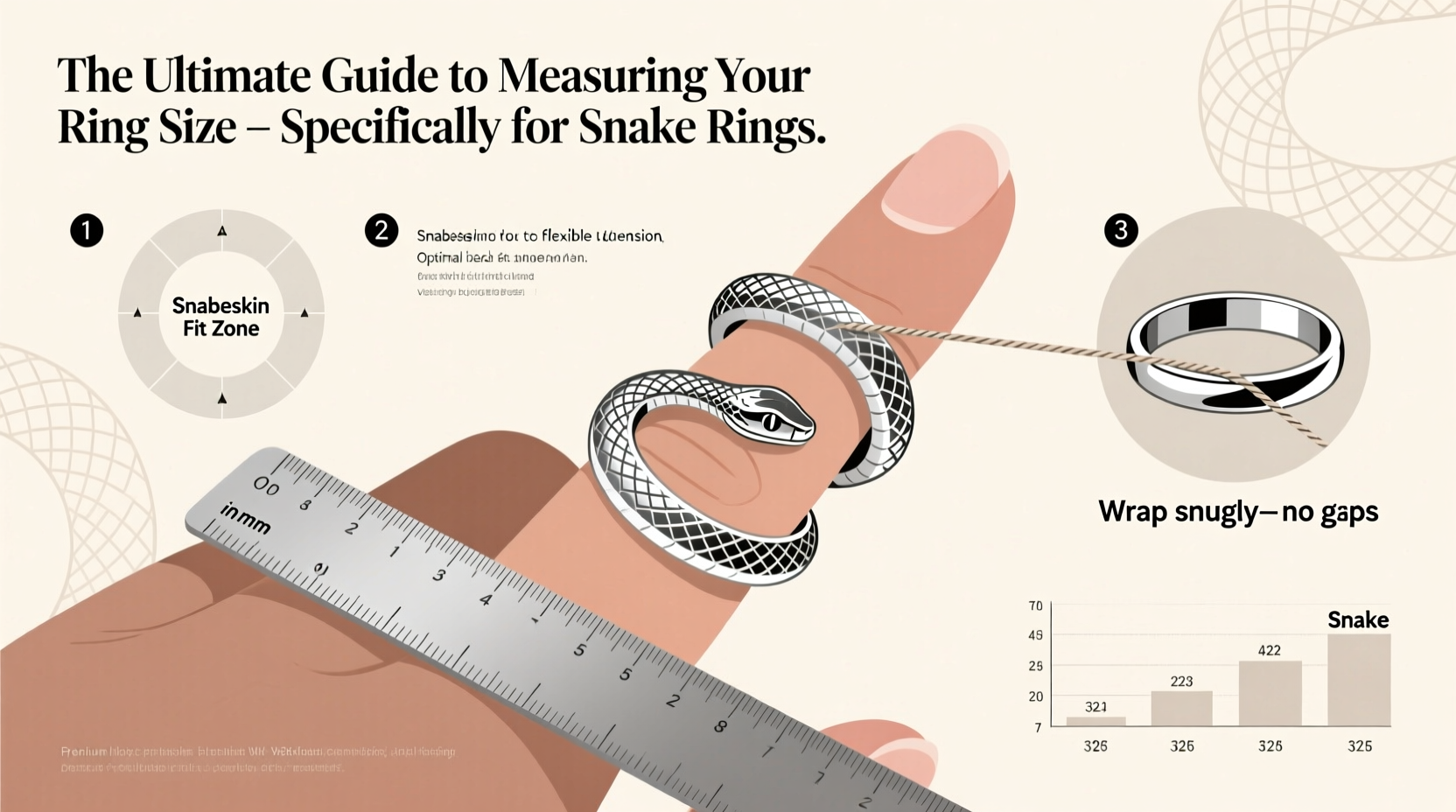
To ensure precision, follow this detailed process designed specifically for articulated or coiled snake-style rings. The goal is to capture not only circumference but also how the ring interacts with your natural finger shape over time.
- Measure at the Right Time of Day: Fingers are smallest in the morning and swell slightly throughout the day, especially after physical activity or exposure to heat. For accuracy, measure between 3 PM and 5 PM, when fingers are at average size.
- Use a Flexible Metal Measuring Tape (Not Paper or String): Paper and string stretch or compress easily, leading to errors. Instead, use a soft cloth tape measure or a tailor’s flexible ruler calibrated in millimeters.
- Wrap Around the Knuckle: Slide the tape snugly over your knuckle—the widest part of your finger—then bring it down to the base where the ring will sit. Record both measurements. Snake rings must pass over the knuckle comfortably but stay secure at the base. <4> Repeat Three Times: Take measurements on three different days to account for minor swelling variations. Average the results for greater reliability.
- Test With a Known-Fit Band: If you already own a well-fitting ring (preferably another flexible style), measure its internal diameter using calipers or compare it against a ring sizer tool. Use this as a reference point.
- Account for Material Thickness: Thicker snake rings occupy more space and may require going up half a size from your standard measurement. Consult the jeweler about band width and inner curvature before finalizing.
Do’s and Don’ts When Sizing for Snake Rings
| Do’s | Don’ts |
|---|---|
| Measure later in the afternoon when fingers are stable | Size your finger right after a workout or hot shower |
| Consider seasonal changes—fingers shrink in cold weather | Order based solely on winter measurements if you live in a warm climate |
| Ask jewelers for adjustable prototypes or try-on samples | Assume online size charts apply universally across brands |
| Factor in arthritis or joint sensitivity if applicable | Force a tight ring over swollen knuckles regularly |
| Recheck size every few years—fingers change with age | Ignore persistent discomfort thinking you’ll “get used to it” |
Real Example: Choosing the Right Fit for a Heirloom Snake Ring
Sophia, a 42-year-old graphic designer from Portland, inherited her grandmother’s vintage gold snake ring. Though beautiful, it slipped off frequently despite being labeled as size 7—the same as her everyday wedding band. Confused, she visited a local artisan jeweler who explained the issue: the antique snake ring had narrow articulation points and less structural rigidity than modern versions, causing it to lose grip under motion. After re-measuring her finger at different times and testing several mock-ups, the jeweler recommended resizing it to 6.75 with slight internal contouring to match her finger’s natural taper. The adjusted fit stayed secure without pinching, proving that even small deviations matter significantly in flexible designs.
Checklist: Ensuring Accurate Snake Ring Sizing
- ✅ Measure finger between 3–5 PM for consistent results
- ✅ Use a non-stretch measuring tool (metal tape or digital caliper)
- ✅ Record both knuckle and base diameters
- ✅ Repeat measurements over 2–3 days
- ✅ Test fit with a similar-style ring if possible
- ✅ Account for material thickness and flexibility
- ✅ Consult a professional jeweler before ordering custom pieces
- ✅ Allow for resizing options when purchasing online
Frequently Asked Questions
Can I use a regular ring sizer for snake rings?
Standard plastic ring sizers can give a baseline estimate, but they don’t account for the dynamic fit of articulated snake rings. These tools assume uniform pressure distribution, which doesn’t reflect how a snake ring expands and contracts during wear. For best results, supplement sizer data with manual tape measurement and professional consultation.
My snake ring twists—does that mean it’s too big?
Twisting is common with poorly aligned or overly loose snake rings, but it can also result from asymmetrical finger shapes or uneven weight distribution in the design. Try adjusting the position gently after each wear. If rotation persists, consider having the inner curve customized or opting for a semi-rigid version with stabilizing connectors.
Should I size up or down for wide snake rings?
Wide snake rings—especially those exceeding 6mm in total span—often require a half-size increase. Their broader surface area creates more contact pressure, which can feel tighter than narrower bands. Always test a physical sample before committing to a size, particularly with wide or multi-chain styles.
Final Thoughts: Precision Meets Personal Style
Measuring your ring size for a snake ring isn’t just about numbers—it’s about harmony between craftsmanship and comfort. These intricate pieces deserve careful attention to detail, ensuring they move with you rather than against you. Whether you're selecting a bold statement piece or a delicate heirloom-inspired design, taking the time to measure thoughtfully pays off in long-term satisfaction.
🚀 Take action today: Re-measure your finger using the steps above, save your results, and share them with your jeweler before placing your next order. Your perfect-fit snake ring is closer than you think.








