
Creating a terrarium is more than just placing plants in a glass container—it’s about crafting a microclimate that supports life over time. The choice between a closed and open terrarium dramatically affects humidity, airflow, and light conditions, all of which determine which plants will not only survive but flourish. Understanding these dynamics helps you match the right plant species to the right environment, ensuring your miniature ecosystem remains vibrant and self-sustaining.
Closed vs Open Terrariums: Key Differences
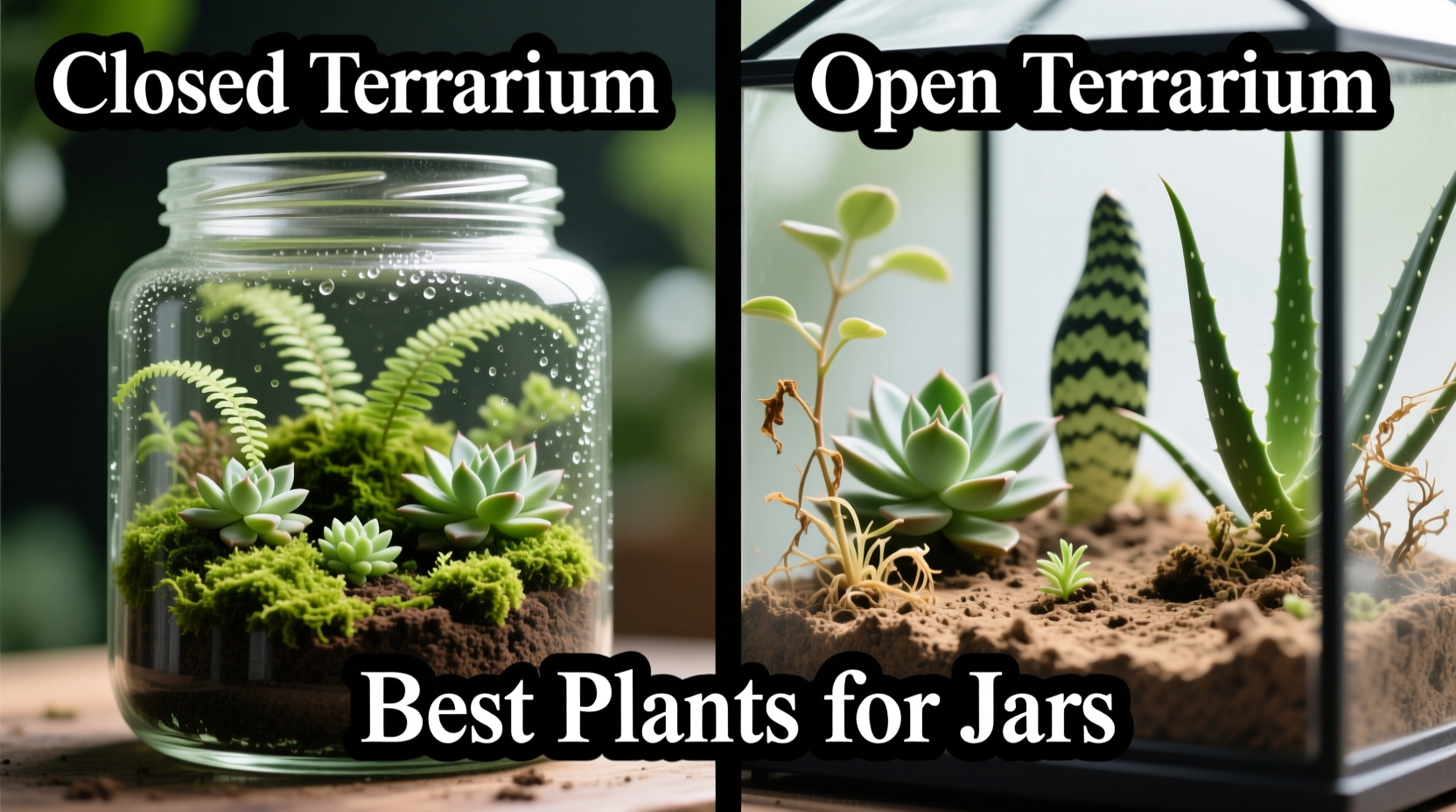
The fundamental distinction between closed and open terrariums lies in air circulation and moisture retention. A closed terrarium is sealed with a lid or cork, creating a humid, greenhouse-like environment where water vapor condenses on the glass and recycles back into the soil. This self-watering cycle mimics tropical rainforest conditions, ideal for moisture-loving plants.
In contrast, an open terrarium has no seal, allowing air to flow freely. Moisture evaporates quickly, resulting in drier conditions similar to those found in arid or temperate zones. These setups suit plants that prefer lower humidity and excellent drainage, such as succulents and cacti.
Choosing between them isn’t just aesthetic—it’s ecological. Misalignment between container type and plant needs leads to rot, mold, or desiccation. Success begins with understanding what each system offers and which plants are naturally adapted to those environments.
Tip: If you notice constant fogging inside a closed terrarium, open it briefly every few days to release excess moisture and prevent fungal growth.Best Plants for Closed Terrariums
Closed terrariums replicate high-humidity forest floors, making them perfect for tropical understory species. These plants evolved in shaded, moist environments with limited airflow—conditions mirrored inside a sealed jar.
- Ferns (e.g., Maidenhair, Button Fern): Thrive in consistent moisture and indirect light. Their delicate fronds unfurl beautifully in humid settings.
- Mosses (e.g., Sheet Moss, Cushion Moss): Act as natural humidity regulators and ground cover. They don’t have true roots and absorb water directly through their leaves.
- Pilea glauca: A trailing plant with tiny blue-green leaves that tolerate low light and enjoy damp soil.
- Fittonia (Nerve Plant): Known for its striking veined foliage, Fittonia wilts quickly if dry but thrives when humidity exceeds 60%.
- Peperomia species (e.g., Peperomia caperata): Compact and slow-growing, many varieties handle humidity well and add texture without overcrowding.
- Calathea lancifolia (Rattlesnake Plant): Prefers warmth and moisture, though it may outgrow small jars over time.
These plants benefit from the terrarium’s moisture loop. Watering is infrequent—sometimes only once every few months—because the system recycles internal condensation. However, they require bright, indirect light; direct sun can turn the sealed jar into a greenhouse oven, killing the plants.
“Closed terrariums are miniature worlds where balance is everything. Too much water, and you get rot. Too little light, and moss turns black.” — Dr. Lena Torres, Botanical Ecologist
Best Plants for Open Terrariums
Open terrariums favor plants that originate from dry, sunny regions. Without a lid, excess moisture escapes rapidly, preventing root rot and fungal issues common in succulents and cacti when kept too wet.
- Echeveria: Rosette-forming succulents that need excellent drainage and bright light. Their fleshy leaves store water efficiently.
- Haworthia: Smaller than aloe and tolerant of lower light, Haworthia adapts well to indoor conditions while resisting overwatering.
- Sedum (e.g., Sedum rubrotinctum): Trailing or upright varieties that grow slowly and handle dry air gracefully.
- Gasteria: Often mistaken for aloe, this South African native prefers partial shade and minimal watering.
- Cacti (small columnar or globular types): Ideal for open jars with sandy soil. Avoid large species that outgrow space quickly.
- Crassula ovata (Jade Plant miniatures): Dwarf cultivars work well in shallow containers and develop woody stems over time.
Soil composition is critical here. Use a gritty mix—such as two parts potting soil, one part perlite, and one part coarse sand—to ensure rapid drainage. Water only when the soil is completely dry, typically every 2–3 weeks depending on climate.
Comparison Table: Closed vs Open Terrarium Suitability
| Plant | Closed Terrarium | Open Terrarium | Notes |
|---|---|---|---|
| Ferns | ✅ Excellent | ❌ Poor | Require constant humidity; dry out fast in open air. |
| Mosses | ✅ Ideal | ❌ Unsuitable | Need enclosed moisture to stay green and active. |
| Fittonia | ✅ Thrives | ⚠️ Marginal | May survive short-term in open setups with frequent misting. |
| Echeveria | ❌ Fails (rots) | ✅ Perfect | High humidity causes leaf drop and stem decay. |
| Haworthia | ❌ Risky | ✅ Strong performer | Tolerates some humidity but needs drying periods. |
| Peperomia | ✅ Good | ⚠️ Possible | Select compact, drought-tolerant species for open use. |
| Cacti | ❌ Not recommended | ✅ Best choice | Prone to rot in stagnant, moist environments. |
Step-by-Step Guide to Building the Right Terrarium
Follow this sequence to create a balanced, thriving terrarium tailored to your chosen environment:
- Choose Your Container: Clear glass jars, apothecary vessels, or geometric terrariums work well. Ensure it’s clean and free of residues.
- Determine Closure Type: Decide whether to use a lid (closed) or leave it open based on your plant selection.
- Add Drainage Layer: Place 1–2 inches of small stones or LECA balls at the bottom to prevent waterlogging.
- Insert Charcoal Layer: A thin layer (½ inch) of activated charcoal filters impurities and reduces odor in closed systems.
- Add Substrate: For closed terrariums, use moisture-retentive potting mix. For open ones, blend in extra perlite or sand for drainage.
- Plant Carefully: Arrange plants with space to grow. Avoid overcrowding—this limits airflow and accelerates disease.
- Mist or Water Sparingly: Closed: lightly water after planting, then wait. Open: water only when dry. Always check soil first.
- Position in Indirect Light: North-facing windows or filtered sunlight are ideal. Avoid direct sun, especially in glass, which magnifies heat.
- Monitor & Maintain: Remove dead leaves promptly. Prune overgrowth. Ventilate closed jars weekly if condensation persists.
Mini Case Study: Reviving a Failed Terrarium
Sophie, an urban gardener in Seattle, built a closed terrarium using a vintage glass cloche. She included a small jade plant, some moss, and a piece of driftwood. Within six weeks, the moss turned brown, the jade dropped leaves, and mold appeared on the soil.
After consulting a local horticulturist, she realized her mistake: the jade plant, though small, was unsuited for high humidity. It couldn’t transpire properly in the sealed environment and began rotting at the base. The moss initially looked healthy due to the moisture but died once fungal competition took over.
She restarted with a new setup: removed the jade, added Fittonia and a resilient fern, used sterile potting mix, and introduced a weekly venting routine. Within a month, condensation stabilized, new growth emerged, and the ecosystem regained balance. Her key takeaway? “Matching plants to the microclimate matters more than design.”
Common Mistakes and How to Avoid Them
- Overwatering: Most terrarium deaths result from too much initial water. Remember: closed systems rarely need topping up.
- Using Tap Water with Sensitive Plants: Chlorine and minerals can damage mosses and delicate roots. Opt for distilled, rainwater, or cooled boiled water.
- Ignoring Airflow Needs: Even closed terrariums benefit from occasional airing. Stagnant air encourages pathogens.
- Placing in Direct Sunlight: Glass intensifies light and heat, cooking plants alive. Diffused, ambient light is safer.
- Adding Too Many Plants: Overcrowding leads to competition, poor air movement, and increased disease risk.
Frequently Asked Questions
Can I convert a closed terrarium to open?
Yes, but transition gradually. Remove the lid for increasing periods each day over a week to acclimate humidity-sensitive plants. Be prepared to replace succulents or cacti if they were previously struggling in high moisture.
How often should I water my terrarium?
In closed terrariums, watering may be needed only once every 2–6 months, depending on size and climate. Open terrariums with succulents typically require watering every 2–3 weeks. Always check soil dryness before adding water.
Why is my terrarium foggy all the time?
Constant fog indicates excessive moisture. Open the container for several hours to allow evaporation. If condensation returns immediately after closing, reduce water volume or remove one plant to decrease transpiration.
Checklist for Long-Term Terrarium Success
- ☐ Select container with appropriate closure (sealed or open)
- ☐ Layer substrate correctly: stone → charcoal → soil
- ☐ Choose plants suited to humidity level (tropical vs. arid)
- ☐ Use proper soil mix (retentive for closed, well-draining for open)
- ☐ Position in bright, indirect light
- ☐ Water sparingly and only when necessary
- ☐ Monitor for mold, pests, or wilting weekly
- ☐ Prune and clean debris regularly
- ☐ Ventilate closed terrariums periodically
- ☐ Label or journal your setup for future reference
Conclusion: Matching Plants to Their Ideal Environment
The success of a terrarium hinges on alignment between container design and plant biology. Closed jars create stable, humid worlds where ferns, mosses, and tropical foliage shine. Open containers offer breathability and dryness, favoring succulents and cacti that would otherwise succumb to rot. There is no universal “best” type—only the right fit for the right plant.
By observing natural habitats, respecting moisture needs, and maintaining thoughtful care routines, you can cultivate a living display that endures for years. Whether you're drawn to the lush green intimacy of a sealed jungle or the minimalist charm of a desert-in-a-jar, the key is intentionality. Start small, learn from each experiment, and let your terrarium evolve as a reflection of both nature and nurture.
💬 Have you found the perfect plant-jar combination? Share your experiences, challenges, or favorite species in the comments—your insight could inspire someone’s next thriving terrarium.








