Dogs thrive on mental stimulation and physical activity, but not all toys deliver the same results. Two of the most popular types—squeaky plush toys and treat-dispensing puzzles—are often marketed as solutions for boredom and excess energy. But when it comes to keeping your dog truly occupied—and quiet—which one performs better in real-life scenarios?
This isn’t just about preference. The right choice can mean the difference between a peaceful afternoon and a house filled with relentless squeaking or destructive chewing. Based on behavioral research, owner feedback, and practical observation, we break down how each toy type impacts engagement duration, noise production, safety, and long-term usefulness.
How Squeaky Plush Toys Work (And Why Dogs Love Them)
Squeaky plush toys mimic prey-like sounds, triggering a dog’s natural hunting instincts. The high-pitched squeak activates their auditory curiosity and predatory drive, making these toys instantly appealing—especially to young, energetic dogs.
Many owners report that their dogs go “crazy” for squeaky toys at first, shaking them vigorously and carrying them around proudly. However, this intense interest often fades quickly once the squeaker is destroyed—a process that can take minutes in aggressive chewers.
Tip: Rotate squeaky toys weekly to maintain novelty and prolong engagement.The downside? Once the squeaker is gone, so is much of the fun. Dogs may lose interest entirely or resort to shredding the fabric, creating a mess and potential choking hazard if stuffing is ingested.
Treat Dispensers: Mental Challenge Over Instant Gratification
Treat-dispensing toys require problem-solving. Whether it's a Kong, a puzzle ball, or a sliding tray system, these toys force dogs to work for their reward. This cognitive effort leads to longer engagement times—often 15 to 30 minutes per session, compared to 5–10 minutes with plush toys.
Because the reward is delayed and earned, treat dispensers promote patience and reduce impulsive behaviors. They're particularly effective for dogs prone to anxiety or overexcitement, offering a constructive outlet for energy.
“Dogs that engage with food puzzle toys show lower cortisol levels and improved focus.” — Dr. Karen Becker, DVM, Integrative Veterinarian
Unlike squeaky toys, treat dispensers don’t rely on sound for appeal. Their quiet operation makes them ideal for apartments, shared living spaces, or households where constant noise is disruptive.
Direct Comparison: Key Factors That Matter
| Feature | Squeaky Plush Toy | Treat Dispenser |
|---|---|---|
| Average Engagement Time | 5–12 minutes | 15–45 minutes |
| Noise Level | High (constant squeaking) | Low to silent |
| Mental Stimulation | Low (instinct-driven) | High (problem-solving) |
| Durability | Poor (easily torn) | High (rubber, nylon, plastic) |
| Boredom Prevention | Short-term | Long-term |
| Safety Risk | Medium (swallowing stuffing/squeaker) | Low (if used correctly) |
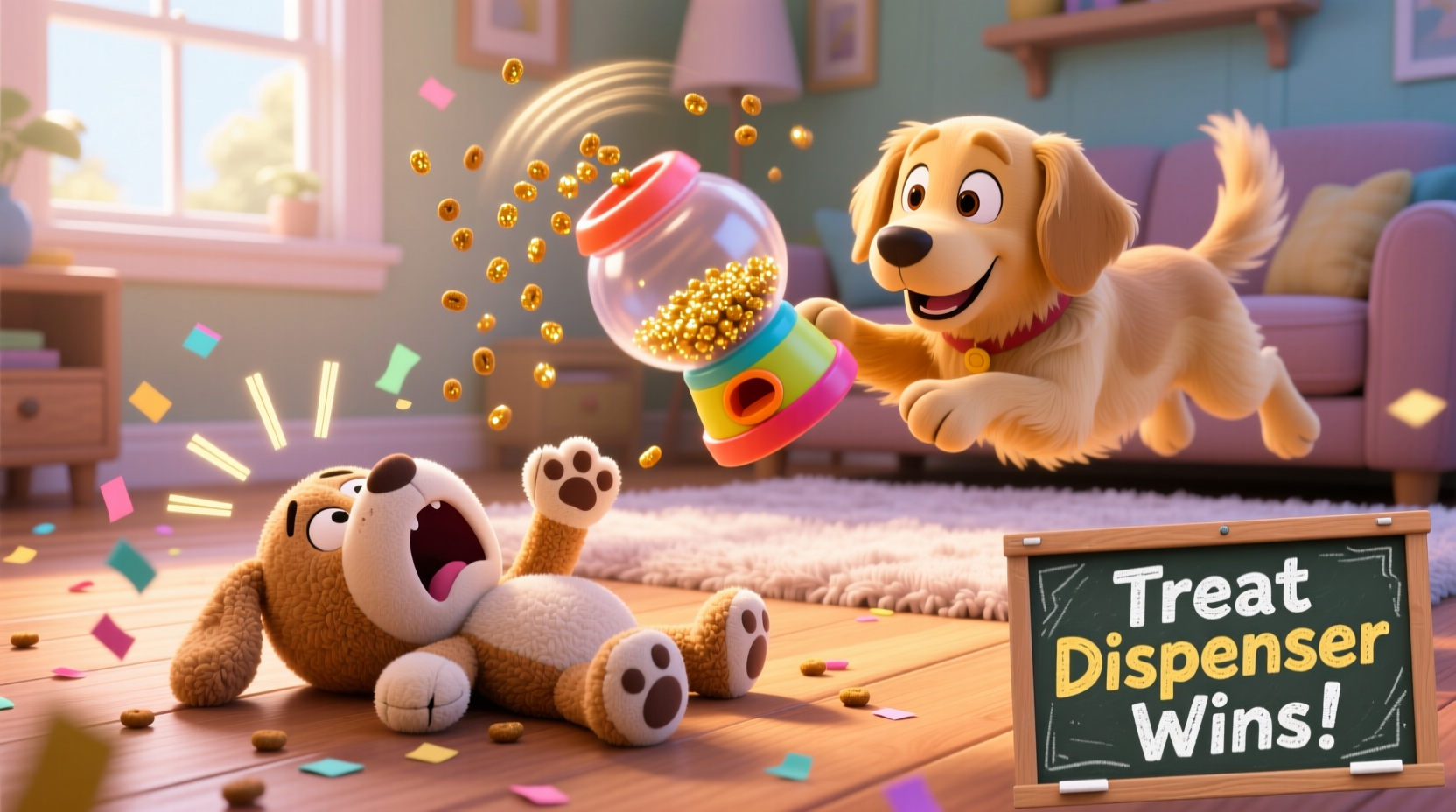
The data shows a clear trend: treat dispensers outperform squeaky plush toys in nearly every category relevant to sustained engagement and household peace.
Real-World Example: One Owner’s Experience
Sarah, a Boston Terrier owner from Portland, noticed her dog Max barked excessively whenever she worked from home. She tried several squeaky toys, but Max would destroy the squeaker within five minutes, then bark louder out of frustration.
She switched to a treat-dispensing ball filled with kibble. The first time, Max spent 22 minutes rolling it across the floor to extract pieces. On days he used the dispenser, Sarah reported a 70% reduction in barking and noticeably calmer behavior afterward.
“It’s not just about keeping him busy,” she said. “It’s like he gets a mental reset. He’s tired in a good way.”
Choosing the Right Option for Your Dog
Not all dogs respond the same way. Here’s how to decide which toy suits your pet best:
- Choose squeaky plush toys if: Your dog enjoys interactive play with you, responds well to sound-based cues, and isn’t a heavy chewer.
- Opt for treat dispensers if: You need quiet time, your dog suffers from separation anxiety, or you want to slow down fast eaters.
For maximum benefit, consider combining both types—but use them strategically. Reserve squeaky toys for outdoor play or supervised sessions, and deploy treat dispensers during work hours, travel, or downtime.
Tip: Freeze stuffed Kongs overnight for extended challenge and soothing texture, especially useful for anxious dogs.Step-by-Step Guide to Introducing a Treat Dispenser
- Start easy: Use a simple model with large openings. Fill it with highly aromatic treats or peanut butter (xylitol-free).
- Demonstrate function: Roll the toy near your dog and let them see treats fall out naturally.
- Encourage interaction: Tap the toy or nudge it toward them to spark curiosity.
- Gradually increase difficulty: Move to more complex puzzles once your dog understands the concept.
- Monitor usage: Ensure they’re not chewing aggressively on plastic components.
This gradual introduction prevents frustration and builds confidence, increasing the likelihood of long-term success.
Common Mistakes to Avoid
- Overfilling the toy: Too many treats reduce the challenge and shorten engagement.
- Using low-value rewards: Kibble may not motivate some dogs; try freeze-dried liver or cheese cubes.
- Leaving plush toys unattended: Even mild chewers can ingest dangerous materials once the squeaker is exposed.
- Ignoring size and breed needs: Small dogs need appropriately sized dispensers; large breeds require durable materials like ballistic nylon or thick rubber.
Frequently Asked Questions
Can squeaky toys be part of mental enrichment?
Only temporarily. While they stimulate instinctual behavior, they lack the cognitive challenge needed for lasting mental fatigue. Pair them with training games (like hide-and-seek) to extend their usefulness.
Are treat dispensers safe for puppies?
Yes, if age-appropriate. Use soft rubber models designed for teething and fill with soft treats or wet food. Always supervise early sessions to prevent chewing on hard edges.
My dog ignores treat toys. What should I do?
Try higher-value rewards, demonstrate how the toy works, or begin with easier models. Some dogs need time to understand the cause-and-effect mechanism. Patience and positive reinforcement are key.
Final Recommendation: Prioritize Quiet Engagement
If your goal is to keep your dog mentally stimulated, physically tired, and your home peacefully quiet, treat-dispensing toys are the superior choice. They offer longer-lasting engagement, encourage problem-solving, and operate without disruptive noise.
Squeaky plush toys have their place—especially in bonding and active play—but they rarely provide sustained quiet time. Used alone, they often lead to short bursts of excitement followed by restlessness.
The most effective approach combines both: use squeaky toys for interactive moments and treat dispensers for independent downtime. This balance supports your dog’s emotional and cognitive health while preserving your sanity.
🚀 Ready to reduce noise and boost your dog’s mental wellness? Swap one squeaky toy for a treat dispenser today and observe the difference in just one session. Share your experience in the comments—your insight could help another dog parent find peace too.








