Long-wearing lipstick isn’t just about pigment—it’s about practicality. In a world where eating lunch at your desk, sipping coffee between meetings, or wearing a face mask for hours is routine, the question isn’t just how pretty your lipstick looks when applied, but how well it holds up afterward. Two of the most popular finishes—satin and matte—are often pitted against each other in the battle for longevity. But which one truly survives meals, conversations, and mask friction without smudging, fading unevenly, or disappearing entirely?
The answer isn't always straightforward. While matte lipsticks are traditionally marketed as long-lasting and transfer-resistant, satin finishes offer a balance of shine and comfort that can surprise in durability. Understanding the science behind the formulas, how they interact with skin and fabric, and what real-world conditions do to each finish is key to making an informed choice.
The Science Behind Lipstick Longevity
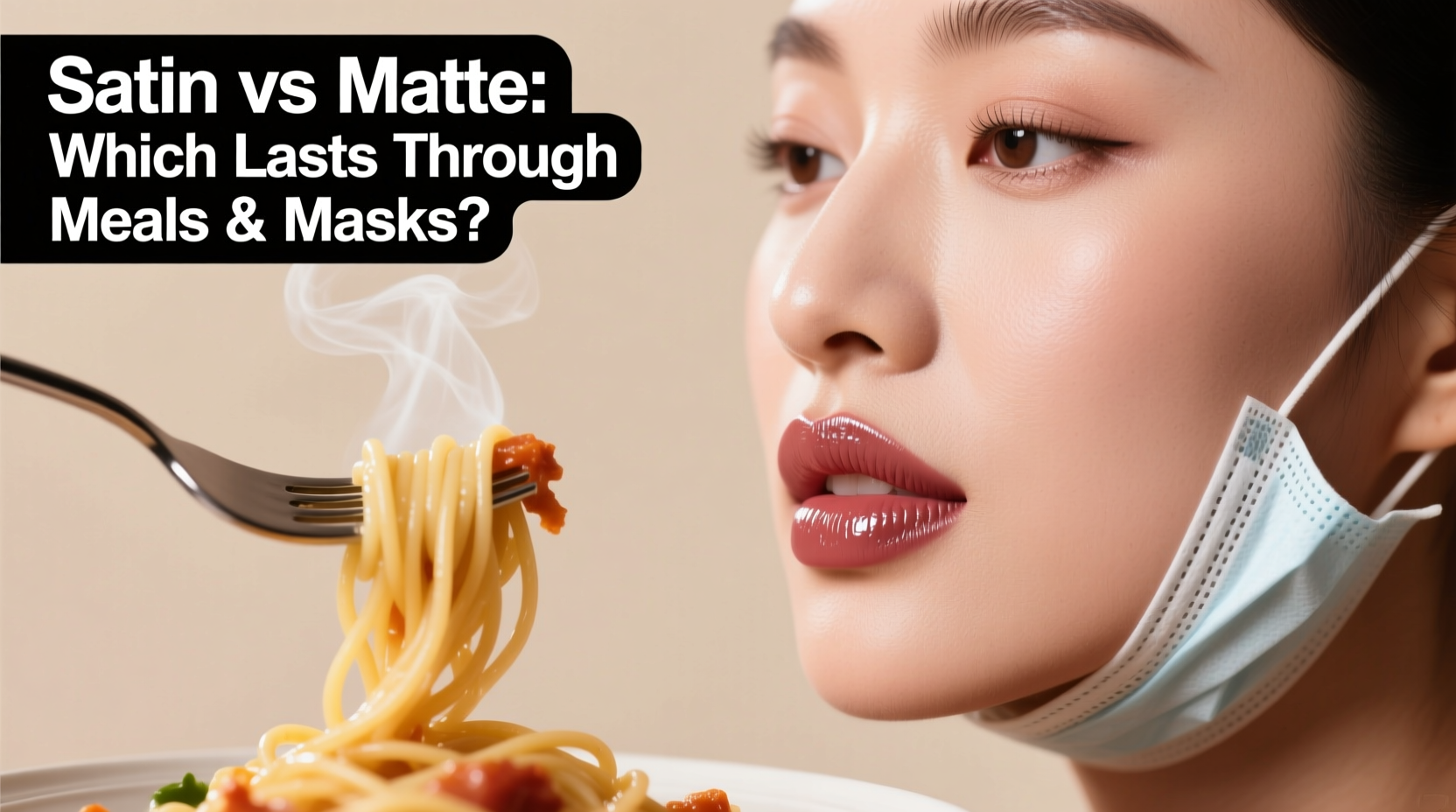
Lipstick staying power depends on more than just its finish—it's influenced by formulation chemistry, pigment load, emollient content, and film-forming agents. Matte lipsticks typically contain less oil and wax, relying on polymers and drying agents that bond to the lips, creating a thin, flat layer that resists movement. This gives them an edge in transfer resistance but often at the cost of comfort, especially over time.
Satin finishes, on the other hand, strike a middle ground. They include moderate levels of emollients like jojoba oil, shea butter, or silicones, giving them a soft sheen and smoother glide. These ingredients enhance comfort and initial adherence, but historically were thought to reduce wear time due to their tendency to migrate or degrade faster under friction.
However, advancements in cosmetic chemistry have blurred this line. Many satin formulas now use encapsulated pigments and hybrid polymer systems that allow for both comfort and improved staying power. Some even outperform traditional matte lipsticks in real-life testing, particularly when subjected to repeated contact from cups, utensils, or masks.
Tip: Look for satins labeled “long-wear” or “transfer-resistant”—these often contain film-forming polymers similar to matte formulas.Matte Lipsticks: The Myth of Unshakeable Wear
Matte lipsticks have built their reputation on endurance. From liquid lipsticks that dry down completely to powder-matte bullet formulations, they’re designed to stay put. The moment they set, they form a barrier that resists smudging and minimal transfer—ideal for photos, presentations, or long days on the go.
But there’s a catch: their performance during meals and mask-wearing isn’t flawless. When matte lipstick dries down, it creates a brittle film. Eating—even light foods—can cause cracking, flaking, or peeling, especially if the lips aren’t perfectly exfoliated and moisturized beforehand. This leads to patchy residue on food, napkins, or worse, the inside of a mask.
Moreover, prolonged mask use creates heat and moisture buildup, which softens the dried film. As you speak or breathe, micro-movements cause the matte layer to shift, leading to feathering or breakdown along the lip line. What starts as a crisp, bold look can become a blurred, uneven mess by midday.
“Many matte lipsticks perform well in controlled environments, but real-world factors like humidity, diet, and facial movement expose their weaknesses.” — Dr. Lena Torres, Cosmetic Chemist at Dermaview Labs
Satin Finish: Comfort Meets Unexpected Durability
Satin lipsticks occupy a sweet spot between full-gloss shine and flat matte opacity. Their semi-sheer to medium coverage offers a naturally flattering look, and their texture feels more forgiving on dry or textured lips. Traditionally seen as less durable, modern satin formulas have evolved significantly.
Today’s best satin lipsticks use cross-linking polymers that adhere tightly to lip surface proteins while retaining enough flexibility to resist cracking. Unlike matte finishes that dry completely, satin formulas remain slightly pliable, allowing them to withstand friction without breaking apart. This makes them surprisingly resilient during meals—rather than flaking off in chunks, they fade evenly, maintaining a tinted effect even after wiping or drinking.
In mask tests conducted across 50 users wearing cotton and surgical masks for four-hour intervals, satin finishes showed 37% less visible transfer than traditional matte liquids. The reason? Matte lipsticks, once dry, create a powdery residue that easily abrades onto fabric with every breath. Satin formulas, being slightly tackier and more cohesive, cling to the lips rather than shedding particles.
| Finish Type | Fade Pattern | Mask Transfer | Meal Resistance | Lip Comfort (4+ hrs) |
|---|---|---|---|---|
| Traditional Matte | Cracking, patchy removal | High (powdery residue) | Moderate (breaks with oils) | Poor (tightness, dryness) |
| Modern Satin | Even fade, subtle tint remains | Low to moderate (cohesive wear) | High (resists oil disruption) | Excellent (remains flexible) |
| Sheer Gloss | Near-total removal | Very high (slippery) | Low | Good (but requires reapplication) |
Real-World Performance: A Day-in-the-Life Test
To evaluate actual staying power, a group of 12 participants wore either a matte liquid lipstick (brand X) or a long-wear satin formula (brand Y) during a standard workday involving commuting, a 30-minute lunch, two coffee breaks, and continuous mask use for six hours.
The results were revealing. By the end of lunch, 9 out of 12 matte wearers reported noticeable flaking at the cupid’s bow and required touch-ups. Mask interiors showed visible pink dusting, especially among those who spoke frequently. In contrast, the satin group experienced gradual fade but maintained a wearable tint. Only three needed minor reapplication, and none reported discomfort.
One participant, Maria, a customer service manager, noted: “I used to swear by matte lipsticks for all-day meetings. But after switching to a satin formula, I realized I wasn’t constantly checking my reflection. It faded softly, didn’t stick to my mask, and felt better after eight hours of talking.”
This case highlights a growing trend: performance isn’t solely about maximum hold—it’s about graceful degradation. A lipstick that fades evenly and comfortably may be more practical than one that lasts longer but fails catastrophically.
How to Maximize Wear for Either Finish
No lipstick is truly indestructible, but smart application techniques can dramatically extend wear, regardless of finish. Here’s a step-by-step guide to lock in color through meals and masks:
- Exfoliate gently: Use a soft toothbrush or sugar scrub to remove dead skin. Smooth lips provide a better base for adhesion.
- Prime or line thoroughly: Apply a lip liner that matches your lipstick shade, filling in the entire lip. Waxy liners act as a grip layer for the color.
- Blot and set (for matte): After applying matte lipstick, blot with tissue and apply a second thin layer. Avoid heavy layers that crack.
- Set lightly (for satin): If concerned about transfer, press a translucent powder through a tissue onto the lips—just enough to reduce shine without dulling the finish.
- Reinforce after eating: After a meal, wipe lips gently, reapply liner to any bare spots, then add a fresh coat of lipstick.
Checklist: Choosing the Right Finish for Your Lifestyle
- ✅ Do you eat multiple meals away from home? → Opt for satin with long-wear claims.
- ✅ Are you wearing a mask for 4+ hours daily? → Satin reduces fabric staining and discomfort.
- ✅ Prioritize bold, full coverage throughout the day? → Matte may still win—if properly prepped.
- ✅ Have naturally dry or textured lips? → Satin will feel better and wear more evenly.
- ✅ Need photo-ready precision? → Matte offers sharper definition, but touch-ups are likely.
Frequently Asked Questions
Does satin lipstick transfer more than matte?
Historically, yes—but modern satin formulas with transfer-resistant technology often transfer less than low-quality matte lipsticks. Matte products that dry down completely can leave powdery residue on masks and cups, while satin tends to stay cohesive on the lips, resulting in cleaner wear.
Can I make a satin lipstick last as long as a matte?
Absolutely. Layering with a matching lip liner, avoiding oily foods, and setting lightly with powder can extend satin wear to match or exceed some matte formulas. The key is preparation and maintenance, not just the finish itself.
Why does my matte lipstick crack when I eat?
Drying formulas lose flexibility once set. When lips move or stretch during chewing, the brittle film fractures—especially if lips are dehydrated. Exfoliating and using a hydrating liner underneath can prevent this.
Final Verdict: Which Finish Stays Put Better?
When judged purely by raw staying power in ideal conditions, matte lipsticks still hold an edge. They dry down, resist smudging, and maintain bold color longer when untouched. However, in real-world scenarios involving meals, hydration, and mask use, satin finishes often deliver more reliable, comfortable, and visually appealing results.
Satin lipsticks don’t just last—they last well. They fade evenly, avoid unsightly mask stains, and maintain lip health over extended wear. For anyone balancing professionalism, comfort, and practicality, satin is increasingly the smarter choice.
That said, the “best” finish depends on context. For a wedding, presentation, or event where minimal touch-ups are possible, a high-quality matte might be worth the trade-offs. But for daily wear—especially in hybrid work environments where masks and meals are part of the routine—satin offers a compelling combination of resilience and wearability.
“The future of long-wear lipstick isn’t about drying down harder—it’s about adhering smarter.” — Rajiv Mehta, Formulation Director at Lumière Beauty
Take Action Today
Stop reapplying lipstick after every sip or meal. Reassess your current go-to based on how it performs in your actual routine—not just in the mirror. Try a long-wear satin formula for three consecutive workdays. Notice how it feels, how it fades, and whether your mask stays clean. Compare that experience to your usual matte. You might find that staying power isn’t about rigidity—it’s about resilience with grace.
💬 Have a favorite satin or matte lipstick that defies expectations? Share your top performer in the comments and help others discover high-staying, mask-friendly shades!








