Folding saw horses are a quiet hero in the world of DIY, construction, and woodworking. They provide essential support for cutting, sanding, assembling, and painting—without demanding permanent space in your garage or shed. The right model combines durability, ease of transport, and quick setup, making it an indispensable tool whether you're building a deck or refinishing furniture. But not all folding saw horses are created equal. Many collapse under pressure, wobble during use, or take up too much room when stored. This guide focuses on truly reliable and compact options that perform across a range of workshop tasks while fitting seamlessly into modern workspaces.
Why Folding Saw Horses Belong in Every Workshop
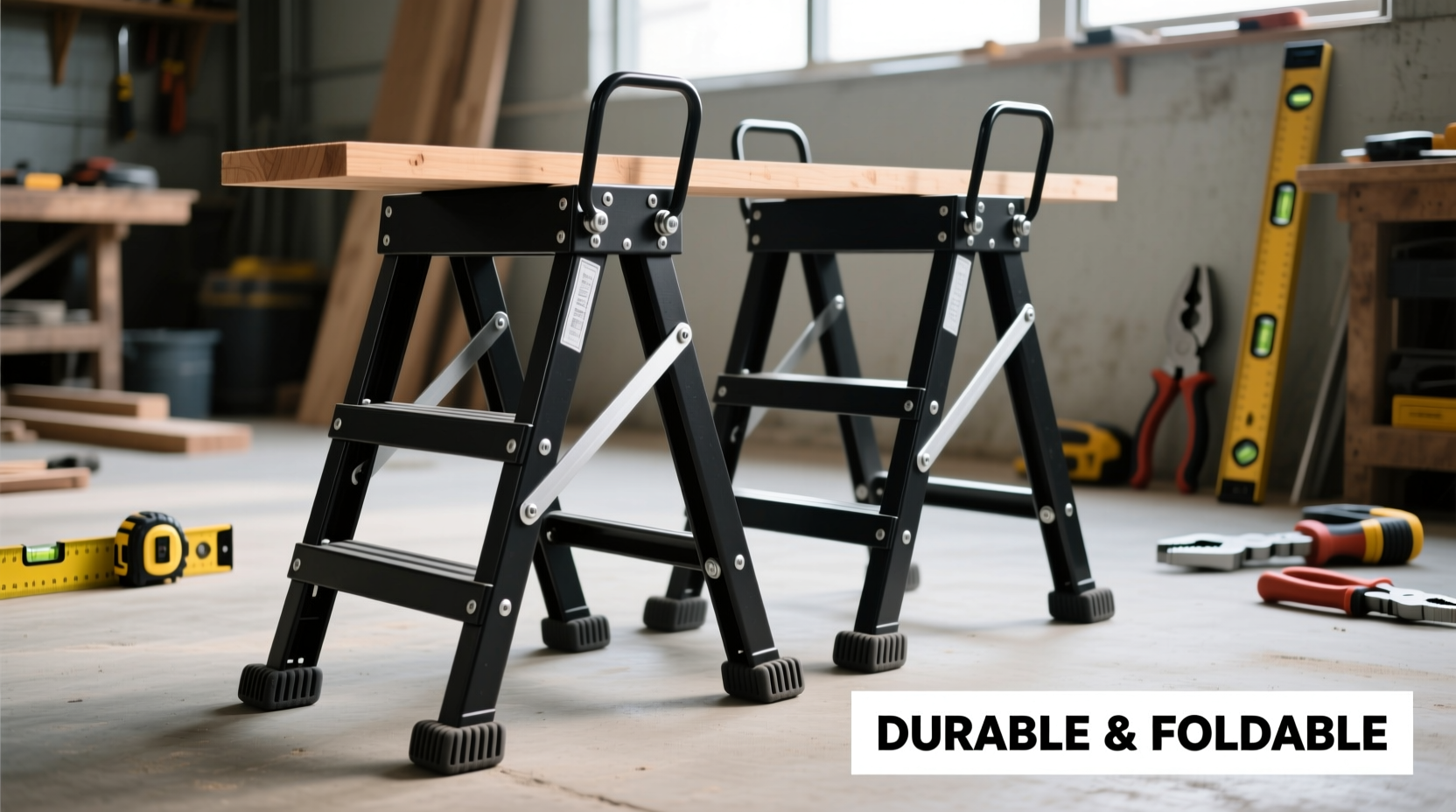
Traditional wooden saw horses have long been a staple on job sites, but they come with limitations: bulk, weight, and susceptibility to weather damage. Folding saw horses solve these problems with engineered designs using steel, aluminum, or reinforced polymers. Their collapsible frames allow them to be tucked behind a door, slid into a truck bed, or carried in one hand. Despite their portability, top-tier models can support over 1,000 pounds per pair—more than enough for most materials, including sheet goods, lumber stacks, or even small engines.
Their adaptability extends beyond carpentry. Contractors use them as temporary scaffolds, painters rest drop cloths over them, and landscapers brace pavers during installation. Because they’re height-adjustable (on many models), they reduce strain on the back and arms by bringing work to a comfortable level.
Tip: Always place saw horses on level ground and avoid cantilevering heavy loads beyond their frame to prevent tipping.Key Features of a Reliable Compact Design
When selecting a folding saw horse, prioritize function over flashy extras. A truly dependable unit should meet several core criteria:
- Frame Material: Steel offers unmatched strength but adds weight. Aluminum provides excellent strength-to-weight ratio and resists rust—ideal for outdoor or mobile use.
- Load Capacity: Look for at least 500 lbs per leg (1,000+ lbs per pair). High-end models exceed 1,200 lbs per leg.
- Folded Dimensions: Aim for under 4 inches thick when folded. Models around 30–36 inches tall when open typically fold down to 24–30 inches in length.
- Quick Deployment: The best units set up in under 10 seconds with no tools required.
- Non-Slip Surface: Rubberized caps or textured tops prevent wood from sliding during cuts.
- Integrated Storage: Some include built-in trays for clamps, levels, or pencils—small touches that improve workflow.
“Portability shouldn’t mean compromise. The best folding saw horses outperform many fixed-frame versions.” — Marcus Tran, Professional Carpenter & Tool Instructor
Top Compact Folding Saw Horses Compared
| Model | Material | Weight (lbs) | Max Load (per leg) | Folded Thickness | Price Range |
|---|---|---|---|---|---|
| Boss Industrial AL-FSHTP | Aluminum | 7.5 | 1,000 lbs | 3.5 inches | $85–$100 |
| WORX Foldable Work Table (WG302) | Steel Frame + Composite Top | 22 | 660 lbs | 4.2 inches | $120–$140 |
| DEWALT DWM15 | Steel | 14 | 1,250 lbs | 3.8 inches | $110–$130 |
| Keter Foldable Workbench | Polymer/Composite | 12 | 880 lbs | 3.2 inches | $90–$110 |
| Husky 48” Folding Sawhorse | Steel | 16 | 1,000 lbs | 4.0 inches | $60–$75 |
The Boss Industrial AL-FSHTP stands out for its featherlight aluminum build and slim profile—perfect for contractors who travel between sites. Meanwhile, DEWALT’s model delivers industrial-grade resilience, often favored in commercial workshops. Keter’s polymer option is ideal for damp environments like basements or patios where metal might corrode.
Real-World Use Case: Building a Deck with Limited Space
Daniel, a homeowner in Portland, decided to build a cedar deck in his narrow backyard. With only 8 feet of clearance behind his house, storing full-size saw horses wasn’t feasible. He opted for a pair of Boss aluminum folding saw horses. Each weighed under 8 pounds, allowing him to carry them through tight gates and store them vertically beside his lawnmower.
During construction, he used them to support joists while drilling pilot holes and later braced decking boards for precise miter cuts. The non-slip pads kept the cedar from shifting, reducing waste. When rain interrupted work, he collapsed the horses and leaned them against the garage wall—dry and out of the way. Over six weekends, the same pair served as a paint staging platform, assembly bench, and even a temporary ladder base. “They’ve paid for themselves in saved trips to the rental yard,” Daniel said.
How to Choose the Right Model for Your Needs
Selecting the best folding saw horse depends on how and where you work. Follow this step-by-step decision process:
- Assess your primary use: Will you cut heavy timber? Sand cabinets? Paint fences? Heavy-duty steel suits framing; lightweight aluminum works well for finish work.
- Evaluate storage space: Measure the area where you’ll keep the horses. If floor space is tight, models under 4 inches thick when folded are optimal.
- Check weight limits: Add up the heaviest load you’ll place across both horses. Ensure each leg supports at least half that weight with margin to spare.
- Test deployment speed: If you set up and break down daily, favor models with spring-loaded hinges or auto-locking legs.
- Consider added features: Built-in vise slots, tool trays, or interlocking capabilities (so two can form a table) increase utility.
Maintenance and Longevity Tips
Even robust folding saw horses require basic care to last. Dirt, moisture, and overloading degrade performance over time. Follow this maintenance checklist to extend their life:
- Wipe down frames after outdoor use, especially if exposed to salt or mud.
- Lubricate pivot points and locking mechanisms every 3–6 months with dry silicone spray.
- Inspect welds or joints annually for cracks or stress marks.
- Avoid stacking heavy materials directly on the crossbars—distribute weight evenly across the top beams.
- Store indoors when possible to prevent UV degradation of plastic components.
“A folding saw horse should feel rock-solid when loaded. If there’s any flex or creak, it’s time to inspect or replace.” — Lena Patel, Construction Safety Consultant
FAQ
Can folding saw horses be used for power tool cutting?
Yes, provided they are rated for the load and vibration. Always secure the material with clamps and ensure the horse is on stable ground. Avoid aggressive plunge cuts near the edge of the support surface.
Are there folding saw horses suitable for RV or van life?
Absolutely. Lightweight aluminum models like the Boss Industrial or Keter variants are popular among mobile builders and van converters due to their ultra-slim profile and resistance to temperature changes.
Do folding saw horses work on uneven ground?
Some high-end models feature adjustable legs or rubber feet that compensate for minor slope. However, significant unevenness compromises safety. Use plywood shims or reposition the unit for stability.
Final Thoughts: Invest Once, Work Better
A reliable folding saw horse isn’t just a convenience—it’s a force multiplier for productivity and precision. Compact design no longer means sacrificing strength or stability. Today’s best models blend aerospace-grade materials, smart engineering, and thoughtful ergonomics to serve every workshop task, from rough framing to fine finishing.
Whether you’re a weekend warrior or a trade professional, choosing the right folding saw horse pays dividends in time saved, injury prevented, and projects completed with confidence. Don’t settle for flimsy hardware-store specials. Test models, read independent reviews, and pick one that aligns with your workflow. Then fold it up, store it neatly, and know it’s ready when you are.
🚀 Ready to upgrade your workspace? Pick a folding saw horse that fits your needs, test it on your next project, and experience the difference real reliability makes.








