Every dog owner has stood in a pet store aisle, overwhelmed by the sheer variety of chew toys. One package says “perfect for teething puppies,” another boasts “tough enough for aggressive chewers.” But are these labels just marketing, or is there a real, physiological reason behind the distinction? The answer lies not just in durability, but in dental development, jaw strength, and behavioral needs. Choosing the wrong toy can lead to broken teeth, digestive issues, or missed opportunities for mental stimulation. Understanding the key differences between puppy teething toys and adult dog chew toys isn’t optional—it’s essential for your dog’s long-term well-being.
The Biological Basis: Why Life Stage Matters
Dogs don’t just grow bigger as they age—they undergo profound physical changes, especially in their mouths. Puppies begin losing their 28 baby teeth around 12 weeks old, making way for 42 permanent adult teeth by six months. During this transition, gums become inflamed, tender, and itchy. This discomfort drives puppies to chew constantly—not out of mischief, but to relieve pain and loosen wobbly teeth.
In contrast, adult dogs chew for different reasons: mental stimulation, stress relief, or simply because it feels good. Their jaws are fully developed, with bite forces that can exceed 300 pounds per square inch in large breeds. A toy suitable for a 10-week-old Labrador would be destroyed—and potentially dangerous—by the same dog at two years old.
“Teething is one of the most uncomfortable phases in a puppy’s early life. Providing appropriate soft, textured toys can reduce destructive chewing and support healthy dental development.” — Dr. Rachel Nguyen, DVM, Veterinary Behavior Specialist
Material & Design: What Sets Them Apart
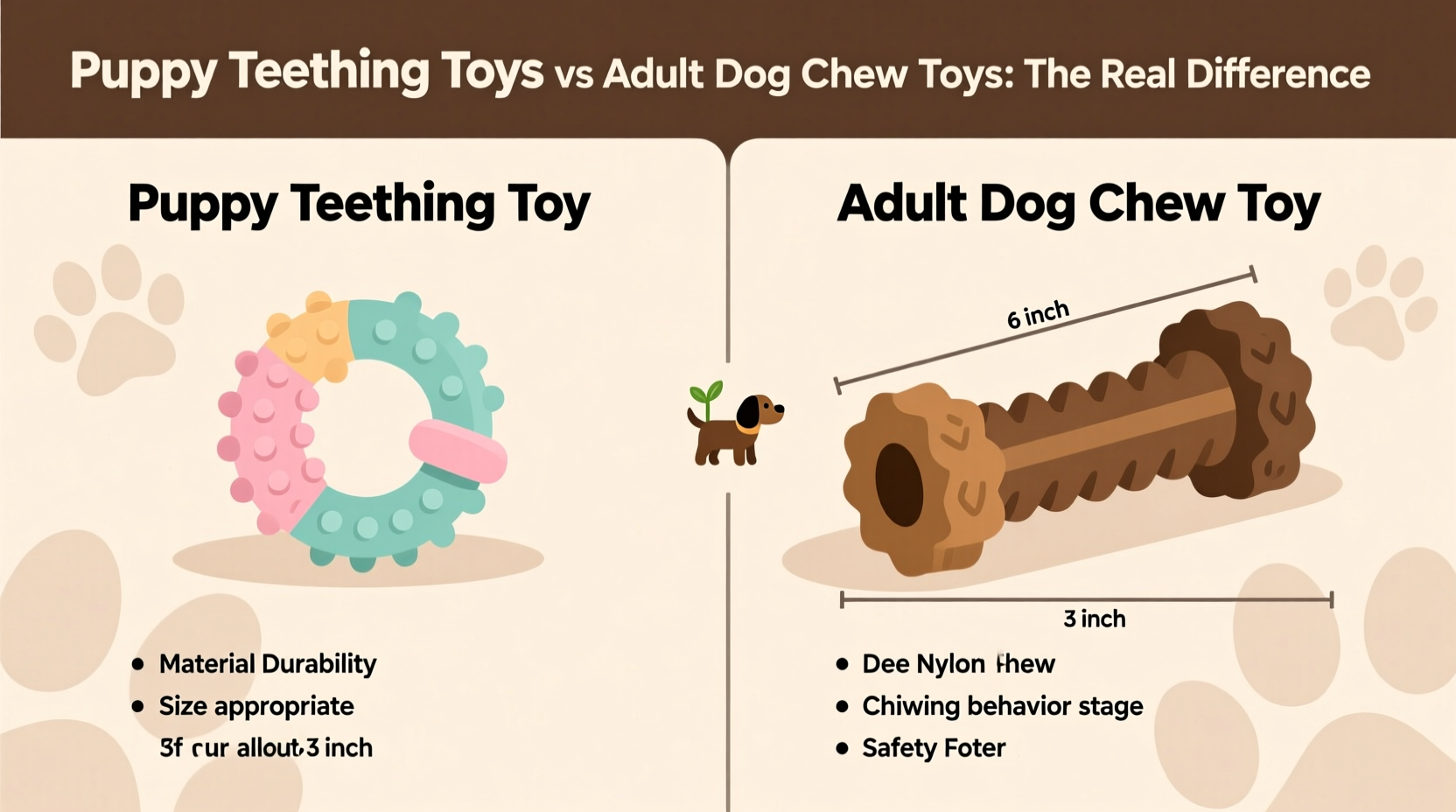
The core distinction between puppy and adult chew toys lies in material composition and structural design. Manufacturers tailor these factors specifically to match developmental needs and physical capabilities.
| Feature | Puppy Teething Toys | Adult Dog Chew Toys |
|---|---|---|
| Material Softness | Soft rubber, plush, silicone, fabric | Dense nylon, hard rubber (e.g., KONG Classic), reinforced polymers |
| Durability | Low to moderate—designed to be gently shredded | High—engineered to withstand powerful chewing |
| Texture | Bumpy, ridged, or nubbed to massage gums | Smoother surfaces or strategic grooves for tartar reduction |
| Size & Shape | Small, lightweight, easy to grip | Larger, heavier, often designed to bounce unpredictably |
| Cooling Feature | Often freezer-safe to soothe sore gums | Rare; focus is on resilience, not temperature therapy |
This isn’t about convenience—it’s about safety. A hard nylon toy given to a teething puppy could damage developing tooth roots or cause gum injury. Conversely, a plush toy meant for a puppy may disintegrate quickly in an adult dog’s mouth, creating choking hazards or intestinal blockages if ingested.
Tip: Always supervise your dog during playtime, especially when introducing a new toy. No toy is completely indestructible.Behavioral Needs Across Development
Chewing behavior evolves alongside cognitive and emotional development. Puppies chew to explore the world—everything goes into their mouths. Adult dogs chew to manage anxiety, boredom, or excess energy. The right toy should align with these shifting motivations.
Puppy toys often incorporate features like treat compartments or crinkle sounds to encourage engagement and redirect chewing away from furniture. They’re designed to be forgiving, allowing gentle destruction as part of learning.
Adult chew toys, particularly for power chewers like German Shepherds or Pit Bulls, prioritize longevity and mental engagement. Puzzle-style chews or slow-feed treats embedded in durable rubber extend interaction time, reducing destructive tendencies born of understimulation.
Real Example: Max the Labrador Retriever
Max’s owner bought him a plush squirrel toy at eight weeks. He loved it, gnawed on the ears, and calmed down after play sessions. At five months, during peak teething, they added a soft rubber bone that could be frozen. His nighttime chewing decreased significantly.
By 18 months, Max had destroyed three plush toys and cracked a hard nylon disc. His vet pointed out slight enamel wear. Switching to a high-density rubber chew designed for adults—like the West Paw Queso—gave him the resistance he needed without risking dental damage. The behavioral shift was clear: fewer accidents, less anxiety, and no more shredded pillows.
When It Really Matters: Health Implications
Mistaking a puppy toy for an adult chew—or vice versa—can have tangible health consequences:
- Dental trauma: Hard toys on immature teeth can cause fractures or pulp exposure.
- Choking hazards: Small parts from over-shredded plush toys can be swallowed.
- Digestive blockages: Ingesting large chunks of non-digestible materials requires emergency surgery.
- Behavioral reinforcement: Giving inappropriate toys may encourage destructive chewing habits.
A 2022 study published in the *Journal of Veterinary Dentistry* found that 23% of dental injuries in dogs under two years were linked to inappropriate chew toy use. Most involved hard plastic or nylon products introduced during the teething phase.
Step-by-Step Guide: Matching Toys to Life Stages
- 0–4 months: Focus on soft, flexible toys. Look for BPA-free silicone or rubber. Freezeable options help with gum pain.
- 4–6 months: Transition phase. Use medium-resistance toys while baby teeth fall out. Monitor for excessive bleeding or retained baby teeth.
- 6–12 months: Begin introducing durable rubber toys. Avoid brittle plastics. Supervise chewing to assess strength and preference.
- 12+ months: Shift entirely to adult-formulated chews based on breed size and chewing intensity. Rotate toys weekly to maintain interest.
- Lifetime: Continue providing age-appropriate chews. Senior dogs may need softer options again due to gum recession or tooth loss.
Frequently Asked Questions
Can I give my puppy an adult chew toy if it’s labeled “gentle”?
Not recommended. Even “gentle” adult toys are typically harder than what a puppy’s developing mouth can handle. Stick to products explicitly designed for puppies until all adult teeth have erupted, usually around seven months.
My adult dog likes soft toys—aren’t they dangerous?
It depends. If your dog gently carries or cuddles soft toys, they’re likely fine. But if they shred and swallow pieces, switch to safer alternatives like puzzle toys or edible chews made from digestible materials. Always supervise heavy chewers.
Are natural chews like antlers or bones better than manufactured toys?
Not necessarily. Natural chews can splinter or be too hard, leading to tooth fractures. Veterinarians increasingly recommend vet-approved synthetic toys over rawhide or animal bones, which pose higher risks of obstruction and contamination.
Final Checklist: Choosing the Right Toy
- ✅ Match toy hardness to your dog’s age and dentition
- ✅ Check for non-toxic, BPA-free materials
- ✅ Ensure size is appropriate—too small risks choking
- ✅ Prioritize supervision, especially with power chewers
- ✅ Replace worn or damaged toys immediately
- ✅ Consult your vet if you're unsure about suitability
Conclusion: Yes, It Matters—And Your Dog Knows It
The difference between puppy teething toys and adult dog chews isn’t a gimmick—it’s grounded in biology, behavior, and safety. Just as you wouldn’t feed a toddler the same diet as a marathon runner, you shouldn’t equip a teething pup with the same tools as a full-grown working dog. Thoughtful toy selection supports dental health, prevents emergencies, and enriches your dog’s daily life. The next time you reach for a chew toy, ask not just “Will my dog like this?” but “Is this right for who my dog is right now?” That small shift in thinking can make a lifetime of difference.
🚀 Take action today: Review your dog’s current chew toys. Are they age-appropriate? Replace any mismatches and observe the change in behavior and oral health. Share your experience—your insight might help another pet parent make a safer choice.








