Chronic conditions such as diabetes, arthritis, allergies, and epilepsy are increasingly common in pets, especially as they age. Unlike one-time injuries or acute illnesses, these conditions require lifelong management, regular vet visits, medications, and sometimes specialized treatments. Without proper financial planning, the cost of managing a chronic illness can quickly become overwhelming. That’s where pet insurance comes in — but not all policies are created equal. Understanding which pet insurance plans cover chronic conditions is essential for responsible pet ownership.
While many pet owners assume their insurance will handle ongoing care, exclusions for pre-existing conditions and limitations on recurring treatments mean some policies fall short when it matters most. This guide compares leading pet insurance providers based on their approach to chronic condition coverage, helping you make an informed decision that protects both your pet and your budget.
Understanding Chronic Conditions in Pets
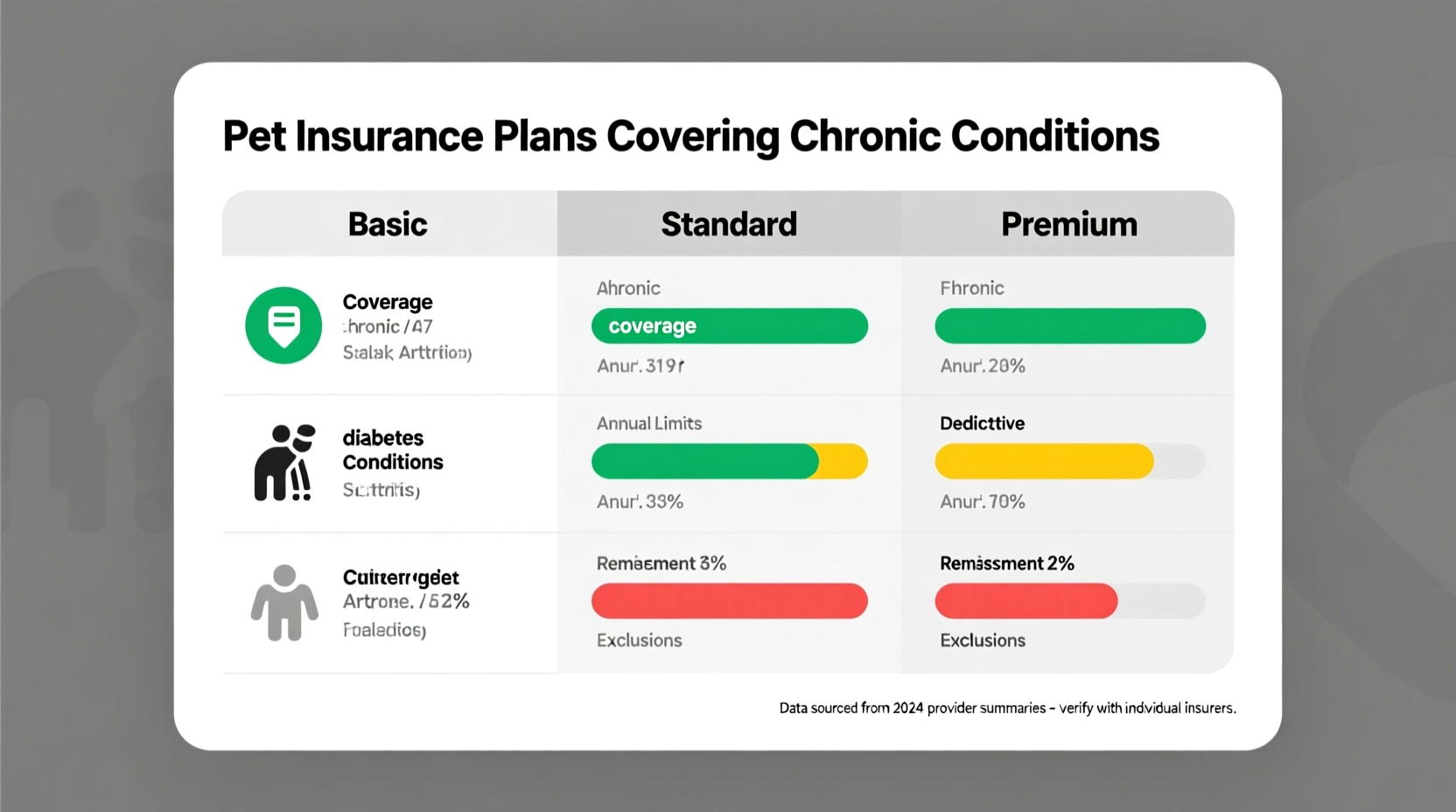
A chronic condition is defined as a long-term or persistent health issue that requires ongoing medical attention. These conditions typically cannot be cured but can be managed with consistent treatment. Common examples include:
- Diabetes mellitus – Requires insulin injections, diet control, and frequent monitoring.
- Osteoarthritis – Causes joint pain and mobility issues; often treated with anti-inflammatory drugs, supplements, and physical therapy.
- Allergies (environmental or food-related) – May lead to skin infections, ear problems, and gastrointestinal distress.
- Epilepsy – Managed with daily medication and periodic blood testing.
- Heart disease – Involves lifelong medication, dietary changes, and cardiac monitoring.
- Thyroid disorders – Such as hypothyroidism in dogs or hyperthyroidism in cats.
The key challenge with chronic conditions is predictability. Once diagnosed, treatment becomes routine — but costs accumulate over time. A single month of insulin and checkups for a diabetic dog can exceed $200. Over several years, expenses may reach thousands of dollars. Insurance that covers these recurring costs can make the difference between consistent care and difficult financial trade-offs.
Tip: Enroll your pet in insurance while they’re young and healthy to ensure chronic conditions are covered if they develop later.How Pet Insurance Handles Chronic Conditions
Pet insurance operates differently than human health insurance. Most policies are reimbursement-based, meaning you pay the vet bill upfront and submit a claim for partial or full reimbursement. Coverage varies significantly by provider, plan tier, and policy terms. When evaluating whether a plan covers chronic conditions, consider three critical factors:
- Pre-existing condition policies – If a symptom appeared before enrollment or during a waiting period, it’s usually excluded.
- Recurrent condition definitions – Some insurers classify flare-ups of prior issues as pre-existing even if initially covered.
- Lifetime vs. annual benefit caps – High-cost chronic care can exhaust low annual limits quickly.
Crucially, once a chronic condition is diagnosed *after* enrollment and outside any waiting period, reputable insurers should cover it as a new condition — provided there were no prior signs or symptoms. However, this depends heavily on accurate medical records and transparent disclosure during enrollment.
“Pet insurance works best when purchased early. Chronic diseases often have subtle onset signs that, once documented, disqualify future claims.” — Dr. Lena Torres, DVM, Veterinary Internal Medicine Specialist
Top Pet Insurance Providers Compared
The following table evaluates major U.S. pet insurance companies based on their chronic condition coverage policies, including waiting periods, recurrence handling, and overall value for long-term care.
| Provider | Chronic Condition Coverage | Waiting Period | Recurrence Policy | Lifetime Max Option | Wellness Add-On? |
|---|---|---|---|---|---|
| Trupanion | Yes, comprehensive coverage including diagnostics, meds, surgery | 5 days (accident), 30 days (illness) | Covers recurrences if original condition resolved | Yes (unlimited available) | No, but includes some preventive care |
| Healthy Paws | Yes, unlimited accident/illness coverage includes chronic care | 15 days for all conditions | Excludes recurrences within 180 days of resolution | Yes (unlimited default) | No |
| Embrace | Yes, with diminishing deductible; covers long-term treatments | 14 days (illness), 48 hours (accident) | Re-evaluates each incident; may cover if unrelated | Yes (up to $10K/year, customizable) | Yes (customizable wellness plan) |
| Figo | Yes, strong chronic illness support with fast claims | 14 days for illness, 2 days for accident | Considers recurrence history; case-by-case review | Yes (up to $20K/year) | Yes |
| Nationwide (Whole Pet with Wellness) | Yes, one of few offering exam fee inclusion and robust chronic care | 14 days standard, 30 days for orthopedic | Tracks related episodes; may bundle under one condition | Yes (up to $10K–$20K annually) | Yes |
Among these, Trupanion stands out for its straightforward unlimited coverage and direct vet payments, reducing out-of-pocket strain during expensive treatment phases. Healthy Paws offers similar breadth but uses a stricter recurrence rule. Embrace rewards loyalty with a shrinking deductible, which benefits pets requiring years of care. Figo combines strong customer service with flexible plan options, while Nationwide uniquely includes exam fees — a significant advantage for pets needing monthly check-ins.
Real Example: Managing Canine Diabetes with Insurance
Sophie, a 7-year-old Miniature Schnauzer, was diagnosed with diabetes after her owner noticed excessive thirst and weight loss. Monthly costs included insulin ($80), syringes ($15), blood glucose test strips ($60), and bi-monthly vet visits ($100 per visit). Without insurance, Sophie’s care would cost about $315/month — over $3,700 annually.
Her owner had enrolled her in Embrace two years earlier. After submitting claims, Sophie’s family received reimbursements averaging 85% of eligible costs. Their actual outlay dropped to around $60 per month. More importantly, Embrace continued covering Sophie’s condition year after year, adjusting for inflation in vet prices and covering emergency complications when she developed pancreatitis six months later.
This case illustrates how early enrollment enables sustainable management of chronic illness. Had Sophie been insured only after diagnosis, her diabetes would have been deemed pre-existing and entirely excluded.
What to Look for in a Chronic-Care-Friendly Plan
Not every pet insurance policy supports long-term illness effectively. Use the checklist below to evaluate whether a plan meets the needs of pets likely to develop or already managing chronic conditions.
Checklist: Evaluating Chronic Condition Coverage
- ✅ Does the policy cover diagnostic testing for suspected chronic diseases?
- ✅ Are prescription medications included (e.g., insulin, thyroid hormone, anticonvulsants)?
- ✅ Is there a lifetime maximum benefit, or only an annual cap?
- ✅ How does the insurer define “pre-existing” and “recurrent” conditions?
- ✅ Can you renew the policy indefinitely, regardless of claims history?
- ✅ Does the plan cover follow-up exams, lab work, and specialist referrals?
- ✅ Is there a co-pay structure that remains affordable over time (e.g., 70%, 80%, 90%)?
- ✅ Are alternative therapies like acupuncture or physiotherapy covered (useful for arthritis)?
Avoid policies with low annual payout limits (under $5,000) or those that exclude exam fees, as these dramatically reduce value for chronic care. Also, read fine print regarding “bundling” — some insurers group related symptoms under one condition and apply a single deductible or limit across multiple years.
Step-by-Step Guide to Choosing the Right Policy
Selecting a plan that truly supports chronic condition management requires careful research and timing. Follow this timeline to maximize protection:
- Assess Your Pet’s Risk Profile (Age 6 months–2 years)
Consider breed predispositions (e.g., German Shepherds for hip dysplasia, Burmese cats for diabetes). Enroll before any symptoms appear. - Compare At Least Three Plans
Focus on chronic illness track record, not just price. Look at customer reviews involving long-term claims. - Choose Adequate Coverage Level
Select at least 80% reimbursement and a high or unlimited annual maximum. Opt for lower deductibles if managing existing minor issues. - Add Wellness or Preventive Care Riders (Optional)
These can help detect early signs of chronic disease through routine labs and screenings. - Submit Claims Promptly and Accurately
Maintain clear records. For chronic conditions, consistency in documentation helps prevent disputes over recurrence. - Review Annually During Renewal
Ensure premiums haven’t increased disproportionately. Confirm coverage hasn’t changed, especially after major claims.
Frequently Asked Questions
Will pet insurance cover a chronic condition diagnosed after enrollment?
Yes, if the condition was not present or symptomatic before the policy start date and has passed the waiting period (typically 14–30 days). Once approved, coverage continues as long as the policy remains active.
Can I get coverage for a pet that already has a chronic illness?
No reputable insurer will cover a known pre-existing condition. However, they may still insure your pet for *future* unrelated illnesses or accidents. Coverage for other body systems usually remains intact.
Do premiums increase if my pet develops a chronic condition?
Premiums generally rise with age and location, but not directly because of claims. However, once a chronic diagnosis is recorded, switching insurers becomes difficult since it will be flagged as pre-existing elsewhere.
Conclusion: Secure Long-Term Peace of Mind
Managing a pet’s chronic condition shouldn’t come down to financial sacrifice. The right pet insurance plan transforms what could be an unsustainable burden into manageable, predictable care. By enrolling early, choosing a provider with proven support for long-term illnesses, and understanding policy nuances, you give your pet the best chance at a comfortable, well-treated life — no matter what health challenges arise.
Don’t wait until symptoms appear. Evaluate your options now, compare real coverage details beyond marketing slogans, and commit to a plan that values continuity of care. Your future self — and your beloved companion — will thank you.
🚀 Ready to protect your pet’s long-term health? Get quotes from Trupanion, Embrace, and Figo today — and take the first step toward worry-free chronic care coverage.








