The smallest accessories often carry the heaviest symbolic weight. A hair clip, seemingly trivial in function, can quietly shift the perception of your entire presence. Among the most debated are pearl and rhinestone hair clips—two staples in accessory design that evoke vastly different aesthetics. One whispers timeless elegance; the other shouts modern glamour. But beyond personal taste, a deeper question lingers: Do pearls genuinely make you look more expensive than rhinestones? The answer isn’t just about material value—it’s rooted in cultural coding, psychological cues, and the silent language of status.
The Psychology of Perceived Value in Accessories
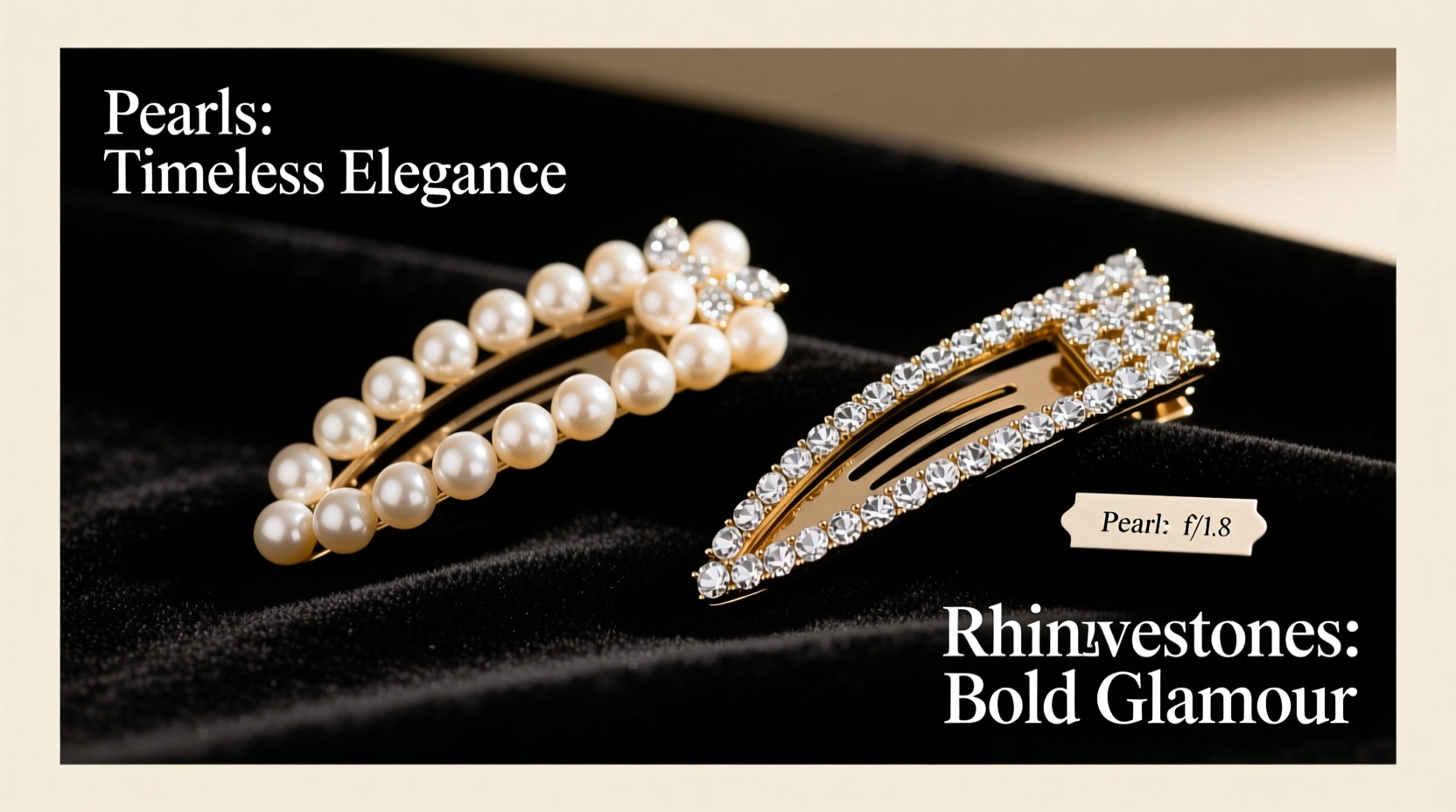
Humans instinctively assign meaning to materials. Pearls have been associated with nobility, refinement, and wealth for centuries. Their organic origin—formed slowly within oysters—adds to their mystique. In contrast, rhinestones, originally created as imitations of diamonds, signal sparkle and attention but not necessarily exclusivity. This distinction influences how others perceive wearers.
According to Dr. Lena Moretti, a behavioral stylist and image consultant, “Perception of luxury is less about cost and more about context. Pearls trigger subconscious associations with heritage, restraint, and sophistication. Rhinestones, while beautiful, are coded as festive or bold—ideal for celebration, but not always read as ‘expensive’.”
“Pearls don’t shout—they suggest. And suggestion is far more powerful in signaling quiet luxury.” — Dr. Lena Moretti, Behavioral Stylist
This subtle communication plays out daily in professional settings, social events, and even digital appearances. A single accessory can align you with a narrative—either one of understated wealth or vibrant expressiveness.
Pearls: The Quiet Signal of Refinement
Pearls have long been favored by figures associated with poised elegance—from Jackie Kennedy to Meghan Markle. Their appeal lies in consistency: soft luster, muted tones, and natural imperfections that speak to authenticity. Unlike lab-created stones, real pearls (even cultured ones) are grown, not manufactured, which adds to their perceived rarity.
When worn in hair clips, pearls tend to blend rather than dominate. They catch light gently, complementing the wearer without demanding attention. This quality makes them ideal for environments where subtlety is valued—boardrooms, formal dinners, academic settings.
Tip: Opt for off-white or champagne-toned pearls in hair clips—they harmonize better with skin tones and appear more luxurious than stark white.The “quiet luxury” trend of recent years has further elevated pearls. As fashion shifts away from logos and overt opulence, accessories that suggest history and care gain prominence. A well-placed pearl hair clip subtly communicates that you appreciate craftsmanship and timelessness.
Rhinestones: Glamour with a Statement
Rhinestones excel in moments that call for drama. Whether arranged in intricate floral patterns or scattered like stardust across a barrette, they reflect light aggressively, creating visual interest and energy. Popularized by Hollywood glamour and stage costumes, rhinestones thrive in contexts where being seen is the goal.
However, their association with imitation limits their ability to project “expensive” in certain settings. Unless set in high-quality metal or paired with minimalist design, rhinestone clips can lean toward costume jewelry—a category often linked to affordability rather than investment.
That said, modern reinterpretations are blurring this line. Designers like Jennifer Behr and Simone Rocha use premium crystals (e.g., Swarovski) in refined settings, elevating rhinestone pieces into luxury territory. The key difference? Intentionality. When rhinestones are used sparingly and thoughtfully, they convey curated glamour—not excess.
Comparing Pearls and Rhinestones: A Practical Breakdown
| Feature | Pearl Hair Clips | Rhinestone Hair Clips |
|---|---|---|
| Luster Type | Soft, organic glow | Bright, reflective sparkle |
| Style Association | Classic, elegant, timeless | Dramatic, festive, bold |
| Best For | Day-to-night transitions, professional settings | Evenings, weddings, photo shoots |
| Perceived Value | High (especially with real pearls) | Variable (depends on setting and quality) |
| Durability | Moderate (can scratch or lose luster) | High (if set securely) |
| Care Requirements | Avoid moisture, perfume, storage in silk | Wipe clean, store separately to avoid scratches |
Real-World Example: The Interview Effect
Sophie, a 32-year-old marketing strategist, prepared for a client pitch at a luxury brand. She owned both a vintage-inspired mother-of-pearl clip and a dazzling rhinestone comb. Initially drawn to the latter for its eye-catching effect, she consulted a stylist who advised her to choose the pearls.
“I wore the pearl clip pinned softly behind my ear,” Sophie recalls. “Afterward, two clients mentioned how ‘put together’ I looked. No one commented on the rhinestone version when I wore it to a party—just that I was ‘glamorous.’ There’s a difference between being admired and being trusted.”
This small choice didn’t change her qualifications—but it shaped perception. Pearls aligned her appearance with competence and composure, qualities highly valued in leadership narratives.
How to Choose Based on Context, Not Just Cost
Deciding between pearls and rhinestones shouldn’t hinge solely on price tags. Instead, consider the message you want to send. Use this checklist to guide your selection:
- Evaluate the occasion: Is it formal, creative, or celebratory?
- Assess the outfit: Does your ensemble lean minimal or maximal?
- Consider your role: Are you leading, presenting, or attending?
- Match the lighting: Natural light favors pearls; low lighting enhances rhinestones.
- Think long-term: Will this piece work across seasons and roles?
Expert Insight: The Role of Craftsmanship
Not all pearls—or rhinestones—are created equal. The construction of the clip matters as much as the material. “A poorly set pearl clip with visible glue lines won’t look expensive, no matter the gem,” says Marco Lin, a jewelry designer based in Milan. “Luxury is in the details: smooth edges, balanced weight, secure fastening.”
“The difference between ‘costume’ and ‘couture’ often lies in millimeters of precision.” — Marco Lin, Jewelry Designer
Invest in pieces where the metalwork feels substantial and finishes are polished. Even modest-sized pearls in a well-crafted setting outshine oversized rhinestones in flimsy bases.
Frequently Asked Questions
Can fake pearls still look expensive?
Yes—if they’re high-quality simulated pearls with uniform shape, smooth texture, and a deep luster. Avoid plastic-looking finishes or inconsistent coloring. Brands like Mikimoto offer affordable cultured options that retain prestige.
Are rhinestone clips outdated?
No, but their styling must be modern. Avoid cluttered designs. Opt for geometric arrangements or single-stone emphasis. Paired with sleek updos or satin fabrics, they remain current and chic.
Do men notice these details?
Indirectly, yes. While most won’t identify the accessory type, people register cues like grooming, intentionality, and polish. These contribute to overall credibility and attractiveness—regardless of gender.
Final Thoughts: It’s Not About Price, It’s About Presence
Pearls may statistically be linked to higher perceived expense, but true elegance comes from alignment—between your accessory, your environment, and your intent. A rhinestone clip worn with confidence at a gala radiates power. A pearl clip securing a bun during a keynote exudes authority. Neither is inherently superior; each serves a purpose.
The real luxury lies not in the material, but in the mindfulness behind the choice. When you select an accessory not because it’s trendy, but because it reflects who you are and where you’re going, you wear something money can’t buy: authenticity.
💬 Which do you reach for more—pearls or rhinestones—and why? Share your go-to hair clip moment and help others find their signature style.








