Dog ownership is one of life’s most rewarding experiences—but it comes with challenges. Misbehavior, lack of obedience, and communication gaps can strain even the strongest bond between human and canine. Enter *Mother Knows Best*, a groundbreaking dog training book that redefines how we understand and shape our dogs’ behavior. Unlike traditional methods that rely on correction and dominance, this book champions a natural, empathetic, and effective approach rooted in observation, consistency, and mutual respect.
Authored by renowned dog trainer Sarah Hodgson, *Mother Knows Best* draws inspiration from the instinctive nurturing behaviors seen in mother dogs. The core philosophy? Puppies learn best through gentle guidance, clear boundaries, and emotional security—exactly what a good mother provides. This method isn’t just for puppies; it’s adaptable to dogs of all ages, breeds, and temperaments, making it an essential resource for every dog owner.
The Natural Foundation of Canine Learning
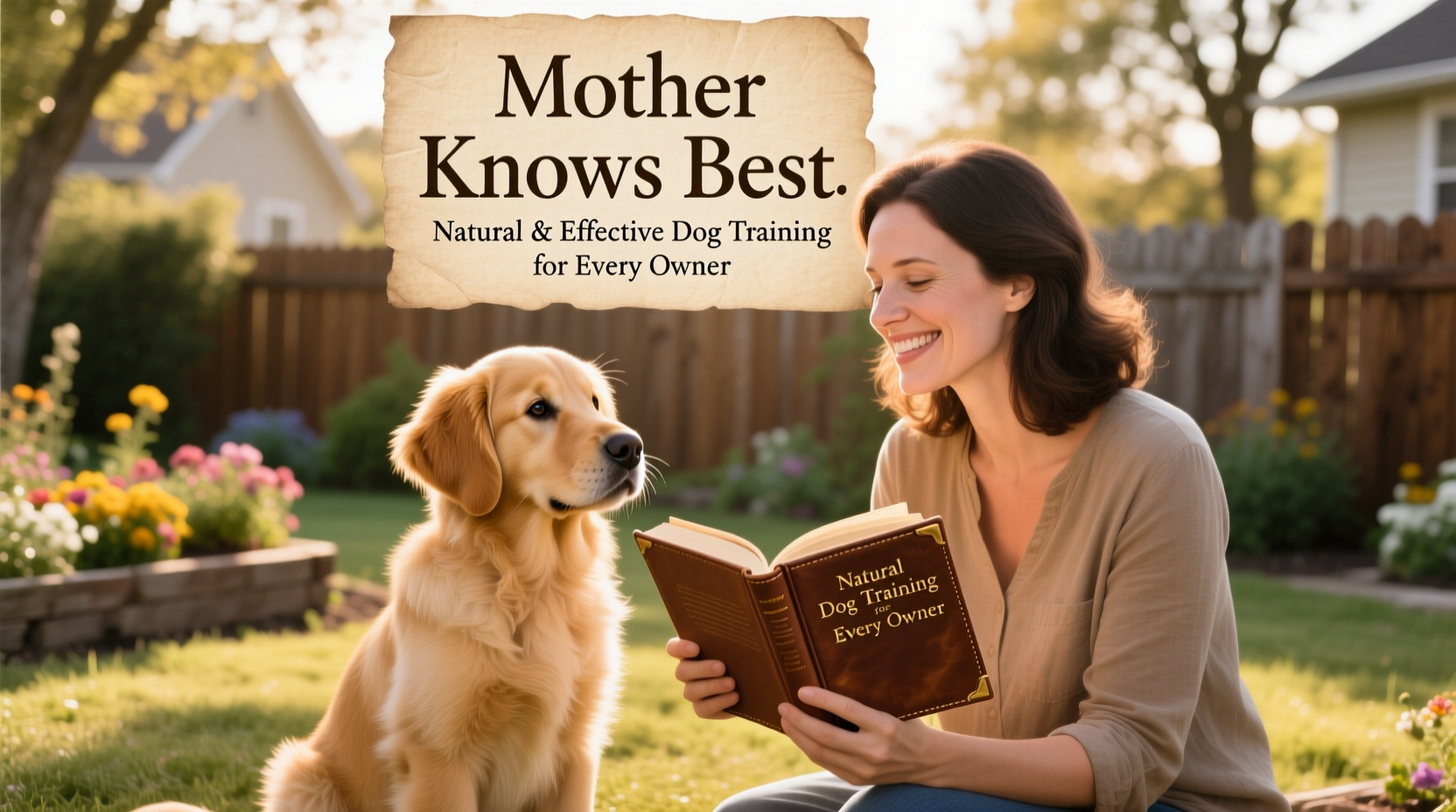
Dogs are not wolves. They are domesticated companions who thrive on structure, affection, and understanding. Traditional training often treats dogs as adversaries needing control. In contrast, *Mother Knows Best* teaches owners to become calm, consistent leaders—like a mother dog guiding her litter.
In the wild, mother dogs don’t yell or punish. They use body language, redirection, and timely corrections to teach their pups what’s safe, acceptable, and expected. For example, when a pup bites too hard during play, the mother yelps and disengages. This natural feedback loop teaches bite inhibition without fear or aggression.
Hodgson translates these instincts into practical techniques for home environments. Instead of choke chains or electronic collars, she advocates for positive reinforcement, environmental management, and emotional regulation. The result is a well-behaved dog who obeys not out of fear, but out of trust and connection.
“Dogs don’t misbehave to spite you. They act based on what they’ve learned—or haven’t learned. A mother doesn’t punish her pup for being a pup. She guides him. That’s the model we should follow.” — Sarah Hodgson, author of *Mother Knows Best*
Core Principles of the Mother Knows Best Method
The success of this training philosophy lies in its simplicity and alignment with canine psychology. Here are the five foundational principles every reader learns:
- Lead with Calm Confidence: Dogs look to their humans for direction. An anxious or inconsistent owner creates confusion. By remaining calm and decisive, you become a reliable leader.
- Use Natural Consequences: Just like a mother dog withdrawing attention after rough play, owners can use time-outs or loss of privileges to teach boundaries.
- Reinforce Desired Behaviors Immediately: Timing matters. Reward sits, stays, and recalls the moment they happen to strengthen the association.
- Manage the Environment: Prevent unwanted behaviors by controlling access. Use baby gates, leashes indoors, and secure yards to reduce mistakes.
- Build Emotional Resilience: Train in low-distraction settings first, then gradually increase difficulty. A confident dog is less likely to react out of fear or frustration.
Step-by-Step Guide to Implementing the Method at Home
Adopting the *Mother Knows Best* approach doesn’t require prior training experience. Follow this six-week timeline to build a strong foundation:
- Week 1: Observe and Adjust
Track your dog’s daily routines, triggers, and common behaviors. Identify patterns—when does he bark? What causes chewing? Adjust the environment accordingly (e.g., crate when unsupervised). - Week 2: Establish Routines
Introduce consistent feeding, walking, and bedtime schedules. Dogs thrive on predictability. Use mealtime to practice “sit” and “wait” before serving food. - Week 3: Teach Core Commands
Focus on “sit,” “stay,” “come,” and “leave it.” Use high-value treats and praise. Practice in quiet areas, increasing distractions gradually. - Week 4: Introduce Natural Corrections
When your dog jumps, turn away and ignore. When he pulls on leash, stop walking. These mimic a mother’s withdrawal of attention and teach self-control. - Week 5: Socialization & Distraction Training
Visit quiet parks or friends’ homes. Practice commands amid mild distractions. Reward focus and calm behavior. - Week 6: Refine and Maintain
Review progress. Address lingering issues with targeted exercises. Continue daily training sessions of 5–10 minutes to reinforce learning.
Do’s and Don’ts of Natural Dog Training
| Do’s | Don’ts |
|---|---|
| Use a calm, firm tone when giving commands | Yell or use a harsh voice |
| Redirect chewing to appropriate toys | Punish after the fact—dogs don’t connect delayed punishment to actions |
| Practice short, frequent training sessions | Train for long periods—dogs lose focus quickly |
| Ignore attention-seeking behaviors like barking | Give any attention (even negative) during unwanted behavior |
| Use treats early, then fade to intermittent rewards | Expect perfect behavior without reinforcement |
Real-Life Success: How the Smith Family Transformed Their Rescue Dog
The Smiths adopted Max, a two-year-old Border Collie mix, from a shelter. He was intelligent but anxious—prone to barking at visitors, pulling on walks, and chewing shoes. Frustrated by failed attempts with clicker training and obedience classes, they turned to *Mother Knows Best*.
Following the book’s guidance, they started by managing Max’s environment—keeping shoes in closets and using a playpen when they couldn’t supervise. They established a strict routine and began teaching “sit” and “go to mat” using treats and praise.
When Max barked at the door, instead of scolding, they taught him to go to his mat and stay. At first, it took multiple attempts, but within three weeks, Max ran to his mat automatically when the doorbell rang. Walks improved by using the “stop when pulling” technique. After six weeks, Max was calmer, more obedient, and integrated seamlessly into family life.
“We stopped seeing Max as ‘difficult’ and started seeing him as misunderstood,” said Laura Smith. “The book didn’t just train our dog—it trained us.”
Essential Checklist for Every Owner Starting the Program
- ✅ Read the book cover to cover before beginning
- ✅ Remove temptations (shoes, trash, counters within reach)
- ✅ Stock up on high-value treats (small pieces of chicken or cheese)
- ✅ Set a daily training schedule (5–10 minutes, 2x per day)
- ✅ Choose a consistent command vocabulary (avoid mixing “sit” and “sit down”)
- ✅ Practice patience—behavior change takes time
- ✅ Involve all household members to ensure consistency
Frequently Asked Questions
Can this method work for aggressive or fearful dogs?
Yes. The *Mother Knows Best* approach is especially effective for sensitive dogs because it avoids intimidation. For severe aggression or fear, however, pairing the method with professional behavioral support is recommended.
Do I need to use treats forever?
No. Treats are used heavily in the learning phase to mark desired behavior. Once reliability is established, you transition to “life rewards”—such as going for a walk or getting dinner—so your dog learns obedience leads to good outcomes.
Is this book suitable for puppy training?
Absolutely. In fact, it’s ideal. Puppies are sponges for learning, and starting with natural, positive methods sets the foundation for a lifetime of good behavior.
Final Thoughts: Become the Leader Your Dog Needs
*Mother Knows Best* isn’t just another dog training manual. It’s a paradigm shift—an invitation to lead with empathy, consistency, and wisdom. By modeling the nurturing yet firm presence of a mother dog, owners can build deeper bonds, reduce conflict, and raise emotionally balanced companions.
The beauty of this approach lies in its accessibility. You don’t need a degree in animal behavior or expensive tools. You need observation, patience, and the willingness to change your own habits. When you do, you’ll find that your dog responds not because he has to, but because he wants to.
🚀 Ready to transform your relationship with your dog? Pick up a copy of *Mother Knows Best*, commit to the process, and witness the power of natural, respectful training. Share your journey in the comments—your story could inspire another owner to begin theirs.








