When it comes to choosing a plush toy—whether for a child, a gift, or a collector—the decision often boils down to two options: the familiar, widely available mass-produced plush like Mickey Mouse or Minnie Mouse from major brands, or a unique, handcrafted plush made by an independent artisan. While branding, nostalgia, and availability play roles, the real question is about quality. Are mass-produced plush toys actually better made than handmade ones? The answer isn’t as straightforward as it seems.
Mass production has perfected consistency, safety compliance, and scalability. Handmade plushes offer individuality, craftsmanship, and emotional resonance. But when durability, materials, stitching, and long-term use are considered, which side holds up better?
The Reality of Mass-Produced Plush Toys
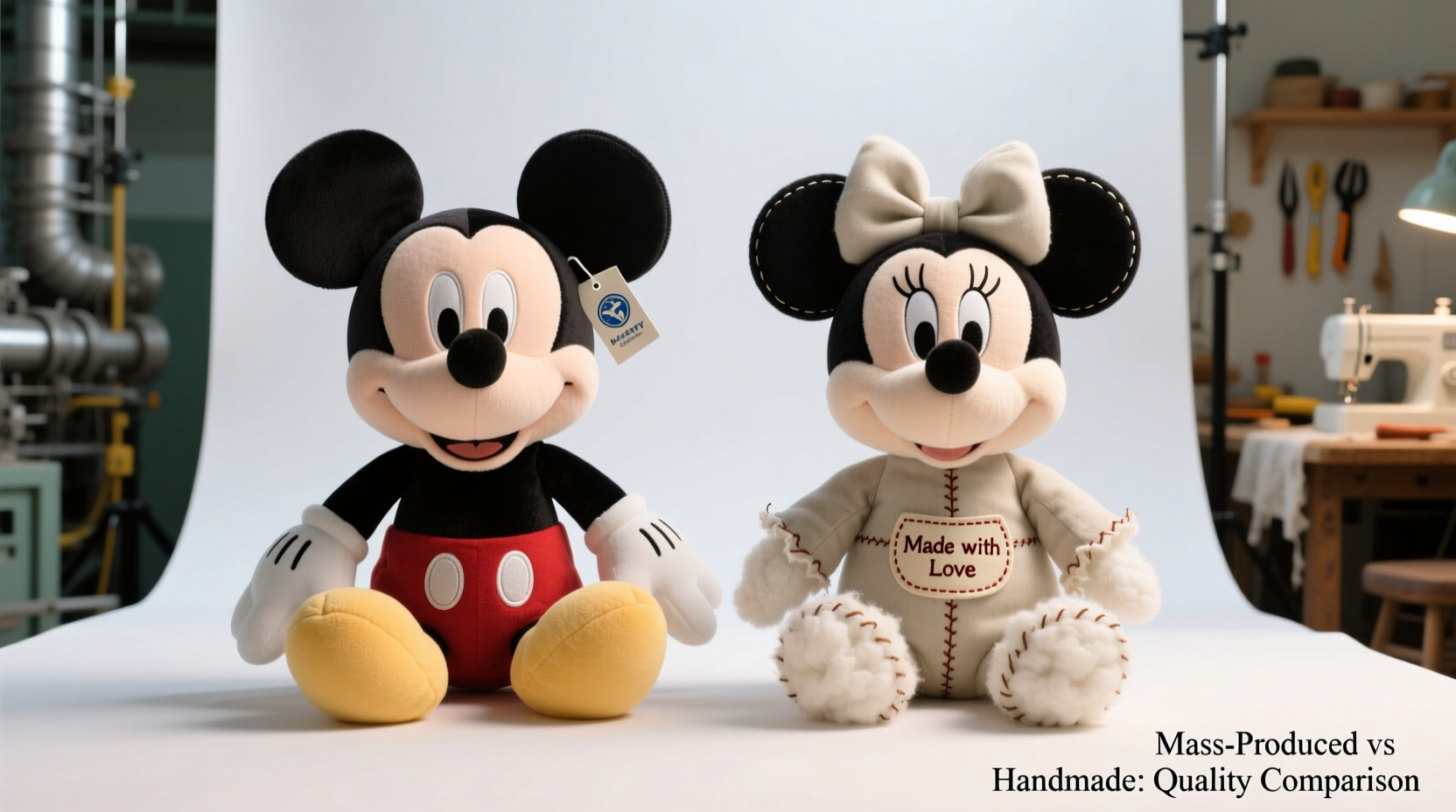
Mickey and Minnie Mouse plush toys, typically manufactured by companies like Disney in large-scale factories, benefit from industrial processes that ensure uniformity. Every stitch, fabric cut, and stuffing density is standardized. These toys undergo rigorous safety testing to meet international standards such as ASTM F963 (U.S.) and EN71 (Europe), covering flammability, chemical content, and small parts.
Materials used in these plushes are usually high-grade polyester fiberfill and tightly woven synthetic fabrics designed to resist pilling and fading. Brands invest heavily in R&D to balance softness with durability. For example, many official Disney plushes use “bean bag” style internal beans for added poseability, which requires precise manufacturing control.
Tip: Always check for sewn-in labels indicating compliance with safety standards—this is non-negotiable for children’s toys.However, mass production also means cost-cutting pressures. In lower-priced lines, you may find thinner seams, less dense stuffing, or simplified embroidery instead of detailed fabric layering. While top-tier versions maintain excellent quality, budget variants can show signs of wear within months of regular play.
The Craft Behind Handmade Plush Toys
Handmade plush toys are created by individual artists or small studios, often one at a time. Each piece reflects personal design choices, fabric selection, and construction techniques. Artisans frequently use premium cotton, wool blends, minky fabric, or even upcycled textiles, prioritizing texture and uniqueness over uniformity.
Stitching is typically done with care—double-stitched seams, reinforced joints, and securely attached eyes (often embroidered rather than plastic, eliminating choking hazards). Because artisans work slowly and deliberately, they can catch flaws early. Many handmade plush makers also customize stuffing density based on the toy’s intended use—softer for hugging, firmer for posing.
“Handmade doesn’t mean fragile. Some of the most durable plushes I’ve seen were crafted by independent designers who treat each piece like a miniature heirloom.” — Lena Torres, Textile Artist & Toy Conservator
The downside? Variability. One plush from a maker might be impeccably finished; another batch could have slight inconsistencies due to manual labor. And while many artisans follow safety guidelines, not all test their toys to formal regulatory standards unless selling commercially in regulated markets.
Direct Quality Comparison: Materials, Construction, and Longevity
| Factor | Mass-Produced (e.g., Mickey/Minnie) | Handmade Plush |
|---|---|---|
| Material Consistency | High – uniform fabric batches | Variable – depends on supplier and artisan choice |
| Stitching Strength | Moderate to high – machine-sewn but sometimes single-stitched | Often higher – double or triple stitching common |
| Safety Compliance | Always tested to international standards | Depends on seller – often safe but not always certified |
| Stuffing Density | Standardized, sometimes too firm or too loose | Customizable per piece |
| Durability (after 1 year of use) | Fair to good – may sag or lose shape | Good to excellent – especially if well-maintained |
| Emotional/Collectible Value | Moderate – nostalgic appeal | High – perceived as unique art object |
Real Example: A Parent’s Dilemma
Sophie Ramirez, a mother of two in Portland, bought both a $25 Disney Minnie plush and a $48 handmade cat plush from an Etsy artist for her daughter’s birthday. After six months of nightly cuddles, the Disney toy showed flattened ears, loose threads near the arm seam, and a faint stain that wouldn’t come out. The handmade plush, though washed once, retained its shape, color, and softness. “I was surprised,” Sophie said. “The expensive one looked delicate, but it’s held up better than the brand-name one we thought was ‘guaranteed’ quality.”
This case highlights a growing trend: consumers discovering that price and brand don’t always correlate with longevity. What matters more is how the toy is constructed and what materials are used—not just where it came from.
How to Choose the Right Plush for Your Needs
Not every situation calls for the same type of plush. Consider your priorities before purchasing:
- For young children: Safety and washability are paramount. Mass-produced plushes often win here due to compliance and machine-wash instructions.
- For collectors: Uniqueness and craftsmanship matter more. Handmade plushes offer limited editions and artistic details.
- For gifts: Emotional impact counts. A handmade plush with a personalized note can feel more meaningful.
- For daily use: Durability is key. Look for reinforced seams and high-quality stuffing, regardless of origin.
Checklist: Evaluating Plush Quality Before Buying
- Inspect the stitching—no loose threads or gaps.
- Press the toy—does it spring back or stay indented?
- Check the eyes—are they embroidered (safer) or plastic?
- Feel the fabric—is it thick and soft, or thin and scratchy?
- Review care instructions—can it be machine washed?
- If handmade, ask the seller about materials and safety testing.
- Read reviews focusing on long-term durability.
Debunking Common Myths
Myth 1: \"Brand-name = better quality.\"
Reality: While brands enforce standards, economies of scale often lead to material compromises in entry-level products.
Myth 2: \"Handmade toys fall apart easily.\"
Reality: Many artisans use superior techniques and materials compared to factory lines focused on speed.
Myth 3: \"If it’s soft, it’s well-made.\"
Reality: Softness fades. Structural integrity—seams, stuffing, joint strength—is what determines lasting quality.
FAQ
Are handmade plush toys safe for babies?
Many are, especially those with embroidered features and OEKO-Tex certified fabrics. However, always confirm safety certifications with the seller, as handmade items aren’t automatically tested like commercial toys.
Why are some handmade plushes so expensive?
Pricing reflects hours of labor, premium materials, small-batch sourcing, and design originality. A $60 handmade plush may take 4–6 hours to create, compared to seconds on an assembly line.
Can mass-produced plushes last as long as handmade ones?
Yes—but only higher-end models. Entry-level versions often degrade faster due to cost-driven material choices. With gentle use and proper care, premium branded plushes can last years.
Conclusion: Quality Isn’t Determined by Production Method Alone
The assumption that mass-produced plush toys are inherently better made than handmade ones overlooks the nuances of craftsmanship, intention, and material quality. While Mickey and Minnie plushes offer reliability, safety, and instant recognition, they aren’t universally superior. Many handmade plushes exceed them in construction quality, emotional value, and long-term resilience.
The truth is, quality depends on the specific product—not the production model. A poorly made factory toy will wear out faster than a carefully stitched handmade one. Conversely, a low-effort artisan piece might not withstand rough play.
🚀 Take action today: Next time you buy a plush, look beyond the label. Examine the seams, feel the fabric, and consider the story behind it. Whether it's a classic character or a one-of-a-kind creation, choose quality with intention.








