
Maya Angelou’s autobiographical masterpiece, I Know Why the Caged Bird Sings, is far more than a coming-of-age story. It is a powerful exploration of identity, resilience, and the enduring human spirit in the face of systemic oppression. Published in 1969, the book chronicles Angelou’s early years—from childhood trauma and racial discrimination to self-discovery and empowerment. Its title, drawn from a poem by Paul Laurence Dunbar, serves as a metaphor that reverberates throughout the narrative, symbolizing both suffering and resistance.
The phrase “I know why the caged bird sings” evokes deep emotional and historical resonance. At its core, it speaks to the paradox of joy and sorrow coexisting in the lives of those denied freedom. The caged bird, though confined, still sings—not out of contentment, but as an act of defiance, hope, and survival. Understanding this metaphor unlocks the heart of Angelou’s message: even in the most oppressive conditions, the human voice cannot be silenced.
The Origin of the Title: Paul Laurence Dunbar’s Influence
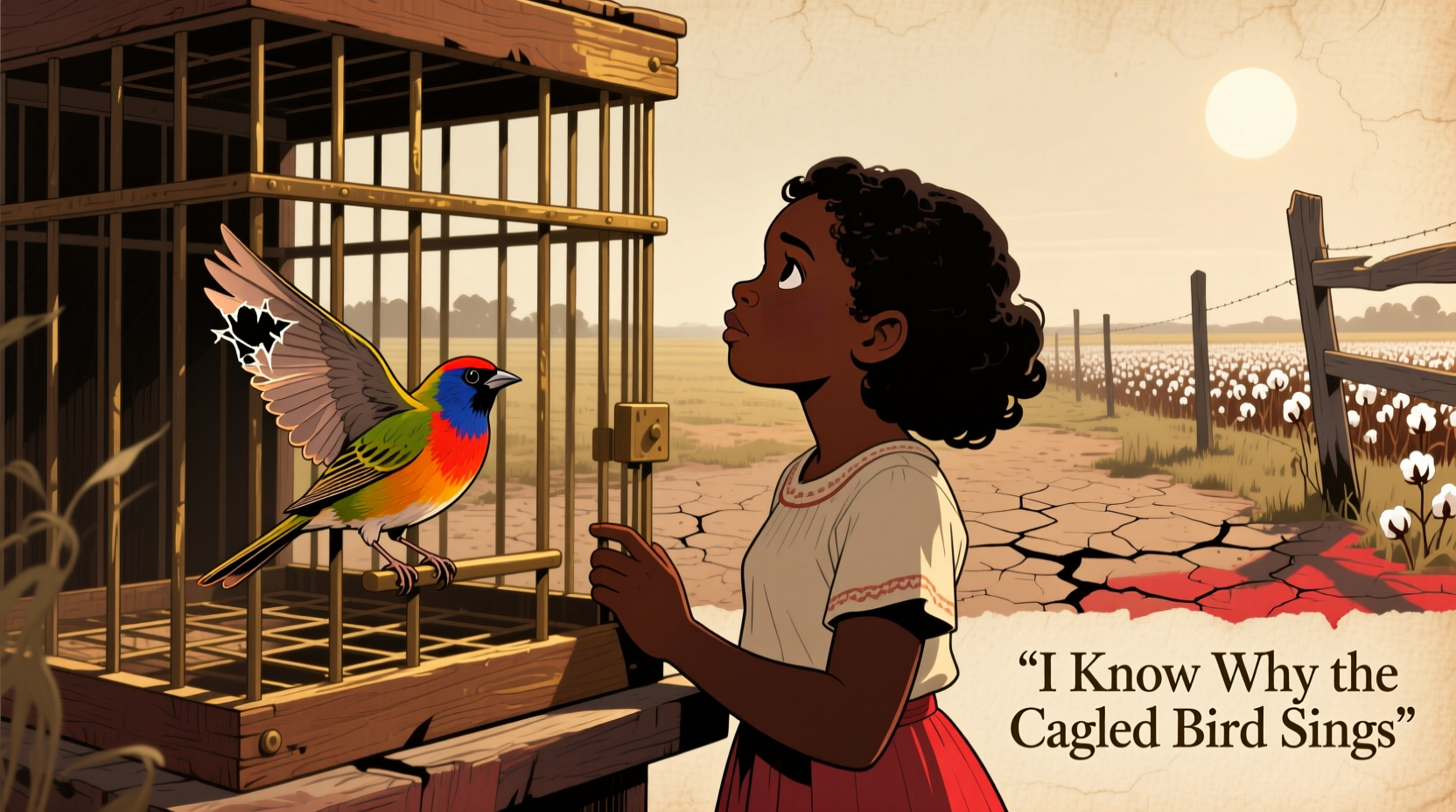
The title is borrowed from Dunbar’s 1899 poem “Sympathy,” which begins with the lines:
“I know what the caged bird feels, alas!
When the sun is bright on the upland slopes;
When the wind stirs soft through the springing grass,
And the river flows like a stream of glass…”
Dunbar, one of the first influential African American poets, used the image of the caged bird to express the anguish of living under racial injustice during the post-Reconstruction era. His bird sings not because it is happy, but because singing is its only form of expression when flight is impossible. Maya Angelou reclaims and recontextualizes this metaphor, shifting the focus from despair to resilience. In her version, the bird doesn’t just feel pain—it knows why it sings, suggesting awareness, purpose, and inner strength.
Tip: When analyzing literary metaphors like the caged bird, consider both their historical roots and how authors reinterpret them to reflect new contexts.Symbolism of the Caged Bird in Angelou’s Narrative
In Angelou’s memoir, the caged bird represents the Black experience in America—particularly that of Black women navigating racism, sexism, and trauma. Marguerite (Maya), the young protagonist, endures multiple forms of captivity: sexual abuse, internalized shame, societal rejection, and geographic displacement. Each of these acts as a cage, limiting her sense of self-worth and autonomy.
Yet, throughout the book, Maya finds ways to sing. Her love for literature, her growing eloquence, and her eventual decision to speak after a period of self-imposed silence are all expressions of that song. The act of writing the memoir itself becomes a continuation of that song—a reclaiming of voice.
The free bird, contrasted with the caged one, symbolizes white privilege and unearned liberty. While the free bird “names the sky his own,” the caged bird can only dream of such freedom. This dichotomy underscores the structural inequalities embedded in American society.
Key Themes in the Memoir
- Racial Identity and Oppression: From segregated schools to humiliating encounters with white authority figures, Angelou illustrates how racism shapes every aspect of her early life.
- Resilience and Self-Discovery: Despite trauma, Maya gradually builds confidence through education, mentorship (notably from Mrs. Flowers), and personal reflection.
- The Power of Voice: Silence and speech are central motifs. After being raped at eight, Maya stops speaking for nearly five years. Her return to language marks a pivotal moment of healing and empowerment.
- Family and Community: The support of her grandmother, Momma, and brother Bailey provides stability amid chaos, highlighting the role of kinship in survival.
- Gender and Trauma: The memoir confronts the intersection of race and gender, showing how Black girls are particularly vulnerable to exploitation and erasure.
Table: Symbolic Contrasts in \"I Know Why the Caged Bird Sings\"
| Symbo | Represents | Literary Function |
|---|---|---|
| Caged Bird | Black Americans, especially women; constrained identity | Metaphor for resilience amid oppression |
| Free Bird | White privilege; unrestricted opportunity | Contrast to highlight inequality |
| Silence | Trauma, fear, loss of agency | Represents psychological captivity |
| Books & Poetry | Escape, knowledge, empowerment | Tools for mental liberation |
| Stamps, Arkansas | Rural segregation; religious conservatism | Setting as social cage |
Expert Insight: The Cultural Significance of Angelou’s Work
“Angelou didn’t just tell her story—she gave voice to generations of Black women who were taught to remain silent. The caged bird sings because it must. That song is memory, resistance, and hope.” — Dr. Keisha Blain, Historian and Author of *Set the World on Fire*
This perspective emphasizes how Angelou transformed personal pain into collective testimony. By publishing one of the first widely read autobiographies by a Black woman that openly discussed sexual abuse, she challenged taboos and expanded the boundaries of American literature. Her work paved the way for future writers to explore trauma, identity, and healing with honesty and lyrical power.
Mini Case Study: A Student’s Journey Through the Text
Jamila, a high school junior in Chicago, initially struggled with the emotional weight of reading I Know Why the Caged Bird Sings for her English class. She found the scenes of racism and abuse difficult to process. But as she continued, she began to see parallels between Maya’s journey and her own experiences growing up in a marginalized neighborhood.
“When Maya finally speaks again,” Jamila wrote in her journal, “it felt like something unlocked in me too. I started writing poetry about my mom’s immigration story. I realized that telling our truths is how we break cages.” Her teacher noted that Jamila became more engaged in discussions and even led a peer workshop on using writing as healing. This real-world example illustrates the transformative potential of Angelou’s narrative.
Actionable Checklist: How to Deepen Your Understanding of the Book
- Read Paul Laurence Dunbar’s poem “Sympathy” and compare its tone and imagery to Angelou’s use of the caged bird.
- Analyze key moments when Maya regains her voice—what triggers her return to speech?
- Identify passages where religion is used both as comfort and as a tool of control.
- Research the historical context of the Jim Crow South to better understand the societal cages Maya faces.
- Reflect on how the theme of displacement (moving between Stamps, St. Louis, and California) affects Maya’s sense of belonging.
- Write a short personal response: What does “singing while caged” mean in your own life?
Frequently Asked Questions
Why is the book controversial?
I Know Why the Caged Bird Sings has faced bans and challenges due to its candid depiction of rape, racism, and sexuality. Some critics argue it is inappropriate for younger readers. However, educators and literary scholars defend its inclusion in curricula, emphasizing its value in fostering empathy and dialogue about difficult topics.
Is the caged bird ever freed in the story?
Literally, no—the bird remains caged. But symbolically, Maya achieves a form of freedom through self-expression, education, and motherhood. The final chapters show her embracing independence by becoming a young single mother, indicating emotional and psychological liberation even if societal barriers persist.
How does the memoir relate to modern movements like Black Lives Matter?
The memoir’s themes of dignity, resistance, and the demand for recognition resonate strongly with contemporary struggles against racial injustice. Maya’s insistence on being seen and heard mirrors today’s calls for equity and accountability. The caged bird’s song continues in protest chants, poetry slams, and personal testimonies shared online and in communities.
Conclusion: Singing Beyond the Cage
I Know Why the Caged Bird Sings endures not because it offers easy answers, but because it asks essential questions about identity, justice, and the cost of silence. Maya Angelou’s story reminds us that singing from within a cage is not resignation—it is resistance. It is the refusal to let trauma have the final word. Every time someone shares their truth despite fear, they echo that same defiant melody.
💬 Your voice matters. Whether through writing, speaking, or creating, find your song—and sing it boldly. Share this article if you believe stories can change the world.








