Walking your dog should be a time of connection, exercise, and enjoyment for both you and your pet. Yet, many owners struggle with control, tangles, or even injuries when using retractable leashes. While these tools offer freedom and convenience, they come with unique challenges that demand responsible handling. Understanding how to use a retractable leash properly isn’t just about convenience—it’s about safety, training, and respect for your dog’s behavior and your environment.
When used correctly, a retractable leash allows your dog to explore within safe boundaries while keeping you in command. But misuse can lead to burns, loss of control, or strained relationships between pet and owner. This guide breaks down the essentials of mastering your retractable leash—offering practical strategies, real-world insights, and expert-backed techniques to ensure every walk is safe, smooth, and enjoyable.
Understanding How Retractable Leashes Work
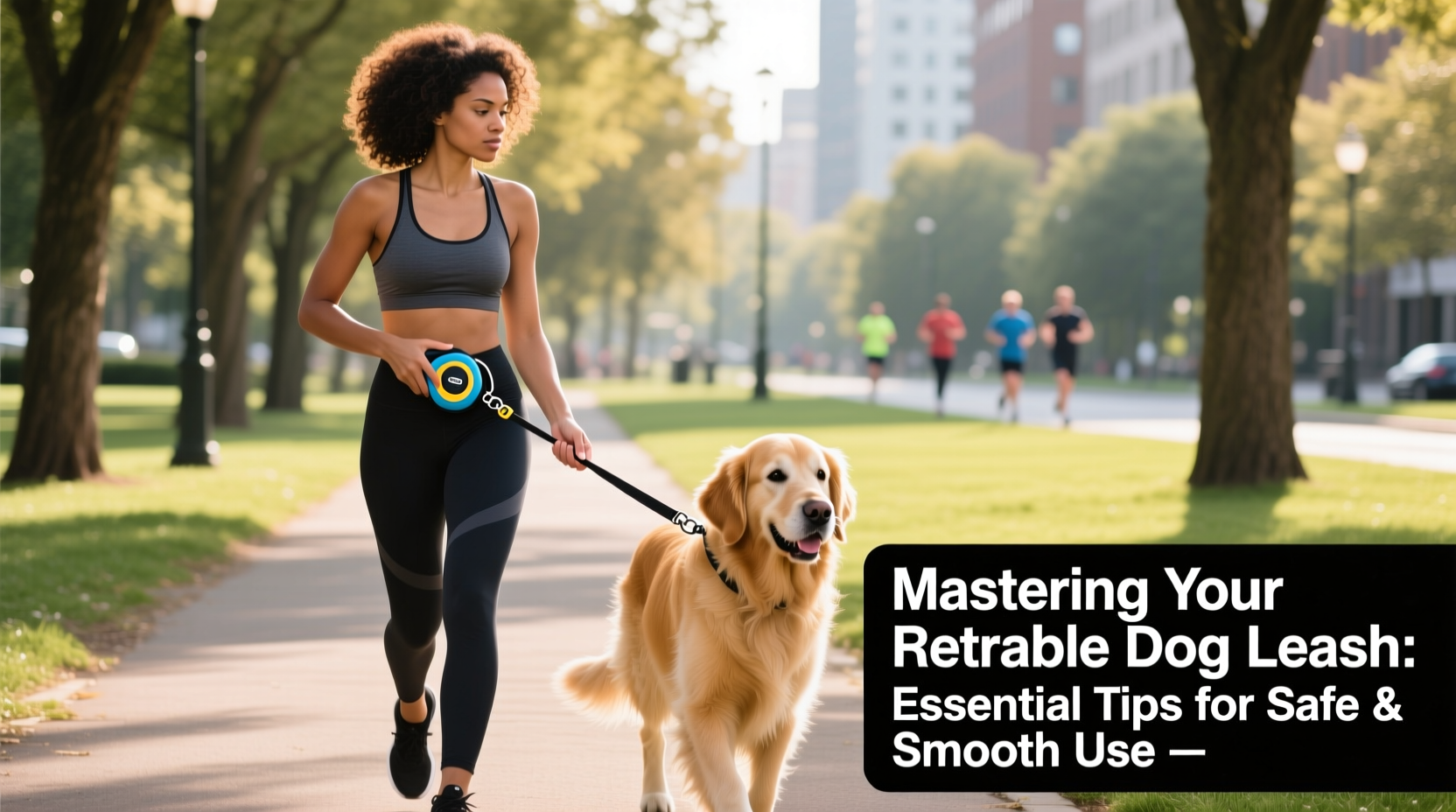
A retractable leash consists of a handle containing a spring-loaded spool that lets the dog extend the line up to a set length—typically 10 to 26 feet. A brake button on the handle allows you to lock the cord at a desired distance. The thin cord or tape retracts automatically when tension is released, making it compact and easy to carry.
The appeal lies in flexibility: dogs can sniff, explore, and move ahead without constant tugging, while owners maintain the ability to reel them back. However, this freedom comes with trade-offs. The long range increases risks around traffic, aggressive animals, or sudden distractions. The cord itself can cause injury if mishandled, and the mechanism may fail under excessive strain.
Tip: Always test the lock mechanism before each walk. Press the brake button to ensure the cord stops instantly and stays locked.Best Practices for Safe Handling
Safety begins with awareness—not just of your dog, but of your surroundings and your own posture. Many accidents occur because owners underestimate how fast things can go wrong when a dog reaches the end of a 20-foot line.
Hold the handle securely with both hands when needed, especially in crowded areas. Keep your arm close to your body to maintain leverage. Never wrap the leash around your hand or wrist; if your dog lunges, the cord can burn through skin or break bones due to high-speed recoil. Instead, keep the handle gripped firmly in your palm and use your body weight to manage sudden movements.
Use the lock feature proactively. Don’t wait for your dog to dart toward a squirrel—lock the leash early when approaching intersections, other dogs, or unpredictable zones. Releasing the lock gradually gives your dog time to adjust without jerking.
“Retractable leashes aren't inherently dangerous—but they require more skill and attention than fixed-length leashes. They’re not ideal for strong pullers or untrained dogs.” — Dr. Karen Bennett, Certified Veterinary Behaviorist
Step-by-Step Guide to Smooth Walks
Follow this sequence to build confidence and control every time you step outside:
- Pre-Walk Check: Inspect the leash for frayed cords, sticky retraction, or cracked housing. Confirm the locking mechanism works smoothly.
- Attach Securely: Clip the leash to a well-fitted collar or harness. Avoid using retractable leashes with slip collars or harnesses that allow easy escape.
- Start Locked: Begin each walk with the leash locked at a short length (4–6 feet) until your dog settles into walking beside you.
- Gradual Release: Once calm, slowly release the cord to give more exploration room, but remain alert to surroundings.
- Maintain Position: Keep the handle near your hip, not overhead or behind you. This improves balance and reaction time.
- Reel with Intent: Use gentle pulses on the lock button to guide your dog back rather than yanking.
- End Controlled: Lock the leash before approaching your home or car to prevent last-minute dashes.
Common Mistakes and How to Avoid Them
Even experienced dog owners fall into habits that compromise safety. Recognizing these pitfalls is the first step to correcting them.
| Mistake | Risk | Solution |
|---|---|---|
| Letting the dog roam too far in public spaces | Loss of control near traffic or other animals | Limit extension in urban or busy areas; use shorter settings |
| Wrapping the leash around the hand | Severe rope burns or fractures during lunges | Hold the handle firmly; never loop it over skin |
| Using with large or strong dogs | Difficulty managing sudden pulls; equipment failure | Reserve retractables for small to medium, well-trained dogs |
| Allowing tangling around legs or objects | Tripping hazard; stress on the dog’s neck | Monitor movement; lock leash when navigating tight spaces |
Real Example: Turning a Chaotic Walk into a Calm Experience
Sarah, a Boston Terrier owner from Portland, used to dread walks with her retractable leash. Max would sprint to the end of the 16-foot cord, then lunge at passing bikes or dogs, often yanking Sarah off balance. After a close call with a cyclist, she consulted a local trainer who suggested a structured approach.
She began locking the leash at 5 feet during the first block, only releasing more line once Max walked calmly beside her. She practiced “check-ins”—pausing every few minutes to call Max back and reward attention. Over three weeks, Max learned that pulling didn’t earn more freedom, but staying close did. Now, Sarah uses the full extension selectively in open parks, but keeps control in neighborhoods. The walks are quieter, safer, and more enjoyable for both.
When to Choose a Different Leash
Retractable leashes aren’t suitable for every dog or situation. They should be avoided for dogs that are reactive, highly energetic, or still learning basic obedience. Puppies, dogs in training, or those prone to bolting are better off with standard 4–6 foot nylon or leather leashes until they demonstrate consistent behavior.
Similarly, certain environments make retractable leashes impractical. Crowded sidewalks, outdoor cafes, hiking trails with obstacles, or areas with heavy traffic demand tighter control. In these cases, switching to a fixed-length leash—or even a hands-free belt leash—can improve safety and reduce stress.
“Think of the retractable leash as a privilege, not a default. It’s earned through training and trust.” — Marcus Reed, Professional Dog Trainer, APDT Member
Essential Checklist Before Using Your Retractable Leash
- ✅ Leash mechanism operates smoothly—cord extends and retracts without sticking
- ✅ Lock button functions instantly and holds firm
- ✅ Cord or tape shows no signs of fraying, kinking, or wear
- ✅ Handle is intact with no cracks or loose parts
- ✅ Dog is wearing a secure collar or harness (no slip-outs)
- ✅ You’re in a safe, low-traffic area appropriate for extended range
- ✅ You’re prepared to switch to a fixed leash if needed
Frequently Asked Questions
Can I use a retractable leash for training?
Generally, no. The inconsistent tension and delayed feedback interfere with clear communication. Use a standard 6-foot leash during formal training sessions to reinforce focus and heel work. Once your dog masters basic commands, limited retractable use in controlled environments may be introduced.
Are retractable leashes banned anywhere?
Yes. Some cities, parks, and trail systems prohibit retractable leashes outright due to safety concerns. For example, New York City parks recommend leashes no longer than 6 feet. Always check local regulations before heading out.
What’s better: cord or tape-style retractable leashes?
Tape-style leashes are wider, more durable, and less likely to cause burns or tangle around limbs. They also resist twisting better than thin cords. For most users, especially with medium-sized dogs, tape is the safer, more comfortable choice.
Final Thoughts: Mastering Control, One Walk at a Time
Mastering your retractable dog leash isn’t about restricting your dog’s joy—it’s about balancing freedom with responsibility. With the right knowledge, technique, and vigilance, you can enjoy the benefits of exploration while minimizing risks. Every walk is an opportunity to reinforce trust, build discipline, and deepen your bond.
Start small. Practice in quiet areas. Prioritize safety over convenience. And remember: the goal isn’t just to manage a leash—it’s to raise a dog who walks with you, not away from you.
💬 Have a retractable leash success story or challenge? Share your experience in the comments—your insight could help another dog owner stay safe and confident on their next walk.








