
Walking your dog should be a shared experience of connection and calm exploration—not a daily battle of tugging, lunging, and frustration. Yet, for many pet owners, loose leash walking remains elusive. The good news is that with the right tools, mindset, and consistent training, any dog can learn to walk politely by your side. Using a harness as part of a structured training plan significantly increases success by reducing strain on the neck and offering better control without encouraging resistance.
Pulling on the leash isn’t just inconvenient—it reinforces unwanted behaviors and can lead to long-term musculoskeletal issues in dogs. Training your dog to walk with a loose leash fosters attentiveness, builds impulse control, and strengthens the human-canine bond. This guide breaks down actionable, science-backed steps to help you achieve relaxed, enjoyable walks—no matter your dog’s age or past habits.
Why a Harness Is Essential for Loose Leash Success
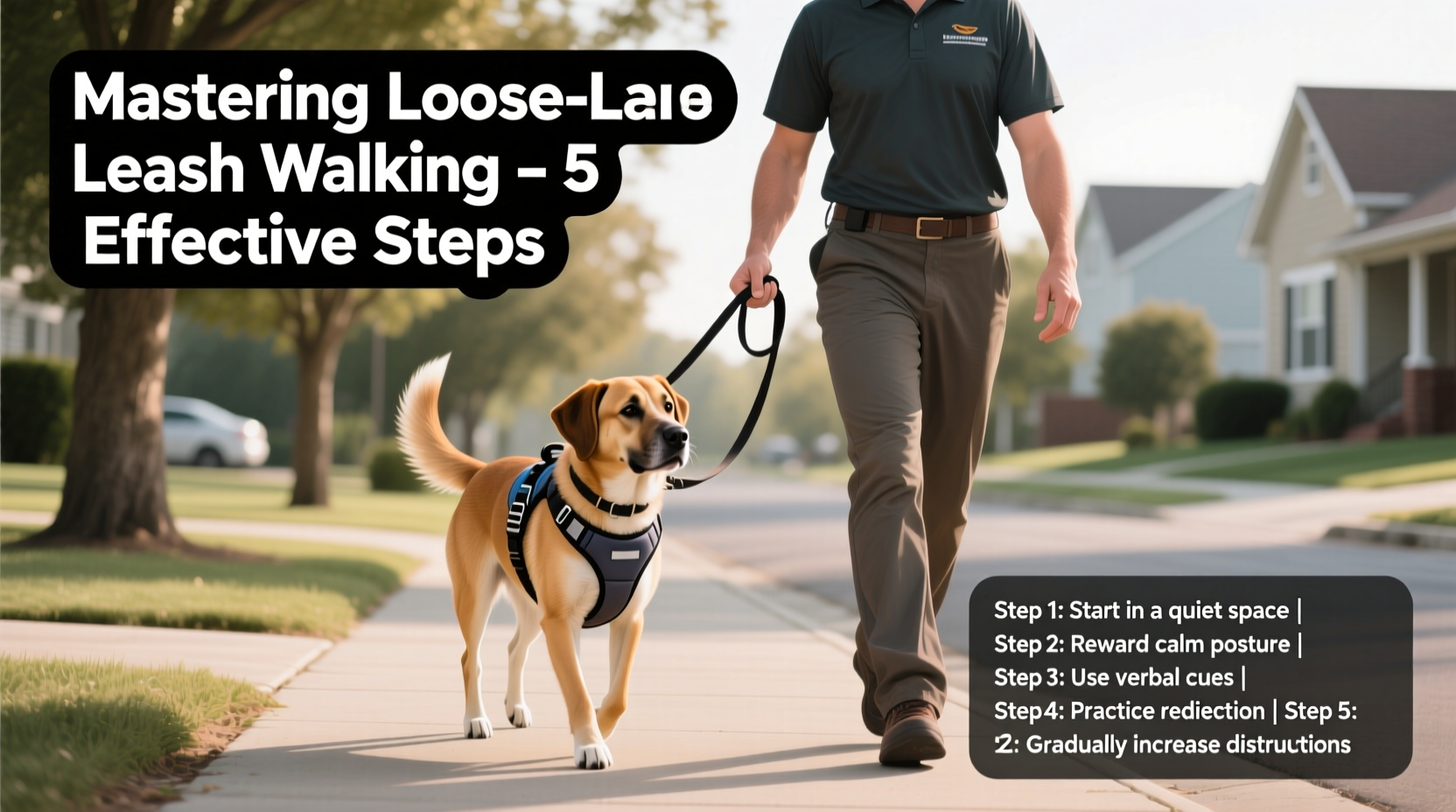
Traditional collars apply pressure directly to the trachea and spine when a dog pulls, which can cause injury and increase anxiety. A well-fitted front-clip harness redirects your dog’s momentum toward you when they surge forward, making it easier to guide them back into position without force. Unlike rear-clip harnesses—which can actually encourage pulling by acting like a sled—front-clip models promote natural turning behavior and discourage forward tension.
Not all harnesses are created equal. Look for one with:
- A chest attachment point for steering
- Adjustable straps for a snug, escape-proof fit
- No rubbing on armpits or shoulders
- Reflective stitching for visibility
Step-by-Step Guide to Teaching Loose Leash Walking
Training should begin in low-distraction environments and progress gradually. Follow this timeline over 2–6 weeks depending on your dog’s temperament and prior experience.
- Introduce the harness at home: Let your dog wear it during meals and play. Reward calm acceptance with treats.
- Practice standing still: Clip the leash and stand quietly. When your dog stops pulling, mark the moment with a clicker or verbal cue (“Yes!”) and reward. Repeat until your dog stands calmly beside you for 10 seconds.
- Take one step together: Move only when the leash is slack. If your dog pulls, stop immediately. Wait for the leash to loosen—even if it takes 30 seconds—then praise and continue.
- Incorporate direction changes: Randomly turn and walk the opposite way. This teaches your dog to stay attentive and discourages forging ahead.
- Add distractions gradually: Begin in quiet areas, then move to sidewalks, parks, or streets with controlled stimuli.
- Phase out treats: Once reliable, switch to intermittent rewards while maintaining verbal praise.
The key is consistency. Every walk is a training opportunity. Never allow pulling to be rewarded by forward motion—even once. Dogs quickly learn patterns: if pulling gets them where they want, they’ll keep doing it.
Common Mistakes That Undermine Progress
Even well-intentioned owners unknowingly sabotage their efforts. Avoid these pitfalls:
| Mistake | Why It’s Harmful | Better Approach |
|---|---|---|
| Yanking back when dog pulls | Creates opposition reflex; dog pulls harder | Stop and wait for slack |
| Allowing pulling on “fun” walks | Reinforces inconsistency | Apply training every time |
| Using treats too far from body | Encourages dog to drift outward | Hold treats near waist level |
| Overlooking body language | Misses signs of fear or overstimulation | Pause and reassess environment |
Real Example: Transforming Max, the Reactive Terrier
Max, a 2-year-old Jack Russell Terrier, would lunge at squirrels, bark at bikes, and drag his owner two blocks before settling. His owner tried choke collars and verbal corrections, but Max grew more anxious. After switching to a front-clip harness and beginning structured training, progress began within days.
Starting in their backyard, Max learned that forward movement only happened when the leash was slack. His owner used high-value chicken treats and practiced frequent turns. By week three, they were walking around the block with only brief pauses when distractions appeared. Within six weeks, Max walked calmly past previously triggering stimuli, checking in with his owner regularly. The change wasn’t just behavioral—it improved their relationship. Walks became bonding time instead of endurance tests.
“Dogs don’t pull because they’re stubborn—they pull because pulling works. Change the consequence, and the behavior follows.” — Dr. Kendra Pope, Veterinary Behaviorist
Essential Tips for Long-Term Success
Tip: Keep training sessions under 10 minutes during early stages to maintain focus and prevent fatigue. Tip: Use a shorter leash (4–6 feet) during training to improve feedback and control.- Train multiple times a day—even indoors or in hallways.
- Use high-value rewards initially (boiled chicken, cheese), then fade to kibble or praise.
- End each session on a positive note, even if it means returning home after one good step.
- Involve all family members in training to ensure consistency.
Checklist: Your First Week of Loose Leash Training
- Choose a properly fitted front-clip harness
- Let your dog wear the harness indoors with treats
- Practice standing still on-leash in a quiet room
- Walk one step forward when leash is slack; stop if tension appears
- Turn and change direction randomly to build attention
- Conduct three 5-minute training sessions daily
- Record progress: note duration, distractions, and successes
Frequently Asked Questions
Can older dogs learn loose leash walking?
Absolutely. While puppies absorb training faster, adult and senior dogs are fully capable of learning new behaviors. The process may take longer due to established habits, but consistency and patience yield results at any age.
What if my dog freezes or refuses to move?
This often indicates fear or uncertainty. Backtrack to a quieter environment and use encouragement rather than force. Lure with treats, speak softly, and celebrate small movements. Never yank or scold.
Is it okay to use a retractable leash during training?
No. Retractable leashes teach dogs that pulling earns them freedom, directly contradicting loose leash goals. They also pose safety risks. Use a standard 4–6 foot nylon or biothane leash for training.
Conclusion: Turn Walks Into Moments of Connection
Mastering loose leash walking isn’t about dominance or suppression—it’s about communication and cooperation. With a proper harness, clear cues, and patient repetition, your dog can learn to walk beside you willingly, not because they have to, but because they choose to. Each pause, turn, and reward builds trust and mental resilience. Over time, what begins as effort becomes habit, and habit becomes harmony.
The next walk doesn’t have to be a struggle. Start today, even if it’s just five steps in your driveway. Celebrate progress, stay consistent, and remember: every dog can learn. You’re not just teaching manners—you’re building a deeper, more attentive partnership with your companion.
💬 Have a loose leash breakthrough story? Share your journey in the comments and inspire others to keep going—one calm step at a time.








