Cats are creatures of habit, and their bathroom behavior reflects more than just instinct—it reveals their comfort, stress levels, and environmental satisfaction. When a cat starts peeing outside the litter box, many owners assume behavioral issues or medical problems first. While those should be ruled out, one of the most overlooked culprits is something far simpler: litter box placement.
The location of a litter box plays a crucial role in whether a cat will use it consistently. Poor positioning can create anxiety, confusion, or physical discomfort—leading even the most fastidious feline to seek alternative spots. Understanding these placement pitfalls isn’t just about cleanliness; it’s about respecting your cat’s natural instincts and sensory needs.
Why Placement Matters More Than You Think
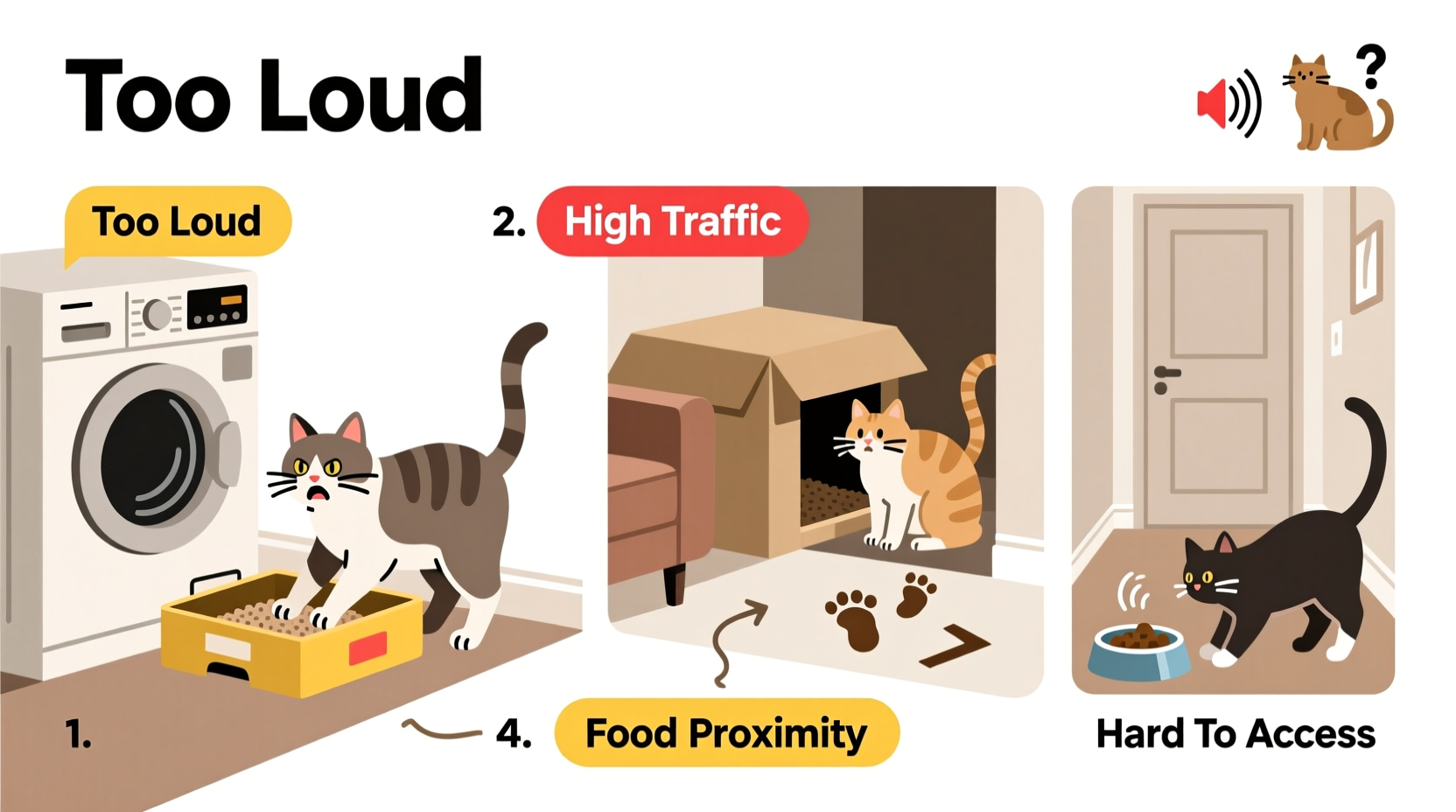
Cats don’t view the litter box as merely a toilet—they see it as a private sanctuary where vulnerability is high. In the wild, cats avoid elimination sites near feeding areas or high-traffic zones to evade predators. They also prefer quiet, easily accessible locations where they can monitor their surroundings while doing their business.
Domestic cats retain these instincts. A poorly placed litter box can trigger avoidance behaviors not because the cat is “misbehaving,” but because the environment feels unsafe or inconvenient.
“Cats are highly sensitive to their environment. A litter box tucked behind a noisy washer or beside a food bowl sends conflicting signals that can lead to inappropriate elimination.” — Dr. Sarah Thompson, DVM, Feline Behavior Consultant
Even minor misplacements—like putting the box too close to a loud appliance or sharing space with another cat’s box without enough distance—can be enough to discourage use. The key is understanding what makes a location acceptable from the cat’s perspective, not ours.
Top 5 Litter Box Placement Mistakes and How to Fix Them
1. Placing the Litter Box Near Food and Water
In nature, cats never eliminate near their eating area. It’s a hygiene instinct deeply embedded in their survival programming. Yet, many owners place litter boxes in kitchens or pantries simply because space is available.
When food and waste are side by side, cats may refuse to use the box altogether. Some will eat elsewhere, others will hold it until they find an alternative spot to urinate—one that feels “cleaner” by their standards.
Tip: Keep litter boxes at least 5–6 feet away from food bowls, water stations, and feeding zones. Use separate rooms if possible.2. Hiding the Box in Hard-to-Reach or Noisy Areas
Basements, laundry rooms, and utility closets often seem like ideal places for litter boxes—they’re out of sight and contain messes. But these locations frequently come with loud appliances (washers, dryers, furnaces), sudden noises, or vibrations that startle cats mid-use.
A cat startled during elimination may associate the box with fear. Over time, this leads to avoidance. Additionally, older cats or kittens may struggle with stairs or dim lighting in basements, making access physically difficult.
Consider your cat’s mobility and sensitivity to sound. If the dryer kicks on every time your cat tries to go, you’ve created a no-go zone.
3. Putting Multiple Boxes Too Close Together
Many experts recommend having one litter box per cat, plus one extra. But placing all boxes in the same corner defeats the purpose. To a cat, two trays within a few feet may feel like a single, overcrowded bathroom.
Cats are territorial. Even bonded cats may avoid using a box if another cat’s scent is too strong nearby. This is especially true in multi-cat homes where subtle social hierarchies exist.
Spacing matters. Distribute boxes across different rooms or floors to give each cat privacy and choice.
4. Choosing High-Traffic or Socially Stressful Locations
Litter box privacy isn’t about human modesty—it’s about feline security. Cats dislike being cornered or surprised while vulnerable. Placing a box in a hallway, living room, or children’s play area exposes them to foot traffic, loud voices, or curious pets.
If your cat has to walk through a busy part of the house to reach the box—or worse, gets ambushed by a dog or toddler afterward—they’ll look for quieter alternatives. Carpets, potted plants, or laundry piles might seem illogical to us, but to a stressed cat, they offer seclusion.
5. Ignoring Vertical Space and Escape Routes
Especially in homes with multiple pets, cats need to feel they can enter and exit the litter area safely. A box tucked into a tight corner with only one entrance traps a cat, increasing anxiety.
Additionally, failing to consider vertical space overlooks a core aspect of feline comfort. Cats feel safer when they have elevated options nearby—such as a shelf or perch—to survey the area before and after use.
Ensure the litter box location allows for clear visibility and at least two escape routes. Avoid cramming it behind furniture or against a wall with no buffer.
Do’s and Don’ts: Litter Box Placement Checklist
Checklist: Follow these guidelines to optimize litter box placement:- DO place boxes in quiet, low-traffic areas with easy access.
- DO provide one box per cat, plus one extra—spread across different rooms.
- DO ensure the location is well-lit and temperature-stable (not freezing basements or hot attics).
- DO keep boxes away from loud appliances, doors that slam, or drafty vents.
- DO clean boxes regularly—placement won’t help if hygiene is poor.
- DON’T place boxes next to food or water bowls.
- DON’T hide boxes in isolated, hard-to-reach corners.
- DON’T put multiple boxes right next to each other.
- DON’T locate boxes in socially stressful zones (e.g., near pet gates or barking dogs).
- DON’T assume one perfect spot works forever—reassess as household dynamics change.
Real-Life Example: Solving a Mystery Peeing Problem
Sarah, a cat owner in Portland, noticed her 3-year-old tabby, Milo, had started urinating on a pile of towels in the guest bathroom. She cleaned thoroughly, tried sprays, and even visited the vet—no medical issues were found.
Frustrated, she contacted a feline behaviorist. After reviewing photos of her home, the consultant pointed to the laundry room, where both litter boxes were located—just three feet apart, next to a constantly running dehumidifier.
The noise and proximity were the issue. Milo associated the sound with the act of going to the bathroom and began avoiding the area entirely. The guest bathroom, though rarely used, was quiet and contained soft fabric—making it an appealing alternative.
Solution: Sarah moved one box to a spare bedroom closet (with the door propped open) and replaced the second with a quieter model in a basement corner away from machinery. Within a week, Milo returned to using the boxes exclusively.
This case highlights how subtle environmental cues—not defiance or spite—drive litter box avoidance.
Optimal Litter Box Placement: A Step-by-Step Guide
Fixing litter box issues requires more than relocation—it demands strategy. Follow this sequence to identify and correct placement problems:
- Map current litter box locations. Note which rooms they’re in, proximity to food, noise sources, and foot traffic.
- Observe your cat’s movement patterns. When do they attempt to use the box? Do they hesitate, sniff around, or leave abruptly?
- Identify potential stressors. Is there a barking dog nearby? Does a child frequently run past? Are there loud appliances cycling on and off?
- Choose 2–3 alternative locations. Prioritize quiet rooms (spare bedrooms, hall closets, quiet corners of main floors) that are easily accessible.
- Introduce new boxes gradually. Place a clean box in the new spot with some used litter on top to encourage familiarity. Let your cat discover it naturally.
- Maintain old locations temporarily. Remove original boxes only after confirming consistent use of new ones—this prevents accidents during transition.
- Monitor usage over 2–3 weeks. Look for complete elimination in trays, reduced sniffing, and absence of marking behavior.
- Adjust based on feedback. If one new location fails, try another. Cats have individual preferences—some like solitude, others prefer being near family activity.
This methodical approach reduces guesswork and increases long-term success.
Comparison Table: Good vs. Bad Litter Box Locations
| Factor | Good Placement | Poor Placement |
|---|---|---|
| Proximity to Food | Separated by walls or rooms | Same room or within 3 feet |
| Noise Level | Quiet, minimal sudden sounds | Near washer, dryer, furnace, or TV |
| Traffic | Low foot traffic, predictable access | High-traffic hallway or entryway |
| Privacy | Partially enclosed, visible entrance/exit | Cramped corner with no escape route |
| Accessibility | On main floor, no stairs required | Basement with steep stairs |
| Multi-Cat Setup | Boxes in separate rooms or floors | All boxes clustered together |
FAQ: Common Questions About Litter Box Placement
Can I put a litter box in the bathroom?
Yes, but with caution. Bathrooms can work if they’re frequently used by humans. Sudden door closures, loud toilets flushing, or steam from showers can scare cats. If using a bathroom, keep the door open, install a slow-close toilet lid, and avoid strong air fresheners.
How many litter boxes do I really need?
Veterinarians and behaviorists recommend one box per cat, plus one extra. For example, two cats should have three boxes. This prevents competition and provides alternatives if one box is dirty or inaccessible.
My cat uses the box sometimes but pees elsewhere—what now?
Inconsistent use often points to unresolved stress or suboptimal placement. First, rule out medical causes with a vet visit. Then evaluate location: Is the box truly convenient? Is there a cleaner, quieter alternative spot your cat prefers? Clean accident sites with enzymatic cleaners to remove odor cues, and add a temporary box near the preferred urination area to redirect behavior.
Final Thoughts: Respecting Your Cat’s Bathroom Boundaries
Elimination issues are among the most common reasons cats are surrendered to shelters. Yet, in many cases, the solution lies not in punishment or medication, but in empathy. By rethinking litter box placement through your cat’s sensory and emotional lens, you restore trust and reduce stress.
Remember: peeing outside the box is not revenge. It’s communication. Your cat is telling you that something in their environment doesn’t feel safe, convenient, or clean. Addressing placement isn’t just about fixing a mess—it’s about honoring their instincts and improving their quality of life.
💬 Have you solved a litter box mystery through better placement? Share your story in the comments—your experience could help another cat owner avoid frustration and strengthen their bond with their pet.








