Knee pain while descending stairs is a surprisingly common complaint, especially among middle-aged and older adults. Unlike general knee discomfort, this specific symptom often signals underlying joint stress or structural damage. The act of going downstairs places up to four times your body weight on the kneecap, making it one of the most demanding movements for the knee joint. Understanding why this happens—and what you can do about it—is essential for maintaining mobility and quality of life.
Why Going Down Stairs Triggers Knee Pain
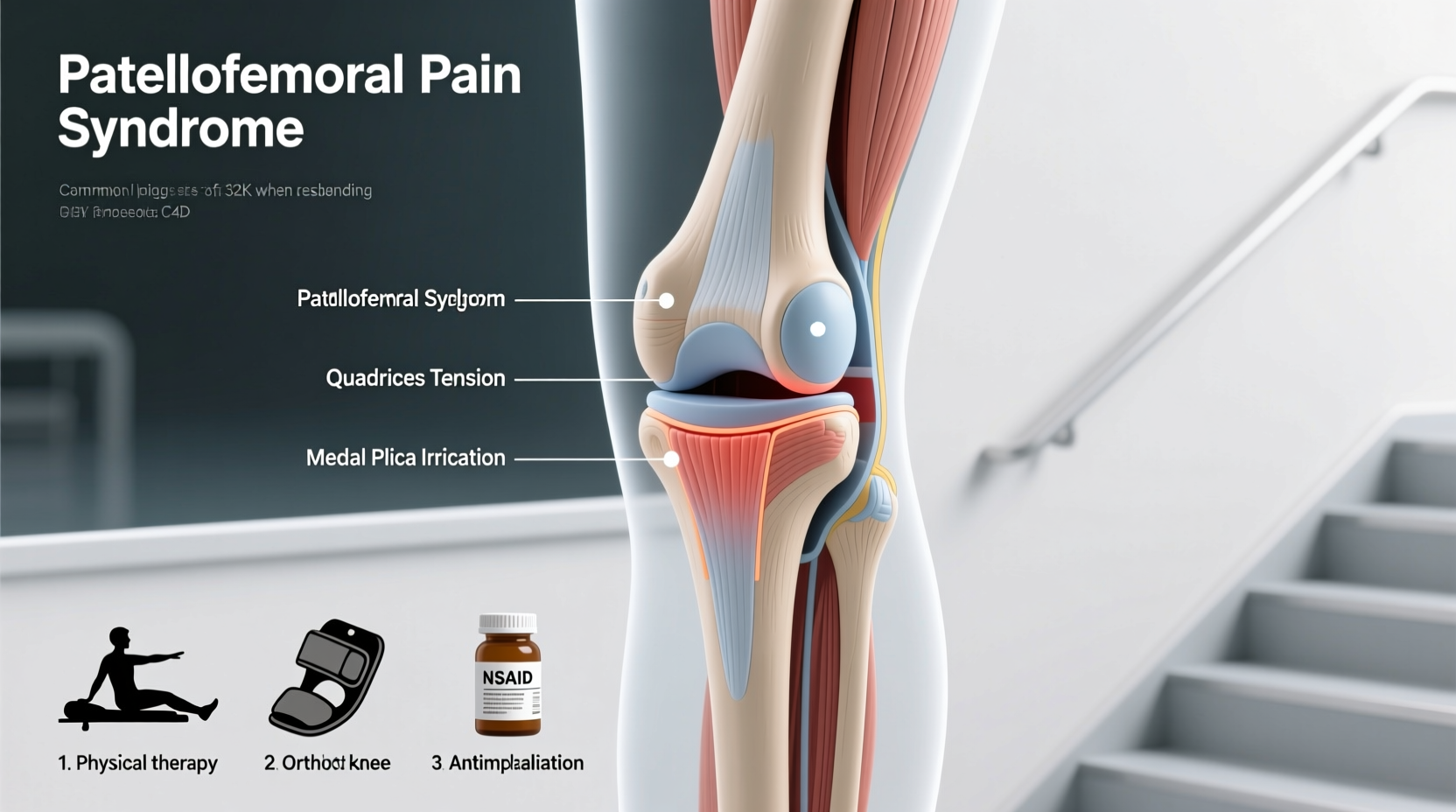
The knee functions as a hinge joint, relying on bones, cartilage, ligaments, and tendons to support movement. When descending stairs, the quadriceps muscles contract eccentrically—meaning they lengthen under tension—to control the descent. This action increases pressure between the patella (kneecap) and the femur (thigh bone), particularly in the patellofemoral compartment.
This mechanical load can expose weaknesses or damage in the joint. Conditions such as cartilage wear, misalignment, inflammation, or muscle weakness amplify discomfort during stair descent. Because the motion is repetitive and high-impact, even minor issues can become painful over time.
Tip: Sit back slightly when stepping down to shift weight into your heels and reduce strain on the front of the knee.Common Causes of Knee Pain on Stairs
Pain when going down stairs is rarely due to a single cause. It’s usually the result of cumulative wear, injury, or biomechanical inefficiencies. Below are the most frequent contributors:
- Osteoarthritis: The most prevalent cause, especially in people over 50. Cartilage degeneration in the knee leads to bone-on-bone friction, causing pain during weight-bearing activities like stair descent.
- Patellofemoral Pain Syndrome (PFPS): Often called “runner’s knee,” this condition involves irritation of the cartilage beneath the kneecap. Misalignment or overuse can lead to pain that worsens with stairs.
- Chondromalacia Patellae: Softening or breakdown of the cartilage under the patella, frequently affecting younger adults and athletes. Pain typically increases with prolonged sitting or stair use.
- Ligament Injuries: Damage to the ACL, MCL, or other stabilizing ligaments alters knee mechanics, leading to instability and pain when navigating inclines.
- Meniscus Tears: The meniscus acts as a shock absorber. A tear—especially in the posterior horn—can cause sharp pain, catching, or locking when descending stairs.
- Quadriceps or Hamstring Weakness: Poor muscle support around the knee increases joint stress. Weak quads fail to absorb impact, transferring more force to the patellofemoral joint.
- Patellar Tendinitis: Inflammation of the tendon connecting the kneecap to the shinbone, often from overuse. Pain is typically localized below the kneecap and aggravated by stairs.
“Descending stairs is a functional test we use clinically. If a patient struggles with it, it often points to patellofemoral pathology or early osteoarthritis.” — Dr. Lena Torres, Orthopedic Specialist
Treatment Options Based on Cause
Effective treatment depends on identifying the root issue. While some conditions require medical intervention, many respond well to conservative management. Below is a comparison of treatment approaches based on diagnosis.
| Condition | First-Line Treatments | Advanced Options |
|---|---|---|
| Osteoarthritis | Weight loss, physical therapy, NSAIDs, braces | Hyaluronic acid injections, corticosteroid shots, joint replacement |
| Patellofemoral Pain Syndrome | Strengthening exercises, activity modification, taping | Gait retraining, custom orthotics |
| Meniscus Tear | Rest, ice, PT, anti-inflammatories | Arthroscopic surgery (if symptomatic) |
| Patellar Tendinitis | Eccentric loading exercises, ice, activity reduction | Shockwave therapy, PRP injections |
| Muscle Weakness | Targeted strength training, neuromuscular re-education | Supervised rehab programs |
Step-by-Step Guide to Managing Knee Pain
If you’re experiencing knee pain on stairs, follow this practical timeline to reduce discomfort and improve function:
- Week 1–2: Assess and Modify Activity
Reduce stair use if possible. Avoid deep squats, lunges, and running. Use handrails for support when descending. Apply ice for 15 minutes after activity if swelling occurs. - Week 3–4: Begin Targeted Exercises
Start low-impact strengthening: straight leg raises, heel slides, mini-squats with support. Focus on quadriceps, hamstrings, and hip abductors. Perform daily for 10–15 minutes. - Week 5–6: Introduce Functional Training
Add step-down exercises: stand on a 4-inch step, slowly lower one foot, then return. Do 2 sets of 10 per leg. Emphasize control and proper alignment (knee over second toe). - Week 7+: Reintegrate Stair Use
Practice descending stairs using the \"step-to\" technique: lead with the affected leg, then bring the healthy leg down to meet it. Gradually increase frequency as tolerated. - Ongoing: Monitor and Maintain
Continue strength work 3x/week. Track pain levels. Seek professional evaluation if no improvement in 6–8 weeks.
Mini Case Study: Recovering Mobility After Knee Pain
Mark, a 58-year-old office worker, began experiencing sharp pain behind his right kneecap whenever he walked down stairs. Initially, he dismissed it as aging, but within months, the pain limited his ability to use public transit and visit family who lived on upper floors.
After a consultation with a physiotherapist, Mark was diagnosed with moderate patellofemoral osteoarthritis and quadriceps weakness. His treatment plan included a tailored exercise program focusing on glute and quad activation, weight management, and gait correction. He used a knee brace during extended walking and applied ice after activity.
Within ten weeks, Mark reported a 70% reduction in pain. He regained confidence on stairs and resumed hiking on weekends. His case underscores how early intervention and consistent effort can significantly alter outcomes—even with degenerative changes present.
Prevention Checklist: Protect Your Knees Long-Term
Whether you're recovering from knee pain or aiming to avoid it, this checklist helps safeguard joint health:
- ✅ Maintain a healthy body weight to reduce joint load
- ✅ Strengthen quadriceps and hip muscles twice weekly
- ✅ Avoid prolonged sitting with bent knees (“moviegoer’s knee”)
- ✅ Wear supportive footwear, especially on hard surfaces
- ✅ Use railings when using stairs
- ✅ Warm up before physical activity
- ✅ Address any limping or favoring one leg promptly
Frequently Asked Questions
Is knee pain when going down stairs a sign of arthritis?
It can be. Osteoarthritis commonly affects the patellofemoral joint, which bears significant load during stair descent. However, not all cases indicate arthritis—muscle imbalances or soft tissue injuries may also be responsible. Imaging and clinical evaluation help confirm the diagnosis.
Should I stop using stairs if my knees hurt?
Complete avoidance isn’t recommended, as it can lead to muscle atrophy and reduced joint mobility. Instead, modify your technique (e.g., step-to method), strengthen supporting muscles, and gradually reintroduce stair use. Consult a physical therapist for personalized guidance.
Can physical therapy really help with stair-related knee pain?
Yes. Studies show that targeted physical therapy improves pain and function in over 75% of patients with patellofemoral disorders. A therapist can correct movement patterns, prescribe appropriate exercises, and provide manual therapy to enhance joint mechanics.
Take Action for Stronger, Pain-Free Knees
Knee pain when going down stairs doesn’t have to be a permanent limitation. With accurate diagnosis, consistent rehabilitation, and lifestyle adjustments, most people can regain comfort and mobility. Ignoring the pain or adapting by avoiding stairs only delays recovery and may accelerate joint deterioration.
Start today: assess your symptoms, begin gentle strengthening, and seek professional input if needed. Small changes now can prevent long-term disability and keep you moving freely through every stage of life.
💬 Have you overcome knee pain on stairs? Share your story or tips in the comments—your experience could help someone take their first confident step down.








