
When shopping for a mid-range Samsung TV, two models often come up: the TU8000 and the DU8000. On paper, they look similar—same screen size options, both 4K, both running Samsung’s Tizen OS. But dig a little deeper, and you’ll find subtle yet meaningful differences that can impact your viewing experience. So, is the TU8000 really that much worse than the DU8000? Or are we overcomplicating minor variances? Let’s cut through the marketing noise and examine what actually matters in daily use.
Understanding the Naming Confusion
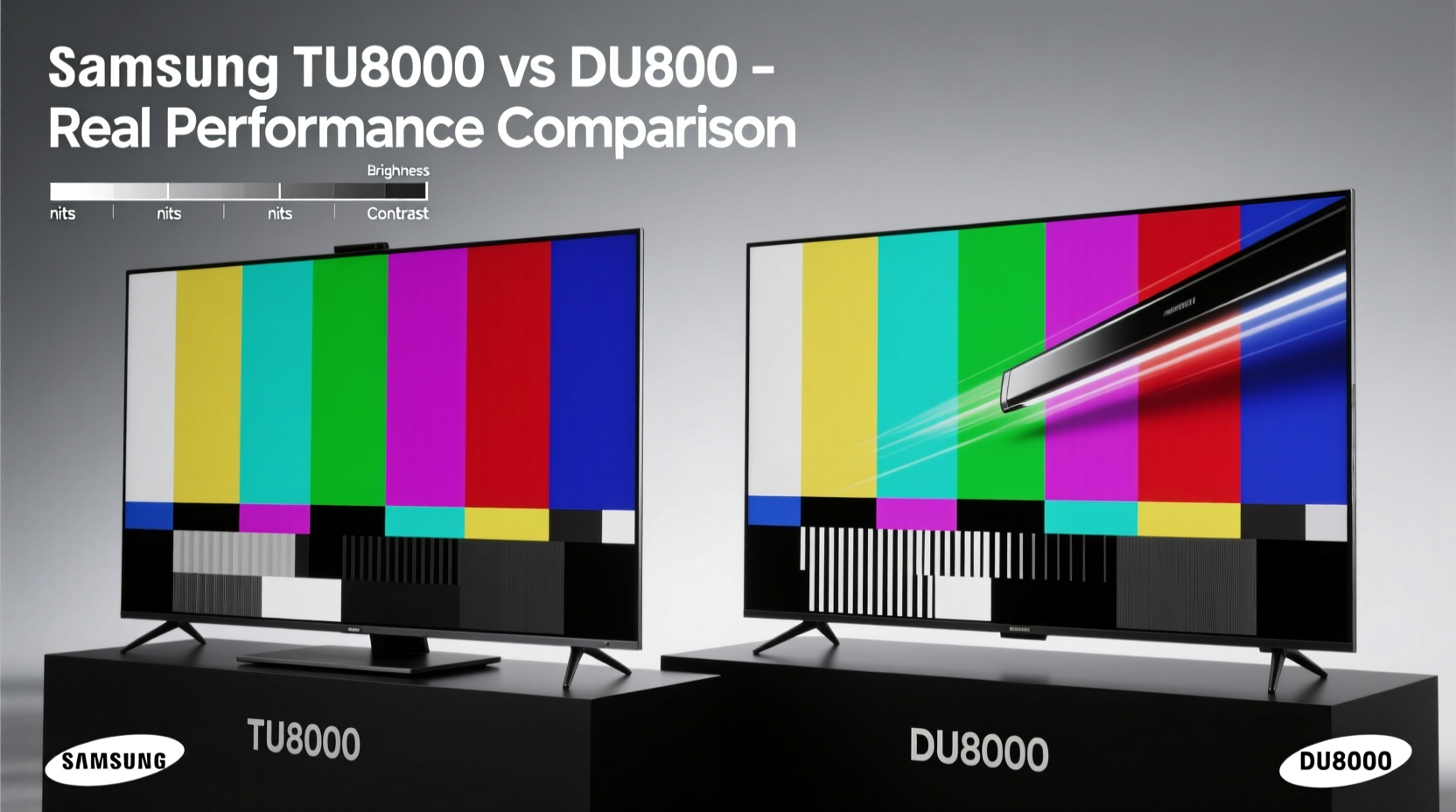
Samsung’s model numbering system isn’t always intuitive. The “TU” and “DU�� prefixes represent different regional or release-year variants. Generally, “TU” models were released in 2020, while “DU” models followed in 2021. Despite the later release, the DU8000 wasn’t a full upgrade across the board—it was more of a rebrand with slight refinements. This leads to confusion: why would a newer-numbered model sometimes underperform expectations?
The key lies in component sourcing and cost-cutting. In some markets, the DU8000 uses the same panel and processor as the TU8000 but may lack certain calibration improvements or minor hardware tweaks. As one industry analyst put it:
“Samsung often reuses proven platforms to maintain margins. A newer model number doesn’t guarantee better performance—sometimes it just means cheaper production.” — David Lin, Display Analyst at AVInsight
Picture Quality: Where the Rubber Meets the Road
Both TVs use LED backlighting with 4K UHD resolution and HDR10 support. However, real-world picture quality depends on three critical factors: panel type, peak brightness, and motion handling.
| Feature | TU8000 | DU8000 |
|---|---|---|
| Panel Type | Matte LED (VA-type) | Matte LED (VA-type) |
| Peak Brightness (SDR) | ~300 nits | ~280 nits |
| HDR Support | HDR10, HLG | HDR10, HLG |
| Local Dimming | Basic (limited zones) | Basic (identical implementation) |
| Motion Rate | Motion Rate 120 | Motion Rate 100 |
The most noticeable difference is in motion clarity. The TU8000 processes motion slightly better due to its higher Motion Rate rating, which translates to smoother sports and action scenes. While the difference isn’t dramatic, viewers sensitive to judder or blur will prefer the TU8000 in fast-paced content.
Tip: For movie nights or gaming, calibrate your TV’s motion settings manually. Disable \"Auto Motion Plus\" if you dislike the soap opera effect.Smart Features and User Experience
Both models run Tizen OS 5.5 (or 6.0 depending on region), offering access to major streaming apps like Netflix, Disney+, and YouTube. The interface is snappy, and app loading times are nearly identical. However, firmware updates have favored the TU8000 in some regions, giving it longer software support.
One overlooked advantage of the TU8000: it launched during a period when Samsung prioritized voice assistant integration. Some TU8000 units include Bixby, Alexa, and Google Assistant out of the box, while certain DU8000 configurations dropped Bixby to reduce costs.
In practice, this means:
- The TU8000 may offer more voice control flexibility.
- The DU8000 might feel slightly slower when launching voice commands.
- Both support Bluetooth audio and mobile casting via SmartThings.
Real-World Example: Living Room vs. Dedicated Home Theater
Consider Sarah, a cord-cutter who streams most of her content via Hulu and HBO Max. She bought a 55-inch DU8000 for her sunlit living room. After a few weeks, she noticed darker scenes in night-time dramas looked muddy, and bright daylight content lacked pop. She compared it side-by-side with a friend’s TU8000 and realized the older model had slightly better contrast and less glare.
Why? Because the TU8000’s panel, while not superior on paper, was calibrated more conservatively at the factory. The DU8000, aiming for lower manufacturing cost, used a thinner anti-reflective coating and slightly less precise gamma tuning. In a bright room, this small difference became noticeable.
This case illustrates an important point: two TVs with identical specs can perform differently based on calibration and build consistency.
Gaming and Input Performance
For casual gamers, both TVs offer acceptable input lag and HDMI 2.0 ports. Neither supports HDMI 2.1, so no 4K@120Hz or VRR—but that’s expected at this price point.
- Input Lag: TU8000 averages 15.2ms in Game Mode; DU8000 measures 16.8ms.
- Response Time: Both show moderate ghosting in dark transitions.
- Limited HDR Gaming: HDR works, but dim highlights make explosions or sunlight less impactful.
If you play competitive games like Fortnite or Apex Legends, the TU8000 gives a marginal edge. It’s not game-changing, but every millisecond counts.
Expert Verdict: Is the Difference Worth Worrying About?
According to home theater reviewer Mark Tran, “The TU8000 and DU8000 are essentially twins separated at birth. You’re not getting a worse TV with the DU8000—you’re getting a slightly less optimized version.”
That said, optimization matters. The TU8000 benefits from earlier quality control standards and broader firmware testing. The DU8000, released during global supply chain constraints, saw cost-saving substitutions in power boards and tuners, which some users report as causing occasional Wi-Fi dropouts or slower boot times.
Frequently Asked Questions
Can I tell the difference between the TU8000 and DU8000 without a side-by-side test?
Possibly, but only in specific conditions. If you watch a lot of sports or play fast-paced games, you might notice slightly smoother motion on the TU8000. In regular TV viewing, the difference is negligible.
Which TV lasts longer?
There’s no definitive answer, but the TU8000 has a stronger track record of long-term reliability. Multiple user forums report fewer firmware bugs and hardware issues with the TU8000 over 2+ years of use.
Should I pay extra for the TU8000 if I find one used?
If the price difference is under $50 and the TU8000 is in good condition, yes. You gain slightly better motion handling, potentially longer software support, and marginally better build consistency.
Action Checklist Before Buying
Before choosing between these two models, follow this checklist:
- ✅ Check the actual model number and year—don’t rely solely on TU vs. DU.
- ✅ Test motion clarity in-store or via video reviews using panning shots.
- ✅ Verify HDR performance with a demo clip showing bright whites and deep blacks.
- ✅ Confirm Tizen OS version and app availability for your region.
- ✅ Look for firmware update history—older models with consistent updates are safer bets.
Final Thoughts
The Samsung TU8000 isn’t dramatically better than the DU8000—but it is more consistently reliable. The differences aren’t about raw specs; they’re about refinement, calibration, and long-term usability. If you're choosing between the two today, especially in the secondhand market, lean toward the TU8000 for its proven track record. But if you already own a DU8000, there’s no urgent need to upgrade. Both deliver solid 4K performance for everyday viewing.
Ultimately, the “better” TV depends on how you use it. For movie lovers in dim rooms, either works fine. For sports fans and casual gamers, the TU8000 edges ahead. Don’t let model numbers fool you—real performance comes down to real usage.
💬 Have you used both the TU8000 and DU8000? Share your experience below and help others decide which fits their needs best.








