Rabbits are intelligent, curious animals with complex emotional and psychological needs. While they may not vocalize their feelings like dogs or cats, they communicate through behavior—often subtle ones. A rabbit that appears listless or withdrawn isn’t just “relaxing”—it might be bored, stressed, or under-stimulated. Boredom in rabbits can lead to destructive habits, health issues, and even shortened lifespans if left unaddressed. Recognizing the signs early and providing meaningful enrichment is essential for any responsible rabbit owner.
Understanding Rabbit Behavior and Mental Needs
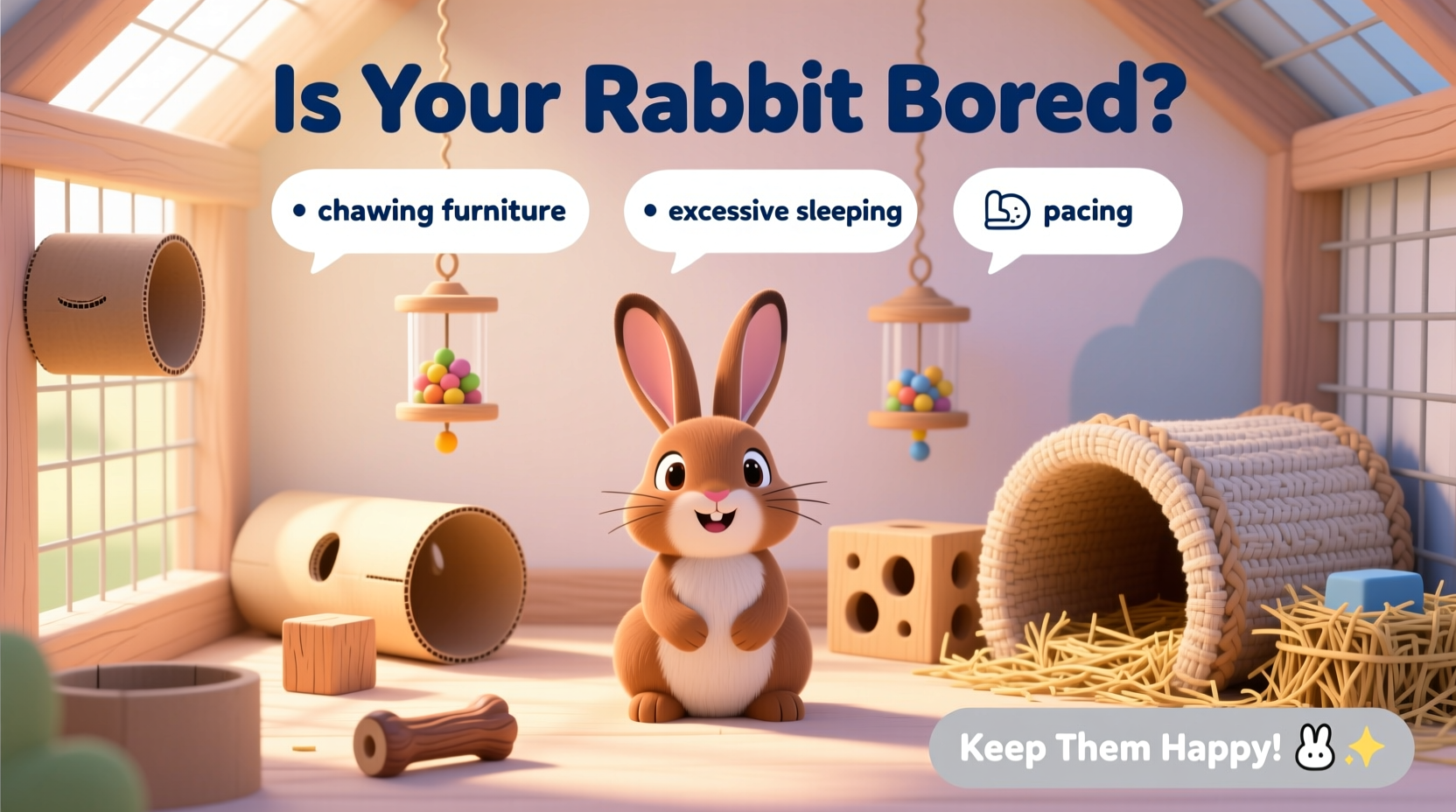
In the wild, rabbits spend much of their time foraging, exploring, digging, and socializing. These natural behaviors are deeply ingrained. When confined to small enclosures without stimulation, rabbits quickly become frustrated. Unlike some pets, rabbits don’t adapt well to monotony. They require daily mental engagement and physical activity to thrive.
A mentally healthy rabbit will exhibit curiosity—sniffing new objects, hopping around with energy (known as \"binkying\"), grooming itself regularly, and interacting with its environment. In contrast, a bored rabbit often retreats into repetitive or abnormal behaviors as a coping mechanism. These behaviors aren't just quirks—they’re signals that something is missing from their life.
“Rabbits are prey animals, so they mask distress well. What looks like calmness could actually be learned helplessness from lack of stimulation.” — Dr. Hannah Reed, Veterinary Ethologist
Signs Your Rabbit Is Bored
Boredom in rabbits doesn’t always look dramatic. It often presents as subtle shifts in behavior. Watch for these key indicators:
- Overgrooming or fur chewing: A rabbit may excessively lick or chew its own fur, sometimes leading to bald patches. This self-soothing behavior mimics grooming but stems from stress or understimulation.
- Circling or pacing: Repetitive movements around the same area of the cage suggest frustration and a desire to explore beyond current boundaries.
- Chewing on cage bars: While sometimes linked to dental health, habitual bar-chewing usually indicates a need for more environmental variety or attention.
- Lethargy or hiding: A rabbit that spends most of the day tucked in a corner may be depressed rather than resting.
- Loss of interest in food or toys: Even favorite treats may be ignored if the rabbit lacks motivation due to mental fatigue.
- Aggression or irritability: Bored rabbits may nip, thump aggressively, or resist handling—signs of pent-up energy and frustration.
- Destructive chewing: Chewing baseboards, furniture, or electrical cords points to an unmet need for gnawing and exploration.
Enrichment Strategies to Combat Rabbit Boredom
Enrichment means enhancing your rabbit’s environment to encourage natural behaviors. The goal isn’t just to entertain but to challenge, engage, and fulfill instinctual drives. Effective enrichment should target multiple senses and promote problem-solving, movement, and curiosity.
1. Foraging Opportunities
In the wild, rabbits spend hours searching for food. Recreate this by hiding hay, pellets, or safe vegetables around their space. Use cardboard boxes with holes, paper bags, or muffin tins covered with shredded paper.
- Scatter hay in different corners instead of using a single rack.
- Place small pieces of apple or carrot inside toilet paper rolls sealed at both ends.
- Create a “snuffle mat” using fleece strips tied onto a mesh grid where treats can be hidden.
2. Puzzle Feeders and DIY Toys
Puzzle feeders stimulate cognitive function. You can make simple versions at home:
- Cut holes in a plastic bottle and fill it with pellets—the rabbit rolls it to dispense food.
- Use egg cartons with treats placed under each section.
- Stack nesting baskets with goodies buried beneath layers of paper.
3. Safe Exploration Zones
Rotate play areas weekly to introduce novelty. Even rearranging furniture within a rabbit-proofed room can spark renewed interest. Let your rabbit explore tunnels made from untreated cardboard tubes or fabric pet tunnels.
4. Digging Outlets
Digging is a powerful instinct. Provide a digging box filled with shredded paper, soil-free potting mix, or clean sand. Place toys or treats underneath to encourage sustained engagement.
5. Social Interaction
Rabbits are social creatures. If spayed/neutered and properly bonded, keeping a companion rabbit dramatically reduces boredom. Even without a partner, regular human interaction—gentle petting, talking, supervised floor time—helps meet emotional needs.
6. Sensory Stimulation
Introduce new (safe) scents occasionally—like a piece of grass clippings, herbs such as parsley or mint, or a blanket that smells different. Rotate toys weekly so novelty remains high.
Tip: Never leave your rabbit unsupervised with new toys made from materials they could ingest in large quantities.Enrichment Checklist: Daily & Weekly Actions
Consistency matters. Use this checklist to ensure your rabbit receives balanced mental stimulation:
- ✅ Provide fresh hay in at least two scattered locations daily.
- ✅ Hide 3–5 food items for foraging each day.
- ✅ Offer one puzzle toy or interactive feeder per day.
- ✅ Allow 3–4 hours of out-of-cage exercise in a safe area.
- ✅ Rotate toys weekly—remove old ones, introduce new textures or shapes.
- ✅ Spend 15+ minutes of focused interaction (petting, talking, training).
- ✅ Inspect enclosure for signs of repetitive behavior or damage.
- ✅ Clean and refresh digging box monthly; add new substrate.
Do’s and Don’ts of Rabbit Enrichment
| Do | Don’t |
|---|---|
| Use untreated wood, cardboard, or seagrass mats for chew toys. | Use painted wood, plastic, or chemically treated materials. |
| Encourage exploration with tunnels and hideouts. | Confine your rabbit to a bare cage all day. |
| Introduce new items gradually to avoid overwhelming them. | Flood the space with too many changes at once. |
| Supervise initial interactions with new toys. | Leave unsafe objects like rubber bands or strings accessible. |
| Reward curiosity with praise or small treats. | Scold or punish passive behavior—this worsens anxiety. |
Real-Life Example: From Lethargic to Lively
Sophie adopted a rescue rabbit named Thistle who spent nearly two years in a small hutch before being rehomed. At first, Thistle showed little interest in his surroundings—sleeping most of the day, refusing toys, and barely moving during free roam time.
Sophie started slowly: she added extra hay piles and began hiding pellets in crumpled paper. After a week, Thistle began nudging the paper aside. Encouraged, Sophie built a cardboard maze with tunnels and dead ends containing herbs. Within three weeks, Thistle was binkying after solving the maze and would race through it multiple times a day.
She introduced a dig box filled with shredded office paper and buried oat treats underneath. Now, four months later, Thistle greets her at the door of his enclosure, explores new setups eagerly, and shows none of the withdrawn behaviors he once did.
This transformation wasn’t due to medication or diet change—it came from consistent, thoughtful enrichment that respected Thistle’s instincts and pace.
Step-by-Step Guide to Creating a Stimulating Environment
Transform your rabbit’s living space with this actionable plan:
- Assess Current Setup: Note how much space your rabbit has, what toys are available, and how long they spend outside their enclosure.
- Add Foraging Elements: Begin by scattering food and using simple DIY puzzles like tissue boxes with holes.
- Expand Movement Options: Set up tunnels, ramps, or low platforms to encourage hopping and climbing.
- Introduce Rotation System: Designate seven toys or activities and rotate one per day to maintain novelty.
- Designate Exploration Time: Schedule daily free-roam sessions in a rabbit-proofed area with new elements weekly.
- Monitor Reactions: Keep notes on which activities your rabbit engages with most—this helps tailor future enrichment.
- Involve Yourself: Sit on the floor during playtime, offer hand-fed treats, or start clicker training for advanced mental work.
Frequently Asked Questions
How much out-of-cage time does a rabbit need?
At minimum, rabbits should have 3–4 hours of supervised exercise outside their enclosure each day. More active breeds or younger rabbits benefit from longer periods. This time should include opportunities for running, jumping, foraging, and socializing.
Can I use cat or bird toys for my rabbit?
Some can work, but only if they’re made from safe, non-toxic materials and don’t contain small parts, strings, or metal. Avoid anything with bells, plastic components, or stuffing. Always supervise initially to ensure safety.
My rabbit ignores all toys—what should I do?
Many store-bought rabbit toys fail because they lack purpose. Try switching to functional enrichment: hide food, build obstacle courses, or let your rabbit interact with household items like empty cardboard boxes. Patience is key—especially with rescued or shy rabbits.
Conclusion: A Happy Rabbit Is an Engaged Rabbit
Boredom in rabbits is preventable—but only if we recognize it for what it is: a welfare issue, not a behavioral quirk. By observing your rabbit closely, responding to subtle cues, and offering varied, species-appropriate enrichment, you create a life that goes beyond survival. You give them joy, purpose, and the freedom to express who they truly are.
Start today. Rearrange a corner of their space. Hide a treat in a paper bag. Sit nearby and watch how they respond. Small actions compound into profound improvements in well-being. Your rabbit may never say “thank you,” but you’ll see it in a hop, a binky, or a nose nudge toward a new adventure.
💬 Have a success story or creative enrichment idea? Share it in the comments—your experience could inspire another rabbit guardian to make a difference.








