Curly hair is celebrated for its volume, bounce, and unique character—but it often comes with challenges like frizz, dryness, and unpredictable styling. In the quest for smoother, more manageable locks, many turn to keratin treatments. Marketed as a solution for taming frizz and adding shine, keratin treatments promise silky results with minimal effort. But for those with naturally curly textures, the question lingers: is this smoothing miracle worth the risk of losing curl definition or long-term hair health?
The answer isn’t black and white. Keratin treatments can offer undeniable benefits, but they also come with trade-offs—especially when applied to tightly coiled or springy curls. Understanding how the treatment works, who benefits most, and what precautions to take is essential before making a decision that could affect your hair’s integrity for months.
How Keratin Treatments Work on Curly Hair
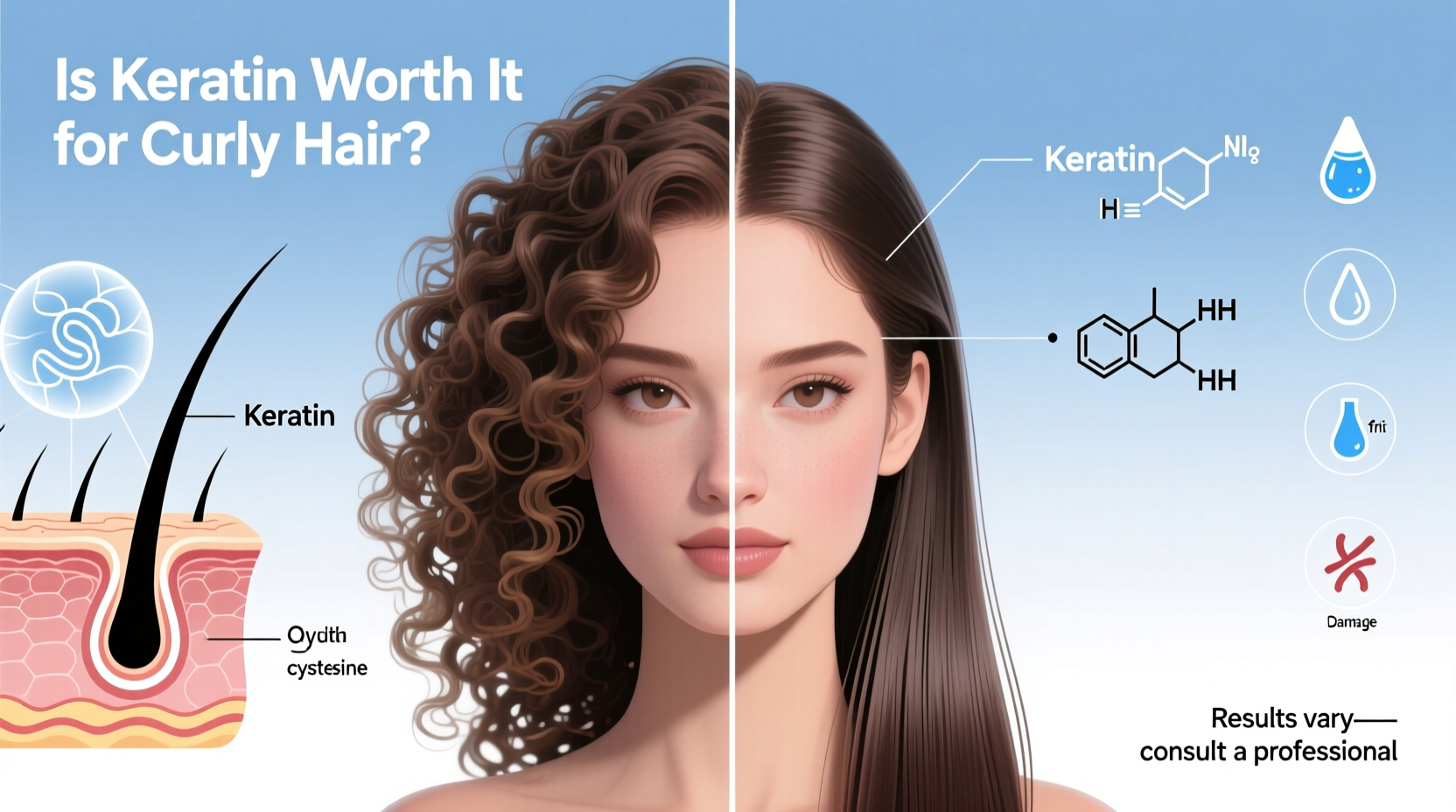
Keratin is a structural protein naturally found in hair, skin, and nails. Over time, heat styling, chemical processing, and environmental exposure deplete keratin, leaving hair porous, weak, and prone to frizz. A keratin treatment replenishes this protein by infusing a liquid formula into the hair shaft, which is then sealed using high heat from a flat iron. The result? Smoother cuticles, reduced volume, and significantly less frizz.
For curly hair, this process temporarily alters the hair’s shape. The intense heat and chemical bonding relax the curl pattern—not permanently, but enough to make waves looser and coils softer. Unlike relaxers, which chemically break disulfide bonds to straighten hair permanently, keratin treatments are semi-permanent. They typically last 3–6 months before gradually washing out.
The degree of change depends on several factors:
- Curl type: Type 2 (wavy) and loose Type 3 curls see enhanced smoothness without complete loss of pattern. Tighter Type 4 curls may experience significant loosening.
- Formula strength: Some treatments contain formaldehyde or formaldehyde-releasing agents, which produce stronger, longer-lasting results but increase health and texture risks.
- Application technique: How the stylist sections, applies product, and irons the hair influences how much curl definition is preserved.
“Keratin treatments aren’t one-size-fits-all. With proper formulation and skilled application, even tight curls can benefit without sacrificing all their texture.” — Dr. Jana K. Stewart, Trichologist & Hair Scientist
Pros and Cons: Is It Worth It?
Deciding whether a keratin treatment is worth it requires weighing tangible benefits against potential drawbacks—particularly for those proud of their natural curl pattern.
Advantages of Keratin for Curly Hair
- Frizz reduction: One of the most immediate benefits. Humidity resistance improves dramatically, making hair easier to style in humid climates.
- Less styling time: Blow-drying and flat-ironing become faster, sometimes unnecessary. Many report air-drying with smooth, defined results.
- Improved shine and softness: The treatment seals the cuticle, reflecting light better and reducing roughness.
- Damaged hair repair: For over-processed, bleached, or heat-damaged curls, keratin can temporarily strengthen strands and reduce breakage.
Potential Downsides
- Loss of curl definition: Especially in tighter curl types, the treatment can loosen spirals into wavy or limp patterns, which some find undesirable.
- Flatness and reduced volume: While frizz goes down, so can lift at the roots, leading to a heavier, flatter look.
- Chemical exposure: Formaldehyde-based treatments release fumes during application, posing respiratory risks and potential scalp irritation.
- Limited reversion: Once applied, you can’t reverse the treatment. You must wait it out, which means living with altered texture for months.
Do’s and Don’ts: A Comparison Guide
| Do’s | Don’ts |
|---|---|
| Choose a certified stylist experienced with textured hair | Go to a salon that uses generic, one-size-fits-all formulas |
| Ask about formaldehyde levels and request low- or no-formaldehyde options | Assume “formaldehyde-free” means completely safe—some alternatives release similar compounds |
| Clarify your goals: “I want less frizz, not straighter hair” | Let the stylist decide the intensity without discussing your expectations |
| Wait at least 72 hours before washing or sweating heavily | Clip or tie hair up too tightly during the first few days—it can leave creases |
| Use sulfate-free shampoos post-treatment to extend results | Use clarifying shampoos frequently—they strip keratin faster |
Real-Life Example: Maya’s Experience with Type 3C Curls
Maya, a 29-year-old graphic designer with dense 3C curls, struggled with shrinkage and puffiness, especially in summer. Despite loving her texture, she spent hours weekly diffusing and defining curls. After seeing a friend’s sleek yet bouncy results, she booked a keratin treatment at a reputable salon specializing in curly hair.
She requested a “curl-preserving” formula and emphasized keeping volume and spring. The stylist used a glyoxylic acid-based treatment—formaldehyde-free—and adjusted ironing techniques to minimize tension. Post-treatment, Maya noticed a dramatic drop in frizz, and her curls dried smoother with consistent ringlets. However, her shrinkage reduced by about 30%, and her crown appeared slightly flatter.
“It wasn’t ruined,” she said. “But it changed. I gained time and predictability, but lost a little of that ‘pop’ I used to get after styling. After four months, as the treatment faded, I actually liked the transition phase—half-curly, half-sleek was kind of cool.”
By month six, her curls had fully returned. She decided to repeat the treatment seasonally—only before humid months—balancing practicality with pride in her natural texture.
Step-by-Step: How to Decide If It’s Right for You
Making an informed choice involves research, consultation, and honest self-assessment. Follow this timeline to determine if a keratin treatment aligns with your hair goals.
- Week 1: Assess Your Hair Goals
Ask yourself: Are you battling frizz more than celebrating curls? Do you straighten your hair often already? If your routine includes daily flat-ironing, a keratin treatment might simplify life without drastic change. - Week 2: Research Formulas
Look into options like Brazilian Blowout (low formaldehyde), Coppola (keratin + collagen), or organic alternatives using plant-based smoothing agents. Compare ingredients and longevity. - Week 3: Consult a Specialist
Schedule a consultation with a stylist trained in both keratin treatments and curly hair. Bring photos of your ideal outcome and discuss curl retention strategies. - Week 4: Do a Strand Test (Optional)
If uncertain, ask the stylist to perform a small patch test on one section. This reveals how your curl pattern responds and how shiny or flat the result appears. - Treatment Day: Communicate Clearly
Reiterate your desire to maintain texture. Request lower heat settings and avoid over-ironing, especially near the mid-lengths and ends where curls form. - Post-Treatment: Monitor and Maintain
Track changes over the first two weeks. Note improvements in manageability versus losses in bounce. Adjust future decisions based on this experience.
Frequently Asked Questions
Will a keratin treatment permanently damage curly hair?
No, keratin treatments are not permanent. Effects fade over 3–6 months as new growth emerges and the treated hair is washed repeatedly. However, improper application—especially excessive heat or harsh formulas—can lead to dryness, brittleness, or weakened strands, particularly if done too frequently.
Can I still wear my hair curly after a keratin treatment?
Yes, but with modifications. Your curls will likely be looser, shinier, and less frizzy. You can still scrunch or diffuse, but expect wider waves or elongated spirals rather than tight coils. Some people love the “lived-in” beachy look it creates.
Are there safer alternatives to traditional keratin treatments?
Yes. Options like smoothing facials, protein reconstructions, or vegan keratin use non-toxic ingredients such as silk amino acids, hydrolyzed wheat protein, or shea butter blends. While results are less dramatic and shorter-lived, they offer frizz control with minimal texture disruption.
Conclusion: Balancing Beauty and Authenticity
Whether a keratin treatment is worth it for curly hair ultimately depends on your personal priorities. If frizz dominates your styling routine and humidity sabotages every good hair day, the treatment can be a game-changer—offering ease, shine, and confidence. But if your curls are a core part of your identity and you cherish their volume and spring, proceeding with caution—or choosing alternative solutions—may be wiser.
The key lies in intentionality. A keratin treatment doesn’t have to mean surrendering your texture. With the right formula, a skilled stylist, and clear communication, you can enjoy smoother, healthier-looking curls without erasing what makes them uniquely yours.
💬 Have you tried keratin on curly hair? Share your story in the comments—your experience could help someone else navigate this transformative decision.








