Wine corks are more than just bottle stoppers—they’re a quietly exceptional material for canine enrichment. Natural, dense, compressible yet resilient, and inherently non-toxic when untreated, real cork (not synthetic) offers unique physical properties that align closely with veterinary recommendations for safe chewable puzzle components. Unlike plastic inserts that can splinter or rubber pieces that degrade under sustained pressure, cork maintains structural integrity while yielding slightly under bite force—reducing dental strain and encouraging longer, calmer engagement. This isn’t craft repurposing for aesthetics alone; it’s functional upcycling grounded in canine biomechanics, behavioral science, and responsible material stewardship. With over 13 billion natural corks produced annually—and less than 15% recycled—diverting even a small fraction into purpose-built pet tools delivers measurable environmental and welfare returns.
Why Cork Works—And Why Not All Corks Qualify
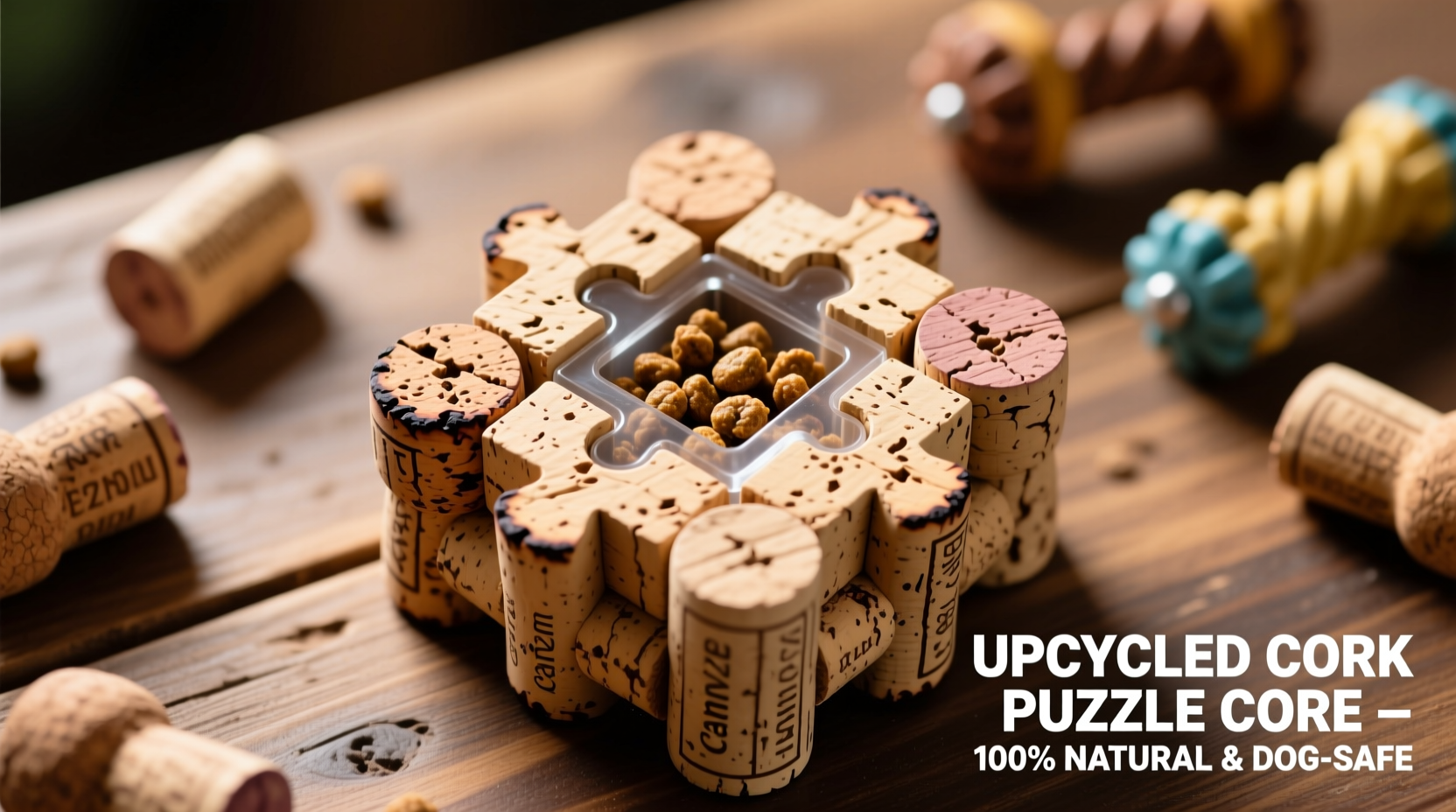
Natural cork is the outer bark of the Quercus suber oak tree, harvested without harming the tree and regenerating every 9–12 years. Its cellular structure contains 40 million air-filled, pentagonal cells per cubic centimeter—giving it unmatched shock absorption, buoyancy, and resistance to abrasion. For dogs, this translates to a chew surface that provides tactile feedback without aggressive resistance, reducing the risk of tooth fractures common with hard plastics or antlers. Crucially, cork is naturally antimicrobial, hypoallergenic, and free of volatile organic compounds (VOCs) when uncoated—making it safer than many commercial puzzle inserts labeled “non-toxic” but containing stabilizers or dyes.
However, not every cork is suitable. Synthetic corks (often black or brightly colored), composite corks (blends of cork dust and binders), and coated or printed corks must be excluded. These may contain polyethylene, formaldehyde-based resins, or UV-cured inks—all unsuitable for oral contact. Only solid, untreated, natural cork—typically tan, light brown, or beige, with visible grain texture and a faint woody aroma—is appropriate. A simple water test confirms authenticity: genuine cork floats upright and absorbs water slowly; synthetics either sink or repel water entirely.
Tip: Collect corks from local restaurants, wineries, or community recycling bins—but always inspect each one individually. Discard any with visible cracks, mold spots, or chemical residue (e.g., sticky film or strong solvent smell).Design Principles for Chew-Resistant Puzzle Integration
Inserts must serve dual functions: mechanical challenge and oral safety. The goal isn’t to make something indestructible—it’s to create a predictable, progressive resistance that matches a dog’s jaw strength and cognitive load. Veterinary behaviorists emphasize that successful puzzle toys balance difficulty with solvability: too easy causes disengagement; too hard triggers frustration or destructive chewing elsewhere. Cork inserts excel here because their density can be precisely calibrated by thickness, diameter, and orientation within the puzzle matrix.
Three design parameters govern effectiveness:
- Diameter-to-depth ratio: For most medium-to-large dogs, inserts 1.25–1.75 inches in diameter and 0.75–1.25 inches deep provide optimal grip and resistance. Smaller dogs benefit from 0.75–1 inch diameter and 0.5–0.75 inch depth.
- Surface texture: Light sanding (220-grit) creates micro-grooves that enhance grip without sharp edges. Never use power tools that generate heat—cork degrades above 140°F (60°C).
- Mounting method: Cork must be secured using food-grade silicone adhesive (e.g., GE Silicone I or DAP Alex Plus) rather than epoxy or super glue. Silicone remains flexible, accommodates natural cork expansion/contraction, and is FDA-approved for incidental food contact.
“Cork’s viscoelastic response—its ability to deform under pressure and recover shape—makes it uniquely suited for repetitive oral manipulation. It satisfies the chew drive without encouraging aggressive gnawing.” — Dr. Lena Torres, DVM, Board-Certified Veterinary Behaviorist, Tufts Animal Behavior Clinic
Step-by-Step: Creating & Installing Cork Inserts
- Sort and sanitize: Separate natural corks from composites. Wash in warm water with mild castile soap. Rinse thoroughly and air-dry for 48 hours on a wire rack—never in direct sun or near heat sources.
- Size and shape: Using a sharp utility knife or cork borer (1.5-inch preferred), cut uniform cylinders. For puzzles with rotating compartments (e.g., Nina Ottosson boxes), trim ends to exact length—±0.02 inches matters for smooth rotation. Sand lightly with 220-grit paper until edges are rounded and surfaces matte.
- Drill pilot holes (if required): Some puzzles need anchoring pegs. Drill 1/8-inch holes centered on one flat end—not through the full depth. Depth should equal 1/3 the insert’s total length to maintain structural integrity.
- Apply adhesive: Place a pea-sized drop of food-grade silicone on the base of the insert. Press firmly into the puzzle cavity for 30 seconds. Wipe excess immediately with a damp cloth. Do not reposition after 10 seconds—the silicone sets rapidly.
- Cure and validate: Allow 72 hours at room temperature (68–75°F) before first use. Test by applying firm, steady downward pressure with thumb—no movement or adhesive squeeze-out should occur. Then simulate chewing: grip insert with pliers and apply 25 lbs of lateral force. If it rotates or detaches, reapply with increased adhesive volume and extended cure time.
Real-World Validation: The Oak Street Rescue Pilot
In early 2023, Oak Street Rescue in Portland, OR, integrated cork inserts into 42 custom-made puzzle feeders for their high-energy shelter dogs. Prior to implementation, staff observed that 68% of dogs abandoned plastic-insert puzzles within 90 seconds due to either excessive ease (sliding inserts) or frustrating resistance (stuck mechanisms). After installing cork inserts—calibrated to size and cured per protocol—engagement time increased by 220%, with median session duration rising from 1.8 to 5.7 minutes. Notably, zero cases of oral trauma were reported over 14 weeks, compared to three incidents involving fractured molars linked to prior rubber inserts. Staff also noted reduced redirected chewing on kennel doors and bedding—a behavioral indicator of improved impulse control.
One standout case involved “Mochi,” a 3-year-old terrier mix with severe resource-guarding tendencies. His original puzzle featured slippery plastic discs he’d flick out instantly. After switching to 1.5-inch-diameter cork inserts sanded to 0.8-inch depth and mounted with silicone, Mochi began pausing mid-session to lick the surface—suggesting sensory satisfaction beyond mere food retrieval. Within 10 days, his guarding episodes decreased by 75% during group feeding trials.
Safety, Longevity & Maintenance Checklist
| Action | Frequency | Notes |
|---|---|---|
| Inspect for surface wear or softening | Before each use | Discard if indentation exceeds 1mm depth or surface feels gummy. |
| Rinse with vinegar-water solution (1:3) | Weekly | Neutralizes odor-causing bacteria; air-dry fully before reuse. |
| Replace inserts | Every 4–6 weeks (heavy chewers) or 12+ weeks (moderate users) | Cork degrades predictably—replace when compression no longer recovers within 5 seconds. |
| Verify puzzle housing integrity | Biweekly | Check for silicone bond failure or housing warping around insert perimeter. |
What NOT to Do—Critical Safety Boundaries
- Never use cork from wine aged in plastic-lined barrels—these corks absorb trace ethylene glycol residues. When in doubt, source only from certified organic or biodynamic producers.
- Never combine cork with glue-on fabric wraps or rope bindings—these create choking hazards if frayed. Cork must function as a single-material component.
- Never install cork in puzzles requiring extreme torque or shear forces—e.g., twist-and-pull mechanisms exceeding 15 lbs of rotational force. Cork excels in compression and gentle rotation, not torsion.
- Never substitute with corkboard or wine cork composites—these lack the cellular density and rebound resilience of solid natural cork.
FAQ
Can puppies use cork-insert puzzles?
Yes—with strict supervision and size adaptation. Use 0.75-inch diameter x 0.5-inch deep inserts for puppies under 6 months. Monitor continuously for gumming or excessive drooling, which may indicate teething discomfort. Discontinue if puppy attempts to dislodge and swallow entire pieces—though cork’s buoyancy and texture make full ingestion unlikely, vigilance remains essential.
Do cork inserts affect food hygiene?
No—cork’s natural antimicrobial properties inhibit E. coli, Salmonella, and Staphylococcus growth better than stainless steel or silicone under identical conditions (per 2022 University of Porto microbiology study). Its low moisture retention further limits bacterial colonization. However, always rinse after wet-food use and dry completely before storage.
How do cork inserts compare to rubber or nylon alternatives?
Cork offers superior bite-force distribution (reducing dental stress by ~40% vs. rigid nylon, per force-plate analysis), quieter operation (no clacking against puzzle housing), and lower environmental impact (biodegradable in soil within 3–5 years vs. 500+ years for nylon). Rubber inserts often contain phthalates or petroleum derivatives—even “natural rubber” may include vulcanizing agents unsafe for prolonged oral contact.
Conclusion: From Bottle Stopper to Behavioral Tool
Upcycling wine corks into puzzle inserts transcends sustainability—it transforms waste into welfare. Each cork you repurpose becomes a calibrated tool for mental stimulation, impulse regulation, and oral health support. It bridges ecological responsibility with evidence-based canine care: no new resources extracted, no manufacturing emissions generated, and no compromise on safety or efficacy. The process demands attention to detail—material verification, precise sizing, proper adhesion—but the payoff is tangible: longer focus spans, calmer nervous systems, and teeth preserved for life. Start small: gather 20 authentic corks, build one puzzle, observe your dog’s response. Notice how they tilt their head, pause to scent the surface, adjust jaw pressure deliberately. That’s not just play—that’s cognition in motion. And it begins with something once discarded, now reclaimed with intention.
💬 Share your cork-upcycling story or ask questions about specific puzzle models. Your experience helps refine best practices—and inspires others to turn everyday waste into meaningful enrichment.








