Cats scratch. It’s not a behavioral flaw—it’s an instinct. From marking territory with scent glands in their paws to shedding outer nail layers and stretching tight muscles, scratching is essential to a cat’s physical and emotional well-being. The real challenge arises when that natural behavior targets your favorite sofa, curtains, or door frames. Many guides suggest using treats as motivation, but what if your cat isn’t food-driven? What if you’d rather rely on understanding feline instincts than bribes? Training a cat to use a scratching post without treats is not only possible—it can be more effective in the long run when rooted in observation, consistency, and respect for their nature.
Understanding Why Cats Scratch (and Why Treats Aren’t Always the Answer)
Before attempting to redirect behavior, it’s crucial to understand why cats scratch in the first place. This behavior is hardwired and serves multiple purposes:
- Marking territory: Cats have scent glands between their toes. Each swipe leaves behind pheromones that signal safety and ownership.
- Maintaining claw health: Scratching removes the outer husk of old nails, revealing sharper, healthier ones underneath.
- Stretching and exercise: A full-body stretch during scratching helps maintain joint flexibility and muscle tone.
- Stress relief: Repetitive motions like scratching can be calming, especially in unfamiliar or tense environments.
Given these motivations, trying to eliminate scratching altogether is both unrealistic and unfair. Instead, the goal should be guiding it toward appropriate outlets—like a scratching post.
Treats are often used as positive reinforcement, but not all cats respond to food rewards. Some are indifferent; others may become overstimulated or even aggressive around food. Relying solely on treats can also create dependency—if the treat disappears, so does the desired behavior. Training without treats shifts focus from external rewards to environmental design and routine-based conditioning, which fosters lasting habits.
“Cats don’t need to be bribed into good behavior—they need clarity, consistency, and the right opportunities.” — Dr. Sarah Lim, Feline Behavior Specialist
Step-by-Step Guide: Training Without Treats
The key to success lies in working with your cat’s instincts, not against them. Follow this timeline-based approach to encourage consistent use of a scratching post—no edible incentives required.
- Assess current scratching patterns (Days 1–3): Observe where your cat already scratches. Is it the arm of the couch? The corner of the carpet? Take note of height, texture, and location. These clues reveal your cat’s preferences.
- Select the right post (Day 4): Choose a scratching post that matches observed preferences. Most cats prefer vertical posts at least 30 inches tall, made of sisal rope, cardboard, or rough fabric. Stability is critical—the post must not wobble or tip over.
- Place strategically (Day 5): Position the post directly in front of or beside the spot your cat currently scratches. If they favor the living room sofa, place the post right next to it. Sudden removal of targeted furniture will cause stress and resistance.
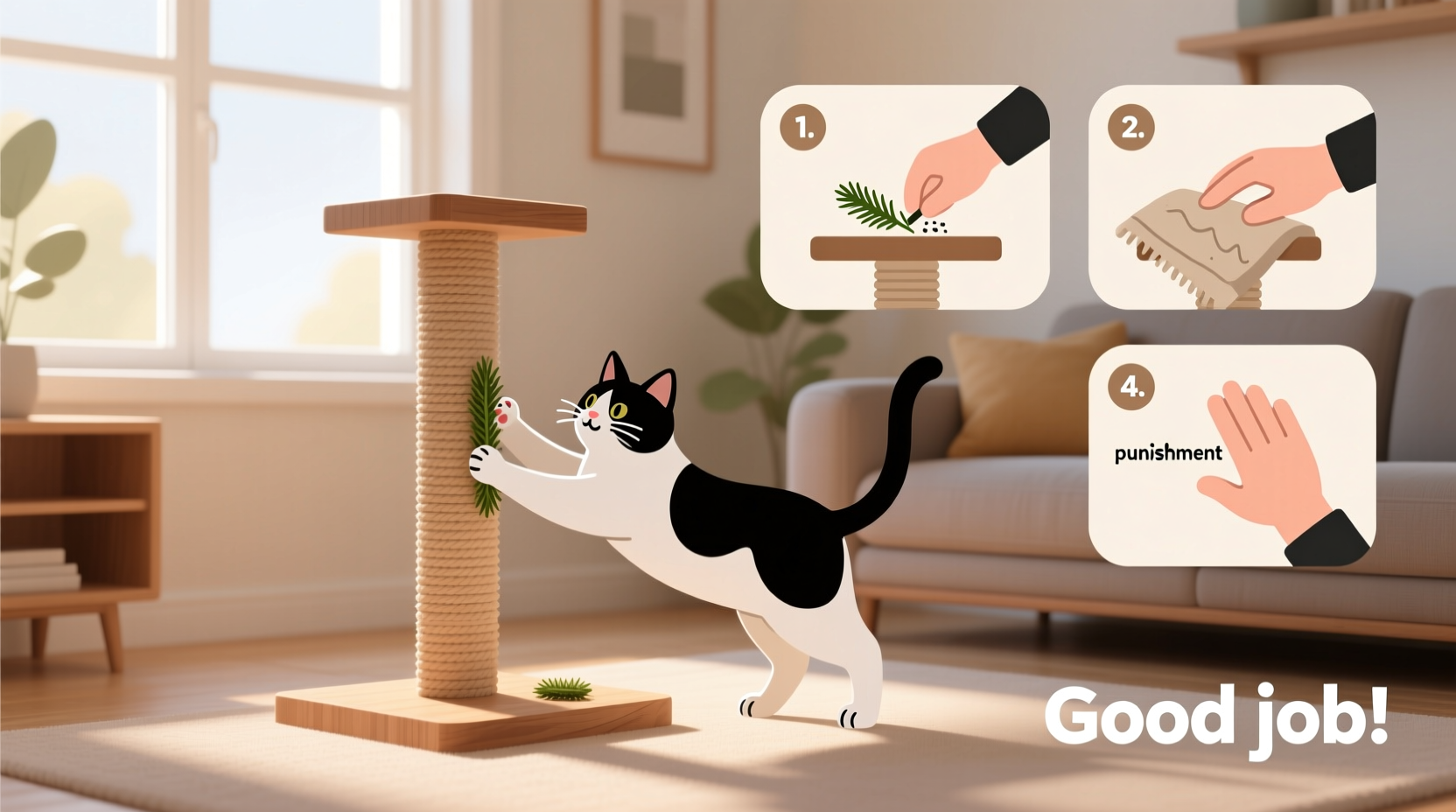
- Make it inviting (Days 6–7): Rub the post with a cloth that carries your cat’s scent (e.g., used on their cheeks). You can also lightly sprinkle catnip or use a synthetic pheromone spray like Feliway Classic to draw interest.
- Encourage interaction (Days 8–14): Use interactive toys—feathers on a stick, crumpled paper balls—near the post. Gently guide play sessions so swatting and pouncing happen close to or on the post. Let natural movement lead to contact.
- Reinforce quietly (Ongoing): When your cat uses the post, avoid loud praise or sudden movements. Instead, remain nearby and speak softly. Your calm presence reinforces security, not performance.
- Phase out unwanted surfaces (Week 3+): Once regular use begins, gradually make undesirable areas less appealing. Cover the sofa arm with aluminum foil, double-sided tape, or a tightly fitted slipcover. Do this slowly—abrupt changes undo progress.
Choosing the Right Post: A Material Comparison
Not all scratching posts are created equal. The wrong material can render even the best-placed post useless. Below is a comparison of common materials based on durability, appeal, and suitability.
| Material | Best For | Pros | Cons |
|---|---|---|---|
| Sisal Rope | Most adult cats, heavy scratchers | Durable, mimics tree bark, excellent grip | Can fray over time; needs replacement every 1–2 years |
| Cardboard | Kittens, light scratchers, budget-friendly | Inexpensive, widely available, satisfies horizontal scratching | Wears out quickly; not suitable for large or aggressive scratchers |
| Carpet | Cats already used to carpet | Familiar texture, soft on paws | Encourages carpet scratching elsewhere; harder to clean |
| Wood or Cork | Cats who like texture variation | Natural look, long-lasting, eco-friendly | Limited availability; may lack vertical height |
Avoid posts that are too short, unstable, or covered in plush fabric—these fail to meet functional needs. Consider investing in modular systems that combine vertical and horizontal surfaces.
Real Example: Luna’s Living Room Rebellion
Luna, a three-year-old tabby, had been shredding the corner of her owner’s linen couch for over a year. Previous attempts to redirect her included dangling treats near a flimsy cardboard scratcher—which she ignored—and scolding, which only made her sneakier. Her owner, frustrated, reached out to a cat behavior consultant.
The turning point came not from training tricks, but from observation. The consultant noticed Luna always scratched after waking up from her afternoon nap on the adjacent armchair. She preferred vertical scratching at a 45-degree angle and favored rough textures.
The solution?
- A 36-inch sisal-wrapped post was placed diagonally between the armchair and the couch.
- The existing scratch mark on the couch was preserved temporarily (covered with a removable fabric shield).
- A feather toy was used daily near the post to stimulate playful swatting.
Within ten days, Luna began using the post consistently. By week four, the couch shield was removed entirely. No treats were used. The change worked because it respected Luna’s routine, environment, and sensory preferences.
Common Mistakes That Cause Frustration
Even well-intentioned efforts can backfire. Here are frequent missteps that lead to setbacks:
- Removing the target too soon: Taking away the scratched furniture before the cat accepts the post creates confusion and anxiety.
- Using punishment: Hissing, spraying water, or tapping the nose damages trust and increases stress-related scratching.
- Placing the post in a quiet corner: Cats scratch in high-traffic or transitional areas (entryways, near beds) to mark territory. A post tucked in a basement won’t get attention.
- Buying a wobbly or short post: A cat won’t commit to a structure that feels unsafe or doesn’t allow full extension.
- Expecting immediate results: Behavioral change takes weeks, not days. Patience is part of the process.
Checklist: Cat-Proof Your Space Without Treats
Use this actionable checklist to set up a successful, low-friction training plan:
- ✅ Observe your cat’s current scratching spots and timing
- ✅ Choose a sturdy scratching post that matches their preferred texture and orientation
- ✅ Place the post directly in front of or beside the targeted furniture
- ✅ Enhance appeal with cheek-rubbed cloths or pheromone sprays (avoid strong scents)
- ✅ Engage in daily interactive play near the post
- ✅ Reward use with calm presence—no loud praise or physical handling
- ✅ Gradually protect off-limits areas with unappealing covers (foil, tape)
- ✅ Monitor progress weekly and adjust placement if needed
- ✅ Replace worn posts before they lose structural integrity
FAQ: Addressing Common Concerns
My cat hasn’t scratched anything since I got the post. Should I be worried?
Not necessarily. Some cats scratch less frequently but still need the option. Ensure the post is accessible and observe for subtle signs—light pawing, stretching near it, or cheek rubbing. Occasional use is normal. If your cat shows no interest in any surface, consult a vet to rule out pain or arthritis.
Can I move the post once my cat starts using it?
Yes, but slowly. After consistent use for at least three weeks, shift the post a few inches per day toward a more permanent location—such as a corner or beside a window. Never relocate it abruptly.
What if my cat prefers two different types of surfaces?
Provide both. Many cats enjoy variety—a sisal post for vertical scratching and a cardboard lounger for horizontal. Offering options reduces competition and supports natural behavior.
Conclusion: Patience Over Bribes, Trust Over Tricks
Training a cat to use a scratching post without treats isn’t about deprivation—it’s about deeper communication. Cats respond to consistency, predictability, and environmental clarity far more than momentary rewards. When you align your strategy with their instincts, you build trust instead of dependency. Success isn’t measured by speed, but by sustainability. A cat who chooses the post day after day, not for a snack but because it feels right, has truly learned.
Start where your cat is—not where you wish they were. Observe quietly, act deliberately, and give time its due. With the right post in the right place, supported by calm encouragement, most cats will make the switch naturally. There’s no shortcut, but there is a better way—one built on understanding, not frustration.
💬 Have a cat who resisted every trick—until one simple change worked? Share your story in the comments. Your experience could help another pet parent find peace with their purring scratcher.








