Cats have an instinctual need to scratch. It’s not just about sharpening claws—it helps them stretch muscles, shed old nail sheaths, mark territory through scent glands in their paws, and relieve stress. But when your cat chooses your favorite armchair over the brand-new scratching post you bought, frustration can set in quickly. The good news? Even the most determined feline can be guided toward appropriate scratching behavior—with consistency, empathy, and the right strategy.
Training a stubborn cat isn’t about dominance or punishment. It’s about understanding their motivations and redirecting them gently but firmly. This guide walks you through science-backed methods, real-world adjustments, and practical steps that work even when progress feels slow.
Why Your Cat Ignores the Scratching Post
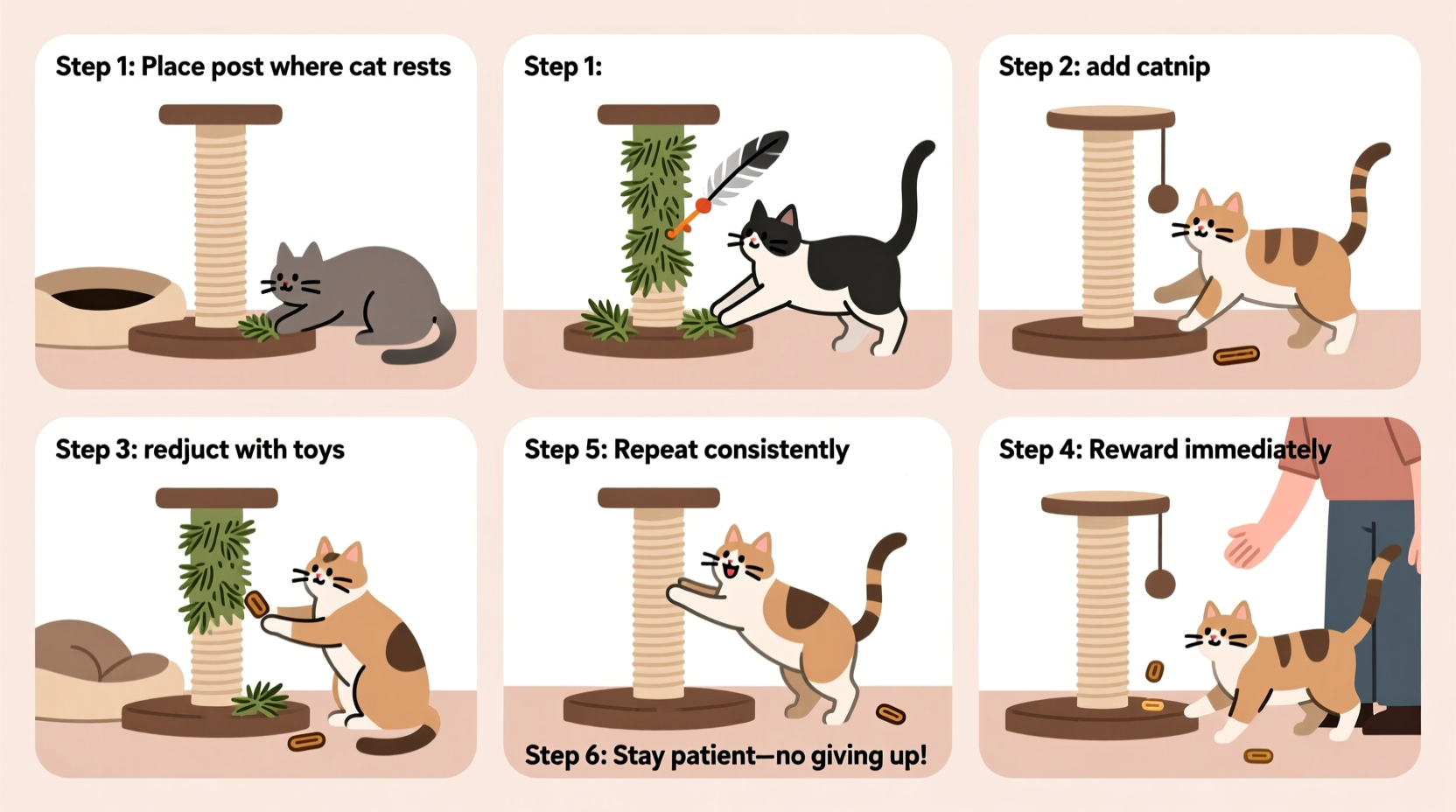
Before addressing behavior, it’s essential to understand why your cat might reject the post. A common mistake is assuming cats will naturally prefer the new post just because it exists. In reality, several factors influence their choice:
- Location: If the post is tucked in a quiet corner far from where your cat spends time, they’re less likely to use it.
- Texture: Cats often have strong preferences for material—sisal, cardboard, carpet, or wood.
- Stability: A wobbly post feels unsafe and discourages full-body stretching.
- Height and Angle: Some cats prefer vertical posts; others favor horizontal or angled surfaces.
- Habit Reinforcement: If your cat has already established a preferred spot (like your sofa), that location carries familiar scent markers and muscle memory.
The Step-by-Step Training Plan
Success lies in a structured approach that combines environmental management, positive reinforcement, and gradual habit formation. Follow this timeline for best results:
- Assess Current Behavior (Day 1–3): Observe when, where, and how your cat scratches. Note patterns—time of day, surface type, duration, and body posture.
- Remove Temptation (Day 2–4): Cover forbidden areas with double-sided tape, aluminum foil, or plastic runners. These textures are unpleasant to step on and deter repeated use.
- Position the Right Post (Day 3–5): Place a sturdy, appropriately textured post directly in front of or beside the targeted furniture. Ensure it’s tall enough for full extension.
- Add Scent and Visual Cues (Day 4–6): Rub catnip on the post or sprinkle silver vine. Use pheromone sprays like Feliway to create a calming, inviting environment.
- Redirect and Reward (Ongoing): When you catch your cat approaching the off-limits area, gently interrupt with a soft noise and guide them to the post. Immediately reward with treats, praise, or play if they engage.
- Gradual Relocation (Week 3+): Once consistent use begins, slowly move the post a few inches per day toward a more convenient location—if needed.
This process may take days or weeks. Progress isn't linear. Setbacks are normal. What matters is consistency in response and environment.
Choosing the Right Scratching Post
Not all scratching posts are created equal. A mismatch between your cat’s preference and the post design is a leading cause of training failure. Consider these key features:
| Feature | Recommended Option | Avoid |
|---|---|---|
| Material | Sisal rope, corrugated cardboard | Plush fabric, thin carpet |
| Height | At least 30 inches (tall enough for stretching) | Short posts under 24 inches |
| Stability | Heavy base or wall-mounted | Wobbly or lightweight models |
| Orientation | Vertical, horizontal, or angled options | Only one orientation |
| Location | Near sleeping area, by window, or near scratched furniture | Isolated rooms or high-traffic zones |
Some cats prefer horizontal scratchers placed on the floor, especially older or arthritic ones who find stretching upward uncomfortable. Others gravitate toward tall, vertical posts ideal for claw conditioning and spinal stretching.
Tip: Offer multiple types of scratchers in different locations. Rotate them monthly to maintain novelty.Real Example: Turning Around a Stubborn Scratcher
Sophie, a 4-year-old domestic shorthair, had shredded two couches in two years. Her owner, Mark, tried everything—spraying water, yelling, buying cheaper posts. Nothing worked. After consulting a veterinary behaviorist, he implemented a new plan.
First, he covered the sofa arms with removable plastic protectors. Then, he purchased a 32-inch sisal-wrapped post with a stable wooden base and placed it directly in front of the couch—the exact spot Sophie favored. He rubbed dried catnip into the fibers and attached a dangling toy at the top.
For the first three days, Sophie ignored it. On day four, she sniffed it. By day six, she gave a tentative swipe. Mark rewarded her instantly with a treat and quiet praise. Within two weeks, she was using it daily. Over time, he moved the post six feet away to a sunlit corner, where she now uses it consistently.
The turning point wasn’t the post itself—it was placing it where Sophie already wanted to scratch and making it more appealing than the alternative.
“Cats don’t misbehave out of defiance. They respond to what works. Make the right choice the easiest and most rewarding one.” — Dr. Lena Torres, DVM, Feline Behavior Consultant
Proven Techniques to Encourage Use
Beyond placement and equipment, active engagement increases success. Try these evidence-based strategies:
- Lure with Play: Use a wand toy to encourage batting and scratching motions on the post. Let your cat “capture” the toy at the end of a swipe.
- Positive Association: Feed meals or give treats near the post. Eventually, your cat links the area with positive experiences.
- Interactive Training Sessions: Spend five minutes twice daily guiding your cat to the post. Gently press their paws against the surface while saying a cue word like “scratch.” Reward any interaction.
- Rotate Scratchers: Introduce a second type (e.g., cardboard lounger) every few weeks to prevent boredom.
- Use Pheromones: Spray Feliway Classic around the post weekly to reduce stress and promote marking via scratching instead of urination.
Patience is non-negotiable. One study published in the *Journal of Feline Medicine and Surgery* found that 78% of cats adopted new scratching habits within four weeks when owners combined environmental enrichment with positive reinforcement—compared to just 32% using deterrents alone.
Checklist: How to Train a Stubborn Cat to Use a Scratching Post
Follow this actionable checklist to stay on track:
- ✅ Identify your cat’s preferred scratching surfaces and locations.
- ✅ Remove access to off-limits furniture using covers or deterrents.
- ✅ Choose a scratching post made of sisal or cardboard, at least 30 inches tall.
- ✅ Place the post directly in front of or beside the targeted furniture.
- ✅ Enhance appeal with catnip, toys, or pheromone spray.
- ✅ Interrupt unwanted scratching gently and redirect to the post.
- ✅ Reward immediately with treats or affection when your cat uses the post.
- ✅ Monitor progress weekly and adjust placement or type as needed.
- ✅ Be patient—allow 2 to 6 weeks for consistent behavior change.
- ✅ Gradually relocate the post once reliable use is established.
Frequently Asked Questions
What if my cat still won’t use the scratching post after weeks?
Reevaluate the post’s material, height, and stability. Try a different type—some cats prefer horizontal cardboard scratchers. Also, ensure you're rewarding the behavior immediately. Delayed rewards confuse cats. If no progress occurs after six weeks, consult a veterinary behaviorist to rule out anxiety or medical issues.
Can I trim my cat’s nails while training?
Yes—and you should. Regular nail trims reduce damage from scratching and make the training process less stressful for both you and your cat. Trim every 10–14 days using pet-safe clippers, avoiding the pink quick. Pair trimming with treats to build a positive association.
Is declawing ever a solution for destructive scratching?
No. Declawing is a surgical amputation of the last bone in each toe and is considered inhumane by major veterinary organizations, including the American Veterinary Medical Association (AVMA). It causes chronic pain, behavioral changes, and long-term health issues. Proper training and environmental modification are always preferable and effective.
Maintaining Long-Term Success
Once your cat consistently uses the scratching post, maintenance becomes crucial. Replace worn-out posts before they become unappealing—frayed sisal or flattened cardboard loses its tactile satisfaction. Clean the base regularly to remove dust and odors that might deter use.
Continue offering variety. A second post in another room supports natural territorial marking. Seasonal rotation keeps interest alive. And never stop rewarding—even occasional treats reinforce the habit.
Remember, scratching is not a flaw to correct but a natural behavior to channel. Your role isn’t to suppress instinct but to guide it constructively.
Tip: Take photos of your cat using the post. Share them online—you’ll inspire other frustrated cat owners and reinforce your own motivation.Conclusion: Stay Consistent, Stay Calm, Stay Committed
Training a stubborn cat to use a scratching post isn’t a quick fix. It’s a process rooted in observation, adaptation, and empathy. There will be days when progress stalls and old habits resurface. That doesn’t mean you’ve failed—it means you’re in the middle of a transformation that takes time.
Every small victory—a paw swipe, a stretch, a moment of curiosity—counts. Celebrate them. Adjust your approach when needed, but don’t give up. With the right tools, mindset, and persistence, even the most furniture-focused feline can learn to love their scratching post.
💬 Have a stubborn cat who finally started using the post? Share your story in the comments—your experience could help someone else keep going when they feel like quitting.








