Puppies explore the world with their mouths. While adorable in small doses, ankle-biting can quickly become frustrating, painful, and even dangerous if left unchecked. The good news: this behavior is normal and entirely correctable with consistency, understanding, and the right techniques. The key isn’t punishment—it’s redirection, timing, and building new habits that align with your household rules. This guide breaks down science-backed strategies to help you teach your puppy that human skin is off-limits, all while preserving your calm and strengthening your bond.
Understanding Why Puppies Bite Ankles
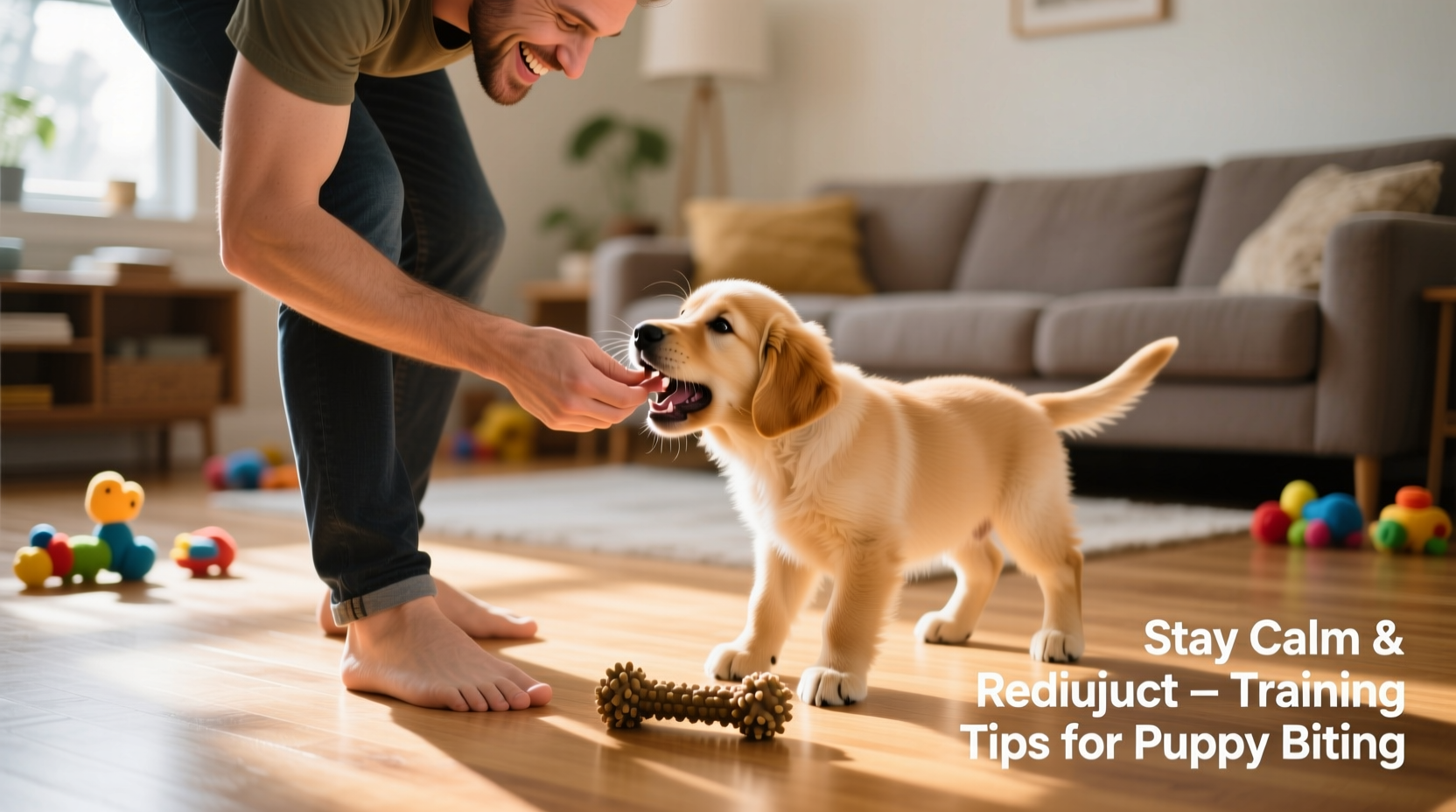
Biting at moving feet or ankles isn’t personal aggression—it’s instinctual play behavior. In the wild, puppies wrestle and nip during social development. Your walking legs mimic prey movement, triggering their chase-and-bite reflex. Additionally, teething discomfort (peaking between 3–6 months) drives puppies to chew on anything within reach. Combine natural curiosity, high energy, and underdeveloped impulse control, and you’ve got a perfect storm for ankle attacks.
It's crucial to avoid interpreting this as “dominance” or “spite.” Mislabeling the behavior leads to harsh corrections, which damage trust and escalate anxiety. Instead, view it as a communication gap: your puppy doesn’t yet know the rules of human interaction.
Tip: Never use physical punishment or yell when your puppy bites. It increases fear and may reinforce biting as a defensive response.Step-by-Step Guide to Stop Ankle Biting
Success lies in consistent repetition and immediate consequences tied to the behavior. Follow this timeline-based approach over 2–6 weeks, depending on your puppy’s age and temperament.
- Recognize the Trigger: Most bites occur during excitement—greetings, playtime, or sudden movements. Note when and where biting happens most often.
- Freeze and Disengage: The moment teeth touch skin, say “Ouch!” in a sharp but calm tone, then immediately stop moving. Stand still like a statue for 5–10 seconds. Movement rewards the behavior; stillness removes the fun.
- Redirect to an Appropriate Chew Toy: After freezing, calmly offer a chew toy. If the puppy bites it, praise enthusiastically. If not, gently walk away for 20–30 seconds—removing attention teaches that biting ends playtime.
- Prevent Practice: Use baby gates or leashes indoors to limit unsupervised access. A puppy on a drag leash (with supervision) can be gently interrupted before biting occurs.
- Reinforce Calm Behavior: Reward moments of non-reactivity. When your puppy chooses to lie down instead of chasing your feet, toss a treat nearby. Build positive associations with stillness.
This method works because it mimics how littermates respond—yelping and withdrawing when play gets too rough. Over time, your puppy learns that gentle interactions lead to continued attention and fun, while biting causes everything to stop.
Do’s and Don’ts of Puppy Bite Training
| Do | Don’t |
|---|---|
| Use high-value treats (like freeze-dried liver) to reward non-biting behavior | Wave hands or feet around teasingly—this encourages chasing |
| Practice short, frequent training sessions (5 minutes, 4x/day) | Tug or wrestle with your puppy using hands or arms |
| Rotate chew toys to maintain interest | Shout, slap, or push the puppy away aggressively |
| Leash your puppy indoors during high-energy times to manage impulses | Ignore repeated biting hoping it will “just stop” |
| Teach a “Leave It” command for emergency redirection | Use bitter sprays on skin—they don’t address the root cause |
Expert Insight: What Trainers Recommend
Professional dog trainers emphasize that consistency across all family members is non-negotiable. Mixed signals confuse puppies and prolong learning.
“Puppies thrive on predictability. If one person runs away screaming when bitten and another laughs and wiggles their toes, the puppy learns that biting sometimes works. Uniform responses are the foundation of reliable behavior change.” — Dr. Karen Liu, Certified Applied Animal Behaviorist
Liu also stresses the importance of managing the environment: “You wouldn’t expect a toddler to resist candy left on the counter. Same with puppies. Prevent rehearsal of unwanted behaviors by controlling access and setting them up to succeed.”
Real Example: Turning Around Max the Terrier Mix
Sarah adopted Max, a 14-week-old Jack Russell mix, excited for companionship. Within days, she dreaded walking through her own living room. Every step triggered lunges at her socks. Frustrated, she tried saying “No!” and tapping his nose, but the biting worsened.
After consulting a trainer, Sarah changed her approach. She kept a rope toy in each room and began freezing the moment Max nipped. At first, he’d bite again after the pause, but she stayed consistent. Within three days, he started looking at her hand, then glancing at the nearby toy. By day ten, he’d grab the toy himself when excited. Sarah also started tethering Max to her belt loop during evening hours—giving him proximity without freedom to chase. Two weeks later, ankle attacks dropped by 90%. Now, at six months old, Max still gets playful, but he grabs his kangaroo plush instead of skin.
The turning point wasn’t a single action, but daily repetition of the same sequence: yelp, freeze, redirect, reward. Patience—not perfection—was the real catalyst.
Essential Checklist for Success
- ✅ Keep chew toys accessible in every room
- ✅ Respond to every bite with “Ouch!” and stillness
- ✅ Immediately redirect to a toy after disengaging
- ✅ End play sessions if biting continues (walk away)
- ✅ Practice “Leave It” and “Drop It” commands daily
- ✅ Use a lightweight leash indoors during high-risk times
- ✅ Rotate toys weekly to prevent boredom
- ✅ Reward calm behavior with treats and affection
- ✅ Ensure your puppy gets enough physical and mental exercise
- ✅ Involve all household members in consistent responses
When to Seek Professional Help
Most ankle-biting resolves by 6–7 months with consistent training. However, consult a certified dog behaviorist if:
- Biting becomes more intense or targets faces
- Your puppy growls or stiffens before biting
- There’s no improvement after 4–6 weeks of consistent effort
- Biting occurs during handling (e.g., touching paws or collar)
These signs may indicate underlying anxiety, fear, or resource guarding that requires specialized intervention. Early professional support prevents escalation and builds confidence for both you and your puppy.
Frequently Asked Questions
Will my puppy grow out of ankle biting on its own?
Some puppies reduce the behavior as they mature, but many do not fully outgrow it without training. Unchecked biting can evolve into reactivity or play aggression. Proactive teaching ensures safety and social compatibility.
Is it okay to let my puppy nibble gently?
No. Puppies struggle to distinguish between soft and hard bites. Allowing any mouthing blurs boundaries and makes it harder to eliminate the behavior later. Teach “no mouth on people” from day one.
How long does it take to stop ankle biting?
With consistent daily practice, most owners see significant improvement within 2–3 weeks. Full resolution typically takes 4–8 weeks. Younger puppies often learn faster due to greater neuroplasticity.
Building a Bite-Free Future
Training a puppy not to bite ankles isn’t just about stopping a nuisance—it’s about laying the groundwork for a respectful, trusting relationship. Every redirected bite is a lesson in self-control. Every calm interaction reinforces emotional regulation. The patience you invest now pays dividends in a well-mannered adult dog who understands boundaries.
Remember: your puppy isn’t trying to annoy you. They’re trying to communicate, play, and cope with a world full of exciting, wiggling things. Meet them with clarity, kindness, and structure, and you’ll shape behavior that lasts a lifetime.
💬 Have a success story or challenge with puppy biting? Share your experience in the comments—your insight could help another overwhelmed pet parent stay calm and consistent.








