
Parrots are among the most intelligent and expressive birds in the animal kingdom. Their ability to mimic human speech is both fascinating and endearing. However, that same talent can become a source of tension—especially if your feathered companion develops a habit of loud, repetitive vocalizations at inconvenient hours. The challenge lies not in stopping your parrot from talking, but in guiding its learning in a way that respects both your bond with the bird and your relationship with those living nearby.
Training a parrot to talk doesn’t have to mean enduring constant squawking or risking neighborly complaints. With thoughtful techniques, consistent routines, and environmental awareness, you can encourage clear, meaningful speech while managing volume and timing. This guide provides actionable strategies for teaching your parrot to communicate on cue, reduce off-hour noise, and become a well-mannered member of your household—without sacrificing the joy of interaction.
Understanding Parrot Vocalization: Why They Talk (and Squawk)
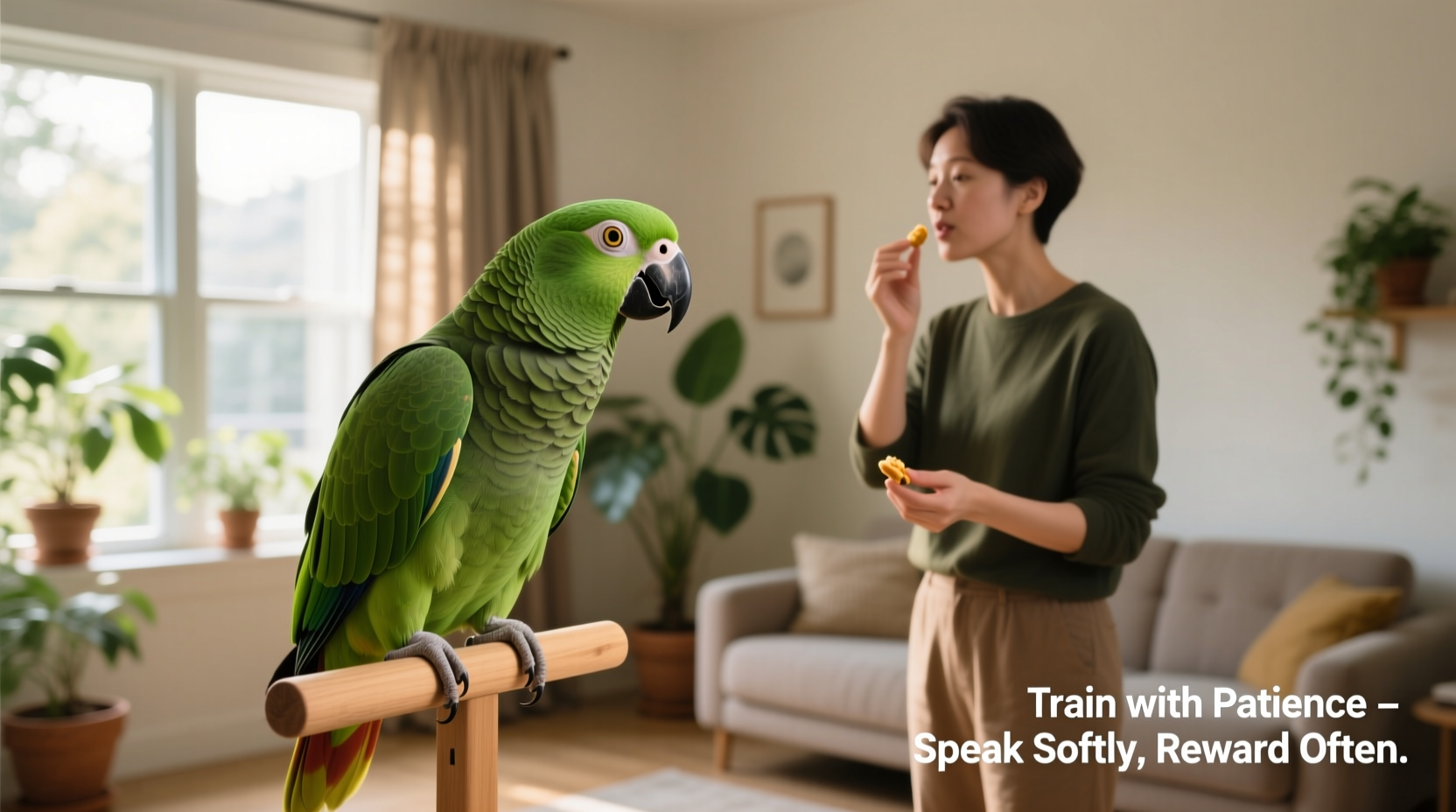
Parrots don’t speak for entertainment alone. In the wild, vocal mimicry plays a critical role in social bonding, territorial signaling, and flock coordination. When domesticated, they transfer these instincts to their human families, viewing owners as part of their flock. Talking becomes a way to gain attention, express emotion, or simply participate in daily life.
However, parrots also use loud calls when stressed, bored, or seeking stimulation. What starts as playful repetition can escalate into persistent screaming—particularly during dawn and dusk, when birds are naturally most active. Recognizing the difference between intentional speech and reactive noise is key to effective training.
“Parrots aren’t noisy because they’re misbehaving—they’re communicating. Our job is to shape that communication, not suppress it.” — Dr. Laura Finch, Avian Behavior Specialist
To train a parrot successfully, you must first create an environment where learning feels rewarding and calmness is reinforced. This foundation prevents excessive vocalizations before they start.
Step-by-Step Guide to Training Your Parrot to Talk Quietly
Teaching speech isn’t just about repetition—it’s about context, consistency, and control. Follow this structured approach to build verbal skills while minimizing disruptive noise.
- Choose a quiet training window: Schedule sessions during mid-morning or early afternoon, avoiding early mornings and late evenings when neighbors are sensitive to sound.
- Select one simple phrase: Start with short, clear words like “hello,” “good bird,” or your parrot’s name. Avoid complex sentences initially.
- Use a soft, calm voice: Speak slowly and clearly. Model the word at a moderate volume—never shout, as your parrot will mirror your tone.
- Pair words with positive reinforcement: Immediately reward attempts (even approximations) with a treat, praise, or gentle head scratch.
- Limit session length: Keep training to 5–10 minutes, 2–3 times daily. Short bursts prevent overstimulation and fatigue.
- Practice in a closed room: Use a bedroom or interior space with closed windows and rugs to dampen sound transmission.
- Introduce a “quiet” cue: After a successful repetition, say “quiet” in a low tone and wait for silence. Reward stillness with a treat.
- Gradually phase out treats: Once the behavior is learned, replace food rewards with verbal praise or affection.
This method builds focus and discipline. Over time, your parrot learns that speaking on cue leads to rewards, while uncontrolled noise does not.
Tip: Record yourself saying the target word and play it softly during solo time—but only when you're home to monitor reactions. Avoid looping audio when unattended.Managing Noise Without Suppressing Natural Behavior
It’s impossible—and unhealthy—to eliminate all noise from a parrot’s life. Instead, aim to redirect and regulate it. Birds need to vocalize; the goal is to make that expression appropriate and manageable.
One effective strategy is to establish a “talking zone”—a specific area where speech training and vocal play are encouraged. This could be a covered playstand placed away from shared walls or near carpeted flooring. Outside this zone, reinforce calm behavior by ignoring attention-seeking screams and only responding to quiet chirps or soft words.
Another crucial element is enrichment. A mentally stimulated parrot is less likely to scream out of boredom. Rotate toys, introduce puzzle feeders, and provide foraging opportunities to keep your bird engaged when you’re not actively training.
Do’s and Don’ts of Parrot Noise Management
| Do | Don't |
|---|---|
| Train during daylight hours when background noise is higher | Allow unstructured screaming sessions |
| Use white noise or soft music to mask incidental sounds | Yell “quiet” or react loudly to screams |
| Provide daily social interaction to reduce loneliness calls | Leave the TV on all day as “company” |
| Encourage speech through positive reinforcement | Punish vocalizations—this increases anxiety and noise |
| Use curtains, rugs, and closed doors to absorb sound | House your bird against a shared wall with neighbors |
Environmental design plays a surprisingly large role in perceived noise levels. Even a small shift in cage placement—away from drywall shared with adjacent units—can dramatically reduce disturbance.
Real-Life Example: Training Charlie the Quaker Parrot
Sophia, a resident of a Chicago apartment building, adopted a young Quaker parrot named Charlie. Within weeks, his enthusiastic “HELLO!” echoed through the hallway every morning at 6:30 a.m., prompting two formal complaints from upstairs neighbors.
Determined to keep Charlie without conflict, Sophia implemented a new routine. She moved his cage from the living room (adjacent to the stairwell) to a spare bedroom with carpeting and heavy drapes. She began training him using the step-by-step method above, limiting sessions to 10 minutes after breakfast and before dinner.
She introduced a clicker to mark correct responses and used millet sprays as rewards. To manage dawn vocalizations, she covered part of his cage with a breathable blanket to extend sleep time slightly and played 30 minutes of soft classical music in the morning.
Within six weeks, Charlie learned to say “Good morning” on cue—and only when prompted. His spontaneous screaming decreased by over 80%. Sophia now enjoys daily interactions with her bird, and her neighbors have stopped knocking.
Her success wasn’t due to silencing Charlie, but to giving him better ways to communicate.
Checklist: How to Train a Talking Parrot Respectfully
- ✅ Choose 1–2 simple words or phrases to teach first
- ✅ Schedule training during midday, avoiding early morning or night
- ✅ Conduct sessions in a sound-buffered room (carpeted, with curtains)
- ✅ Use a calm voice and immediate rewards for correct attempts
- ✅ Introduce a “quiet” command and reinforce silent behavior
- ✅ Rotate toys and provide mental stimulation daily
- ✅ Position the cage away from shared walls and windows
- ✅ Monitor neighbor feedback and adjust as needed
- ✅ Keep training sessions under 10 minutes to maintain focus
- ✅ Be patient—some parrots take months to speak clearly
Frequently Asked Questions
Can all parrots learn to talk?
No—not all species or individuals develop speech. African Greys, Amazons, Budgies, and Quakers are among the most vocal. Cockatiels and Pionus parrots may mimic sounds but rarely form words. Even within talkative species, personality and exposure play major roles.
How long does it take for a parrot to start talking?
Some birds begin mimicking within a few months; others take over a year. Younger parrots typically learn faster, but older birds can acquire words with consistent training. Progress depends on frequency of interaction, clarity of modeling, and the bird’s confidence.
Is it okay to cover my parrot’s cage to reduce noise?
Covering can help regulate sleep and reduce dawn calling, but should never be used as punishment or for extended periods. Use breathable fabric and only partially cover the cage to allow airflow and dim light without complete isolation. Never cover a bird that shows signs of stress or respiratory issues.
Expert Insight: The Role of Routine in Vocal Control
“Parrots thrive on predictability. When their daily rhythm includes scheduled interaction, feeding, and quiet time, they feel secure—and secure birds are less likely to scream for attention.” — Dr. Rajiv Mehta, Exotic Animal Veterinarian
Routine isn’t just comforting—it’s a behavioral anchor. When a parrot knows when to expect interaction, it’s less likely to initiate loud calls throughout the day. Establish fixed times for feeding, play, training, and sleep. Consistency reduces anxiety and creates natural pauses in vocal activity.
For example, many owners find success by aligning training with post-breakfast energy peaks and winding down with calming activities before evening. Over time, the bird internalizes this rhythm, making vocalizations more predictable and easier to manage.
Conclusion: Building a Harmonious Home for You, Your Parrot, and Your Neighbors
Training a parrot to talk is one of the most rewarding aspects of avian companionship. But that joy shouldn’t come at the expense of peaceful coexistence. By combining patient teaching methods with smart environmental choices, you can nurture your parrot’s voice while respecting shared living spaces.
The secret lies in redirection, not repression. Encourage speech through structured, quiet sessions. Reinforce calmness. Design your home to absorb sound. Listen to your bird—and your neighbors—with empathy. When done right, your parrot won’t just say words; it will become a thoughtful participant in your daily life.
💬 Ready to start training? Pick one phrase today, choose a quiet time, and begin building a clearer, quieter conversation with your parrot. Share your progress or tips in the comments below—your experience could help another bird owner find balance too.








