
Bringing a second adult cat into a home already occupied by another is rarely as simple as opening a carrier door and stepping back. More often than not, the result is weeks—or even months—of hissing, swatting, and tense standoffs. Unlike kittens, adult cats are set in their routines, territorial by nature, and highly sensitive to changes in their environment. But with patience, structure, and an understanding of feline psychology, peaceful coexistence is not only possible—it can evolve into genuine companionship.
The key lies in recognizing that cats don’t communicate or bond like dogs or humans. They rely on scent, space, and gradual exposure. Rushing the process triggers fear and defensiveness. A well-managed introduction respects both cats’ emotional needs and allows them to form associations at their own pace. This guide outlines a practical, science-backed approach to integrating two adult cats while minimizing stress and conflict.
Understanding Feline Territorial Behavior
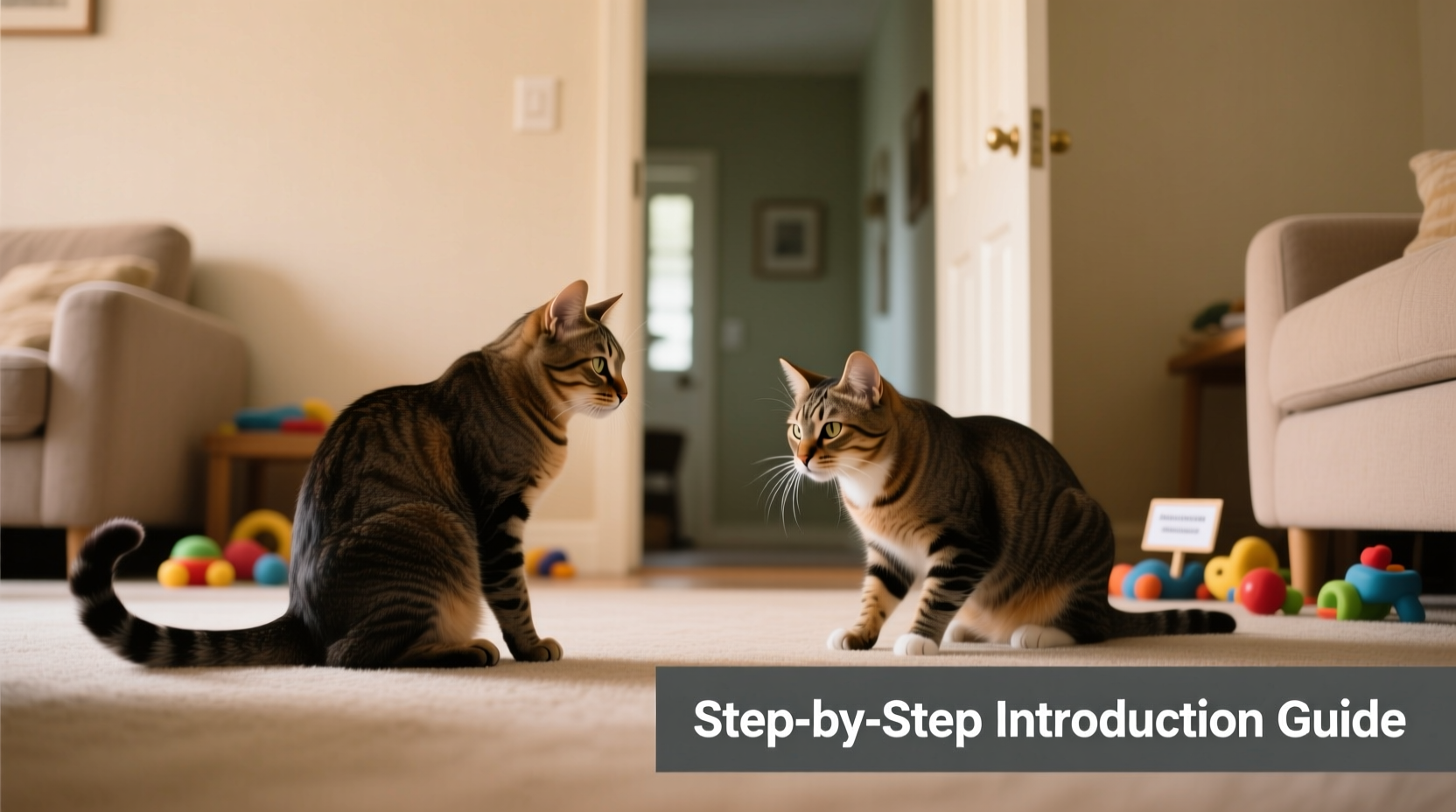
Cats are solitary hunters by evolutionary design. Even domesticated ones retain strong instincts to claim and defend territory. For an established cat, the arrival of a newcomer represents an intrusion—not just physically, but olfactorily and emotionally. The scent of another cat on shared air, furniture, or human hands can trigger anxiety long before visual contact occurs.
Fear-based aggression is common during introductions. Hissing, flattened ears, and puffed fur are defensive signals, not signs of irreconcilable hatred. These behaviors serve to create distance and avoid physical confrontation. When managed correctly, most cats learn that the other poses no threat and gradually relax their guard.
Dr. Sarah Ellis, co-author of *The Cat’s Mind* and feline behavior expert at the University of Lincoln, emphasizes:
“Cats don’t generalize safety. Just because they’ve met one cat peacefully doesn’t mean they’ll accept another. Each introduction must be treated as a unique social challenge.” — Dr. Sarah Ellis, Feline Behavior Scientist
This means every step—from initial separation to full integration—must be intentional and controlled.
Step-by-Step Introduction Timeline
A successful introduction unfolds over several phases, typically spanning 2–6 weeks depending on the cats’ temperaments. Skipping stages increases the risk of long-term hostility.
- Phase 1: Preparation (Days 1–3)
Create a dedicated room for the new cat with food, water, litter box, bedding, and toys. This becomes their safe zone. Keep the resident cat out of this space entirely. - Phase 2: Scent Swapping (Days 4–7)
Exchange bedding between cats daily. Rub a cloth on one cat’s cheek (where scent glands are located) and place it near the other’s food or sleeping area. This builds familiarity without visual stress. - Phase 3: Controlled Visual Contact (Days 8–14)
Use a baby gate or cracked door to allow sightlines. Feed both cats on opposite sides of the barrier so they associate each other’s presence with positive experiences. Keep sessions short and end before tension arises. - Phase 4: Supervised Interaction (Days 15–25)
Allow brief, leashed or confined interactions in a neutral space (not the resident cat’s core territory). Use distractions like wand toys to redirect focus. End immediately if either cat shows signs of distress. - Phase 5: Gradual Freedom (Weeks 4–6+)
Allow increasing periods of unsupervised time together, starting with 15 minutes and building up. Monitor closely for subtle signs of tension—stiff posture, tail flicking, or avoidance.
Rushing past Phase 3 before the cats appear relaxed around each other’s presence dramatically increases the likelihood of setbacks. Patience is not optional—it’s the foundation of success.
Tip: Always feed both cats simultaneously during early visual phases. Positive reinforcement through mealtime helps build favorable associations.Essential Do’s and Don’ts During Introduction
Mistakes in handling can undo days of progress. The following table summarizes critical actions to take—and those to avoid—throughout the process.
| Do’s | Don’ts |
|---|---|
| Use pheromone diffusers (e.g., Feliway) in shared areas to reduce anxiety | Force direct contact before cats are ready |
| Maintain separate resources (litter boxes, food bowls, sleeping spots) even after integration | Allow one cat to block access to essentials like litter or food |
| Play with each cat individually to prevent competition | Punish hissing or growling—this increases fear |
| Monitor body language closely: dilated pupils, low tail, or crouching signal stress | Leave cats unsupervised too soon |
| Wash hands between handling cats to avoid cross-scenting too quickly | Expect instant friendship—bonding may never happen, and that’s okay |
Remember: peaceful tolerance is a realistic goal. Not all cats become cuddle buddies, and that doesn’t indicate failure. As long as they can share space without aggression, the introduction has succeeded.
Real-Life Example: Introducing Luna and Milo
When Maria adopted Luna, a 3-year-old tabby, to join her 5-year-old male Milo, she expected quick bonding. Instead, Milo hissed nonstop when he caught Luna’s scent. Following a structured plan, Maria kept Luna in the spare bedroom for ten days, swapping blankets nightly. She used a baby gate for visual access during meals and noticed Milo began eating calmly within a week.
At day 18, she allowed 10-minute supervised meetings in the living room, using a feather toy to engage both cats separately. One session ended abruptly when Milo batted at Luna, but no injuries occurred. After four more weeks of incremental exposure, the cats now nap in the same room—on opposite ends of the couch. While they don’t groom each other, they ignore one another peacefully, sharing litter boxes and window perches.
“I thought I’d done something wrong when they didn’t become best friends,” Maria said. “But my vet told me this level of calm coexistence is actually a win for adult cats.”
Checklist: Key Steps for a Smooth Integration
- Prepare a separate room for the new cat with all essentials
- Use Feliway or similar calming diffusers in both spaces
- Swap scents daily using bedding or cheek-wiped cloths
- Feed cats on opposite sides of a barrier during visual phase
- Watch for body language cues: hissing is normal; prolonged staring or chasing is not
- Introduce neutral play areas for early interactions
- Keep resources doubled—even after full integration
- Never punish aggressive displays; instead, interrupt and redirect
- Extend unsupervised time gradually, increasing by 15-minute increments
- Consult a veterinarian or certified feline behaviorist if aggression persists beyond six weeks
Frequently Asked Questions
How long should the introduction process take?
There’s no fixed timeline. Some cats adjust in three weeks; others take three months. The process should move at the slower cat’s pace. Signs of readiness include relaxed body posture, mutual sniffing, and parallel grooming. If hissing continues beyond brief, isolated incidents after six weeks, consider consulting a behavior specialist.
Is it normal for cats to fight during introductions?
Minor skirmishes—brief chases, slaps, or vocal confrontations—can occur, especially if space is limited or resources are shared too soon. However, serious fights involving biting, bloodshed, or sustained aggression are not normal and indicate the process moved too fast. Separate the cats immediately and return to earlier phases.
Can I speed up the process with medication?
In extreme cases of anxiety, veterinarians may prescribe short-term anti-anxiety medications like fluoxetine (Prozac) or sedatives such as gabapentin. These are not shortcuts but tools to lower baseline stress so behavioral techniques can work more effectively. Never use medication without veterinary guidance.
Conclusion: Building Peace One Step at a Time
Introducing two adult cats successfully isn’t about forcing harmony—it’s about creating conditions where peace can emerge naturally. Every hiss avoided, every meal eaten in proximity, and every relaxed moment in shared space is a victory. The process demands consistency, observation, and above all, empathy for the silent emotional world of cats.
By honoring their need for control, scent familiarity, and gradual trust-building, you lay the groundwork for a stable multi-cat household. Whether your cats eventually groom each other or simply tolerate coexistence, you’ve given them the greatest gift: safety in their shared home.
💬 Have you introduced adult cats successfully? Share your story or tips in the comments—your experience could help another cat owner avoid months of stress.








