Dressing up your dog in a princess dress isn’t just about fashion—it’s an expression of love, celebration, and companionship. When paired with a matching leash, the ensemble becomes a coordinated statement that turns heads at the park or during special events. However, style should never come at the expense of comfort or safety. An ill-fitting dress can restrict movement, cause chafing, or lead to overheating, while a mismatched leash may compromise control. The key to getting it right lies in precise measurement and informed selection. Understanding your dog’s body dimensions, breed-specific proportions, and behavioral tendencies ensures that both dress and leash support not only aesthetics but also well-being.
Step-by-Step Guide: Measuring Your Dog Accurately
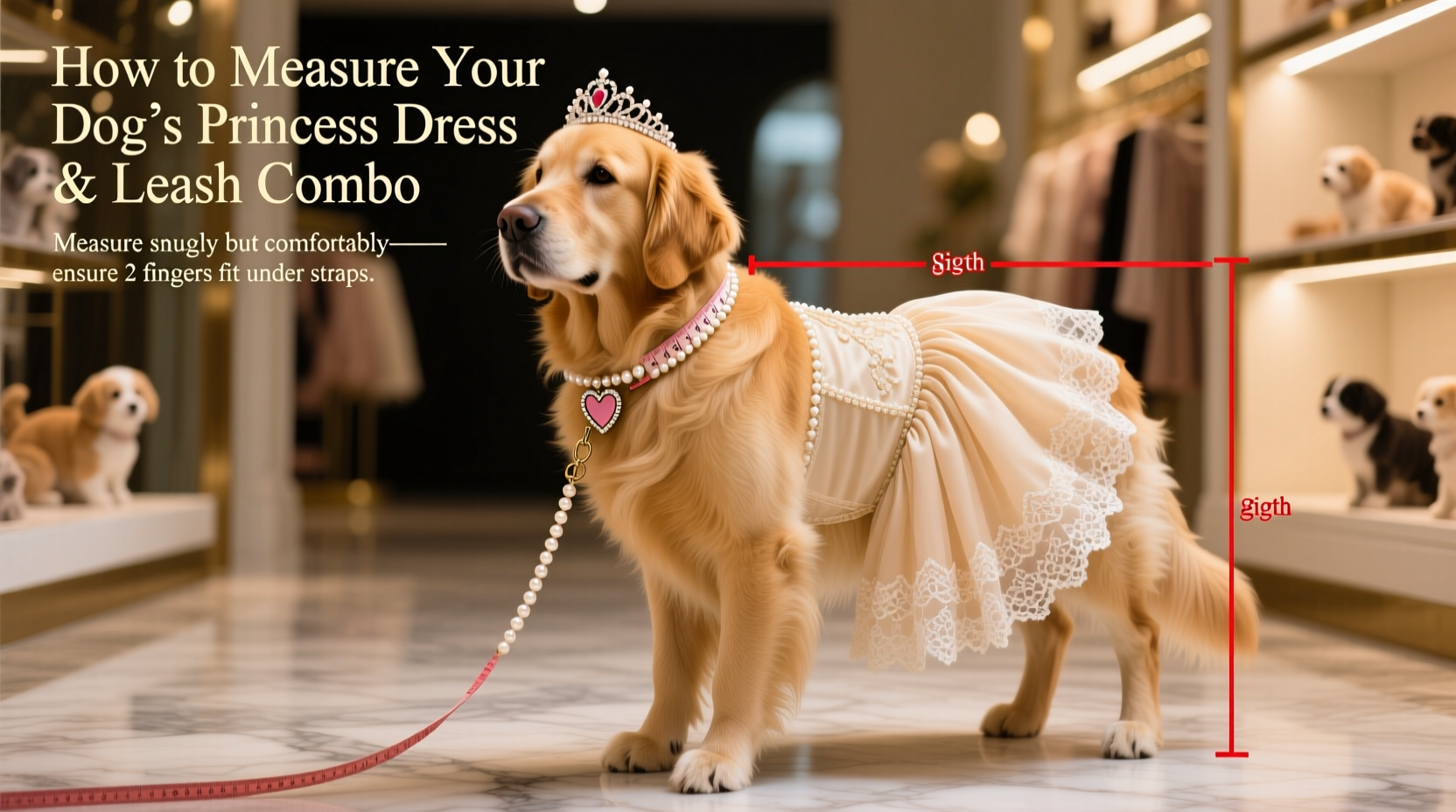
Before purchasing any dog apparel, accurate measurements are essential. Unlike humans, dogs vary widely in shape even within the same breed, so relying on weight or breed averages alone is risky. Follow this five-step process to gather reliable data:
- Neck Circumference: Use a soft measuring tape to wrap around the base of the neck where the collar normally sits. Ensure two fingers fit comfortably between the tape and skin—this accounts for padding and movement.
- Chest Girth: Measure the widest part of the chest, just behind the front legs. This is often the largest dimension and the most critical for fit. Exhale gently before measuring to avoid overestimation.
- Back Length: From the base of the neck (where the collar rests) to the start of the tail. This determines how long the dress should be and whether it will cover sensitive areas properly.
- Weight: While not a direct sizing factor, weight helps cross-reference size charts, especially when shopping online.
- Leg Openings (if applicable): For dresses with leg holes, measure from armpit to elbow and ensure clearance for natural stride.
Choosing the Right Dress Size: Fit, Fabric, and Functionality
Once you have the numbers, consult the manufacturer’s size chart—but don’t assume all brands are consistent. A size “Medium” in one brand may fit like a “Small” in another. Always match your dog’s actual measurements to the product’s specific guidelines.
Fabric choice significantly affects fit and comfort. Tulle and satin, common in princess-style dresses, offer visual appeal but provide little stretch. If your dog has a broad chest relative to their neck, opt for a garment with elastic panels or adjustable straps. Cotton blends or spandex-infused materials offer more flexibility and breathability, making them better suited for longer wear.
The cut matters too. A-line silhouettes flatter most body types, while empire waists elevate the seam beneath the chest—ideal for dogs with shorter torsos. Avoid designs that place seams directly under the armpits or along the spine, as these can rub during movement.
“Dogs don’t tolerate discomfort silently. Signs like excessive scratching, reluctance to move, or trying to remove the garment mean it’s time to reassess fit.” — Dr. Lena Patel, Veterinary Behaviorist
Determining Leash Compatibility and Safety Standards
A matching leash isn’t just decorative; it must function safely. The leash should complement the outfit without compromising control. Consider these factors:
- Attachment Point: If the dress includes a harness loop, ensure the leash connects securely. Never attach a leash directly to a collar if the dog pulls heavily.
- Length: A 4–6 foot leash offers optimal control in public spaces. Retractable leashes can work but require caution—they may tangle with skirts or encourage pulling.
- Material Strength: Nylon and polyester are durable and easy to clean. Avoid thin ribbons or purely decorative chains unless used solely for parades with close supervision.
- Handle Comfort: Padded handles reduce hand strain, especially important if your dog is energetic or large.
The leash should coordinate stylistically—matching color, trim, or embellishments—but never at the cost of functionality. A sparkly leash with weak stitching is a hazard.
Size Comparison Table: Breed-Based Estimates vs. Actual Measurements
| Breed / Size Category | Avg. Neck (in) | Avg. Chest (in) | Back Length (in) | Recommended Dress Size |
|---|---|---|---|---|
| Chihuahua, Toy Poodle | 8–10 | 10–12 | 8–10 | XS |
| Beagle, Cocker Spaniel | 14–16 | 18–22 | 12–14 | M |
| Border Collie, Bulldog | 16–18 | 22–26 | 15–17 | L |
| Labrador, German Shepherd | 18–22 | 28–34 | 18–22 | XL+ |
Note: These are general estimates. Always verify with actual measurements before ordering.
Checklist: Final Steps Before Purchase
Use this checklist to ensure you’re making a smart, safe choice:
- ✅ Measured neck, chest, and back length with a soft tape
- ✅ Compared numbers to the brand’s exact size chart (not generic guides)
- ✅ Checked fabric composition for breathability and stretch
- ✅ Verified leash material strength and clasp security
- ✅ Ensured the design allows full range of motion (legs, tail, head)
- ✅ Confirmed return policy in case of fit issues
Real Example: Bella the Bichon Frise’s Perfect Fit Journey
Bella, a 7-year-old Bichon Frise, was set to attend her owner’s daughter’s birthday party in a lavender princess dress with a matching pearl-trimmed leash. The owner initially ordered a Medium based on breed averages. Upon arrival, the dress was too tight across the chest, restricting Bella’s breathing and causing visible anxiety. After re-measuring (chest: 14.5 inches), the owner discovered Bella fell into the Small category due to her petite frame despite being average weight. A replacement Small from a different brand, featuring side elastics and a broader chest opening, fit perfectly. The leash, made of reinforced nylon with a secure snap hook, allowed easy handling during outdoor photos. Bella wore the set for 90 minutes with no signs of distress—proof that precise sizing makes all the difference.
Frequently Asked Questions
Can I use a human measuring tape for my dog?
Yes, but use a flexible cloth tape rather than a rigid metal one. If unavailable, a string and ruler work—just mark the length and measure afterward.
What if my dog falls between sizes?
Always size up, especially for breeds with thick coats or muscular builds. A slightly loose dress is safer than one that binds. You can sometimes adjust with Velcro or ties, but can’t expand a too-tight garment.
How long should my dog wear the dress?
Limited durations—30 to 90 minutes—are safest. Monitor for signs of overheating, itching, or restricted movement. Remove immediately if discomfort occurs.
Final Tips for Long-Term Use and Care
Once you’ve found the ideal combo, maintain it properly. Hand wash the dress in cold water with mild detergent to preserve delicate fabrics. Air dry flat to prevent stretching. Inspect the leash weekly for fraying, especially near clasps. Store both items in a breathable cotton bag away from sunlight to prevent fading.
Tip: Introduce the outfit gradually. Let your dog wear the dress indoors for short periods first to build positive associations.Conclusion: Style Meets Comfort and Confidence
Selecting the ideal princess dress and leash combo for your dog goes beyond aesthetics—it’s an act of care. By taking accurate measurements, understanding fit nuances, and prioritizing safety, you ensure your pet enjoys the spotlight without sacrifice. Whether it’s a birthday, parade, or just a fun photo session, a well-fitted ensemble enhances the experience for both of you. Don’t guess. Measure, test, and choose wisely. Your dog’s comfort is the true crown jewel.
💬 Have a story about your dog’s favorite outfit or a sizing challenge you overcame? Share your experience below and help fellow pet parents dress their pups with confidence!








