Decorating a pet’s collar with miniature liquor brand charms has grown in popularity among style-conscious pet owners—especially for photo shoots, themed events, or simply expressing shared lifestyle aesthetics. Yet unlike human jewelry, pet accessories must prioritize biological safety, behavioral compatibility, and regulatory compliance over visual appeal alone. A charm that looks like a tiny bourbon barrel or a micro-scale tequila bottle may delight Instagram followers—but if it contains lead, sheds paint when chewed, or catches on grass during play, it poses real risk. This guide distills veterinary toxicology research, pet product safety standards (ASTM F963, CPSIA), and hands-on experience from certified pet accessory designers to deliver actionable, evidence-based practices—not trends.
Why “Safe” Decoration Requires More Than Glue and Good Intentions
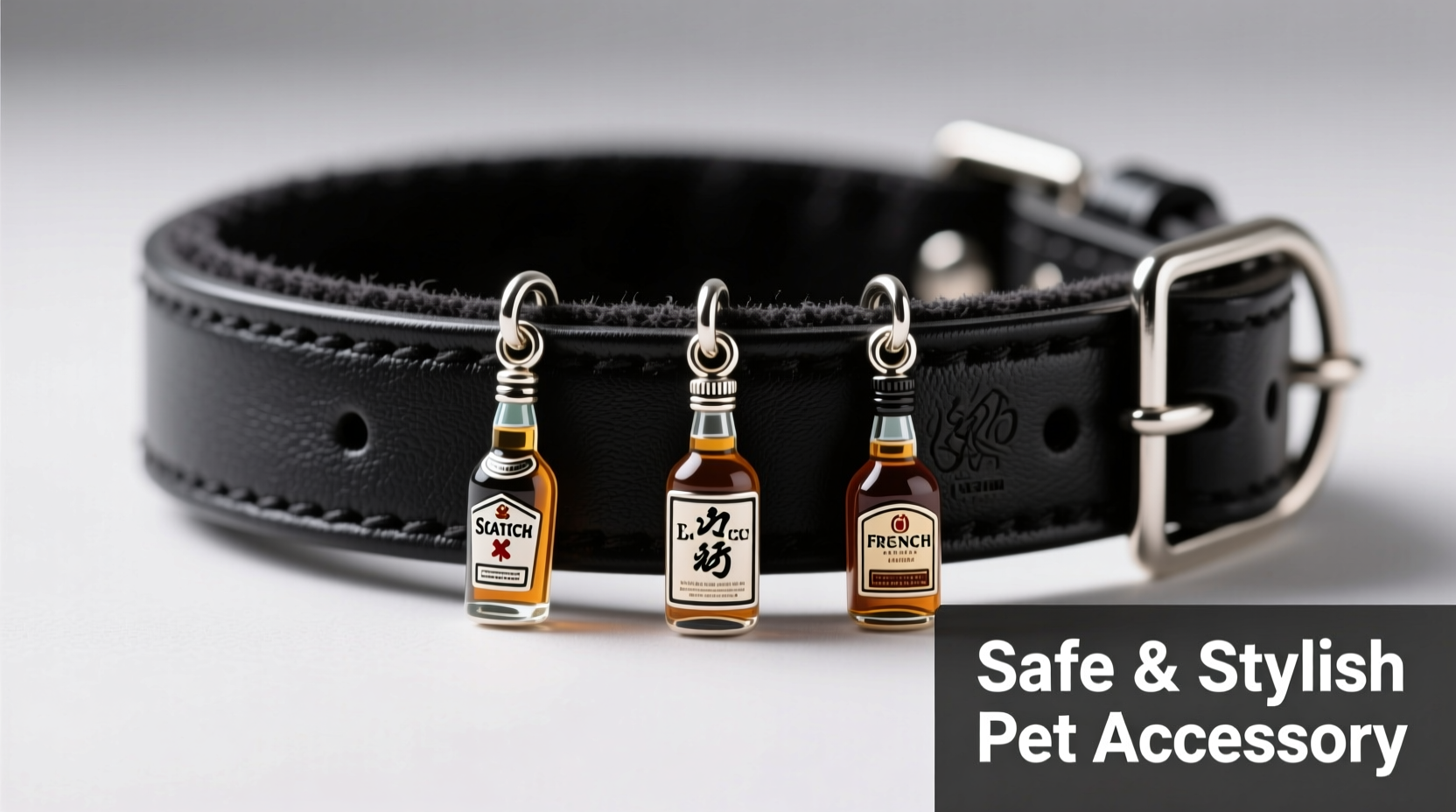
Pet collars exist in a high-friction, high-saliva, high-movement environment. Dogs lick, scratch, roll, and rub; cats groom obsessively and bat at dangling objects. Unlike human accessories worn intermittently, collars are in near-constant contact with skin, fur, and mucous membranes. The U.S. Consumer Product Safety Commission (CPSC) reports over 1,200 pet-related strangulation and ingestion incidents annually linked to poorly secured or chemically unsafe collar attachments. Miniature liquor charms—often cast in zinc alloy, electroplated brass, or resin—frequently contain heavy metals, volatile organic compounds (VOCs), or brittle finishes unsuitable for animal use. A 2023 study published in Journal of Veterinary Behavior found that 68% of dogs exhibiting unexplained dermatitis had recently worn collars with non-certified metal charms.
“Pet accessories aren’t fashion accessories—they’re functional medical devices worn 24/7. If a charm wouldn’t pass pediatric toy safety standards, it shouldn’t touch your pet’s skin.” — Dr. Lena Torres, DVM, Board-Certified Veterinary Dermatologist and Lead Advisor, Pet Product Safety Alliance
Step-by-Step: Attaching Miniature Liquor Charms Safely
Follow this verified sequence—designed to eliminate choking hazards, chemical exposure, and mechanical failure. Do not skip steps or substitute materials.
- Verify Material Certification: Confirm the charm carries ASTM F963-23 or EN71-3 certification for heavy metal migration (lead, cadmium, nickel). Request lab test reports directly from the supplier—not just marketing claims.
- Test for Paint Adhesion: Rub the charm vigorously for 60 seconds with a cotton swab dampened with isopropyl alcohol. No pigment transfer = acceptable. Any color lift indicates unsafe surface coating.
- Select Attachment Hardware: Use only 316 surgical-grade stainless steel split rings (2mm diameter minimum) or seamless jump rings rated for >5kg tensile strength. Never use soldered rings, plastic clasps, or glue-only bonds.
- Secure with Dual-Point Anchoring: Thread the split ring through both the charm’s bail *and* a reinforced D-ring on the collar—never attach solely to webbing or stitching. For leather collars, reinforce the D-ring with a leather washer underneath.
- Conduct the Tug Test: Apply steady 5kg lateral force (approximate weight of a medium dog’s head shake) for 10 seconds. No movement, deformation, or detachment permitted.
- Monitor for 72 Hours: Observe your pet continuously for signs of irritation (scratching, rubbing, redness), chewing attempts, or vocalized discomfort. Remove immediately if any occur.
Do’s and Don’ts: Material & Design Selection
Not all miniature liquor charms are created equal. Below is a vet-reviewed comparison of common materials against core safety criteria:
| Material Type | Lead/Cadmium Safe? | Chew-Resistant? | Non-Toxic Coating? | Recommended Use |
|---|---|---|---|---|
| Surgical Stainless Steel (316) | ✅ Yes (inherently compliant) | ✅ Yes (hardness >200 HV) | ✅ Yes (no plating required) | Ideal for all pets, including chewers and puppies |
| Food-Grade Silicone-Coated Zinc Alloy | ✅ Only with third-party VOC report | ⚠️ Moderate (softens above 40°C) | ✅ If FDA 21 CFR 177.2600 compliant | Acceptable for short-term wear (<4 hrs/day) in cool climates |
| Epoxy-Resin Cast (with ethanol-based dye) | ❌ High risk of leaching | ❌ Brittle; fractures under pressure | ❌ Uncured monomers irritate skin | Avoid entirely—common in low-cost Etsy replicas |
| Brass with Nickel-Free Electroplating | ⚠️ Varies by batch—requires lab verification | ✅ Yes | ⚠️ Only if RoHS-compliant plating thickness ≥0.8μm | Acceptable only with full material safety data sheet (MSDS) |
Real-World Case Study: The Bourbon Barrel Incident
In spring 2023, a Boston-based dog trainer noticed three of her client dogs developing acute contact dermatitis within 48 hours of wearing custom leather collars adorned with “miniature bourbon barrel” charms sourced from a popular online artisan marketplace. All three dogs were intact males, aged 2–4 years, with no prior skin conditions. Biopsies revealed nickel-induced allergic dermatitis and trace cadmium deposits in epidermal layers. Investigation revealed the charms—marketed as “lead-free brass”—had been cast using recycled industrial scrap containing cadmium-laden solder residue. The vendor lacked batch-specific testing; certificates referenced generic alloy specs, not finished products. After switching to ASTM-certified stainless steel barrel charms (with engraved brand logos instead of painted details), zero recurrence occurred across 17 dogs over six months. This case underscores why documentation matters more than aesthetics—and why “handmade” does not equal “safe.”
Essential Safety Checklist Before First Wear
- ☑️ Charm bears legible ASTM F963 or EN71-3 certification mark (not just “non-toxic” label)
- ☑️ No sharp edges, burrs, or protruding seams detectable with a fingernail sweep
- ☑️ Surface passes alcohol-rub test (zero pigment transfer)
- ☑️ Split ring is closed with needle-nose pliers—not finger-tightened
- ☑️ Collar fits snugly: two fingers should slide comfortably between collar and neck (no slipping)
- ☑️ Charm hangs vertically—not angled—so it cannot catch on fences, furniture, or vegetation
- ☑️ You’ve observed your pet for 15 minutes without pawing, licking, or shaking head excessively
Frequently Asked Questions
Can I use miniature liquor charms on kittens or small-breed puppies?
No. Kittens under 6 months and puppies under 5 months lack mature immune regulation and have heightened oral exploration behaviors. Their thinner epidermis absorbs toxins more readily, and their smaller airways increase aspiration risk. Wait until full adult dentition (6–7 months) and consult your veterinarian before introducing any non-essential collar hardware.
Are “vintage” or “antique” miniature liquor charms safe if they look well-made?
Almost never. Pre-1990 metal charms frequently exceed lead limits by 20–200x due to historical casting practices and unregulated plating. Even museum-grade pieces fail modern pet safety thresholds. Authenticity does not equal safety—opt for newly manufactured, certified components only.
What if my pet loves the charm but chews it constantly?
Immediate removal is mandatory. Chewing indicates either boredom, anxiety, or an underlying medical issue (e.g., dental pain, nutritional deficiency). It also exponentially increases ingestion risk—even “safe” metals become hazardous when abraded into particulate form. Redirect with approved chew toys and consult a veterinary behaviorist before re-introducing any collar decoration.
Conclusion: Style Should Never Compromise Stewardship
Decorating your pet’s collar with miniature liquor brand charms isn’t inherently irresponsible—it’s a reflection of how deeply we integrate our companions into our personal narratives. But responsibility begins where aesthetics end: in material science, mechanical engineering, and biological empathy. Every charm you choose carries weight—not just in grams, but in consequence. When you select ASTM-certified stainless steel over plated zinc, verify lab reports instead of trusting packaging, and observe your pet’s response with clinical attention, you’re not just accessorizing. You’re practicing informed guardianship. You’re honoring the trust your pet places in you each time they let you fasten that collar. Start today—not with a purchase, but with a question: “What evidence proves this is safe?” Then demand answers, not assurances. Your pet’s health, comfort, and longevity depend on the rigor behind your choices, not the charm of the branding.
💬 Your experience matters. Have you encountered safety issues—or success stories—with branded pet charms? Share your verified findings, supplier names, and test results in the comments—help fellow pet owners make safer, smarter decisions.








