Maintaining the correct temperature in a reptile enclosure is not just about comfort—it’s essential for survival. Reptiles are ectothermic, meaning they rely entirely on external heat sources to regulate their body temperature and support critical biological functions such as digestion, immune response, and metabolism. An improperly heated tank can lead to lethargy, illness, or even death. One of the most crucial decisions in setting up a reptile habitat is selecting a heater with the appropriate wattage. Too little power won’t raise the temperature sufficiently; too much can create dangerous hot spots or overheat the entire enclosure. The right choice depends on multiple factors: tank size, ambient room temperature, reptile species, geographic origin, and heating method. This guide breaks down each element to help you make an informed, safe decision that supports your reptile’s long-term health.
Understanding Heat Requirements by Species
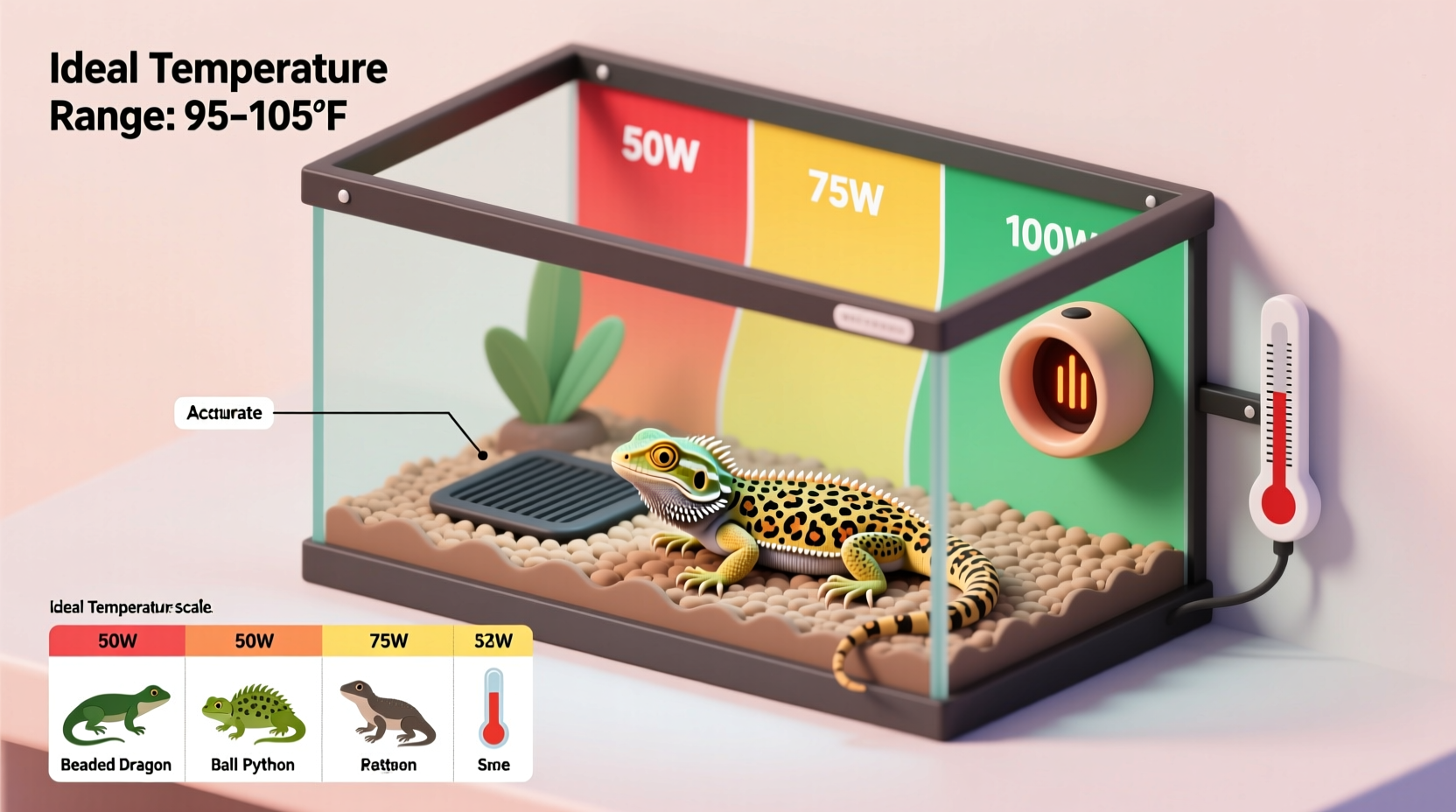
Not all reptiles need the same thermal environment. A desert-dwelling bearded dragon requires significantly higher basking temperatures than a temperate zone box turtle. Before selecting a heater, research your reptile’s native habitat and ideal thermal gradient. Most reptiles thrive when offered a temperature range rather than a single uniform temperature. This means creating a warm basking zone on one end of the tank and a cooler area on the other, allowing the animal to thermoregulate naturally.
For example:
- Bearded dragons require basking temperatures of 95–110°F (35–43°C) and ambient temps around 75–85°F (24–29°C).
- Leopard geckos prefer a basking spot of 88–92°F (31–33°C) with a cool side around 75°F (24°C).
- Crested geckos, originating from New Caledonia, do best at 72–80°F (22–27°C), rarely needing supplemental heating if room temperatures are stable.
- Ball pythons need belly heat for digestion, typically requiring under-tank heating to maintain a basking surface of 88–96°F (31–36°C).
Choosing the wrong wattage based on generalized advice can result in chronic stress or thermal burns. Always consult species-specific care sheets from reputable herpetological societies or veterinarians.
“Temperature gradients are non-negotiable in reptile husbandry. A properly sized heater allows reptiles to move between zones, mimicking natural behavior.” — Dr. Rebecca Tran, DVM, Exotic Animal Specialist
Calculating Wattage Based on Tank Size and Room Temperature
Wattage determines how much heat energy a heater produces. As a general rule of thumb, you’ll need approximately 2.5 to 5 watts per gallon of tank volume for tropical species, but this varies widely depending on ambient conditions. If your home averages 65°F (18°C), you’ll need more heating power than if it stays at 78°F (26°C).
To estimate starting wattage:
- Determine your tank’s volume in gallons or liters.
- Measure the average room temperature where the enclosure will be placed.
- Identify the target basking and ambient temperatures for your species.
- Calculate the temperature differential (e.g., if room temp is 70°F and you need 90°F, the difference is 20°F).
The greater the gap, the higher the wattage required. For instance, a 40-gallon tank in a cool room may need a 100-watt ceramic heat emitter, while the same tank in a warm room might only require a 50-watt bulb.
Tip: Always use a thermostat with any heater. It prevents overheating and ensures consistent temperatures, protecting both your reptile and your investment.Types of Heaters and Their Wattage Applications
Different heating devices serve different purposes and have varying efficiency. Choosing the right type—and matching it with proper wattage—is key to effective thermal management.
| Heater Type | Best For | Common Wattages | Notes |
|---|---|---|---|
| Ceramic Heat Emitter (CHE) | Nocturnal heating, dry environments | 25W–150W | Emits heat without light; ideal for 24/7 use. Requires a ceramic socket fixture. |
| Basking Light Bulb | Daytime basking zones | 50W–100W | Provides visible light and heat. Use with a dimming thermostat to avoid burns. |
| Under-Tank Heater (UTH) | Snakes, geckos needing belly heat | 15W–40W | Should cover no more than 1/3 of tank bottom. Must be used with a thermostat. |
| Heat Tape | Large enclosures, rack systems | 30W–100W per strip | Even heat distribution; excellent for breeders. Requires precise installation. |
| Deep Heat Projector | Larger lizards, arboreal species | 50W–100W | Penetrates deeper into tissue; simulates infrared sunlight. More expensive but efficient. |
Each device interacts differently with air flow, humidity, and enclosure material. Glass tanks retain heat better than mesh-top enclosures, which lose warmth rapidly. If using a screen lid, expect to increase wattage by 20–30% to compensate for heat loss.
Step-by-Step Guide to Selecting the Right Wattage Heater
Follow this practical sequence to ensure you select a heater that meets your reptile’s needs safely and efficiently:
- Assess your enclosure. Note dimensions, material (glass, plastic, wood), and whether it has a solid top or mesh lid.
- Record ambient room temperature. Use a digital thermometer over several days to get an average, especially noting nighttime lows.
- Determine your reptile’s thermal needs. Identify required basking and ambient temperatures from reliable care guides.
- Select heater type based on species behavior. Use UTHs for ground-dwellers needing belly heat; CHEs or basking bulbs for climbers and diurnal species.
- Estimate initial wattage. Start with 4 watts per gallon for glass tanks in moderate climates. Adjust upward for cooler rooms or mesh enclosures.
- Purchase a thermostat. Choose a proportional thermostat for precision, especially with CHEs or UTHs.
- Install and test. Place the heater on one side, position temperature probes correctly, and monitor for 48 hours before introducing your reptile.
- Adjust as needed. If temperatures are too high, reduce wattage or increase ventilation. If too low, upgrade heater or improve insulation.
This process eliminates guesswork and reduces risk. Never rely solely on built-in rheostats or dials—these are inaccurate and unsafe without external thermostatic control.
Real-World Example: Heating a 40-Gallon Leopard Gecko Setup
Consider Sarah, a first-time leopard gecko owner setting up a 40-gallon breeder tank in her basement, where temperatures average 68°F (20°C). Her gecko needs a basking surface of 90°F (32°C) and a cool side around 75°F (24°C). She opts for an under-tank heater since leopard geckos are nocturnal and benefit from belly heat during digestion.
She calculates: 40 gallons × 3.5 watts = ~140 watts. However, standard UTHs max out around 40W for this tank size. Instead of oversizing, she chooses a 40W UTH paired with a high-quality thermostat. After installation, she finds the basking zone reaches only 82°F. To compensate, she adds a thin layer of insulating foam beneath the heater, reducing heat loss to the floor. Within hours, the temperature climbs to 89°F—within the target range. She continues monitoring and adjusts thermostat settings slightly over the next few days to stabilize conditions.
Sarah’s success came not from raw wattage, but from understanding heat transfer, using feedback tools, and making incremental improvements. She avoided purchasing a dangerously oversized heater that could have led to thermal injury.
Common Mistakes and How to Avoid Them
Many reptile owners unknowingly endanger their pets through incorrect heater choices. Here are frequent errors and how to prevent them:
- Using household space heaters or heat rocks. These lack precision and often cause severe burns. Stick to reptile-specific products.
- Ignoring thermostats. Plugging a heater directly into the wall is a fire hazard and leads to unstable temperatures. Always pair heaters with thermostats.
- Overheating small enclosures. A 100W bulb in a 10-gallon tank can spike temperatures beyond 100°F quickly. Scale wattage appropriately.
- Placing thermometers incorrectly. Air temperature near the ceiling doesn’t reflect surface or substrate heat. Use multiple probes: one near the basking site, one on the cool side, and one at floor level.
- Assuming wattage is the only factor. Insulation, airflow, humidity, and placement matter just as much. A well-insulated wooden vivarium retains heat far better than glass.
Frequently Asked Questions
Can I use a higher wattage heater with a thermostat?
Yes, and it’s often recommended. A thermostat cycles the heater on and off to maintain the set temperature. A higher-wattage heater will reach the target faster and maintain it more consistently in colder environments, as long as it’s controlled by a reliable thermostat.
How do I know if my heater is too strong?
If the cool side of the tank exceeds the species’ upper tolerance limit, or if surface temperatures exceed 100°F (38°C) without direct basking intent, the heater is likely too powerful. Use an infrared temperature gun to measure surface heat accurately.
Do I need different wattage for day and night?
Most reptiles do not require bright lights at night, but some still need maintained ambient temperatures. Switch to a non-light-emitting heat source like a ceramic heat emitter at night, adjusting wattage only if room temperatures drop significantly.
Final Checklist Before Installation
Before powering up your heater, run through this essential checklist:
- ✅ Verified species-specific temperature requirements
- ✅ Measured room temperature over multiple days
- ✅ Chosen appropriate heater type (UTH, CHE, basking bulb, etc.)
- ✅ Calculated approximate wattage based on tank size and climate
- ✅ Purchased a high-quality thermostat with probe
- ✅ Ensured proper ventilation and safety clearance around heater
- ✅ Positioned thermometer(s) correctly inside the enclosure
- ✅ Tested system for 24–48 hours without reptile present
Conclusion
Selecting the right wattage heater for your reptile tank is a science grounded in observation, measurement, and responsibility. It’s not about buying the strongest heater available, but the one that delivers stable, species-appropriate heat within your specific environment. By considering tank size, ambient conditions, heater type, and always using a thermostat, you create a safe, sustainable habitat that supports your reptile’s health for years. Small investments in quality equipment and careful planning pay enormous dividends in animal welfare. Take the time to get it right—your reptile depends on it.
💬 Have experience with reptile heating setups? Share your wattage tips or lessons learned in the comments to help fellow keepers avoid common pitfalls.








