Hamsters are intelligent, active creatures that thrive in environments where they can explore, dig, and forage. Despite their small size, their psychological and physical needs are often underestimated. A cramped or poorly designed cage is one of the leading causes of stress, repetitive behaviors, and shortened lifespans in pet hamsters. Choosing the right cage isn’t just about floor space—it’s about creating a stimulating habitat that supports natural behaviors. This guide breaks down the essential factors in selecting an appropriately sized and enriched enclosure to keep your hamster healthy, engaged, and stress-free.
Why Cage Size Matters More Than You Think
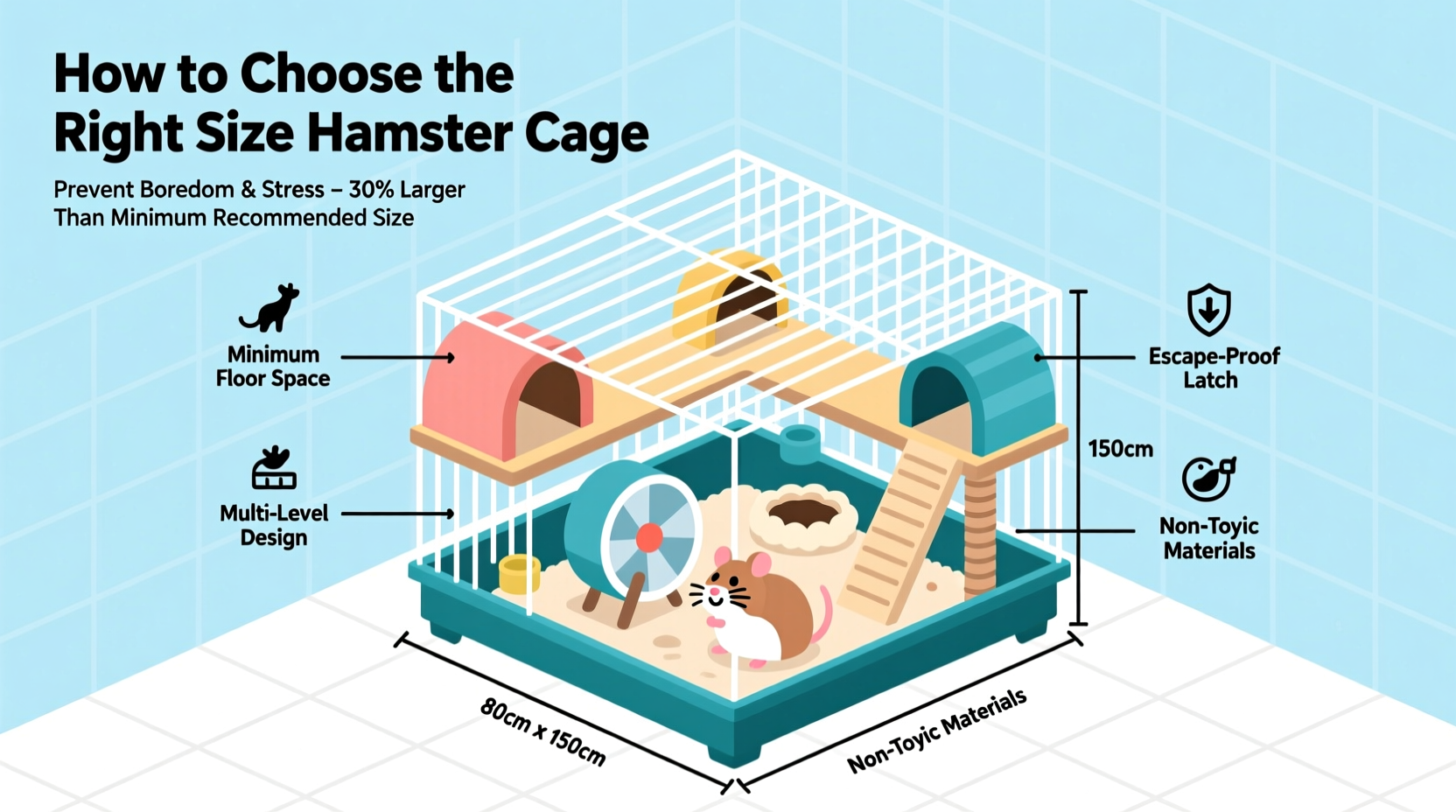
Hamsters may be small, but their activity levels are high. In the wild, Syrian hamsters can travel up to 5 miles per night in search of food and nesting materials. Even dwarf species cover significant ground. When confined to undersized cages—especially wire-bottomed or multi-level plastic tanks under 300 square inches—hamsters quickly develop signs of distress.
Chronic stress in hamsters manifests as bar-chewing, excessive grooming, lethargy, aggression, or pacing along the same route repeatedly (a behavior known as \"stereotypy\"). These are not quirks—they’re symptoms of environmental deprivation. The Association of Exotic Mammal Veterinarians (AEMV) emphasizes that inadequate housing directly impacts neurological development and immune function.
“Small cages do more than limit movement—they restrict mental stimulation. A hamster in a cramped space cannot express even basic instincts like burrowing or exploring, which leads to chronic stress.” — Dr. Rebecca Sanderson, DVM, Exotic Pet Specialist
To prevent these issues, the minimum recommended floor space for a single adult hamster is 450 square inches (approximately 2900 cm²). This is not a luxury—it’s a baseline for welfare. Larger is always better, especially when combined with proper enrichment.
Floor Space vs. Height: What Your Hamster Actually Needs
Many commercial cages market vertical space as a selling point, featuring multiple levels and climbing accessories. However, hamsters are ground-dwelling animals. While they can climb, they prefer horizontal exploration and deep bedding for tunneling.
Vertical levels in cages often sacrifice usable floor area and can pose safety risks if platforms aren't securely fastened. Falls from heights greater than 6 inches can result in serious injury or death. Additionally, wire shelves or mesh flooring can lead to bumblefoot—a painful bacterial infection caused by pressure sores on the feet.
The ideal cage prioritizes wide, open floor space over height. A long, low-profile bin cage or modified aquarium offers far more utility than a tall, narrow model with ladders and tubes. If you include levels, ensure they are low to the ground and accessible via solid ramps, not open drops.
Tip: Use deep bedding (at least 6–8 inches) in one corner to allow natural burrowing, even in smaller cages.Recommended Minimum Sizes by Hamster Type
Different hamster species have varying spatial needs. Syrians, being larger and more territorial, require significantly more room than dwarfs. Below is a comparison of recommended minimum floor areas based on species and current veterinary standards.
| Hamster Type | Minimum Floor Area | Ideal Floor Area | Notes |
|---|---|---|---|
| Syrian | 450 sq in (2900 cm²) | 600+ sq in (3870+ cm²) | Never house with other hamsters; needs space for separate activity zones. |
| Roborovski | 450 sq in (2900 cm²) | 600+ sq in (3870+ cm²) | Highly active; benefits from longer runs and tunnels. |
| Winter White / Campbell's | 450 sq in (2900 cm²) | 500+ sq in (3225+ cm²) | May tolerate siblings if raised together, but still need personal space. |
| Chinese | 450 sq in (2900 cm²) | 550+ sq in (3550+ cm²) | Longer body; needs extra length for stretching and running. |
Note: All dwarf species listed above are solitary by nature despite occasional cohabitation myths. Housing hamsters together—even siblings—increases stress and risk of fatal fighting, regardless of cage size.
Enrichment: Making Space Work for Mental Health
A large cage without proper enrichment is no better than a small one. Boredom leads to stress just as surely as confinement does. Enrichment means providing opportunities for natural behaviors: foraging, digging, chewing, climbing, and hiding.
Start by dividing the cage into functional zones:
- Exercise zone: Wheel (solid-surface, minimum 8\" diameter for Syrians, 6.5\" for dwarfs), tunnels, and open run areas.
- Resting zone: Nesting box or DIY hide filled with unscented tissue paper or hay.
- Foraging zone: Scatter food across the bedding instead of using a bowl; hide treats in cardboard tubes or puzzle feeders.
- Digging zone: Deep bedding area (shredded paper, aspen, or kiln-dried pine) at least 6 inches deep.
Include chewable items like untreated wood blocks, loofah slices, or cardboard rolls to satisfy gnawing instincts and wear down continuously growing teeth. Avoid plastic accessories, which can be ingested and cause intestinal blockages.
Step-by-Step Guide to Selecting and Setting Up the Right Cage
Choosing the right cage involves more than measuring square inches. Follow this sequence to ensure a safe, enriching environment:
- Measure available space: Determine where the cage will go and measure the footprint. Aim for a base of at least 30” x 15” (450 sq in).
- Select cage type: Opt for a solid-bottom bin (like a Sterilite or IKEA Detolf) or a glass aquarium. Avoid wire cages with plastic bases—they offer poor ventilation and limited space.
- Check ventilation: If using a bin, drill 1/8” holes every inch along the top sides for airflow. For aquariums, use a mesh lid.
- Add deep bedding: Layer at least 6–8 inches of safe substrate in one section for burrowing. Paper-based or aspen shavings work well; avoid cedar or scented beddings.
- Install a proper wheel: Ensure it’s solid (no rungs), appropriately sized, and mounted flush to the wall or floor to prevent spine arching.
- Place essentials: Position food, water, and hideouts away from the wheel to reduce contamination and noise disruption.
- Add enrichment: Include tunnels, chew toys, and foraging elements. Use toilet paper tubes, wooden ladders, or cork bark.
- Monitor behavior: Observe your hamster for signs of stress or overactivity. Adjust layout or add space if needed.
Common Mistakes That Lead to Stress
Even well-intentioned owners make errors that compromise their hamster’s well-being. Watch out for these pitfalls:
- Using cages sold as “hamster palaces”: Many marketed cages are under 300 sq in and contain unsafe wire grids or narrow tubes.
- Overcrowding with accessories: Too many toys or levels reduce usable floor space and hinder movement.
- Ignoring noise and light: Place the cage in a quiet area away from TVs, loud pets, or direct sunlight.
- Using inappropriate substrates: Cedar and pine oils are toxic; fabric bedding can tangle limbs.
- Wheeled exercise balls: These disorient hamsters, cut off scent trails, and expose them to predators (other pets). They are not a substitute for free-roam time.
“Exercise balls are stressful confinement devices disguised as fun. Hamsters rely heavily on scent and memory to navigate. Being rolled around in a plastic ball disrupts both and increases anxiety.” — Dr. Lila Nguyen, Animal Behavior Researcher
Real-Life Example: From Bar-Chewing to Burrowing Bliss
Sarah adopted a young Syrian hamster named Nibbles from a local pet store. He came in a compact cage barely 200 square inches, complete with a wire wheel and plastic tube maze. Within days, Sarah noticed Nibbles constantly chewing the bars and running frantic circles at night.
After researching proper housing, she upgraded to a 42” x 20” bin cage (840 sq in) with 8 inches of paper-based bedding in one corner. She added a wooden nest box, a solid 9\" wheel, and scattered his food daily. Within two weeks, the bar-chewing stopped. Nibbles began building deep nests and spent hours tunneling. His nighttime activity became purposeful—exploring, foraging, and grooming—rather than panicked looping.
Sarah’s experience illustrates how a simple change in cage size and setup can transform a stressed animal into a thriving companion.
Frequently Asked Questions
Can I use a rabbit hutch or cat carrier as a hamster cage?
Only if it meets the minimum floor space and safety requirements. Many hutches have widely spaced bars that allow escape or limb trapping. Convertibles must be fully secured, lined with solid flooring, and fitted with adequate ventilation. Always supervise initial use.
Is a bigger cage ever too big?
No. Hamsters will use all available space if it’s properly enriched. In fact, larger enclosures reduce stress by allowing separation of activity zones (sleeping, eating, toileting). Just ensure temperature remains stable—drafts in oversized rooms can chill small animals.
How often should I clean the cage?
Spot-clean waste and soiled bedding every 2–3 days. Do a full change every 3–4 weeks, preserving some old bedding to retain familiar scents and reduce stress. Never clean the entire cage weekly—that erases scent markers and increases anxiety.
Final Checklist Before Buying or Building a Cage
Use this checklist to ensure your hamster’s home supports health and happiness:
- ✅ At least 450 square inches of continuous floor space
- ✅ Solid bottom with no wire mesh
- ✅ Deep bedding (6–8 inches) in part of the cage
- ✅ Properly sized, solid-surface exercise wheel
- ✅ Multiple hides and chew toys made from safe materials
- ✅ Ventilation without drafts
- ✅ Quiet, low-traffic location away from direct sunlight
- ✅ No overcrowding with unnecessary plastic accessories
Conclusion: Space Is a Form of Kindness
Choosing the right hamster cage isn’t just about following recommendations—it’s about respecting the animal’s nature. A spacious, thoughtfully arranged enclosure prevents boredom, reduces stress, and allows your hamster to live a fuller, more natural life. These small creatures deserve more than decorative cages and fleeting attention. By investing in proper housing, you give them the freedom to behave as they’re meant to: digging, exploring, and resting in peace.
🚀 Take action today: Measure your current cage. If it’s under 450 square inches, plan an upgrade. Your hamster’s well-being depends on it. Share this guide with fellow owners and help spread awareness—one spacious cage at a time.








